
Free visual inspection and a written scope of work before any mitigation begins - photos, moisture readings, and drying logs go in your claim file
The scope we write is the scope we bill. Anything new gets shown to you, in writing, before we touch it.
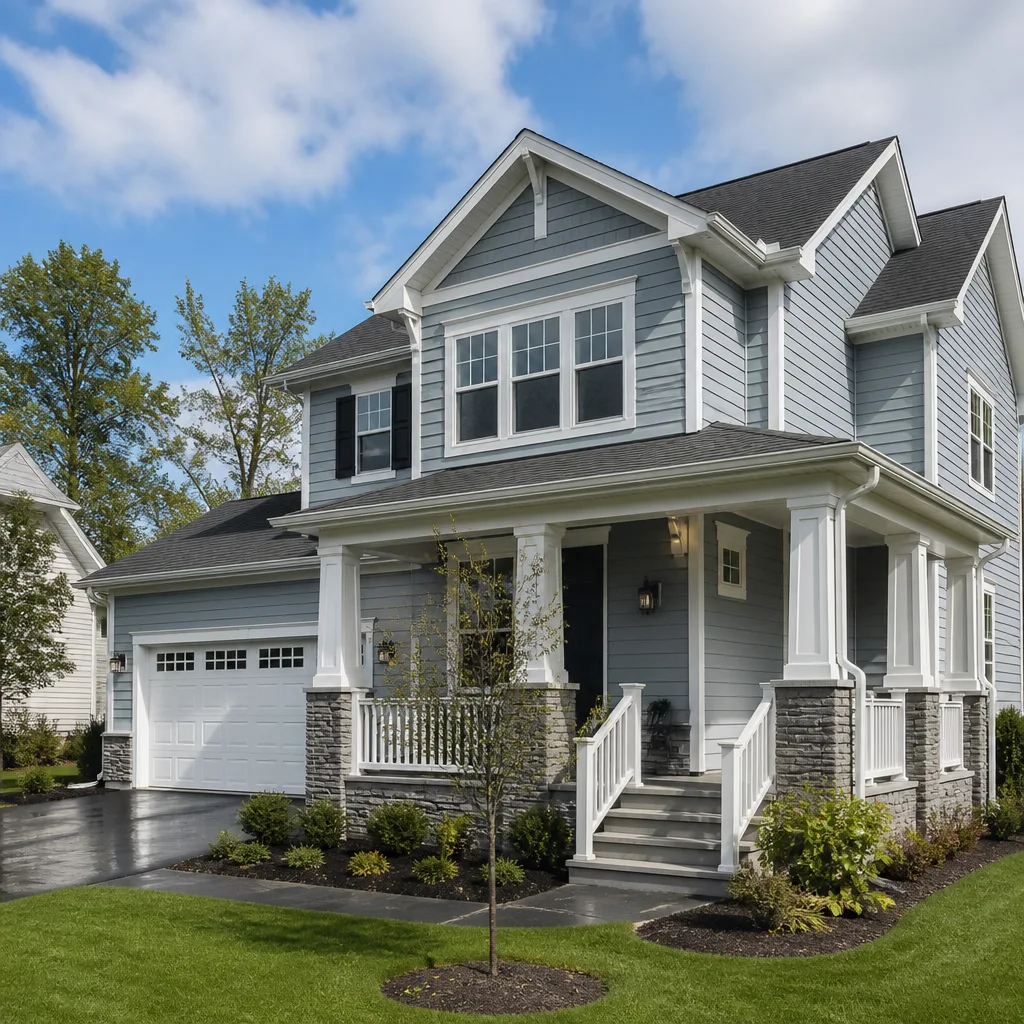
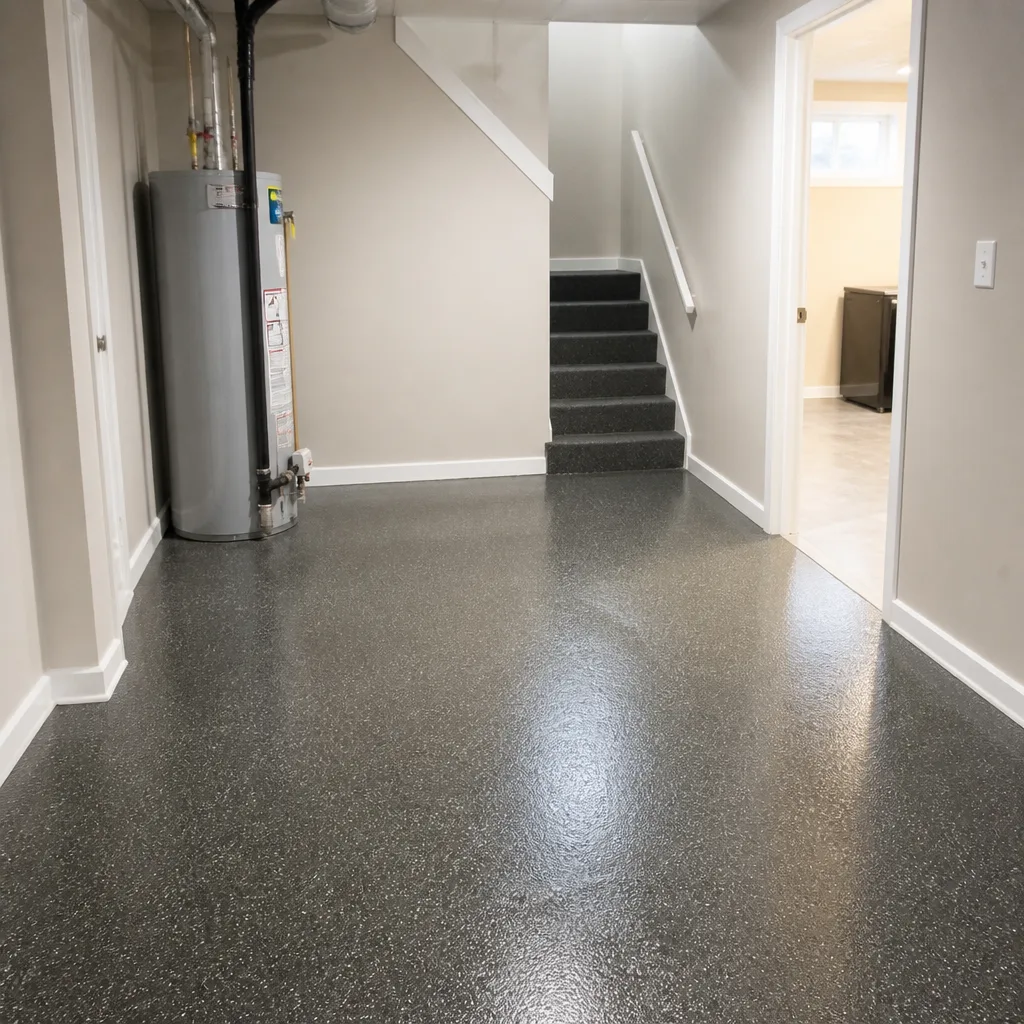
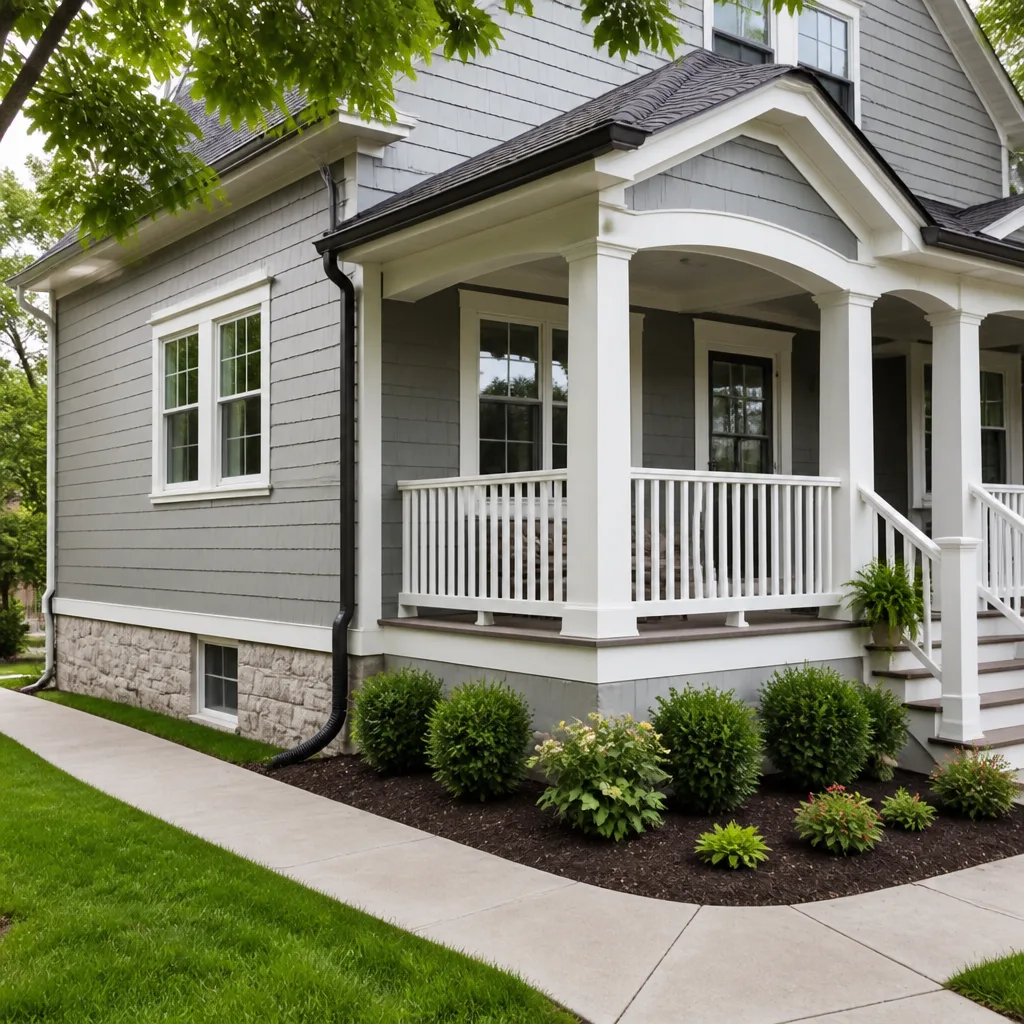
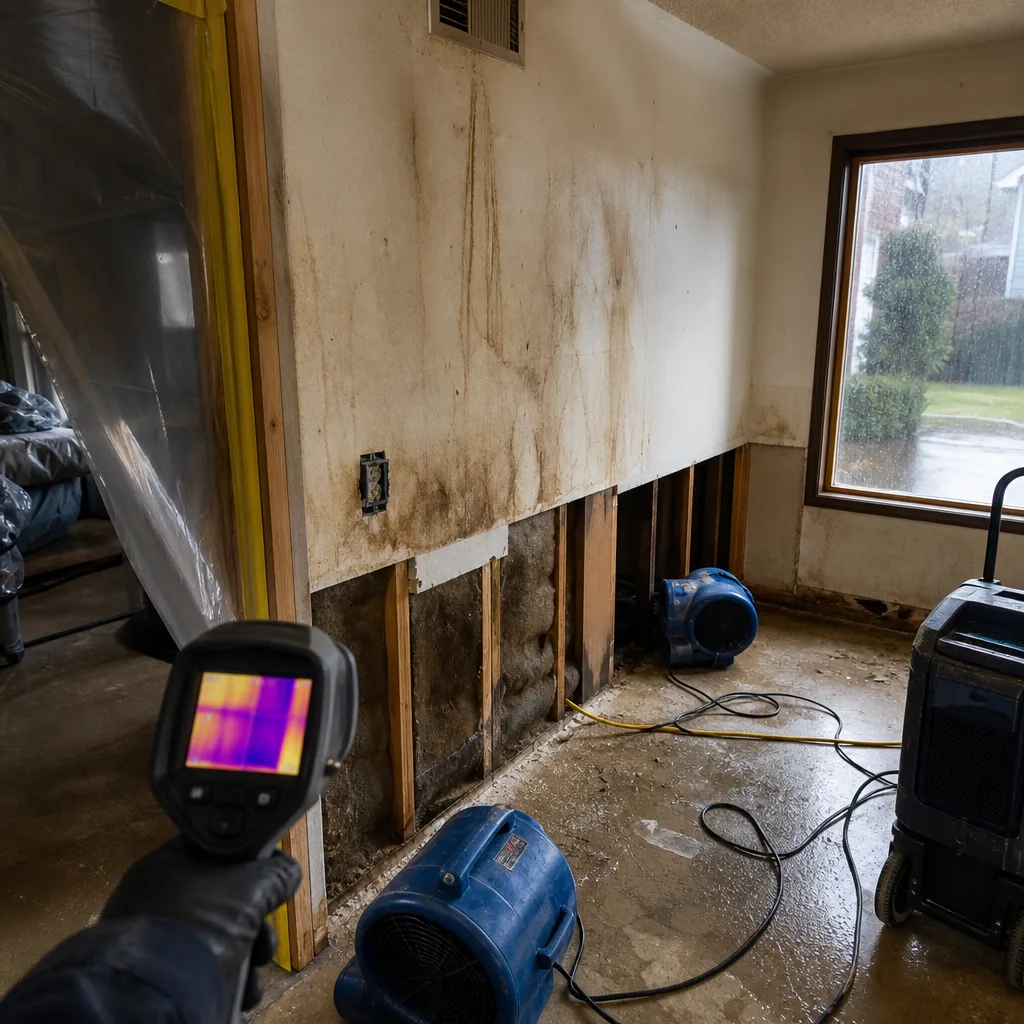 Before
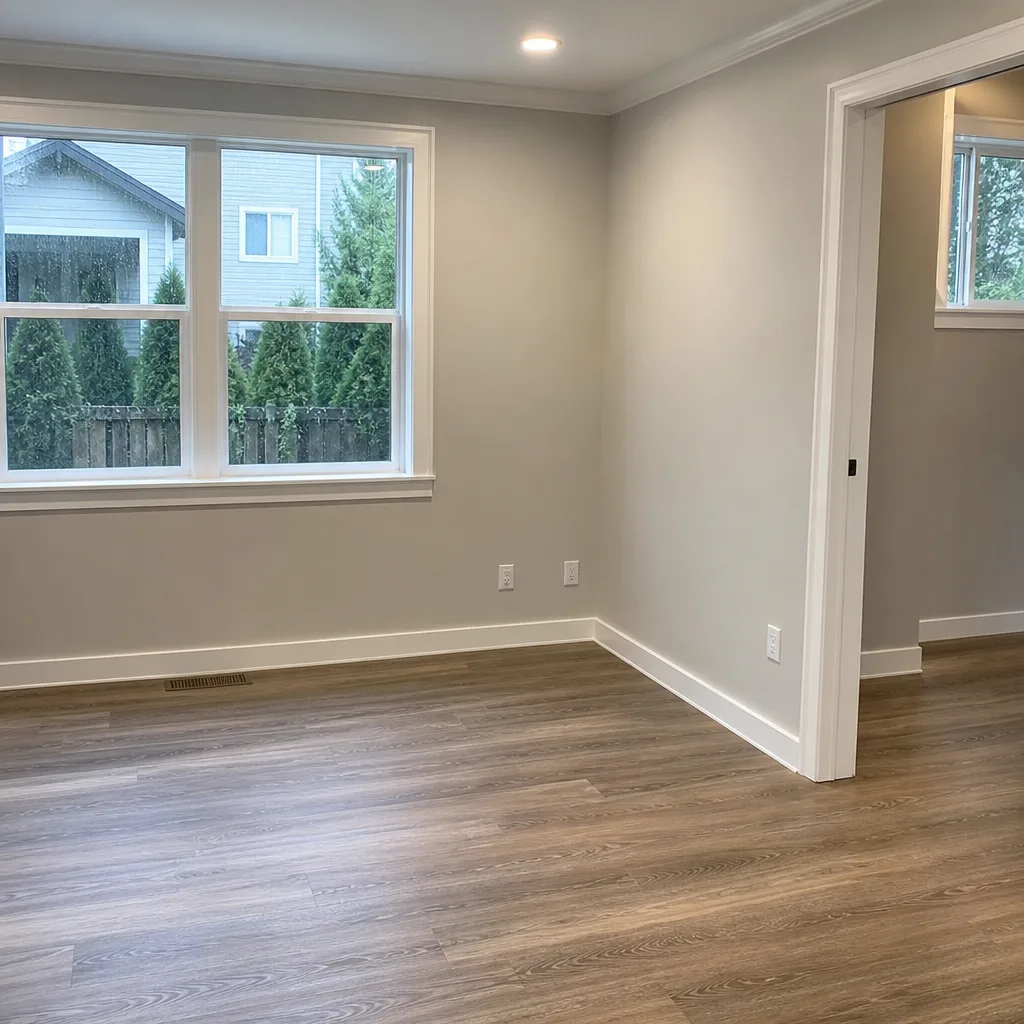 After
After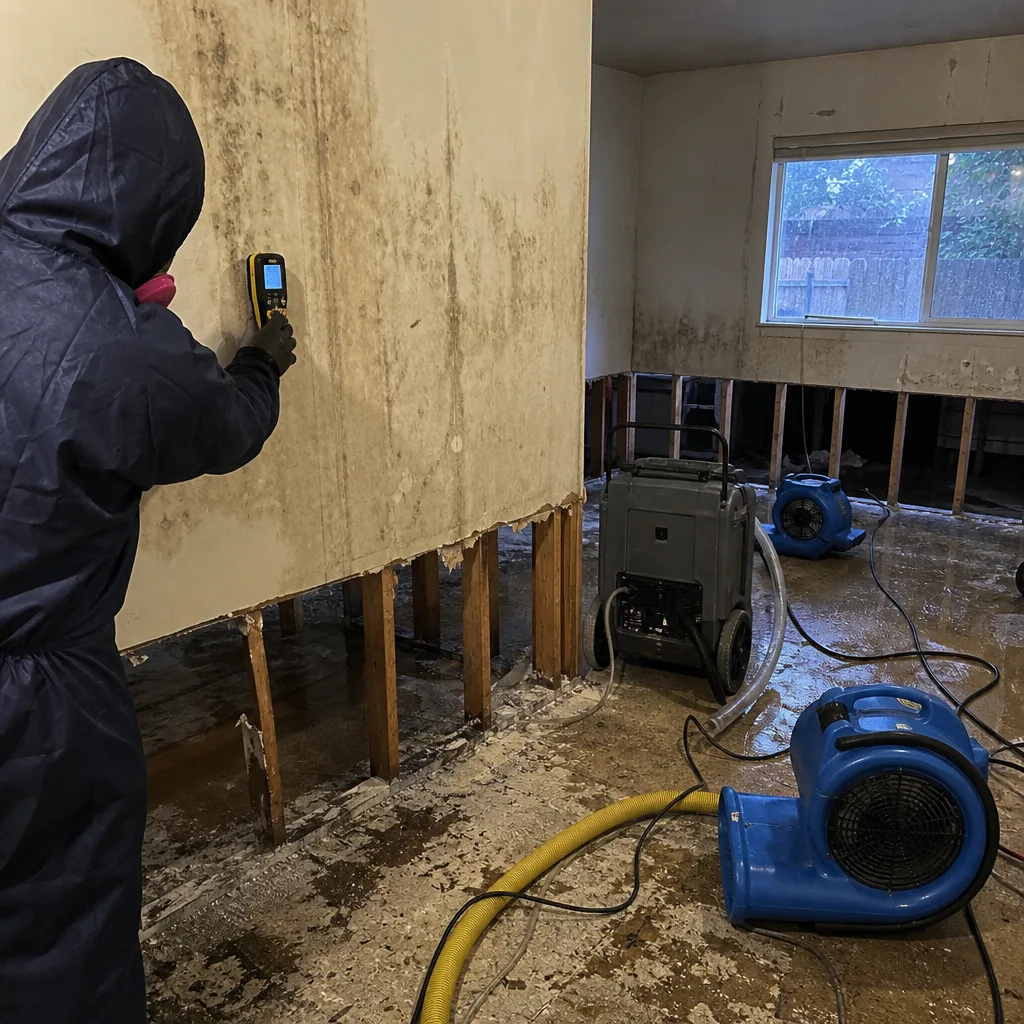 Before
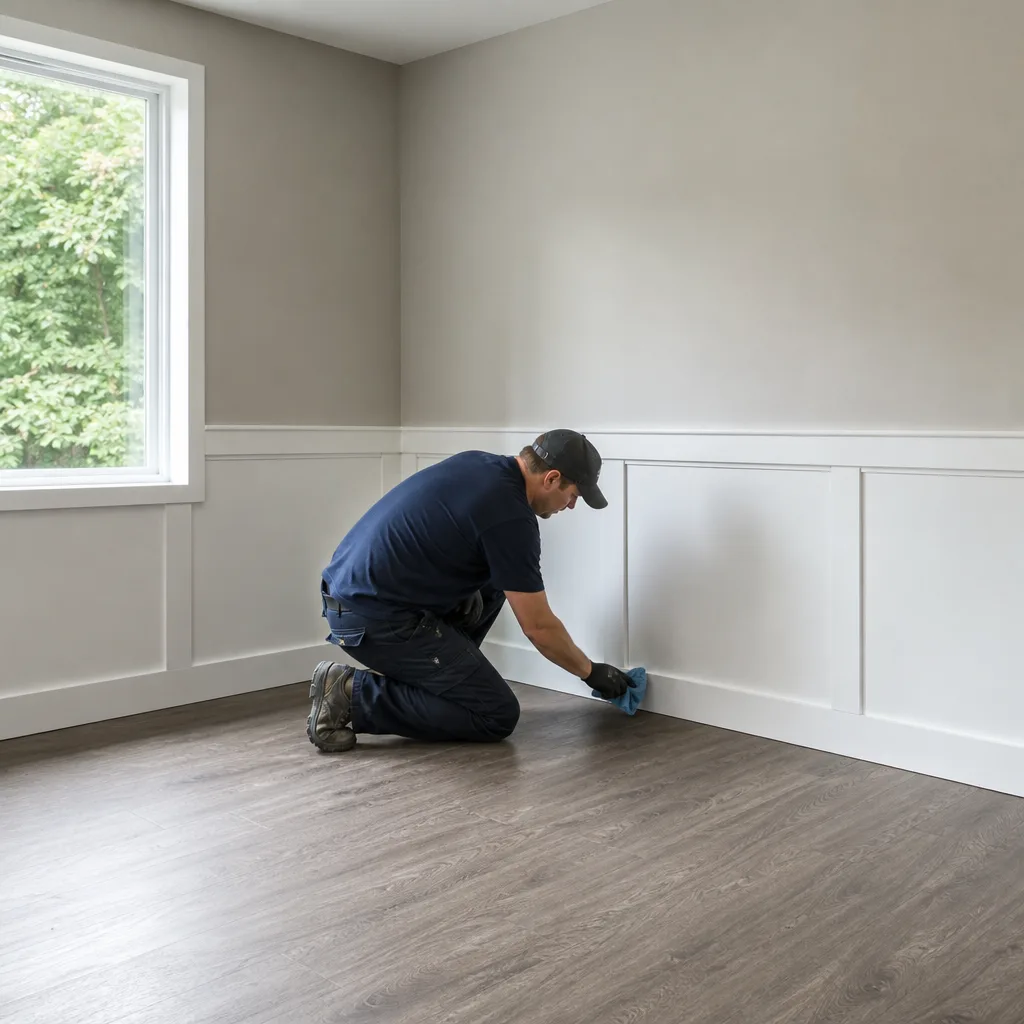 After
After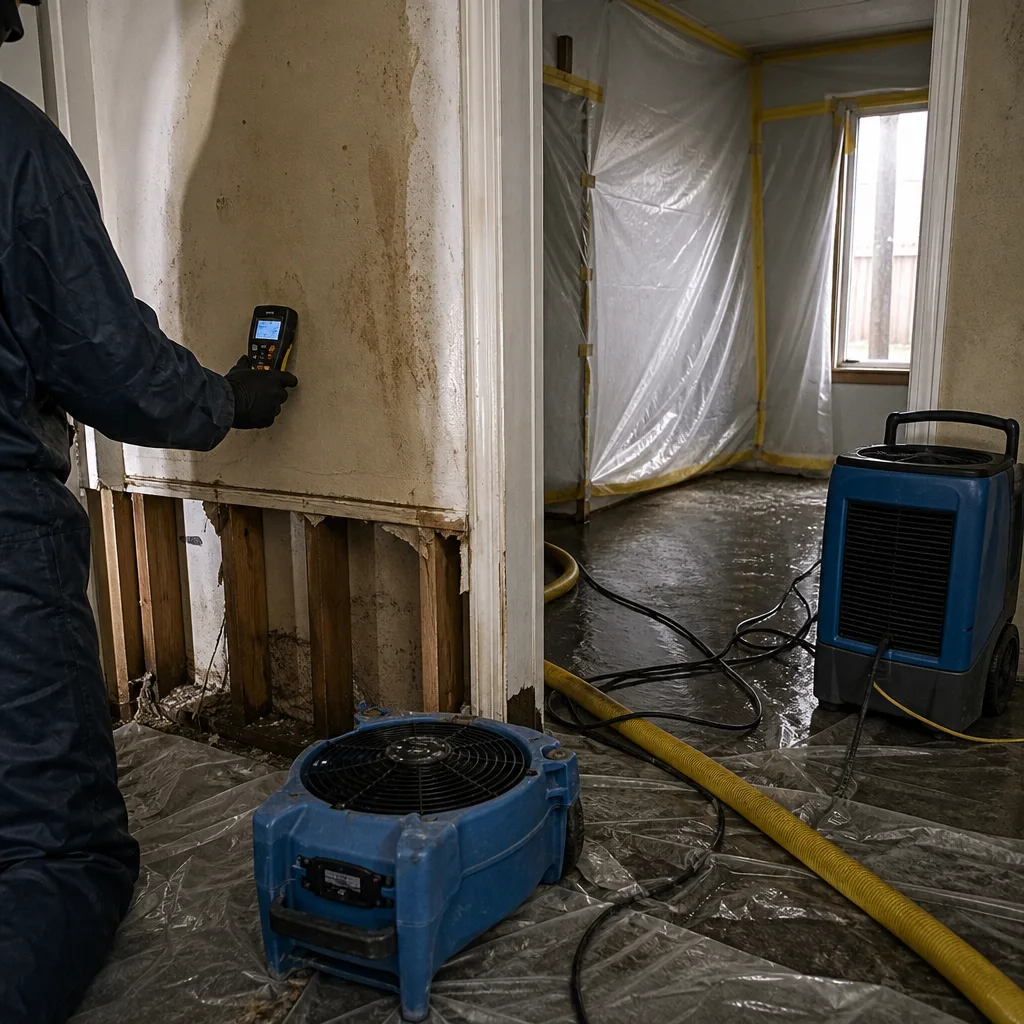 Before
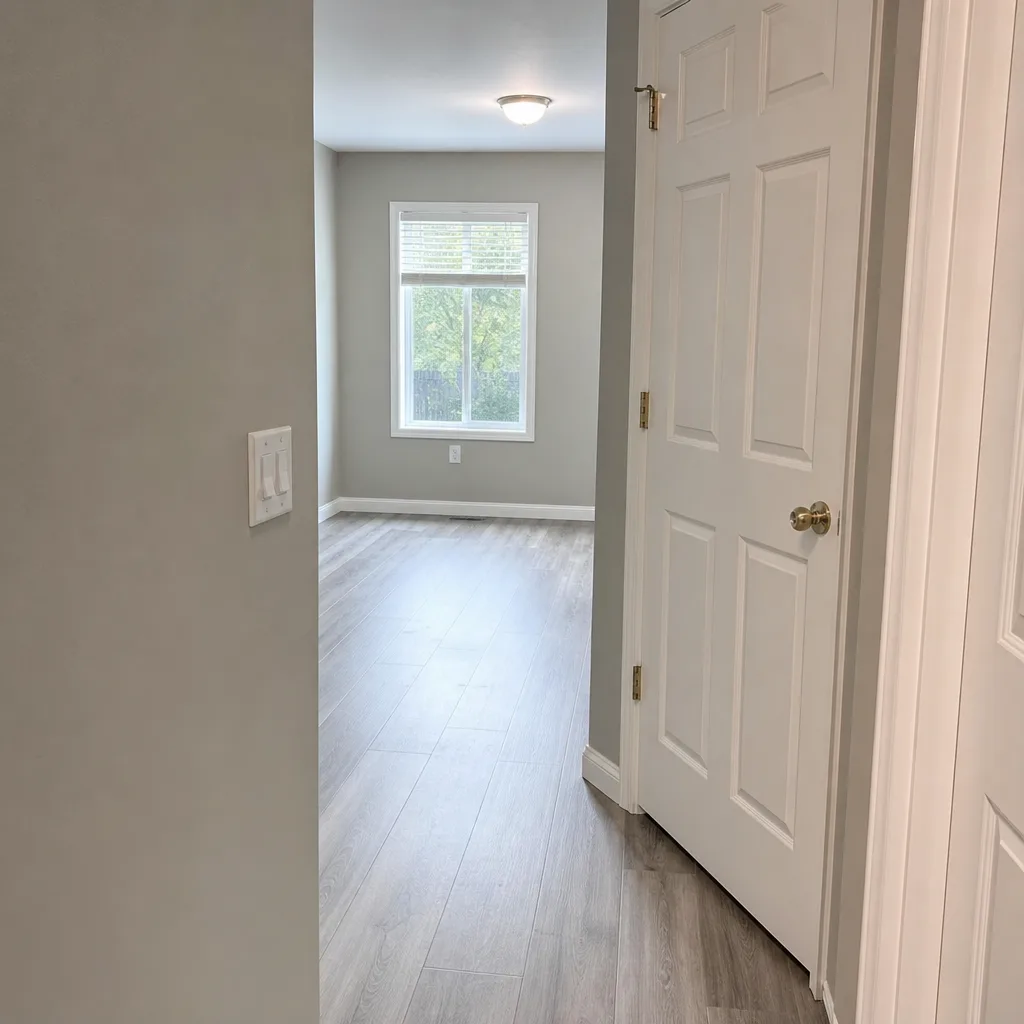 After
After24/7 Emergency Water Damage Restoration in Everett
Water damage restoration in Everett typically costs $2,800-$7,500 for a standard residential mitigation, with emergency extraction starting at $450-$950 and structural drying running $1,200-$3,200 depending on affected square footage and category of water. Our crews answer live at (425) 696-6061 24 hours a day, 7 days a week, with no voicemail trees, and we dispatch to Everett neighborhoods within 45 minutes of your call. The first hour after water intrusion determines whether you’re looking at a three-day dry-out or a three-week rebuild with full mold remediation, especially in Everett’s mid-century housing stock where vapor barriers were minimal and crawlspaces sit close to groundwater.
We provide a free visual inspection, a written price before any work starts under Haven Standard, Clause 1, and photo-documented assessments from arrival to final walkthrough. If you’re standing in water right now, call (425) 696-6061 - we’ll have a crew en route while we talk.
Understanding Water Damage Restoration Severity in Everett Properties
Water damage in Everett breaks into three categories that dictate everything from protective gear to disposal protocols. Category 1, or clean water, comes from supply lines and broken pipes - common in Everett’s older mill-era homes with galvanized plumbing and in the 1940s-1960s Boeing-worker tracts where polybutylene was used through the 1990s. Category 2, gray water, carries chemical or biological loads from dishwasher drains, washing machine overflows, or wind-driven rain forced past failed door seals - the scenario we see repeatedly in south Everett’s mid-century homes with corroded slider tracks and degraded weatherstripping. Category 3, black water, includes sewage backups, river floodwater, and any water that has passed through ground or building materials; in Lowell and the south Everett floodplain, this is a genuine seasonal risk when the Snohomish River overtops its banks.
Moisture mapping with thermal imaging and pinless moisture meters lets us trace the true extent of migration, not just what’s visible. In Everett’s wood-frame housing, water wicks laterally through sill plates and up into wall cavities via capillary action in balloon-frame construction, particularly in the historic core near Hewitt Avenue. Psychrometric data - temperature, relative humidity, and vapor pressure differential - drives our drying strategy; without it, you’re guessing at equipment placement and extending the job by days. Tertiary drying, the final phase where we drop humidity to pre-loss equilibrium, is where most DIY attempts and under-equipped contractors fail, leaving trapped moisture that feeds mold in Everett’s persistently humid fall and winter months.
Why Everett Property Owners Choose DryMark Restoration Bothell
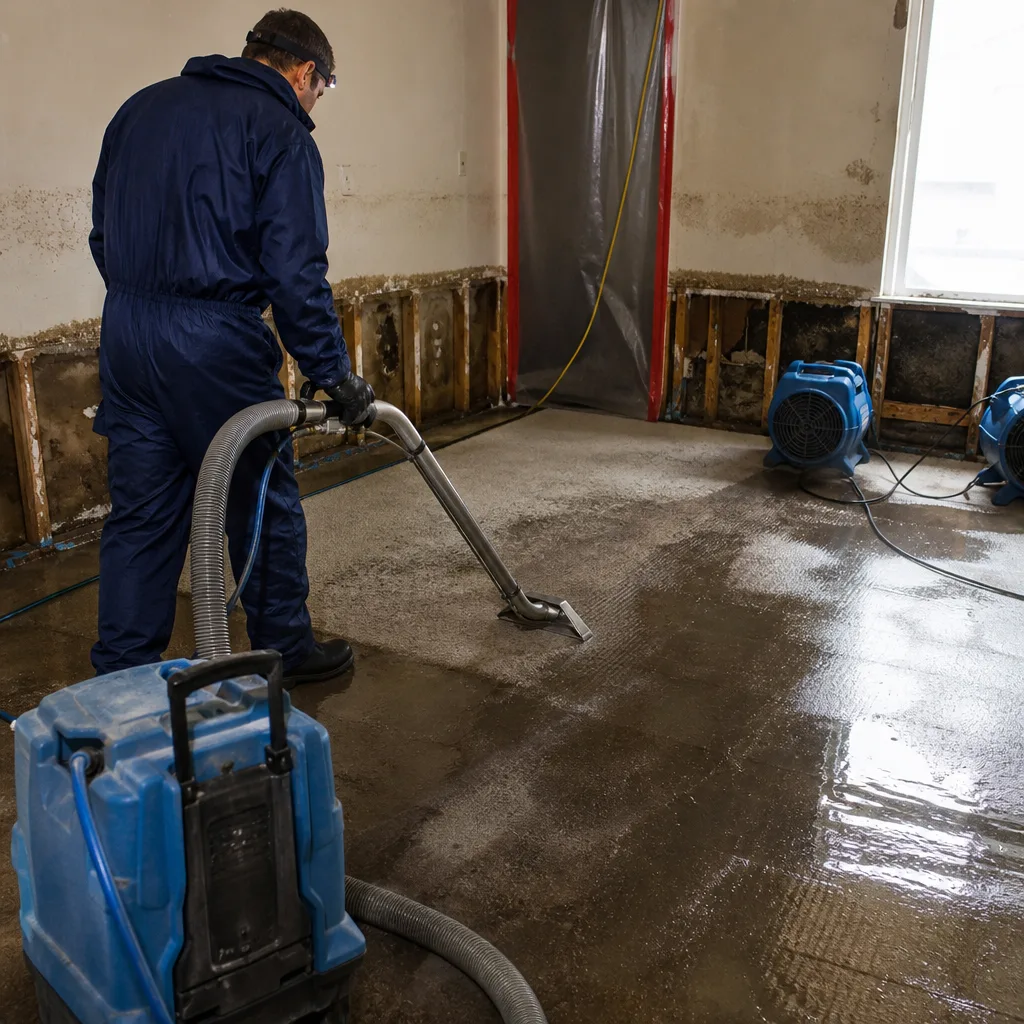
- 45-minute response commitment to Everett addresses, with crews staged for the Lowell floodplain, north Everett, and the Mukilteo corridor.
- 24/7 live answer - a real person picks up every call, never an automated system or next-business-day callback while water is still moving through your floors.
- IICRC-certified crews holding WRT (Water Damage Restoration Technician), ASD (Applied Structural Drying), and AMRT (Applied Microbial Remediation Technician) credentials, with license numbers documented on every job file.
- Free visual inspection and moisture assessment, with a written scope and price delivered before any equipment is powered on.
- Direct insurance billing and adjuster coordination, including photo-documented loss files that satisfy carrier requirements without back-and-forth delays.
- One team from extraction to reconstruction - no handoffs between mitigation and rebuild contractors, no gaps in documentation, no disputed scope items.
BeforeAfterOur Water Damage Restoration Process
1. Inspection & Assessment
We arrive with thermal imaging cameras, pin and pinless moisture meters, and hygrometers to map the full water migration pattern. In Everett’s mid-century homes, we pay particular attention to crawlspace vapor barriers and wall cavity saturation behind hardboard siding, where wind-driven rain often hides for days before showing on interior surfaces. Every reading is logged to the drying record.
2. Extraction & Stabilization
Standing water comes out first with truck-mounted extraction systems and weighted vacuum heads for carpet and pad. For Everett’s frequent crawlspace flooding, especially in Lowell and south Everett river-delta parcels, we deploy submersible pumps and portable extraction units to remove water from below-grade spaces before it wicks into sill plates and floor joists.
3. Drying & Dehumidification
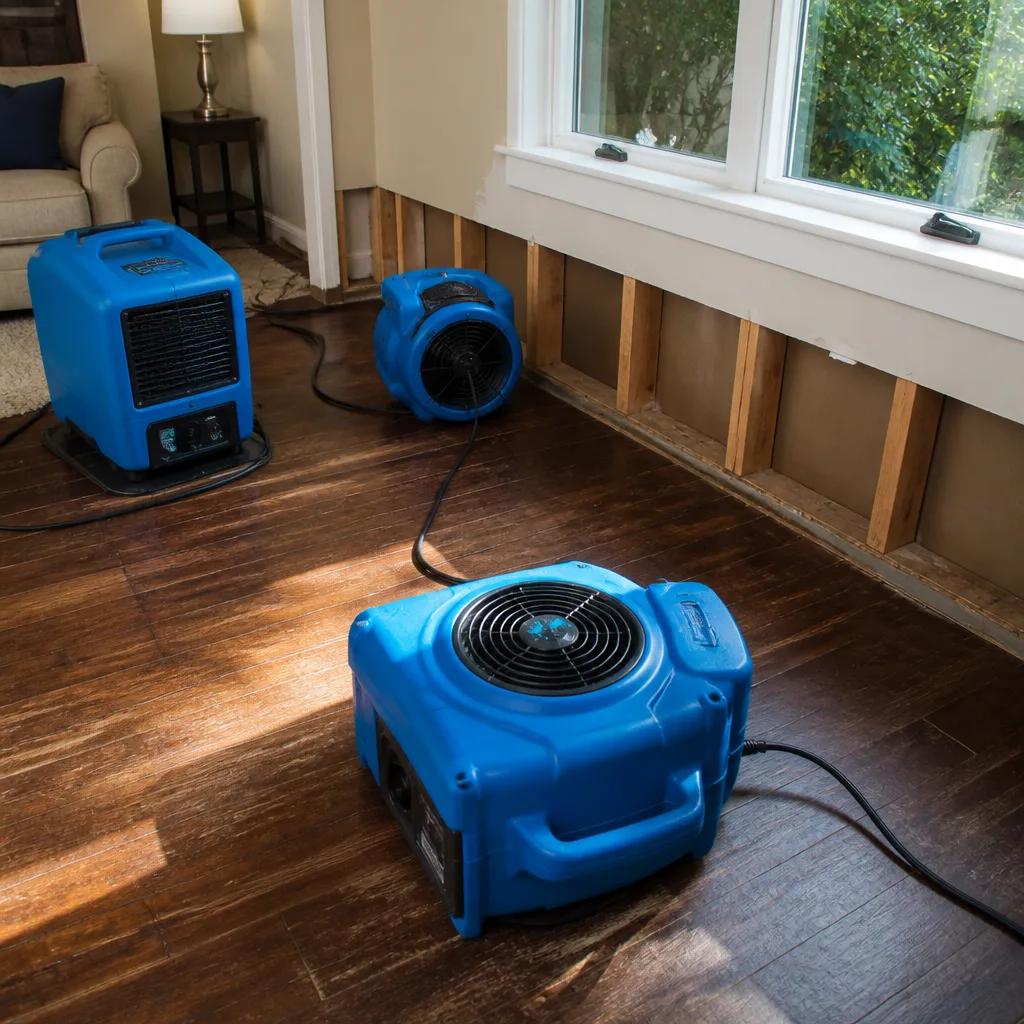
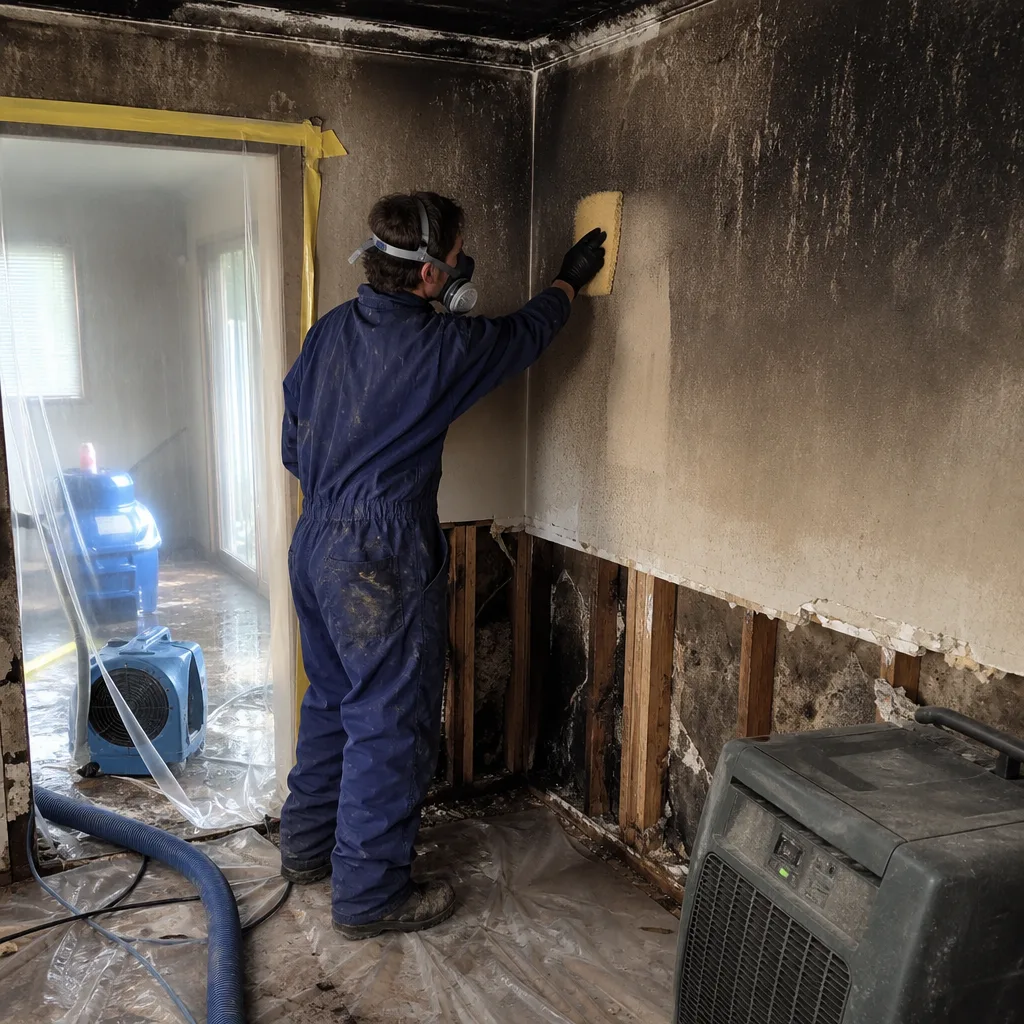
We deploy Phoenix LGR dehumidifiers, Dri-Eaz air movers, and Injectidry cavity-drying systems to establish vapor pressure differential that pulls moisture from building materials into the air, then strips it from the air. In Everett’s marine climate, where fall and winter humidity rarely drops below 70% exterior, aggressive dehumidification is non-negotiable - ambient drying simply doesn’t work here.
4. Cleaning & Sanitization
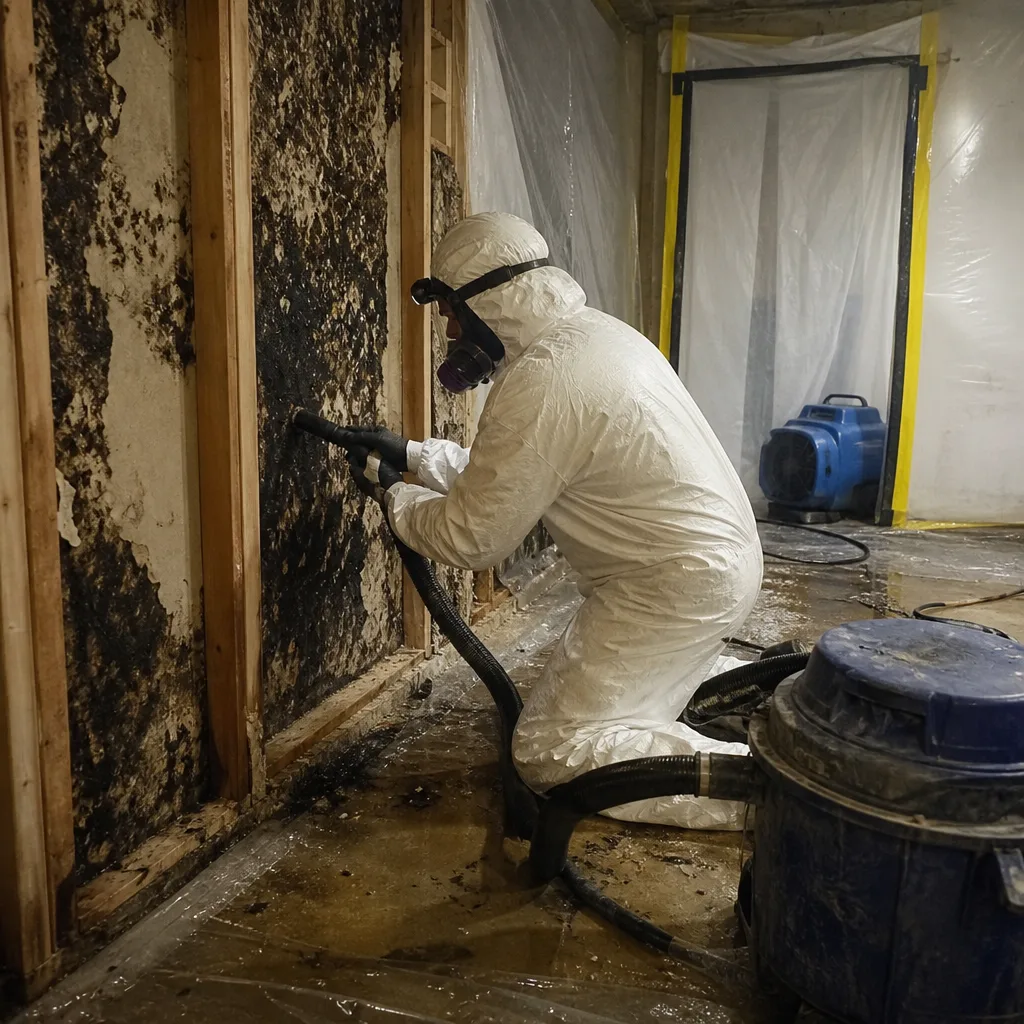
Category 2 and 3 water jobs receive antimicrobial treatment of affected surfaces, HEPA air scrubbing to capture airborne particulates, and disposal of contaminated porous materials per IICRC S500 standards. In Everett’s older housing stock, we test for lead paint and asbestos before disturbance, particularly in pre-1978 mill-era and Victorian homes in the historic core.
5. Moisture Verification & Documentation
We don’t call a job dry until moisture content readings match the dry standard for each material class - typically 12% or below for softwood framing in the Pacific Northwest climate zone. Daily drying logs with psychrometric data, equipment readings, and photo documentation become your insurance file’s backbone, turning restoration invoices into payable claims.
6. Repairs & Restoration
Our reconstruction team replaces removed materials with matched finishes, from drywall and baseboard to flooring and cabinetry. In Everett’s Boeing-worker neighborhoods, we source period-appropriate siding and trim to maintain curb appeal, and we coordinate with flood-insurance adjusters on south Everett floodplain properties where NFPA requirements may dictate elevation or material changes.
Need Emergency Water Damage Restoration in Everett Now?
Crews minutes away, answering live 24 hours a day. The sooner we start, the less it costs.
Working With Your Insurance Company
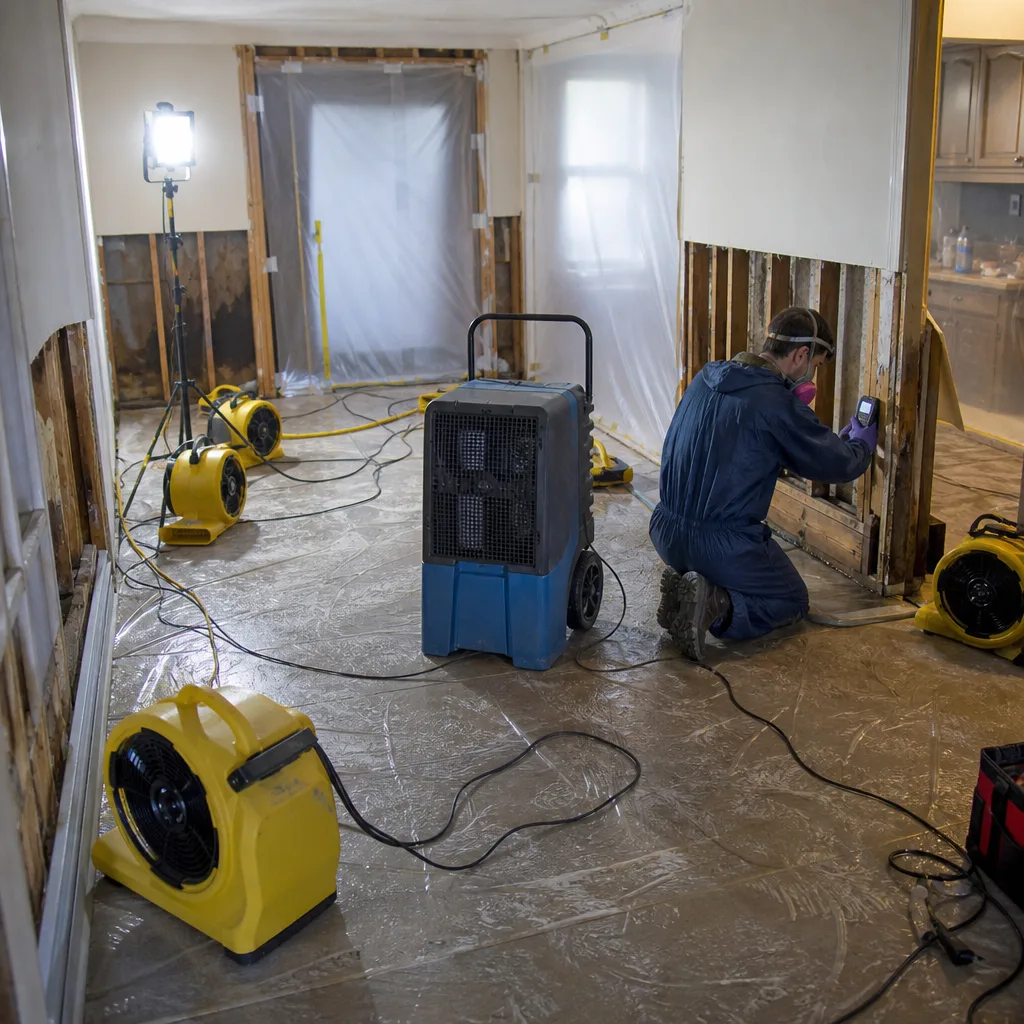
Insurance claims live or die on documentation, and most disputes trace back to the first 48 hours after loss. We start building your file the moment we arrive: pre-loss condition photos, moisture mapping diagrams, equipment placement logs, and daily psychrometric readings that satisfy IICRC S500 and carrier guidelines. Our estimates are written to Xactimate industry standards, the same platform adjusters use, which eliminates the back-and-forth that delays payment. We communicate directly with your adjuster, provide supplemental documentation when hidden damage extends the scope, and never ask you to front costs beyond your deductible on covered losses.
For Everett’s south Everett and Lowell floodplain properties, we routinely coordinate with flood-insurance adjusters under NFIP policies, which carry distinct documentation requirements and coverage limits from standard homeowner’s policies. We know the difference and scope accordingly.
What We Provide Your Insurer
- Thorough documentation of the loss
- Photos of all damage, room by room
- Moisture readings and drying logs
- A detailed, line-item scope of work
- Direct coordination with your carrier
Built for Everett’s Loss Calendar
January through March brings the deepest risk: cold snaps freeze exposed supply lines in Everett’s uninsulated crawlspaces and exterior walls, particularly in the 1940s-1960s tracts where original copper has thinned or been patched with incompatible fittings. When thaw hits, pipes burst under pressure and homeowners discover the leak hours later. April through June, snowmelt in the Cascades swells the Snohomish River; south Everett and Lowell floodplain parcels see groundwater intrusion through foundation cracks and overtopped crawlspace vents. July and August bring brief dry windows, but marine moisture never fully releases - relative humidity in unconditioned spaces stays elevated, so any summer water intrusion still faces mold pressure within 48 hours. September through December is Everett’s longest damage season: atmospheric river events dump sustained rainfall, wind-driven rain overwhelms aging door seals and composition roofing on mid-century homes, and the combination of saturated soil and persistent fog keeps structures from ever reaching true dry standard without mechanical intervention. We took a call in Lowell after a winter storm pushed water under a south-facing slider whose track had corroded from years of marine moisture; wind-driven rain overwhelmed the door’s drainage and we found category 2 water in the wall cavity behind the hardboard siding. Our techs did moisture mapping across the affected wall and crawlspace, pulled baseboard, set containment, then ran Phoenix dehumidifiers and XPOWER air movers to dry the assembly before antimicrobial treatment. We documented pre-loss condition, logged daily moisture readings, and coordinated with the homeowner’s flood adjuster because the parcel sits in the south Everett floodplain.
Water Damage Restoration Across Everett’s Neighborhoods
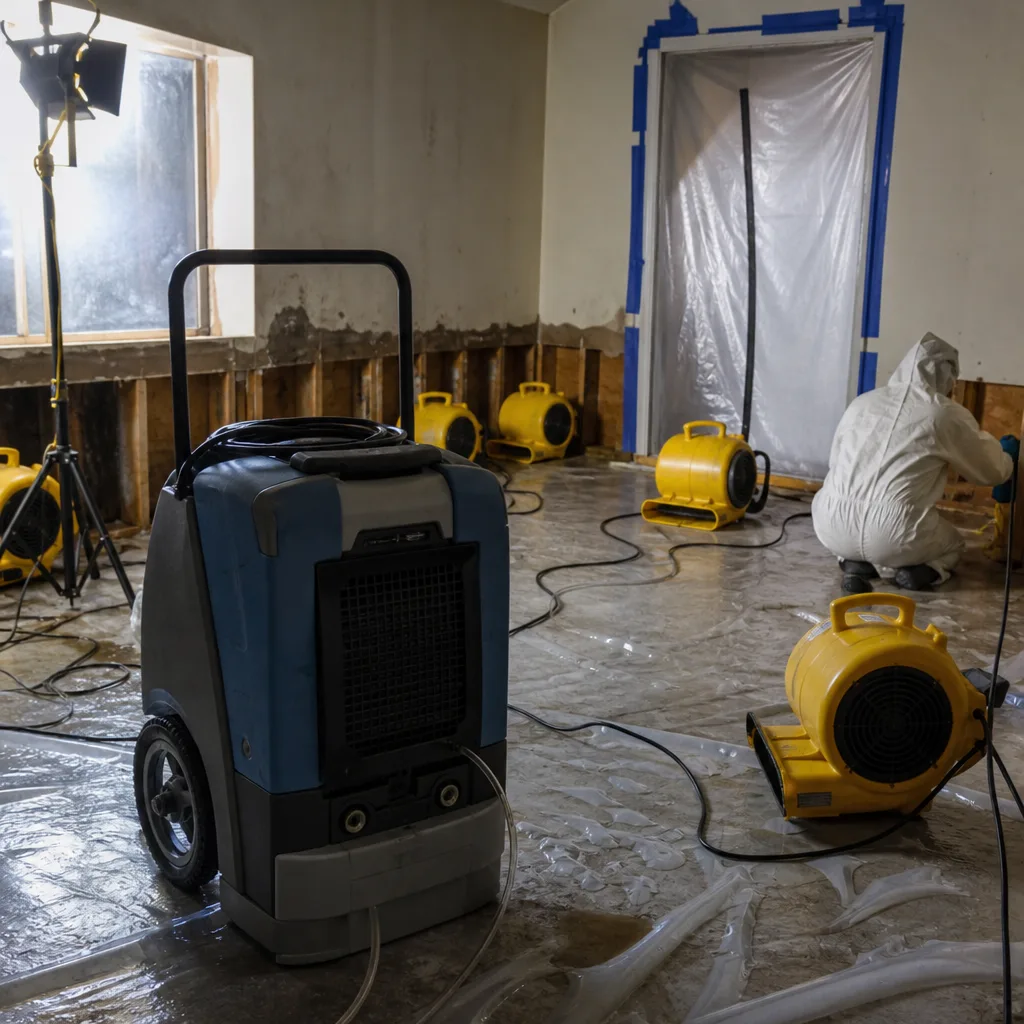
Lowell and the south Everett river-delta neighborhoods sit on the floodplain side of the equation. Technicians working here quickly learn that repeated flood claims on the same addresses are the norm - homeowners have often had two or three restoration scopes done in a decade, and drying equipment left after a job can find standing water again before the next rain season ends. Our response to these properties includes pre-emptive moisture monitoring and coordination with flood-insurance adjusters who know the parcel history.
North Everett’s historic core, from Hewitt Avenue up to Rucker Hill, presents the opposite challenge: early-1900s Victorian and mill-era homes with balloon-frame construction, lead paint, minimal or absent vapor barriers, and foundations that have settled over a century of Puget Sound freeze-thaw cycles. Water migration here runs vertically through wall cavities and horizontally along original dimensional lumber that acts like a wick. Drying requires cavity injection systems and careful containment to avoid disturbing lead-painted surfaces.
The Boeing-worker tracts between Everett Mall and Silver Lake - dense 1940s-1960s wood-frame construction with minimal insulation, aging composition roofing, and crawlspaces that sit directly on clay-heavy soils - represent the chronic moisture market. These homes don’t flood dramatically; they seep, sweat, and degrade slowly. We find mold behind baseboard and in attic sheathing where bathroom vents terminate improperly and marine fog keeps sheathing above 20% moisture content year-round.
Westmont and the Mukilteo corridor along Casino Road see a mix: newer construction with better envelopes but still exposed to the same Port Gardner Bay wind loads and marine humidity. The difference is that failed door seals and window flashing on 1990s-2000s homes often hide behind vinyl siding until the damage is extensive.
Specialized Water Damage Restoration Services We Offer in Everett
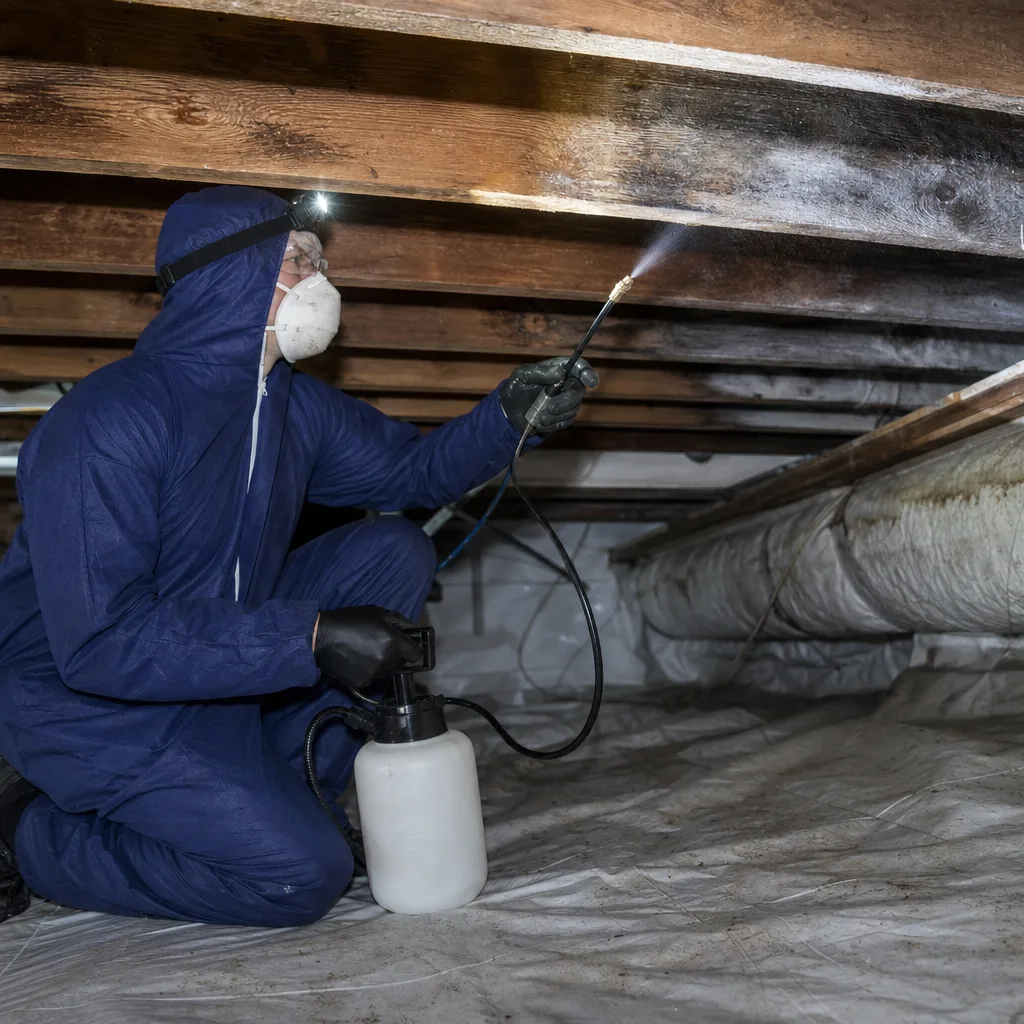
Emergency Water Extraction
Standing water doesn’t wait. Our truck-mounted extraction systems remove thousands of gallons per hour from flooded Everett properties, with portable units for crawlspaces and basement access where truck mount hose runs won’t reach. In Lowell flood events, we often extract, set drying equipment, and return to extract again when river levels rise overnight.
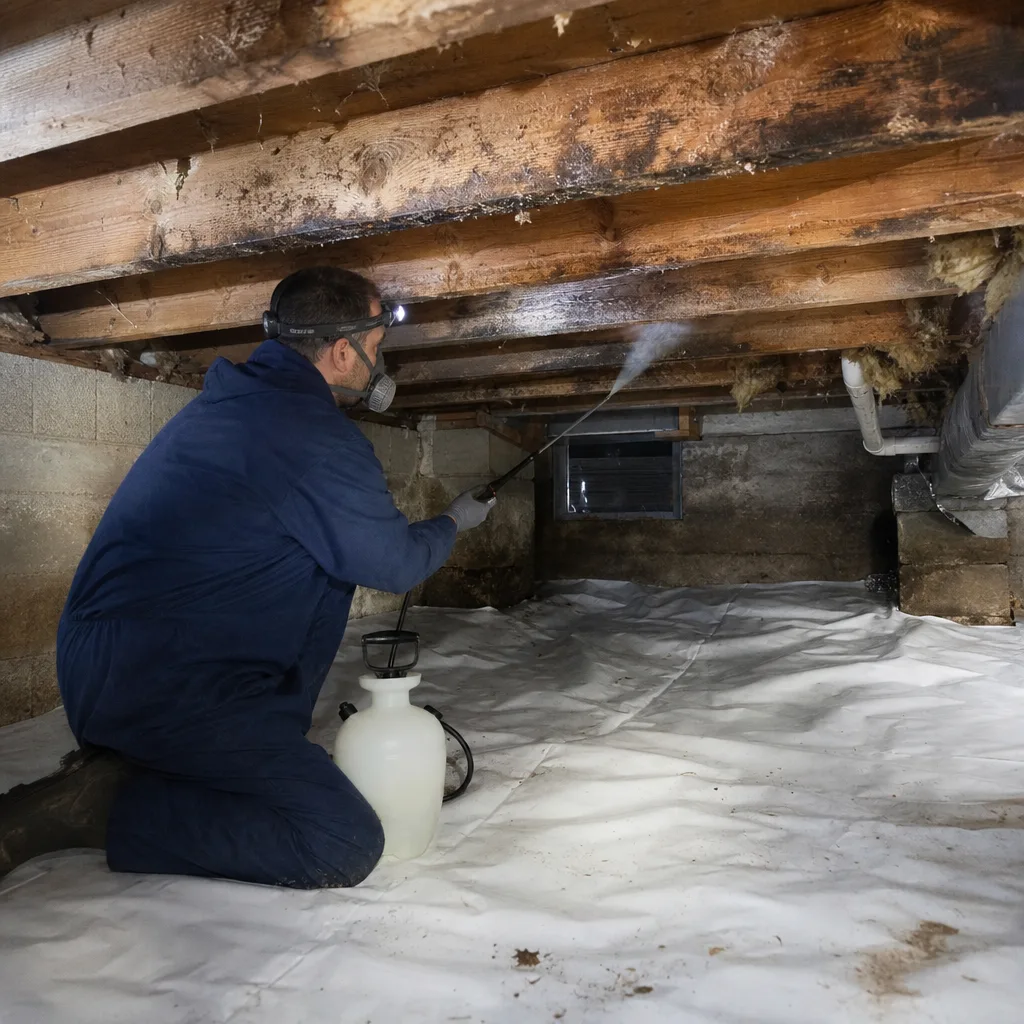
Structural Drying & Dehumidification
This is where Everett’s marine climate makes professional equipment essential. Phoenix and Dri-Eaz LGR dehumidifiers, sized to the affected cubic footage, establish the vapor pressure differential that pulls moisture from studs, subfloor, and concrete. Without it, structural drying stalls in the 60-70% relative humidity that passes for “dry” in a typical Everett winter.
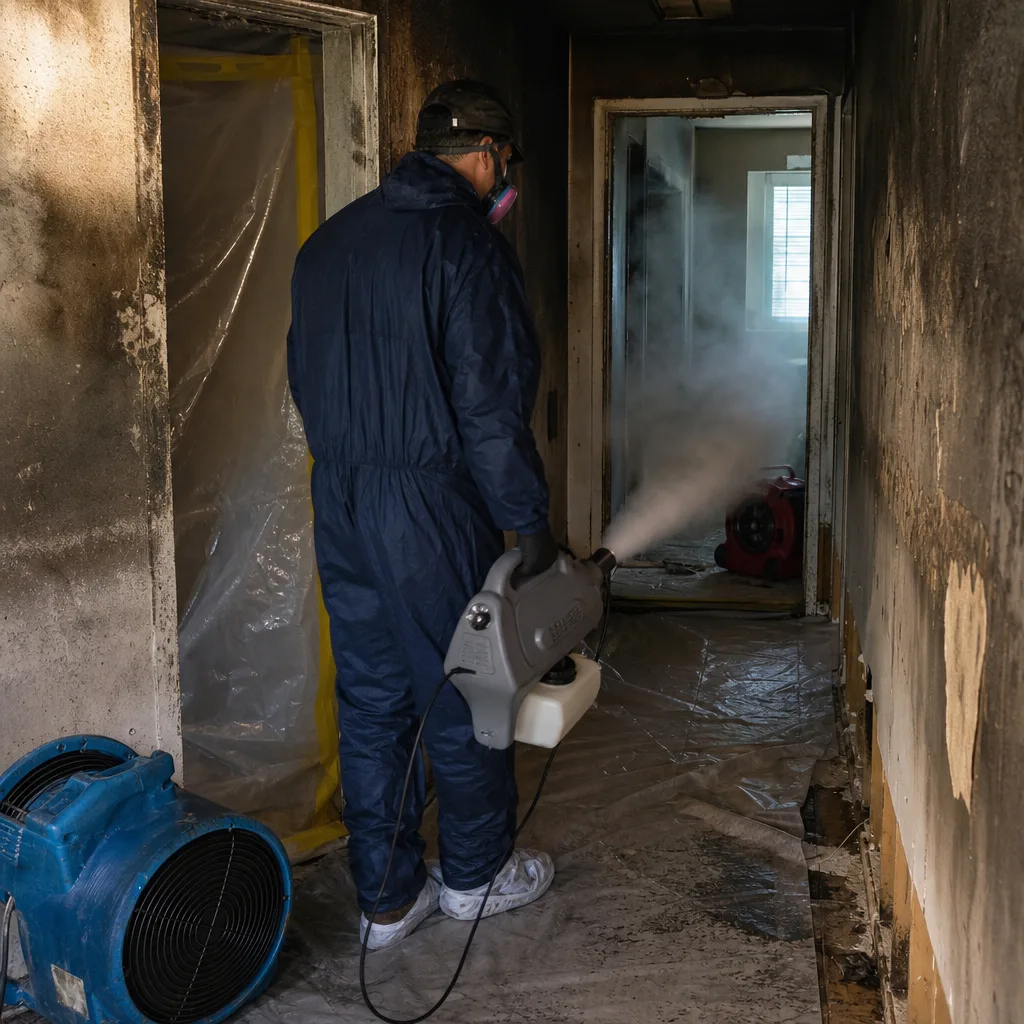
Flood Cleanup
Snohomish River flooding in south Everett brings category 3 water with sediment, chemical contamination, and biological load. We treat these jobs as hazmat operations: full PPE, contained demolition of porous materials, HEPA air scrubbing, and antimicrobial treatment of remaining hard surfaces. Documentation for flood-insurance adjusters is included as standard, never an upsell.
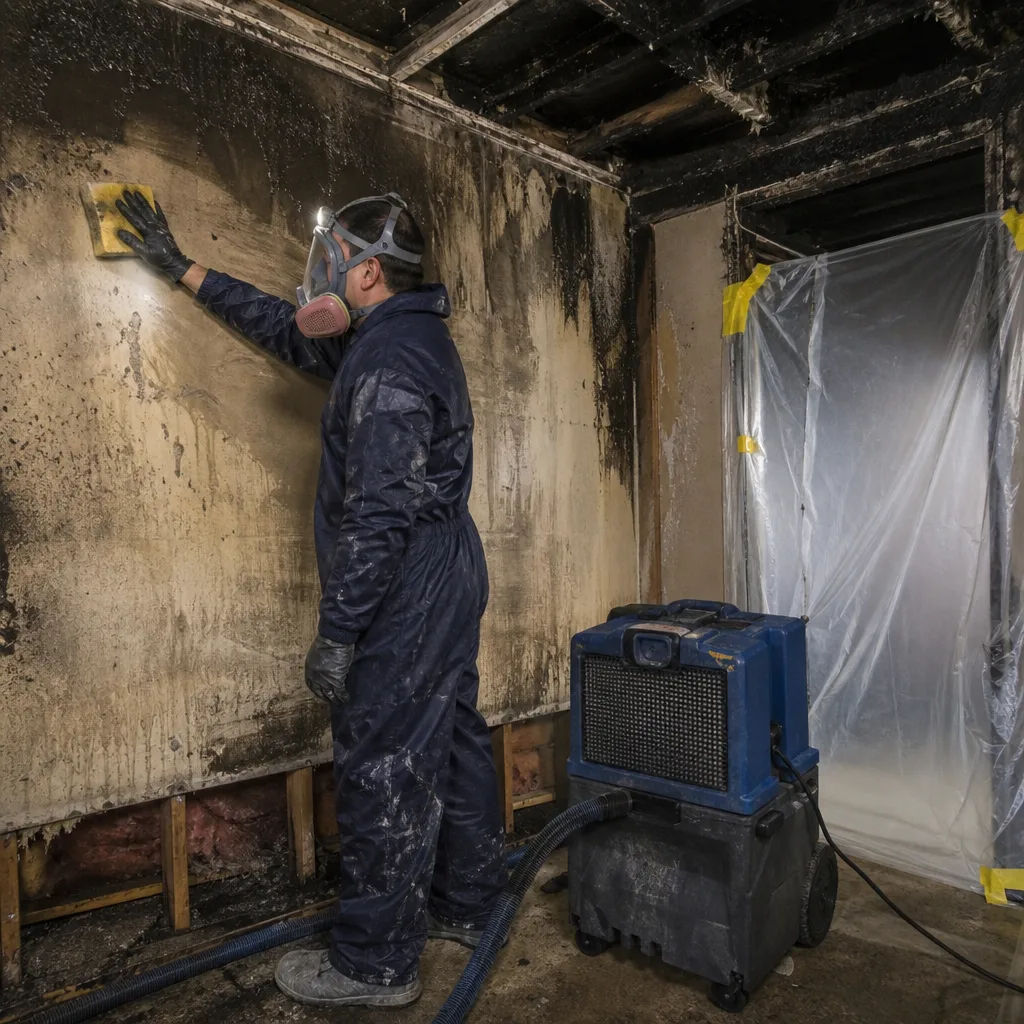
Burst Pipe Restoration
Everett’s freeze-thaw cycle hits hardest in uninsulated crawlspaces and exterior walls of pre-1980 homes. We extract, dry, and document the full migration pattern - including hidden saturation in insulation and wall cavities - then scope the plumbing repair or coordinate with your preferred plumber.
Basement Water Removal
Basements are rare in Everett’s flat river-delta terrain but common in the Rucker Hill and north Everett elevations. We handle submersible pump failures, foundation seepage, and hydrostatic pressure intrusion with the same documentation-first approach, including sump pump replacement coordination where the failure source needs addressing.
What happens when you call
- 1
A real person answersNo phone trees - you reach a local pro.
- 2
You get an upfront price rangeHonest numbers before anyone is dispatched.
- 3
A background-checked tech heads outLicensed & insured, dispatched right away.
- 4
You approve before work beginsNothing starts until you say go.
Water Damage Restoration Costs in Everett, WA
Here is what we see in the Everett market for water damage mitigation, based on 12,000+ jobs documented since 2011:
| Service | Typical Range in Everett |
|---|---|
| Emergency water extraction (up to 1,000 sq ft) | $450 - $950 |
| Structural drying & dehumidification (3-5 day standard) | $1,200 - $3,200 |
| Category 2 cleanup with antimicrobial treatment | $2,800 - $5,500 |
| Category 3 flood cleanup with controlled demolition | $4,500 - $9,500 |
| Full mitigation + reconstruction (typical residential) | $7,500 - $18,000 |
What moves the price: affected square footage, category of water, accessibility (crawlspace work costs more than open-basement work), and whether asbestos or lead paint requires abatement coordination - common in Everett’s pre-1978 housing stock. Insurance typically covers sudden and accidental water damage from supply lines, storms, and appliance failures; gradual leaks and maintenance-related issues often fall to the homeowner. We provide a written price before any work starts, Haven Standard, Clause 1, and a free second opinion on any competitor’s written estimate if you want comparison.
We Also Serve Cities Near Everett
Our crews respond throughout Snohomish County from dispatch coordinated through our Seattle office, including Water Damage Restoration in Everett and neighboring Water Damage Restoration calls in Marysville, Mukilteo, Lynnwood, and Monroe. Each market carries distinct building stock and climate pressures; our documentation and pricing adapt to local conditions rather than applying a regional template.
Serving Everett, WA - Our Local Coverage Area
We’re based in the Everett area and know this community well. Use the map below to see our service coverage - if you’re nearby, we can almost certainly help.
Everett Water Damage Restoration Questions, Answered
Why does water damage in Lowell or south Everett often turn into a mold job so fast?
The combination of river-delta groundwater intrusion and Everett’s persistent marine humidity keeps interior relative humidity elevated year-round, shortening the mold colonization window to 24-48 hours in unconditioned crawlspaces and wall cavities. In Lowell specifically, we’ve seen properties where floodwater re-wet structures that were still drying from a prior mitigation, resetting the mold clock before the previous drying logs could validate completion. Aggressive dehumidification and daily moisture monitoring are the only reliable countermeasures. Call (425) 696-6061 for an assessment - estimates are free.
Does my south Everett floodplain address change how you scope water damage restoration?
Yes. FEMA flood-zone parcels in south Everett and Lowell require NFIP-specific documentation, distinct coverage limits, and coordination with flood-insurance adjusters who handle these files routinely rather than standard homeowner’s carriers. We scope to NFIP requirements from the first visit, including elevation certificates where relevant and flood-resistant material recommendations for rebuild phases. The documentation package we provide is structured specifically for flood-policy submission. Call (425) 696-6061 to discuss your parcel.
What does a failed door have to do with water damage restoration in Everett?
Everything, in this market. Wind-driven rain off Port Gardner Bay forces past corroded slider tracks, degraded weatherstripping, and failed door bottoms on Everett’s mid-century homes, depositing category 2 water inside wall cavities before the storm ends. We’ve traced major interior damage back to a $12 door sweep that hadn’t been replaced in twenty years. Our inspections include door and window envelope assessment as standard, because the entry point is rarely where the damage becomes visible. Call (425) 696-6061 for a free visual inspection.
How do you decide what can be dried versus what has to be removed on an Everett water job?
IICRC S500 governs: porous materials saturated with category 2 or 3 water are removed - drywall, insulation, carpet pad, particleboard subfloor. Structural materials like solid lumber, concrete, and tile can often be dried in place if we reach them within the window and establish proper vapor pressure differential. In Everett’s historic homes with plaster and lath, we often dry the plaster assembly if it’s lime-based and the keys are intact; gypsum plaster with failed keys comes out. The decision is documented with moisture readings and photos, never guesswork. Call (425) 696-6061 for a scope.
Do Everett’s older mill-era and Victorian homes change the drying approach?
Significantly. Balloon-frame construction lets water travel vertically through wall cavities for multiple stories. Original plaster requires different drying protocols than modern drywall. Lead paint and asbestos testing precede any disturbance. And the dimensional lumber used in 1900s construction is dense enough that surface dryness doesn’t indicate core dryness - we verify with deep-probe moisture meters at multiple depths. Our crews are trained to these material-specific protocols, not just standard residential drying. Call (425) 696-6061 for an assessment.
How fast can you actually get to my Everett property?
We commit to 45 minutes for Everett addresses, with crews staged for the Lowell/south Everett floodplain, north Everett, and the Mukilteo corridor. Live answer at (425) 696-6061 means no voicemail delay - a real person dispatches while you’re still on the line. For active flooding, we extract standing water first, then assess; every minute of standing water extends the drying timeline and increases the mold risk in Everett’s humid climate.
Will insurance cover my water damage restoration in Everett?
Sudden and accidental damage from burst pipes, appliance failures, and storm intrusion is typically covered under standard homeowner’s policies. Gradual leaks, maintenance neglect, and river flooding require separate evaluation - flood damage in south Everett and Lowell floodplain parcels usually falls to NFIP coverage, not standard HO-3 policies. We document to carrier standards from hour one and coordinate directly with your adjuster to establish coverage scope. Our photo records and drying logs have supported thousands of payable claims. Call (425) 696-6061 and we’ll review your situation.
How long does structural drying take in Everett’s climate?
Standard residential drying runs 3-5 days with professional dehumidification and air movement. In Everett’s fall and winter, where marine fog keeps exterior humidity elevated, we often extend to 5-7 days to reach true dry standard - typically 12% moisture content or below for softwood framing in this climate zone. We don’t call a job complete until daily moisture logs verify equilibrium; releasing equipment early based on surface feel is how mold jobs start. Call (425) 696-6061 for a timeline specific to your loss.
Written by Alicia Brennan, Owner at DryMark Restoration Bothell, serving Everett since 2011.
Water Damage Restoration in Nearby Areas