Free visual inspection and a written scope of work before any mitigation begins - photos, moisture readings, and drying logs go in your claim file
The scope we write is the scope we bill. Anything new gets shown to you, in writing, before we touch it.
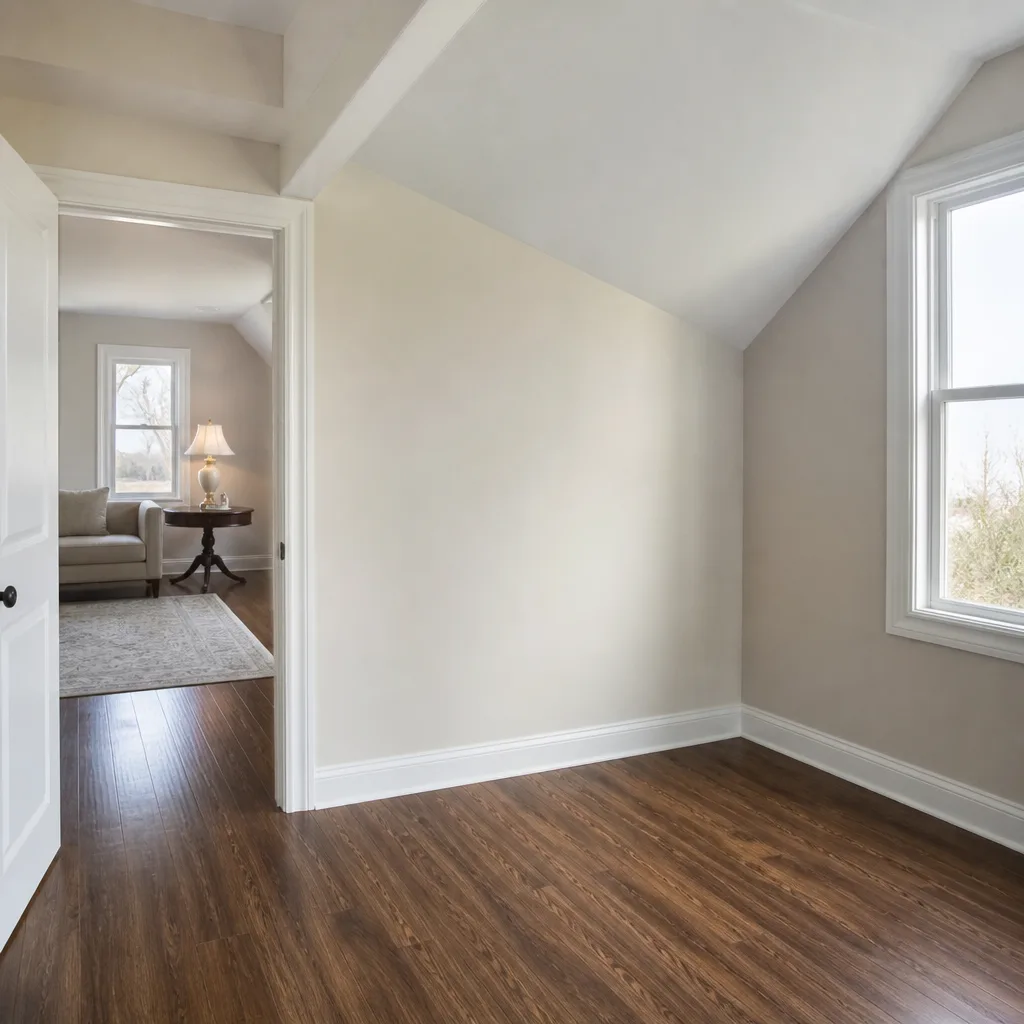
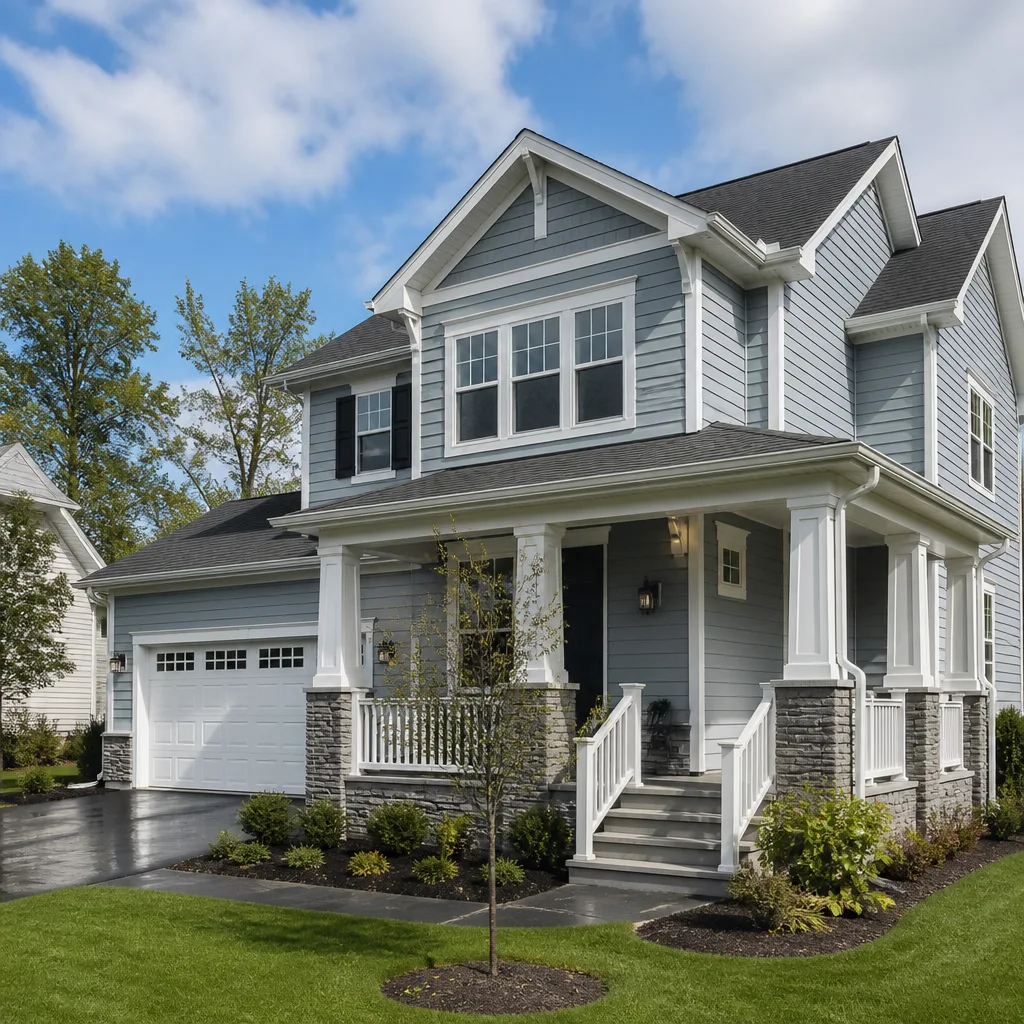
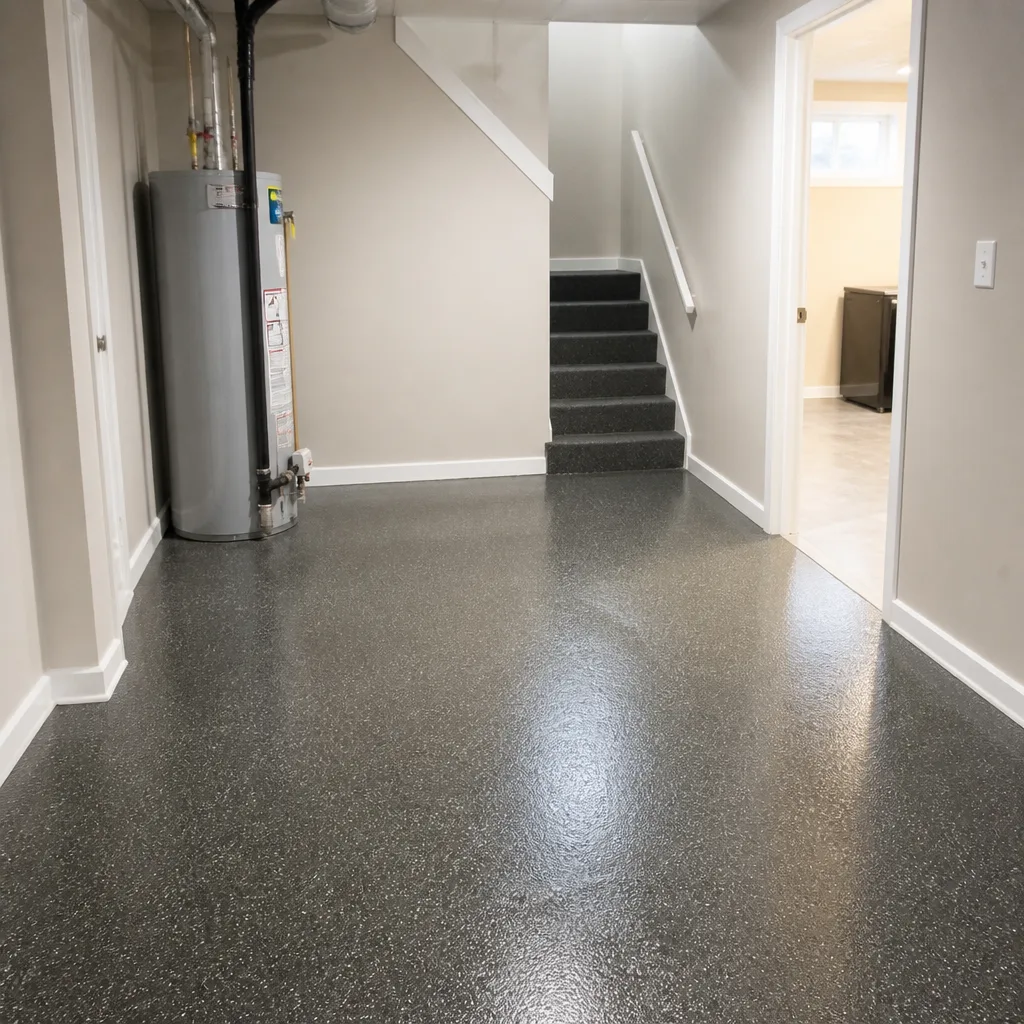
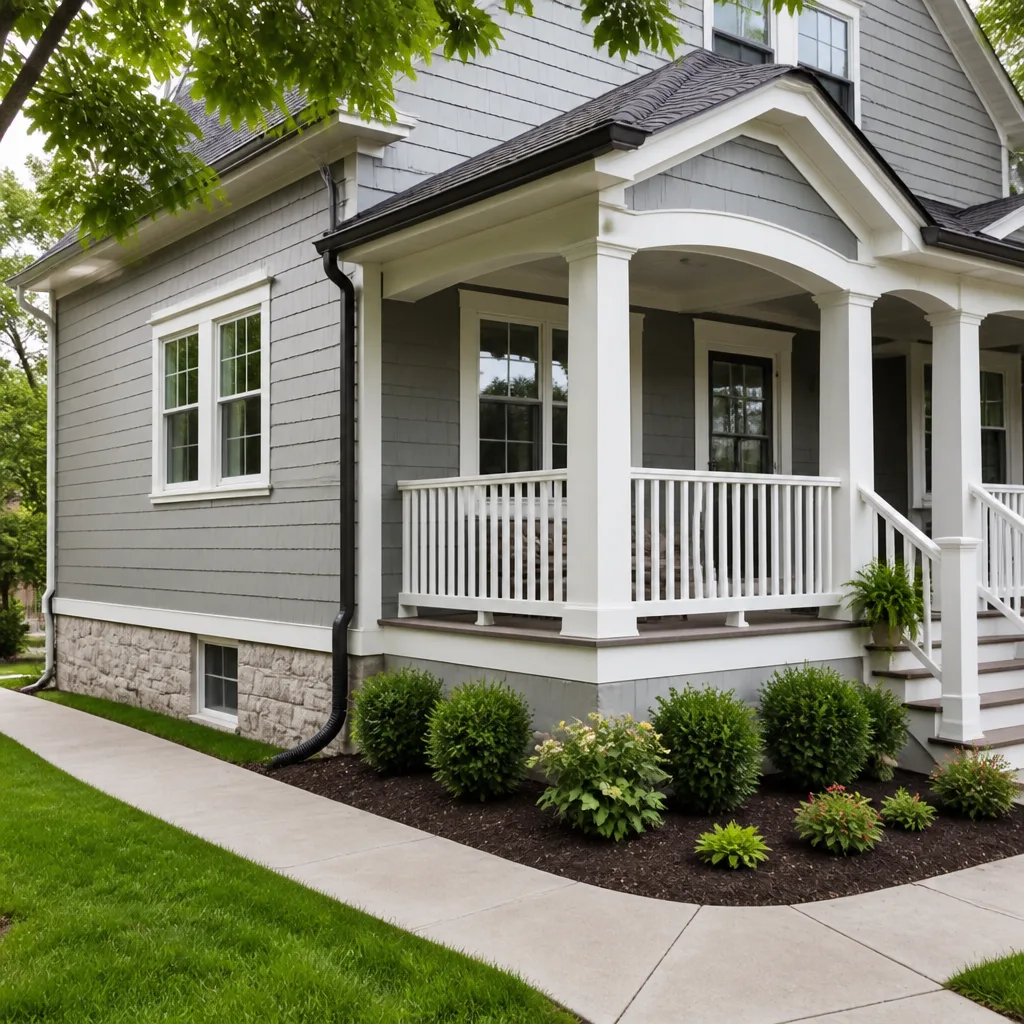
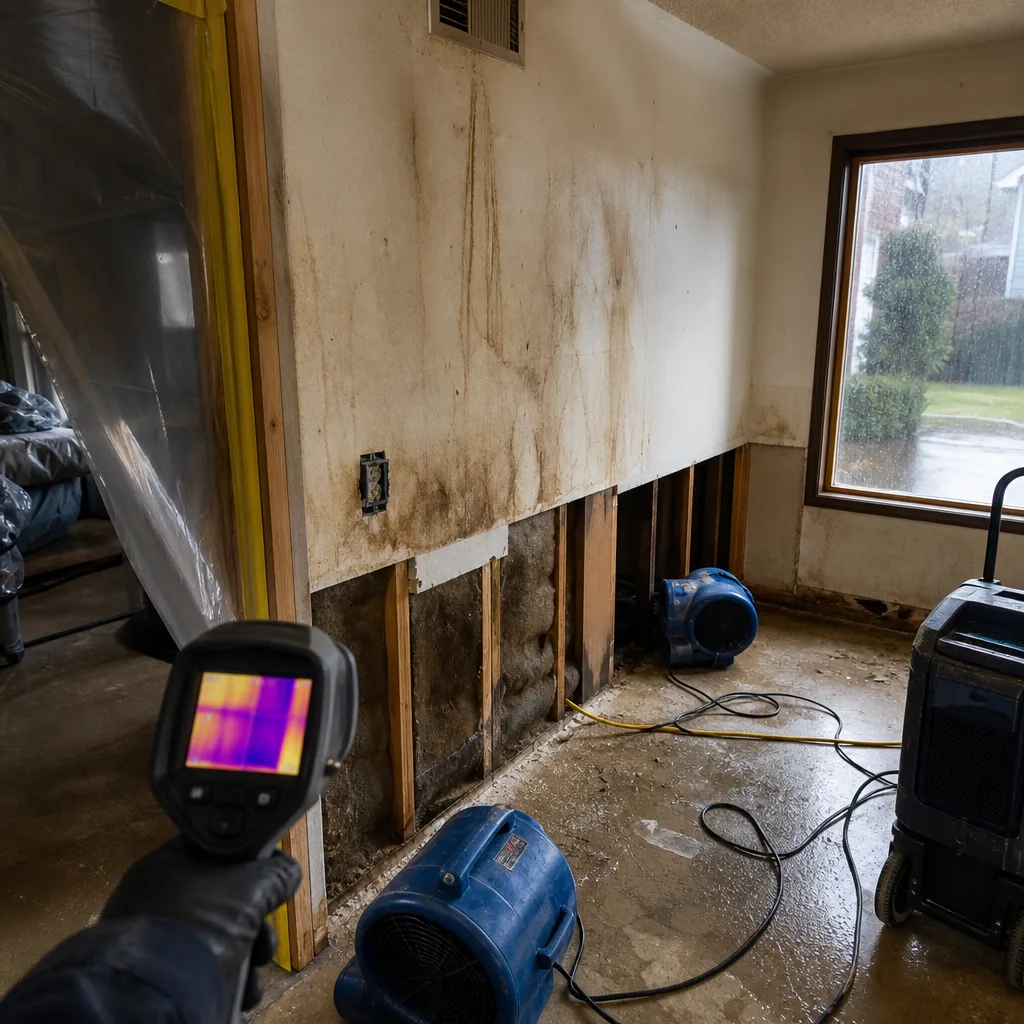 Before
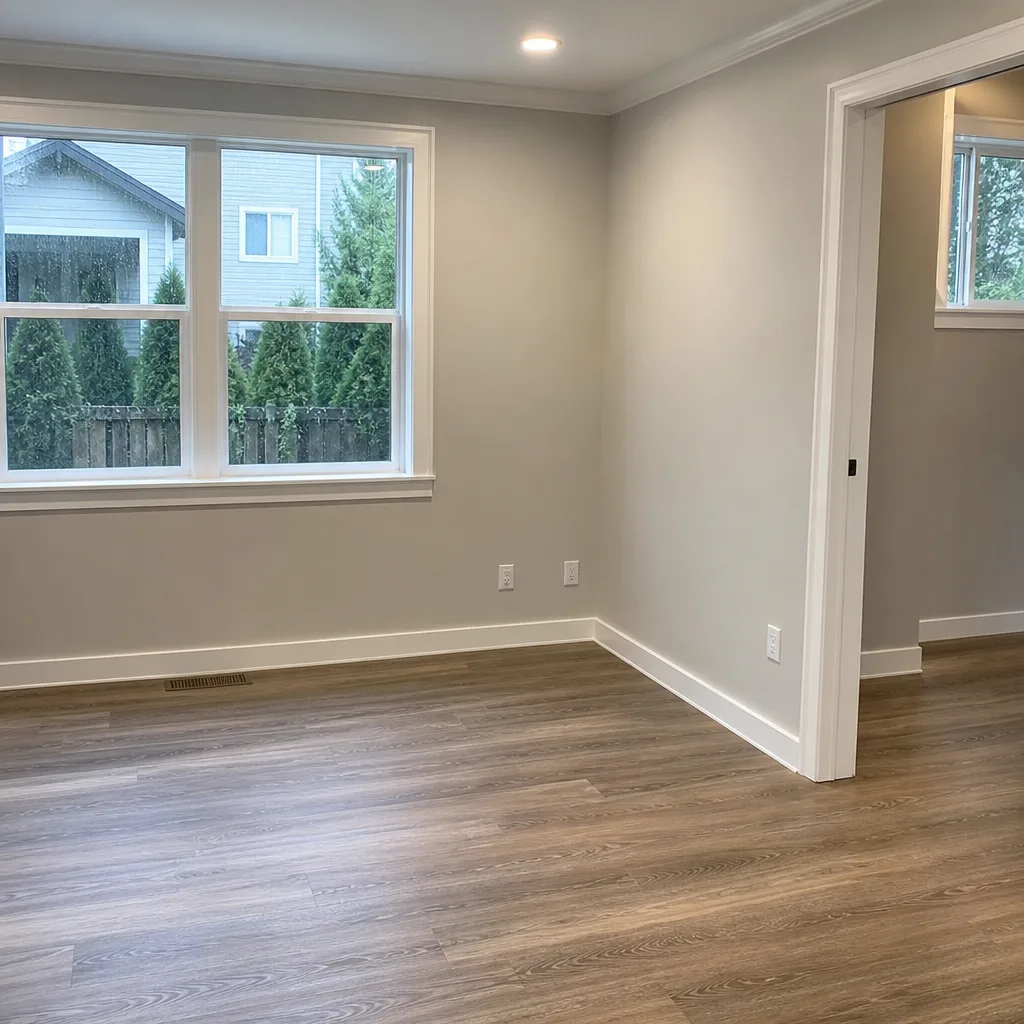 After
After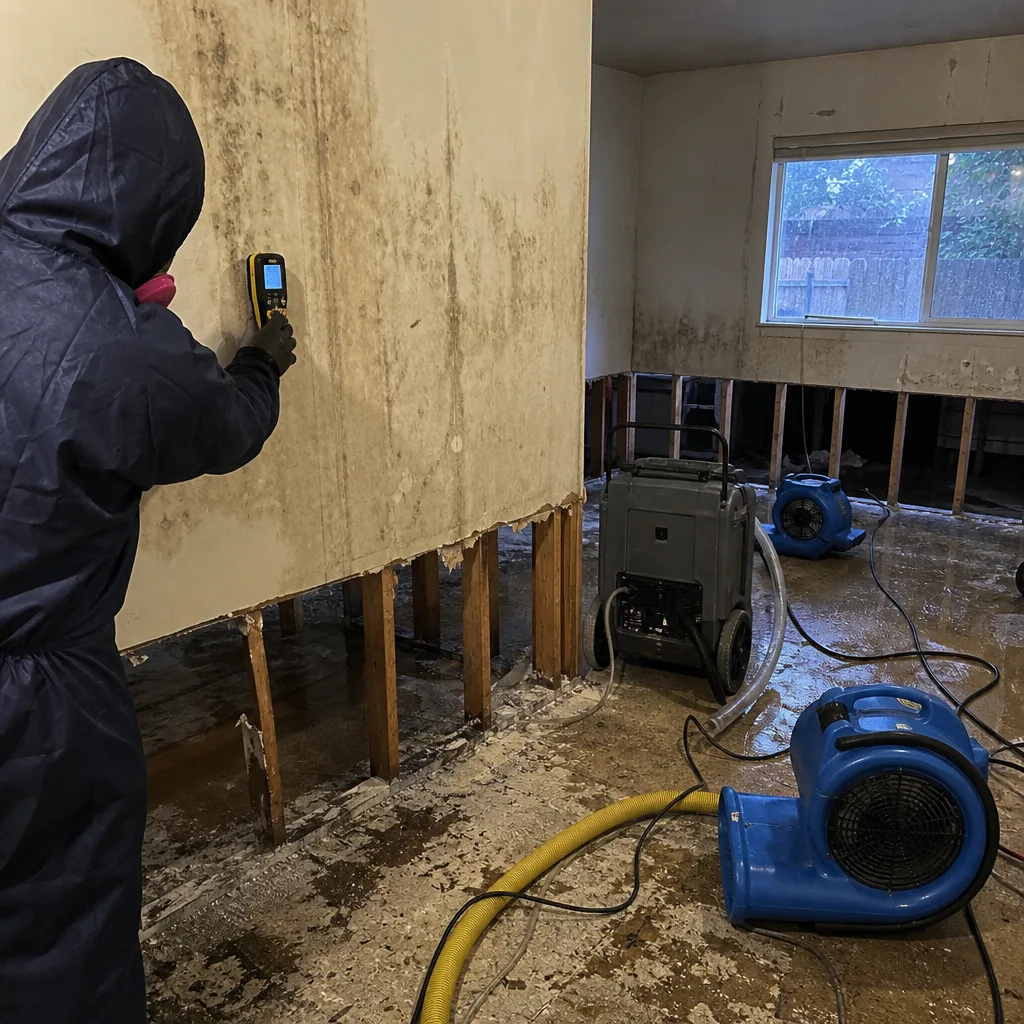 Before
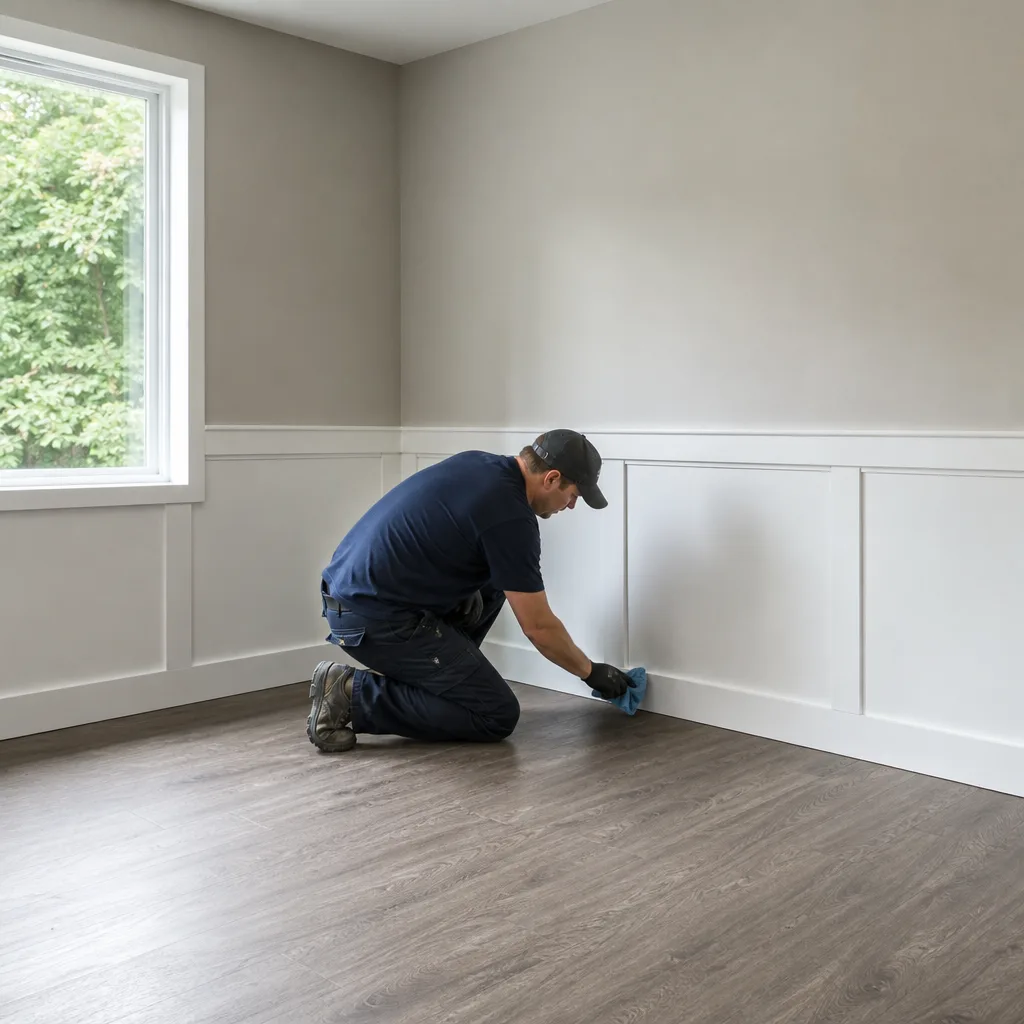 After
After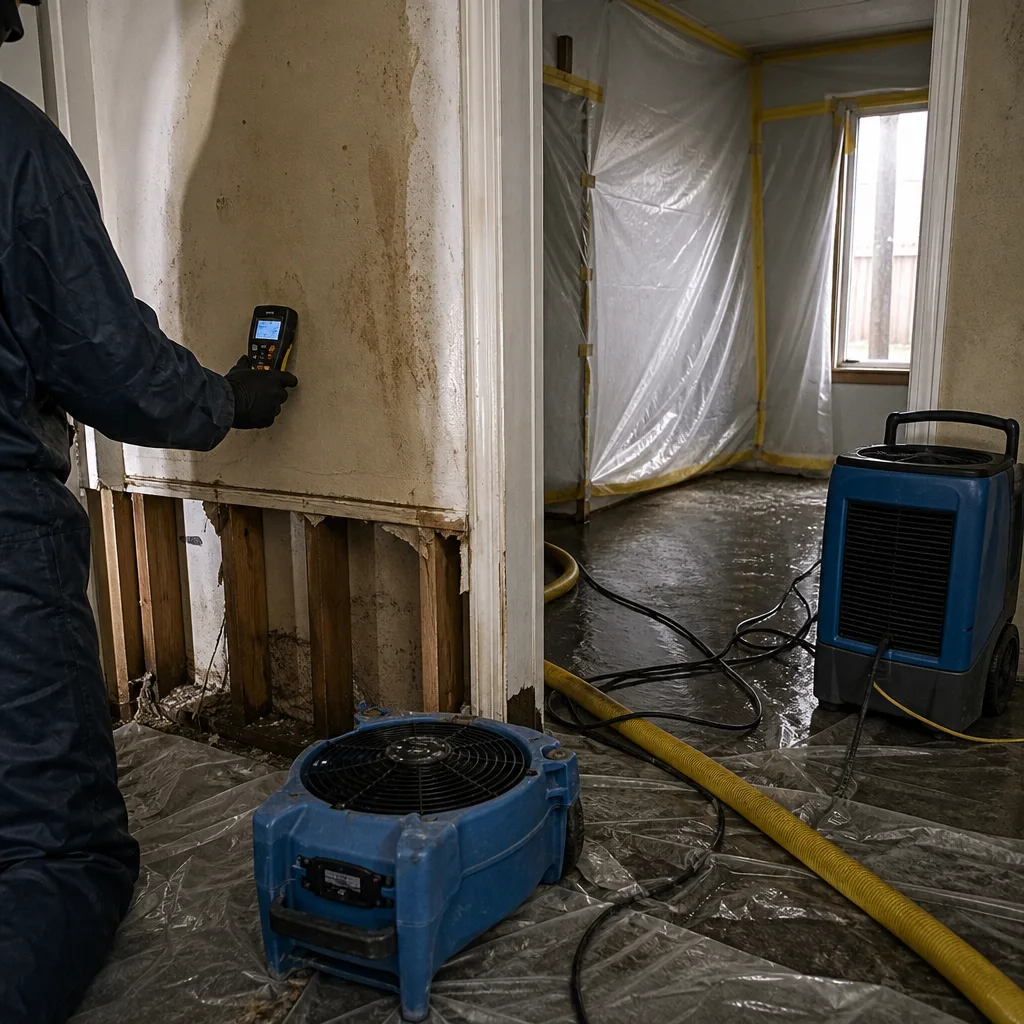 Before
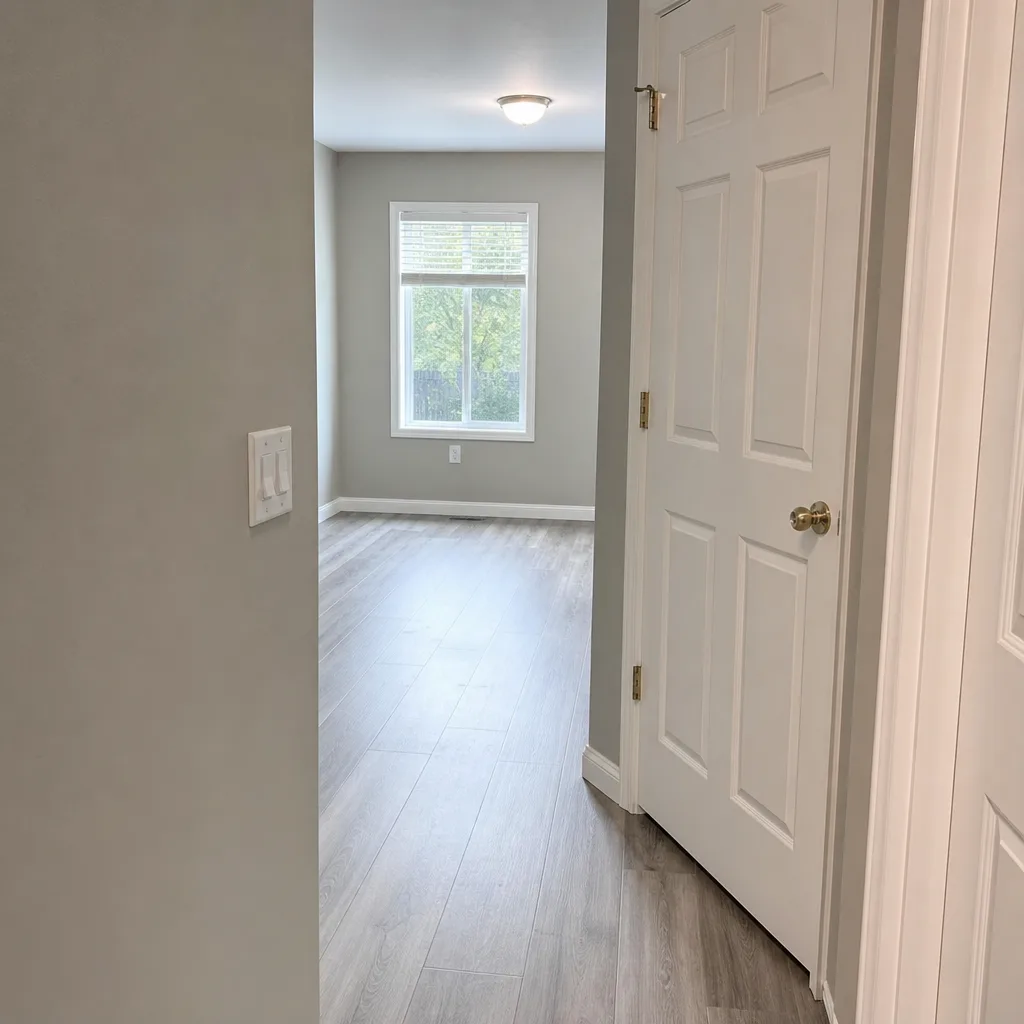 After
After24/7 Emergency Fire & Smoke Damage Restoration in Everett
A fire in your Everett home demands immediate action to prevent secondary damage from smoke, soot, and firefighting water. Our crews answer live at (425) 696-6061 twenty-four hours a day, seven days a week, with no voicemail trees or next-business-day callbacks while your property continues to deteriorate. We dispatch from our Seattle office to Everett addresses inside forty-five minutes, and we provide a free visual inspection on arrival to document the full scope before any work begins. The first hour after a fire is extinguished determines whether smoke residues set permanently into porous surfaces and whether firefighting water begins colonizing mold in your crawlspace or wall cavities.
Understanding Fire & Smoke Damage Restoration Severity in Everett Properties
Fire damage in Everett exists on a spectrum that rarely matches what homeowners first see. Surface soot on kitchen cabinets may read as minor, but the same fire can drive protein residues and acidic smoke particles through balloon-frame wall cavities into attic spaces, creating a tertiary contamination zone far from the original burn. We classify fire losses by residue type: dry smoke from fast-burning paper and wood, wet smoke from slow-burning plastics and synthetics, protein residue from kitchen fires that discolors surfaces with nearly invisible but pungent deposits, and fuel oil soot from furnace puff-backs common in Everett’s aging mid-century heating systems.
Severity escalates quickly in Everett’s 1940s-1960s Boeing-worker housing stock. These wood-frame structures were built with minimal fire-stopping between floors, meaning smoke migration follows the path of least resistance vertically through stud bays. A ground-floor kitchen fire in a Lowell neighborhood rental can contaminate second-floor bedrooms and attic insulation before the fire department packs hoses. Our crews use thermal imaging to trace these migration paths, then establish containment barriers and negative air pressure with HEPA scrubbers to prevent cross-contamination during restoration.
Why Everett Property Owners Choose DryMark Restoration Bothell
- 45-minute response commitment to Everett addresses from our Seattle dispatch office, with GPS-tracked crew routing through I-5, SR-526, and Everett Avenue corridors.
- 24/7 live answer - a real person, never an automated system or voicemail queue, because fire damage doesn’t wait for business hours.
- IICRC-certified crews holding FSRT (Fire and Smoke Restoration Technician) and WRT (Water Damage Restoration Technician) certifications, with AMRT (Applied Microbial Remediation Technician) credentials for the mold that follows firefighting water.
- Free visual inspection on every call, with a written scope and price delivered before any work starts, per Haven Standard, Clause 1.
- Direct insurance billing with photo-documented estimates, room-by-room moisture readings, and daily drying logs that adjusters recognize and pay without dispute.
- One team from board-up to reconstruction - no handoffs between mitigation contractors and rebuild crews that lose documentation in the transition.
BeforeAfterOur Fire & Smoke Damage Restoration Process
1. Inspection & Assessment
We arrive with thermal imaging cameras, hygrometers, and combustion residue test kits to map visible damage and hidden smoke migration. In Everett’s balloon-frame housing, we inspect attic spaces and wall cavities even when the fire was contained to one room. Every finding is photographed and logged before any disturbance.
2. Emergency Board-Up & Stabilization
Broken windows, compromised doors, and damaged roofing get secured with plywood and weatherproof tarps to prevent intrusion and further weather damage. On Everett’s tight alley-loaded lots, we coordinate access with neighbors and document pre-loss condition wall by wall before any demolition begins.
3. Water Extraction & Structural Drying
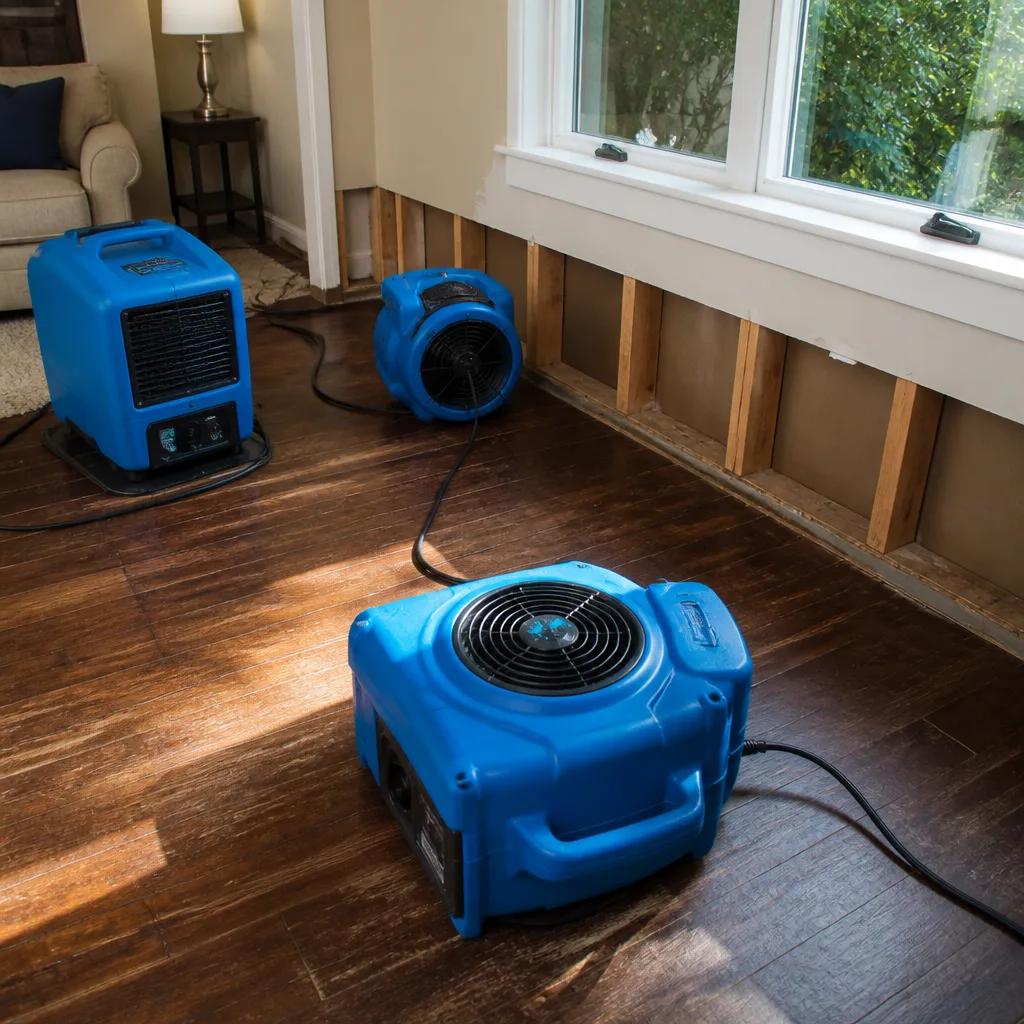
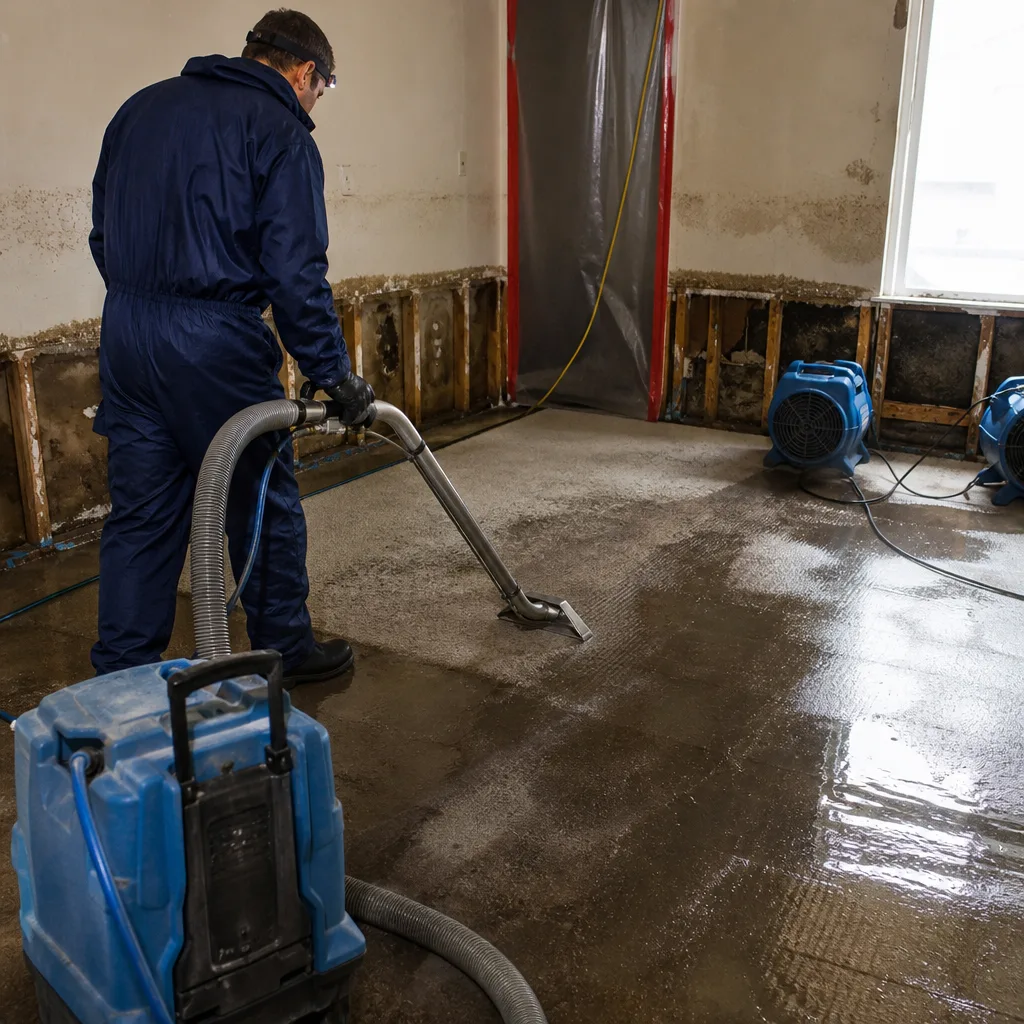
Firefighting water saturates wall cavities, subfloors, and crawlspaces within minutes. We deploy Dri-Eaz and Phoenix dehumidifiers with Injectidry cavity-drying systems to pull moisture from inside walls, paired with XPOWER air movers to maintain vapor pressure differential - the force that drives evaporation. Daily moisture logs track progress to IICRC standards.
4. Smoke & Soot Cleaning
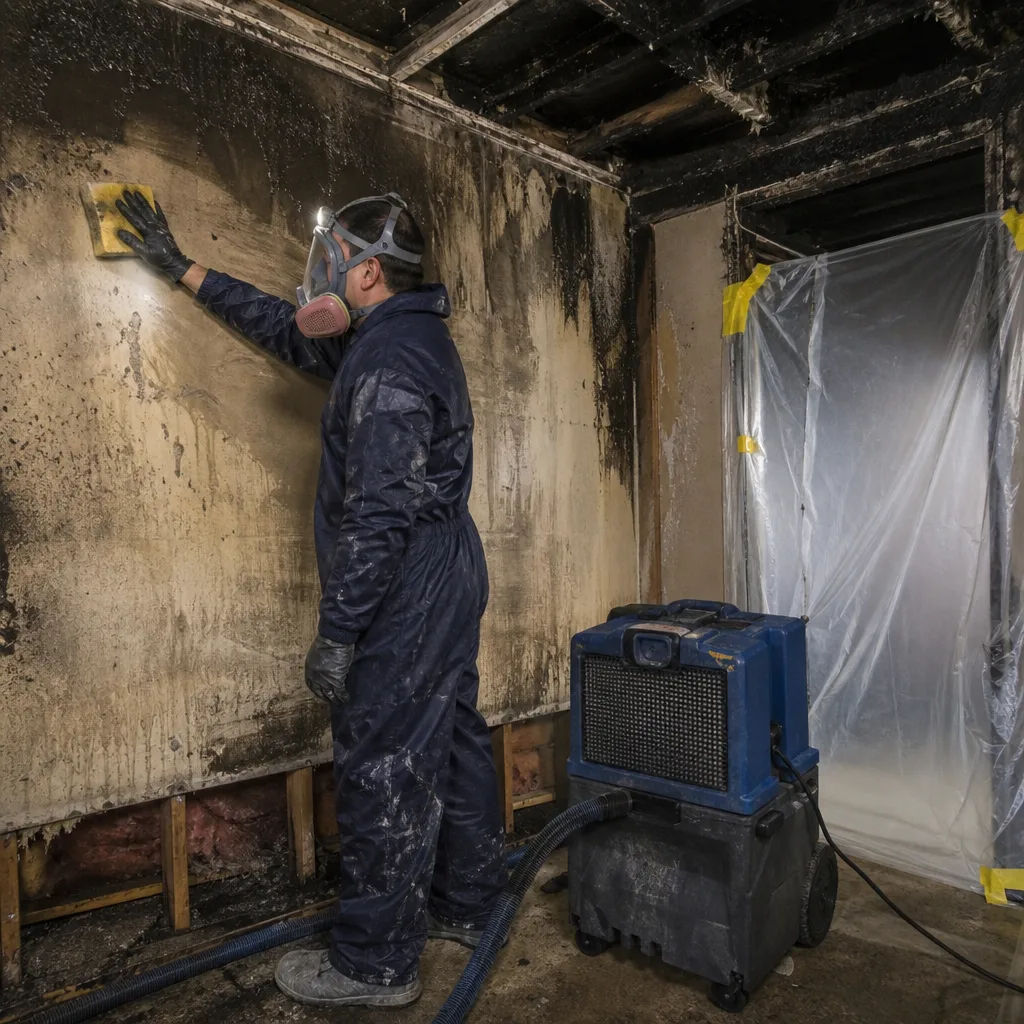
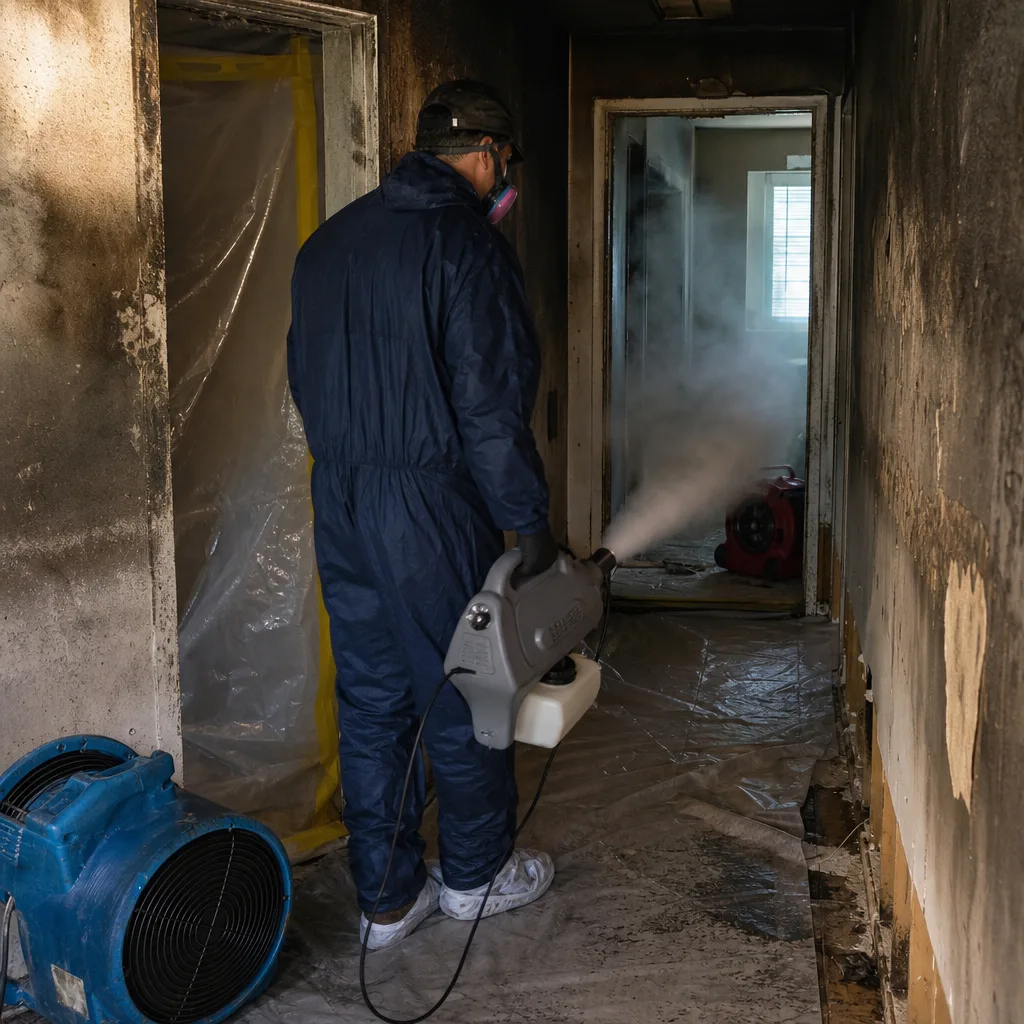
Dry smoke, wet smoke, and protein residues each demand specific cleaning chemistry. We use HEPA vacuums, dry sponges, and solvent-based cleaners appropriate to the residue type, working from top to bottom to prevent recontamination of cleaned surfaces. Balloon-frame cavities get treated with thermal fogging or ozone where accessible.
5. Odor Removal & Deodorization
Surface cleaning doesn’t reach odor molecules absorbed into framing lumber, insulation, and HVAC ductwork. We deploy hydroxyl generators and thermal foggers that penetrate porous materials, breaking odor compounds at the molecular level rather than masking them. Containment and negative air pressure protect unaffected areas during treatment.
6. Repairs & Restoration
Our reconstruction crew replaces compromised drywall, flooring, insulation, and structural elements, matching original finishes where possible. In Everett’s historic core Victorian homes, we coordinate lead-safe practices and balloon-frame fire-blocking upgrades that meet current code. A final walkthrough with photo documentation closes the file.
Need Emergency Fire & Smoke Damage Restoration in Everett Now?
Crews minutes away, answering live 24 hours a day. The sooner we start, the less it costs.
Working With Your Insurance Company
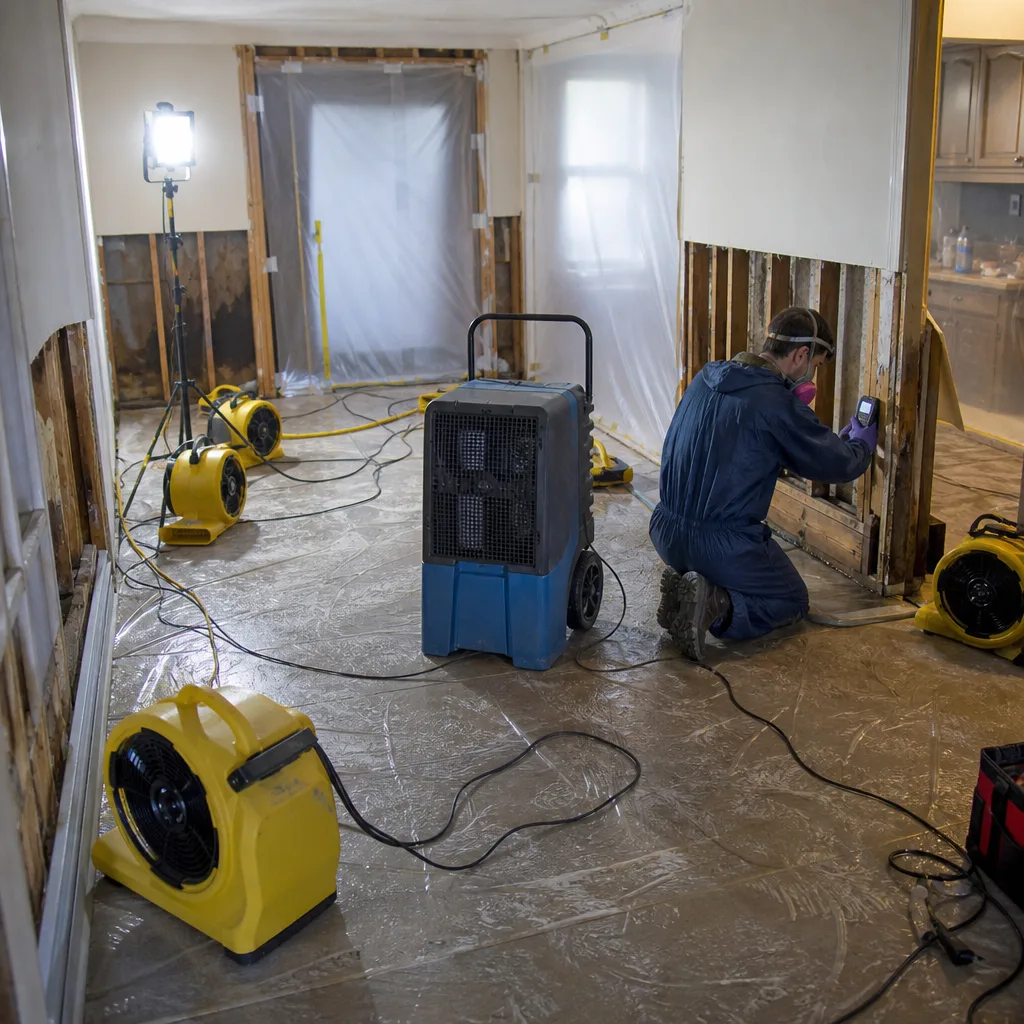
Fire claims generate more documentation disputes than any other restoration type, and Everett’s flood-zone addresses make adjusters especially cautious about scope creep. We eliminate that friction by building the claim file from minute one. Our technician photographs every room before touching anything, records moisture readings on every surface, and maintains a daily drying log that tracks equipment placement, psychrometric data, and material removal by square footage.
We write estimates to industry-standard pricing databases that carriers recognize, and we communicate directly with your adjuster rather than handing you a bill to negotiate alone. The photo record, drying logs, and written scope become a unified claim package that explains itself. Alicia Brennan founded Back to Dry Restoration in 2011 after working as a claims adjuster and watching homeowners lose legitimate coverage over documentation gaps. That origin shapes every file we build.
What We Provide Your Insurer
- Thorough documentation of the loss
- Photos of all damage, room by room
- Moisture readings and drying logs
- A detailed, line-item scope of work
- Direct coordination with your carrier
Built for Everett’s Loss Calendar
Fire losses in Everett follow patterns tied to housing age, heating systems, and seasonal behavior. January through March brings furnace puff-backs in aging oil and gas systems, particularly in the 1940s-1960s stock where original heating equipment still runs. These deposits fuel oil soot, a sticky, odorous residue that resists standard cleaning chemistry and demands solvent-based treatment.
Holiday cooking season, November through January, spikes kitchen fires in rental properties and multi-family buildings along Everett Avenue and Broadway. The combination of distracted cooking and balloon-frame construction produces our highest volume of vertical smoke migration calls. Summer months see electrical fires from overloaded circuits in homes without modern grounding, and dryer vent fires in aging ductwork. Each season demands different residue chemistry and different containment strategies, and our crews carry the full range.
Fire & Smoke Damage Restoration Across Everett’s Neighborhoods
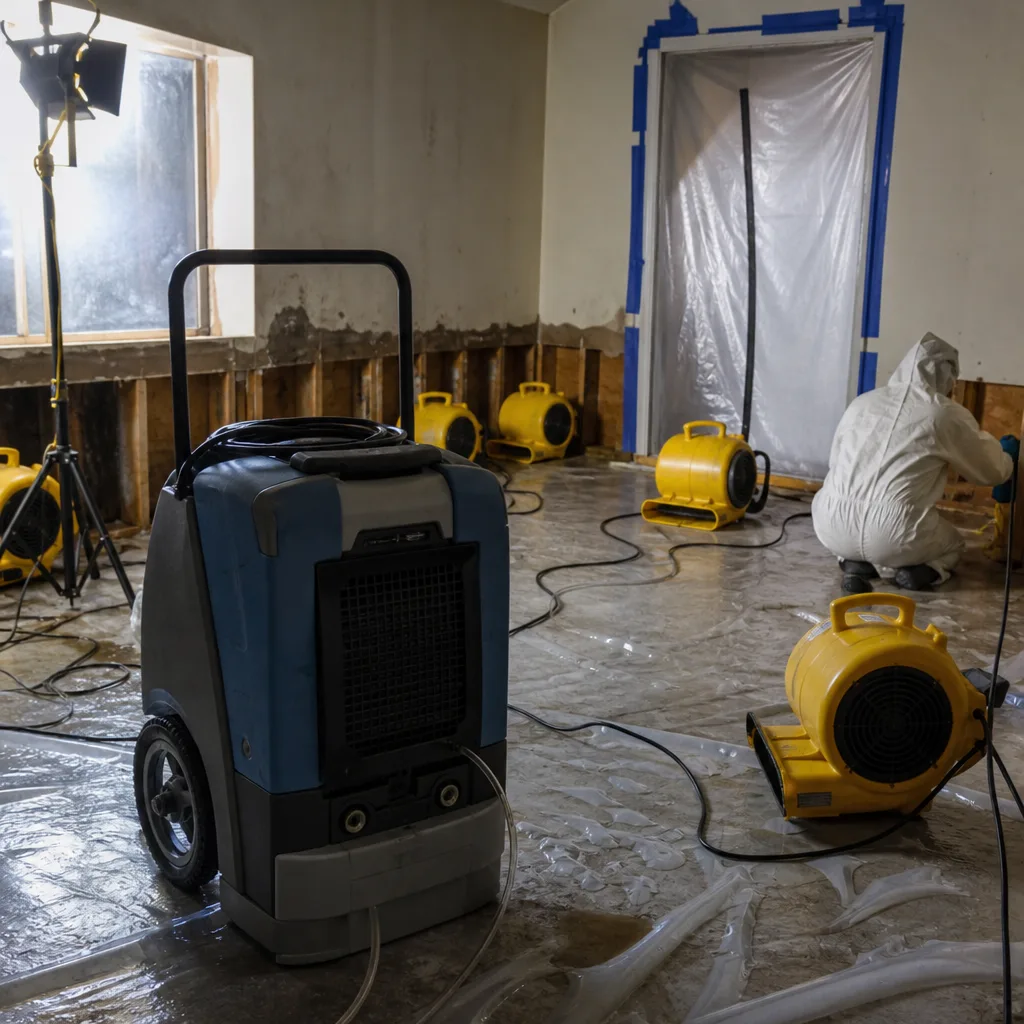
Everett’s geography and development history create distinct fire-restoration challenges by area. In Lowell and south Everett’s river-delta neighborhoods, we regularly respond to properties that have seen multiple restoration scopes in a decade. A kitchen fire in a 1952 wood-frame rental near the Lowell river-delta sent smoke up balloon-frame wall cavities straight into the attic before we arrived. Our crew ran XPOWER air movers and Dri-Eaz dehumidifiers to stabilize the structure, set containment to isolate soot-laden zones, and completed a pack-out of the tenant’s contents for off-site cleaning. Because the house sat in a FEMA flood-zone parcel, we coordinated the scope of work with the flood-insurance adjuster and documented pre-loss condition wall by wall before any demolition. The homeowner had been through two prior water mitigation scopes on the same address.
North Everett’s historic core, around Hewitt Avenue and Rucker Hill, holds early-1900s Victorian and mill-era homes with balloon framing, knob-and-tube wiring, and lead paint layers. Fire restoration here requires lead-safe demolition practices, careful documentation of original millwork for replication, and coordination with historic preservation requirements when applicable. The tight lots and alley access mean our crews arrive with compact equipment and plan staging to minimize neighbor disruption.
Everett’s Boeing-worker neighborhoods - the dense tracts around Casino Road, Evergreen Way, and south of Paine Field - hold thousands of near-identical wood-frame homes built in the 1950s and 1960s. These properties share the same vulnerabilities: minimal vapor barriers, aging composition roofing, unblocked stud bays, and crawlspaces that collect groundwater. A fire in one of these homes almost always involves secondary moisture concerns, and our crews arrive prepared to address both simultaneously.
Port Gardner waterfront properties and the Marina District present their own profile: higher-value construction with more synthetic materials that produce wet, oily smoke when burned, and salt-air corrosion that complicates electrical fire investigations. The marine moisture environment also accelerates mold colonization in firefighting water, shortening our drying window.
Specialized Fire & Smoke Damage Restoration Services We Offer in Everett
Fire Damage Cleanup
We remove compromised materials, clean salvageable surfaces, and stabilize structures for repair. In Everett’s mid-century housing, this means checking every balloon-frame cavity for hidden char and soot, not just the visible burn room. Our containment protocols prevent cross-contamination to unaffected areas during demolition.
Smoke & Soot Removal
Different residues demand different chemistry. Dry smoke from fast-burning wood responds to dry sponging and HEPA vacuuming. Wet smoke from plastics and synthetics requires solvent-based cleaners and often ultrasonic cleaning for contents. Protein residue from kitchen fires, nearly invisible but aggressively odorous, needs specialized enzymatic treatment. We identify the residue type before selecting the method, because the wrong chemistry sets stains permanently.
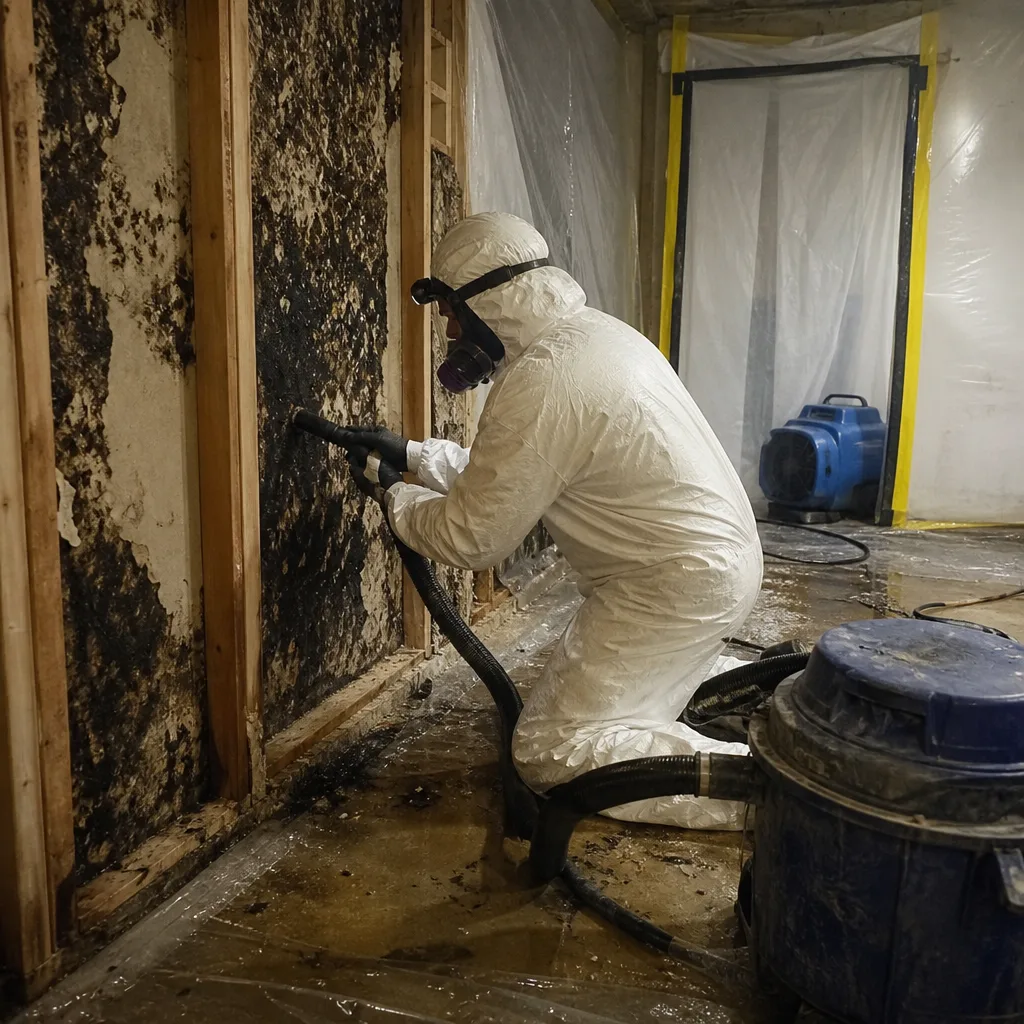
Odor Removal & Deodorization
Smoke odor persists when molecules penetrate porous materials beyond reach of surface cleaning. We deploy hydroxyl generators that break odor compounds safely in occupied spaces, thermal foggers that penetrate wall cavities, and ozone treatment for unoccupied structures. In Everett’s balloon-frame homes, we often need to treat attic insulation and HVAC ductwork that absorbed odor during vertical migration. The goal is molecular neutralization, not fragrance masking.
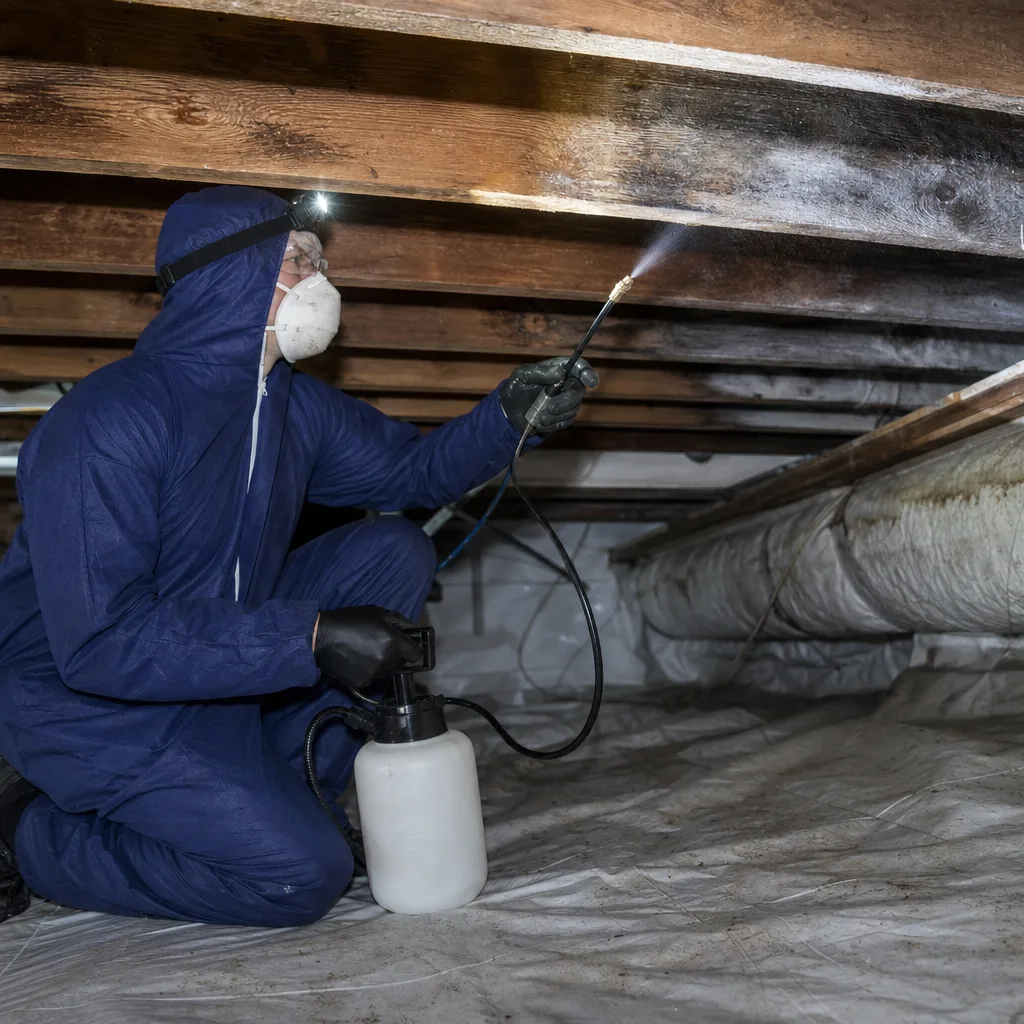
Contents Cleaning & Pack-Out
Smoke-damaged belongings require immediate removal from the contaminated environment to prevent further absorption and to allow thorough structure treatment. We inventory, photograph, and pack contents for transport to our cleaning facility, where textiles receive ultrasonic and ozone treatment, hard goods get detailed cleaning, and electronics undergo corrosion assessment. Delicate items and heirlooms get individual evaluation. The pack-out process is documented room by room for insurance replacement valuation and for accurate return placement after restoration.
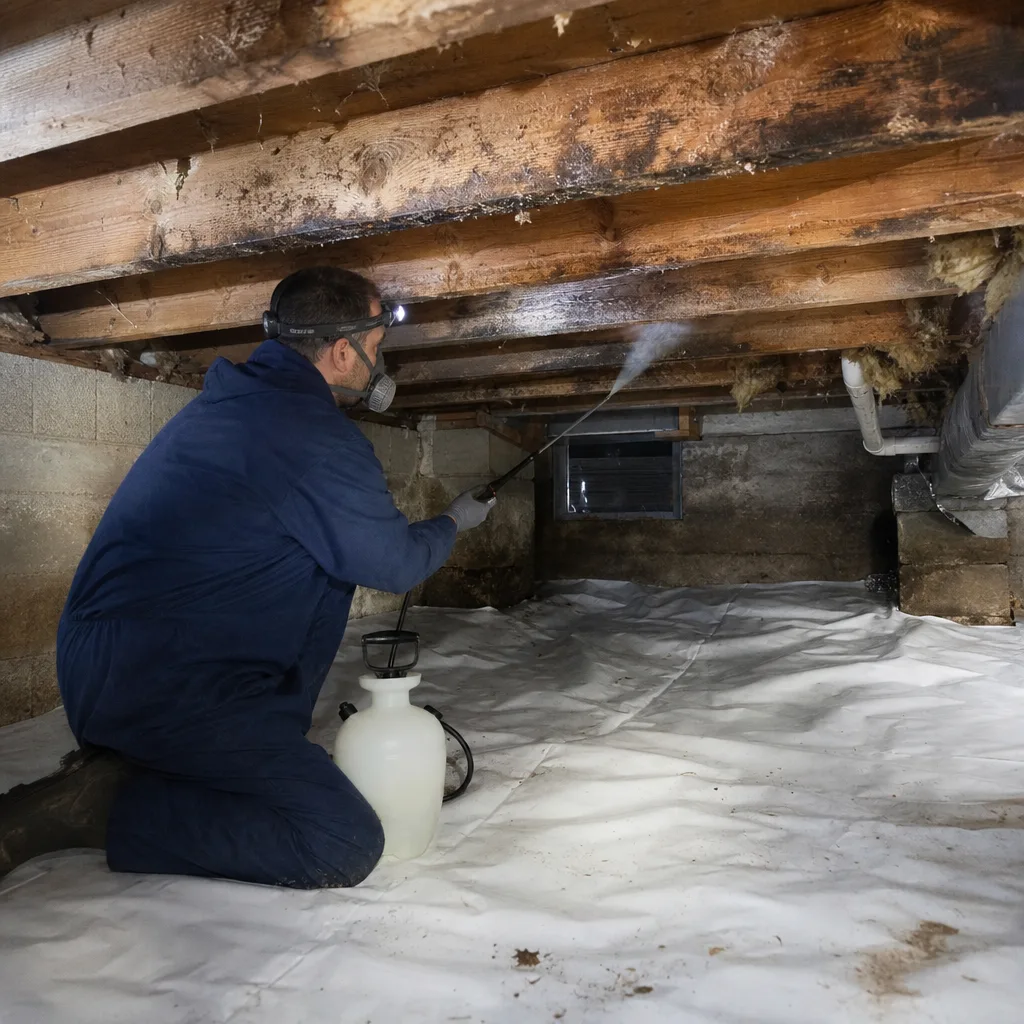
Emergency Board-Up & Tarping
Fire-damaged structures need immediate weatherproofing and security. We board broken openings, tarp compromised roofing, and install temporary fencing where needed. On Everett’s tight alley-loaded lots, we coordinate access with adjacent property owners and document pre-existing conditions to prevent liability disputes. Every board-up is photographed for the claim file before any material is removed.
What happens when you call
- 1
A real person answersNo phone trees - you reach a local pro.
- 2
You get an upfront price rangeHonest numbers before anyone is dispatched.
- 3
A background-checked tech heads outLicensed & insured, dispatched right away.
- 4
You approve before work beginsNothing starts until you say go.
Fire & Smoke Damage Restoration Costs in Everett, WA
Fire restoration pricing in Everett reflects the specific residue type, the extent of hidden smoke migration, and whether firefighting water requires concurrent drying. A limited kitchen fire with contained smoke and no water damage typically runs $3,200-$6,500 for cleaning, odor treatment, and minor repairs. Moderate fires with attic smoke migration and structural drying add $5,000-$12,000 for cavity treatment, insulation removal, and equipment-intensive drying. Major fires with significant reconstruction, particularly in historic core homes requiring lead-safe practices and millwork replication, can reach $25,000-$65,000 or more.
What moves the price: residue type (protein and fuel oil soot demand more labor than dry smoke), square footage of affected area, height of smoke migration, presence of firefighting water, and whether contents pack-out is required. Insurance typically covers direct fire and smoke damage plus necessary water mitigation; our written scope separates insurance-covered items from any upgrade or non-covered work before you authorize anything. Call (425) 696-6061 for a free inspection and firm written price - estimates are free, and Haven Standard, Clause 1 applies to every job.
We Also Serve Cities Near Everett
Our crews respond throughout Snohomish County from the same Seattle dispatch office, with familiar routes to Marysville via I-5 north, Mukilteo along the waterfront corridor, Lynnwood via SR-99 and I-5, and Monroe via SR-522. Each community shares Everett’s marine moisture challenges but presents distinct housing stock and response considerations. We carry the same documentation standards and written-price guarantee to every address we serve.
Serving Everett, WA - Our Local Coverage Area
We’re based in the Everett area and know this community well. Use the map below to see our service coverage - if you’re nearby, we can almost certainly help.
Everett Fire & Smoke Damage Restoration Questions, Answered
Why does smoke odor keep coming back in my Everett home even after the visible burn is cleaned?
Smoke odor returns because residue hides in places surface cleaning cannot reach. In Everett’s balloon-frame mid-century homes, smoke travels vertically through unblocked stud bays from the fire room to the attic, depositing odor-absorbing particles in insulation, framing lumber, and HVAC ductwork. Our crews use thermal imaging to locate these hidden reservoirs, then deploy hydroxyl generators or thermal fogging to neutralize odor at the molecular level rather than masking it. Call (425) 696-6061 for an inspection that traces the full migration path.
My Everett house flooded last year and now had a kitchen fire - does the flood zone affect the fire restoration?
Yes. FEMA flood-zone properties in south Everett and Lowell carry insurance complexities that change how we document and scope the job. Adjusters handling these addresses are already sensitive to repeated claims, so we photograph pre-loss condition wall by wall before any demolition and coordinate directly with your flood-insurance carrier when both coverages apply. The same crawlspace that collected groundwater during the flood now holds firefighting water, and we test for pre-existing mold that could complicate the claim. Call (425) 696-6061 and we’ll sort the coverage coordination.
How fast can mold start after a fire is put out and water from firefighting sits in my Everett crawlspace?
In Everett’s persistent marine moisture environment, mold colonization can begin in unheated crawlspaces and attics within 24 to 48 hours of water intrusion. Firefighting water adds to existing groundwater collection in these spaces, and the combination of cellulose framing, elevated humidity, and stagnant air creates ideal conditions. We extract standing water immediately, deploy dehumidifiers and air movers, and take moisture readings daily until levels return to IICRC dry standards. Delaying this step turns a fire claim into a fire-plus-mold claim. Call (425) 696-6061 for immediate dispatch.
What is the pack-out process for contents in a smoke-damaged Everett home?
We inventory, photograph, and remove salvageable belongings to prevent further odor absorption and to allow thorough structure treatment. Each item is tagged by room location, cleaned at our facility using methods matched to material type - ultrasonic for hard goods, ozone for textiles, specialized assessment for electronics - then stored until your home is restored. The inventory documentation supports your insurance claim and ensures accurate return placement. Call (425) 696-6061 to schedule pack-out as part of your restoration scope.
Do you have to tear out walls in an Everett Victorian or mill-era home after a fire?
Not always. We remove drywall or plaster only when smoke residue has penetrated beyond cleaning reach or when structural char compromises safety. In balloon-frame Victorians, we often can clean and seal intact cavities using thermal fogging and encapsulant sealers, preserving original plaster and millwork where possible. Lead-safe practices are mandatory for pre-1978 homes, adding documentation requirements but not necessarily demolition. Our written scope specifies exactly what comes out and what stays, with photos, before any work begins. Call (425) 696-6061 for an assessment of your specific structure.
How fast can your crew actually get to my Everett address?
We commit to 45 minutes from dispatch to arrival for Everett addresses, routed from our Seattle office via I-5, SR-526, or Everett Avenue depending on traffic and your neighborhood. Live dispatch means no voicemail delay - a real person takes your call, confirms your address, and releases the nearest crew immediately. Night calls run the same as day calls. Call (425) 696-6061 and we’ll give you an exact ETA when you call.
Will my insurance cover the full fire restoration, or will I pay out of pocket?
Homeowners insurance typically covers direct fire and smoke damage, firefighting water mitigation, and necessary deodorization as part of the covered peril. You pay your deductible; we bill your carrier directly for the restoration scope. Items that may fall outside coverage include upgrades beyond pre-loss condition, code-upgrade requirements in older homes, and any pre-existing maintenance issues we discover. Our written scope separates covered from non-covered items before work starts, per Haven Standard, Clause 1, so you know your exposure before authorizing anything. Call (425) 696-6061 for a free inspection and insurance coordination.
What should I do in the first 30 minutes after the fire is out?
Ensure everyone is safe and accounted for, then call us at (425) 696-6061 before touching anything in the damaged area. Do not attempt to clean soot yourself - improper chemistry can set stains permanently. Do not use electrical outlets near the fire zone, and avoid breathing heavy smoke residue without respiratory protection. If the structure is compromised, wait outside for our crew. We’ll handle board-up, documentation, and stabilization. The sooner we start, the more we can save.
Fire and smoke damage in Everett demands more than surface cleaning. It requires understanding how this city’s specific housing stock - balloon-frame mid-century homes with minimal fire-stopping, FEMA flood-zone addresses with complicated claim histories, and persistent marine moisture that accelerates secondary damage - transforms a simple kitchen fire into a multi-zone restoration project. Our Fire & Smoke Damage Restoration team documents every step, writes every price before work begins, and stands behind the result with the 365-Day Done Right Promise under The Haven Standard. We’ve restored more than 12,000 homes since 2011, every one with a written scope and a photo record, because sloppy documentation costs homeowners their claims and we have no interest in repeating that mistake.
If your Everett property has suffered fire or smoke damage, call (425) 696-6061 now. A live person will answer, dispatch a crew, and begin building the documentation file that gets your claim paid without a fight. We also provide Fire & Smoke Damage Restoration in Everett and surrounding communities with the same standards on every job.
Written by Alicia Brennan, Owner at Back to Dry Restoration, serving Everett since 2011.
Fire & Smoke Damage Restoration in Nearby Areas