
Last updated September 23, 2026
Free visual inspection and a written scope of work before any mitigation begins - photos, moisture readings, and drying logs go in your claim file
The scope we write is the scope we bill. Anything new gets shown to you, in writing, before we touch it.
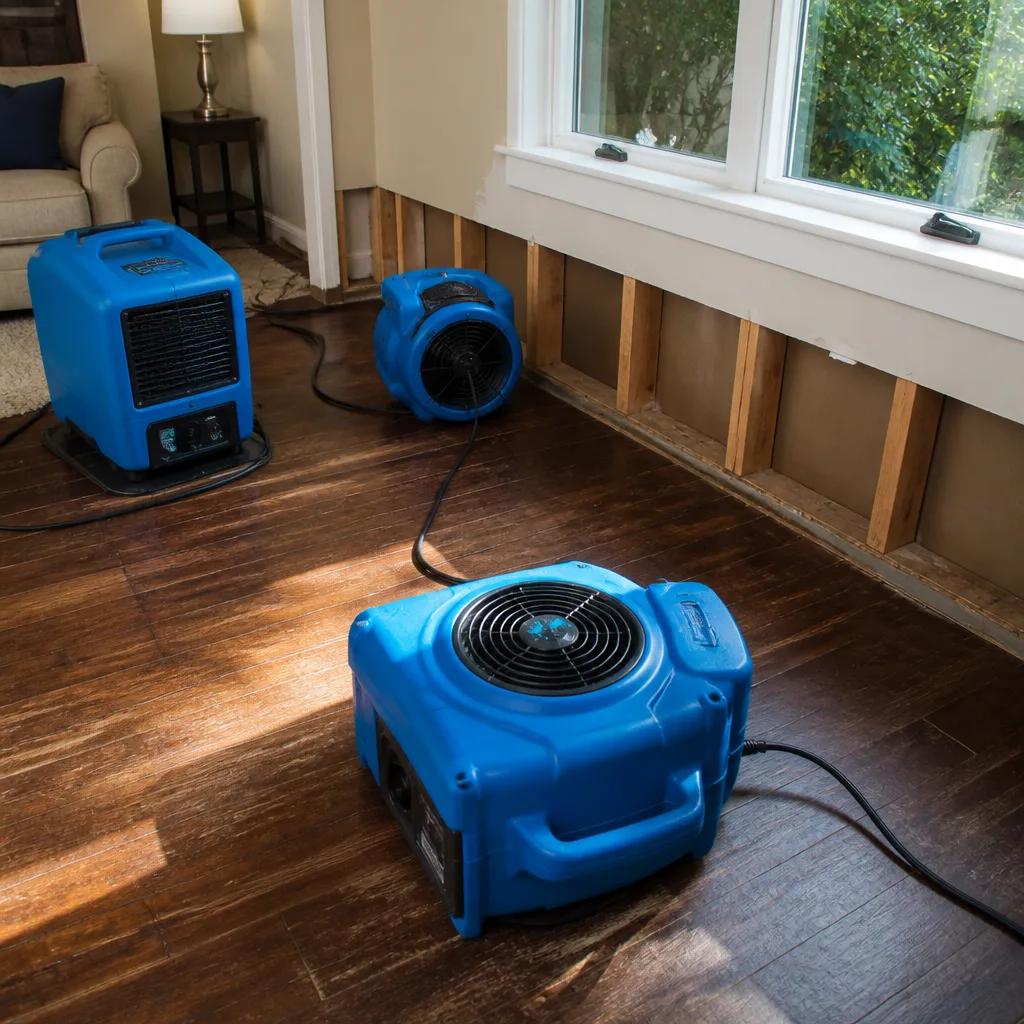
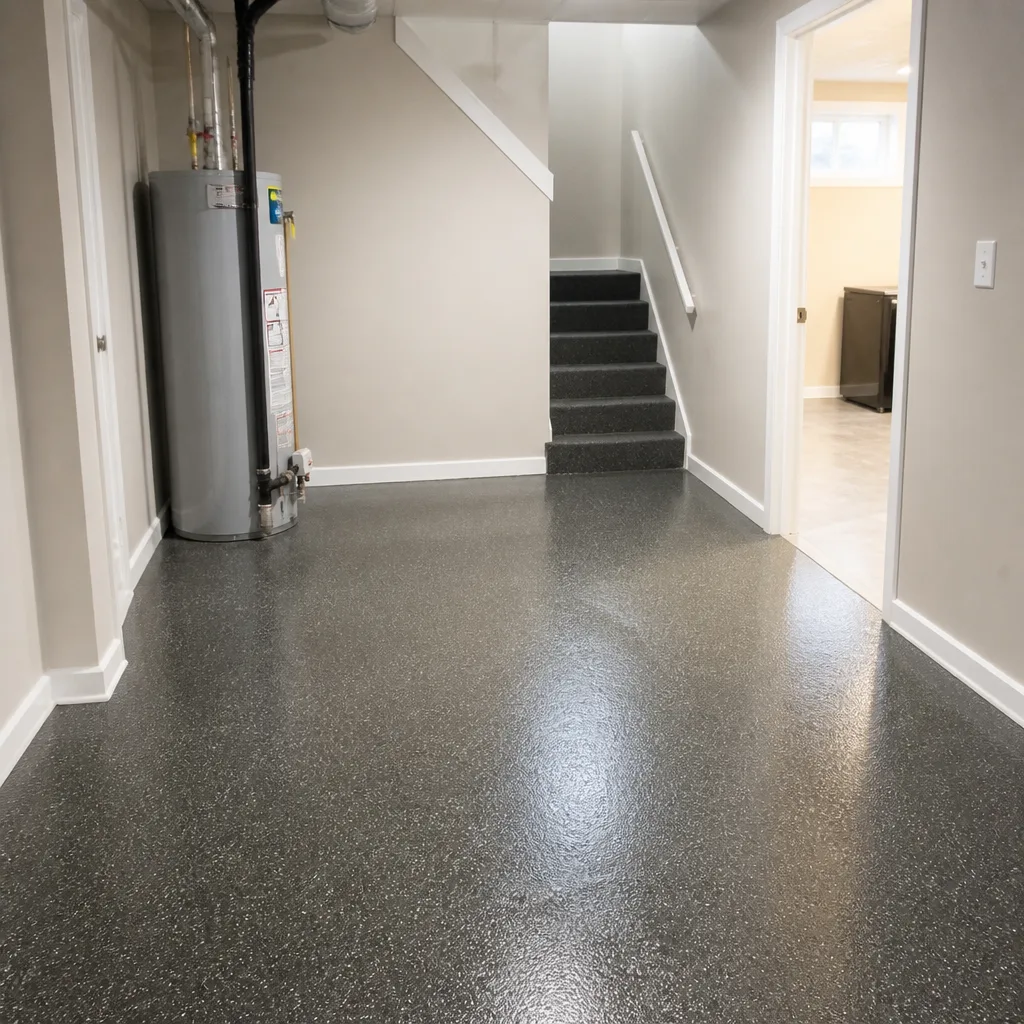
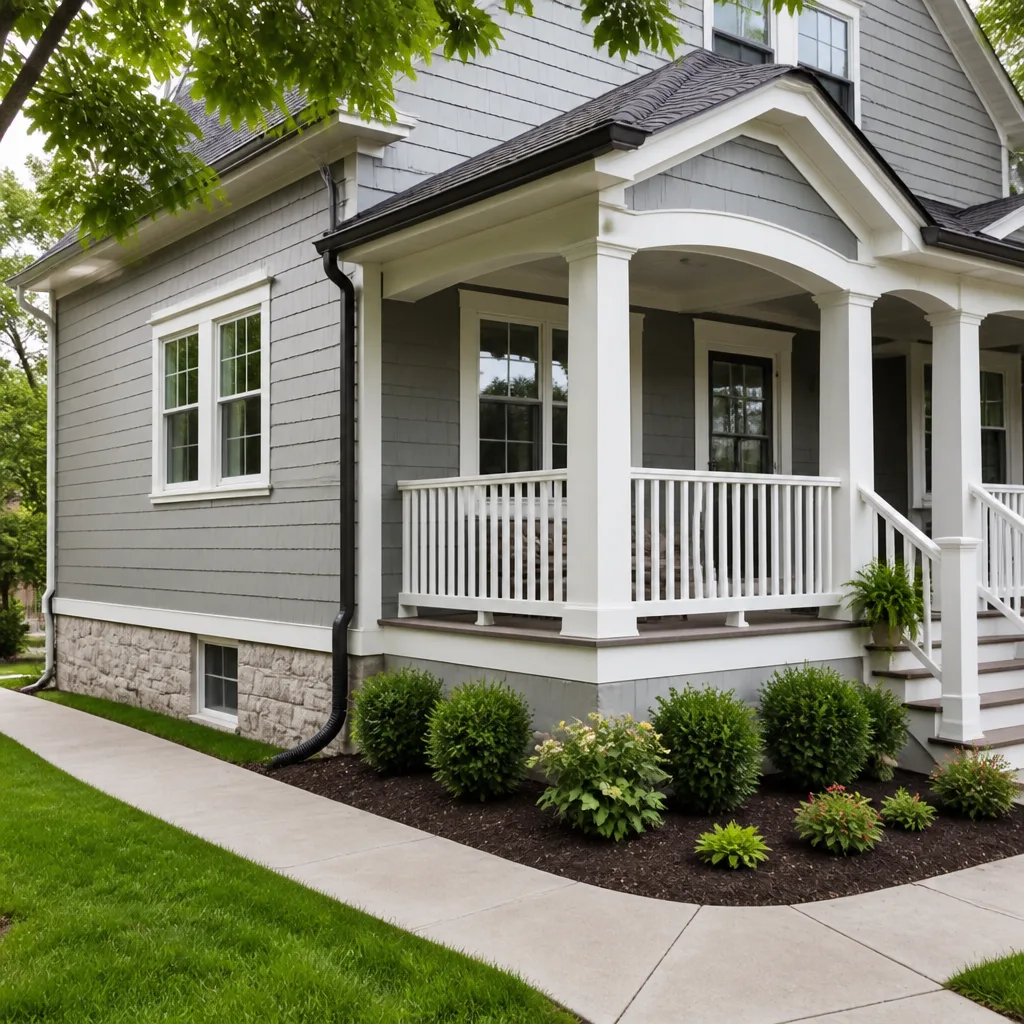
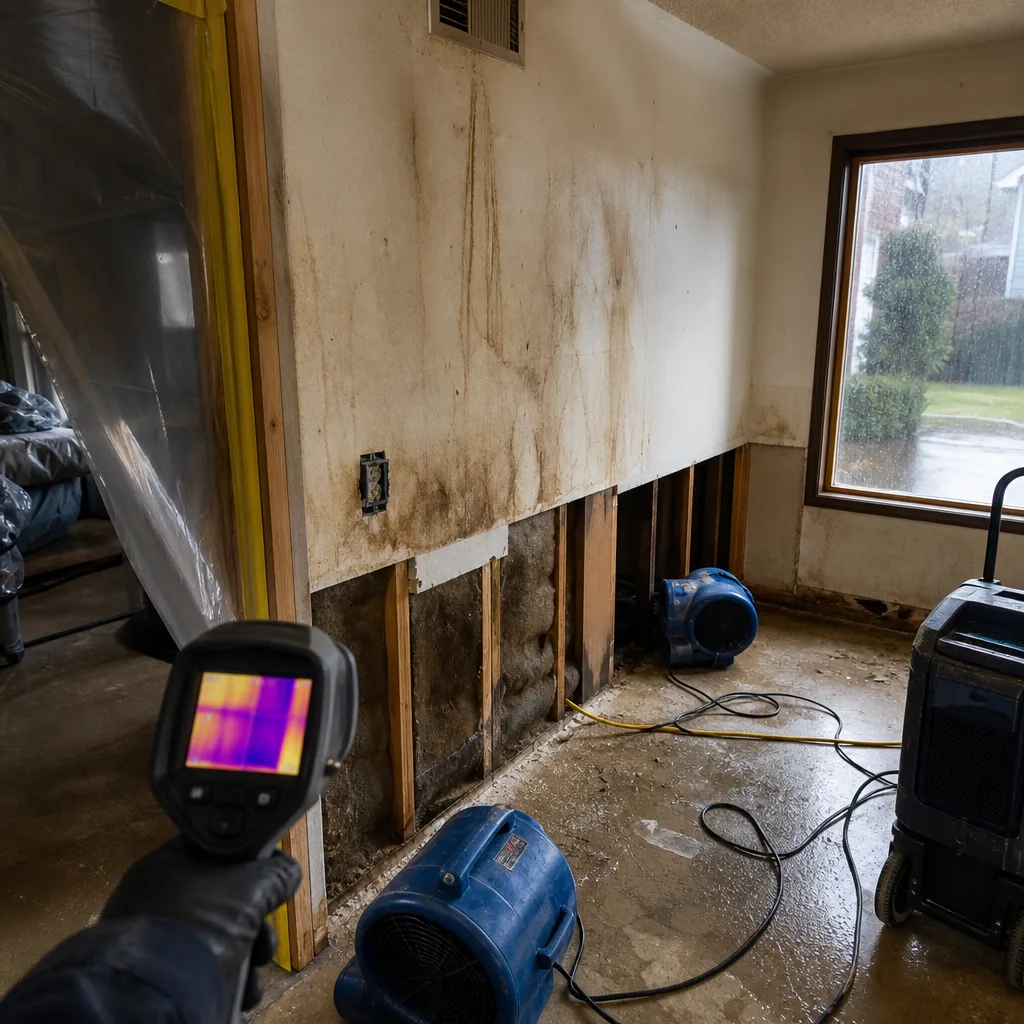 Before
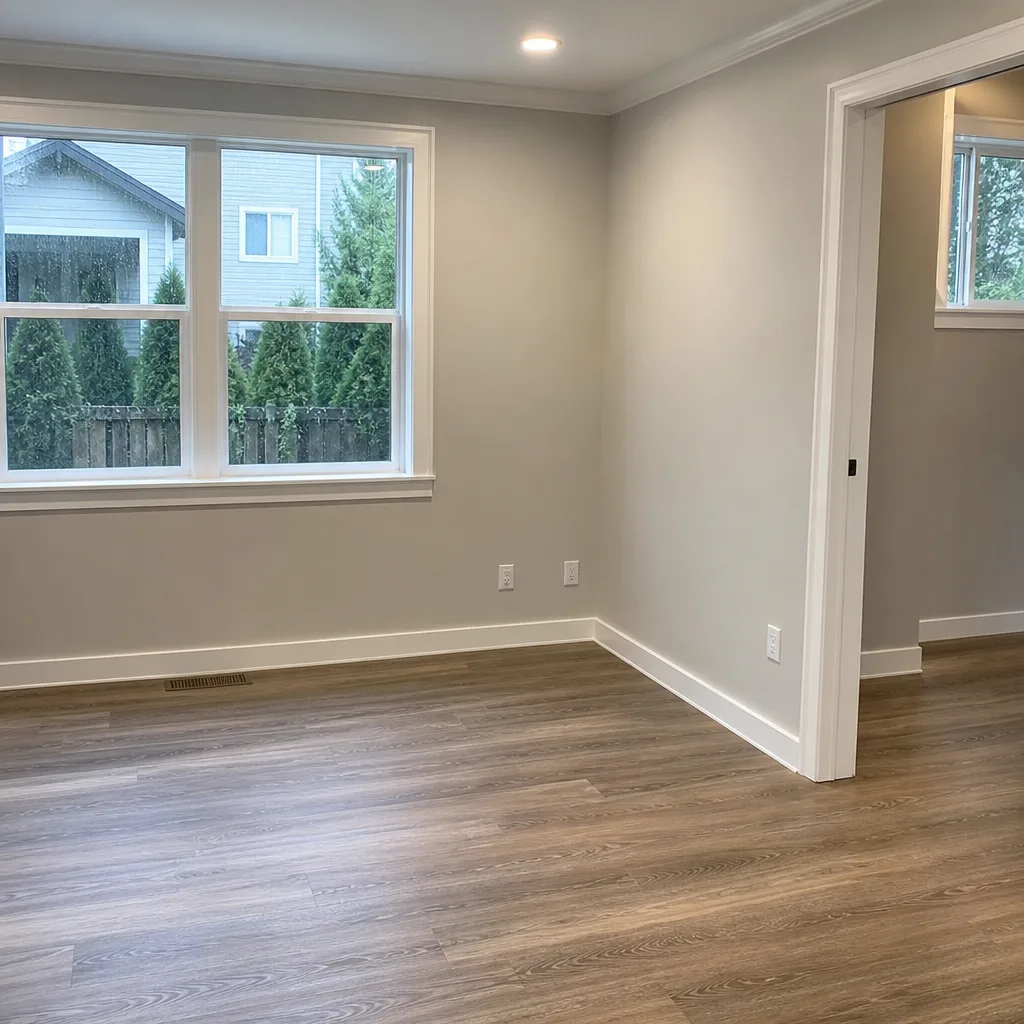 After
After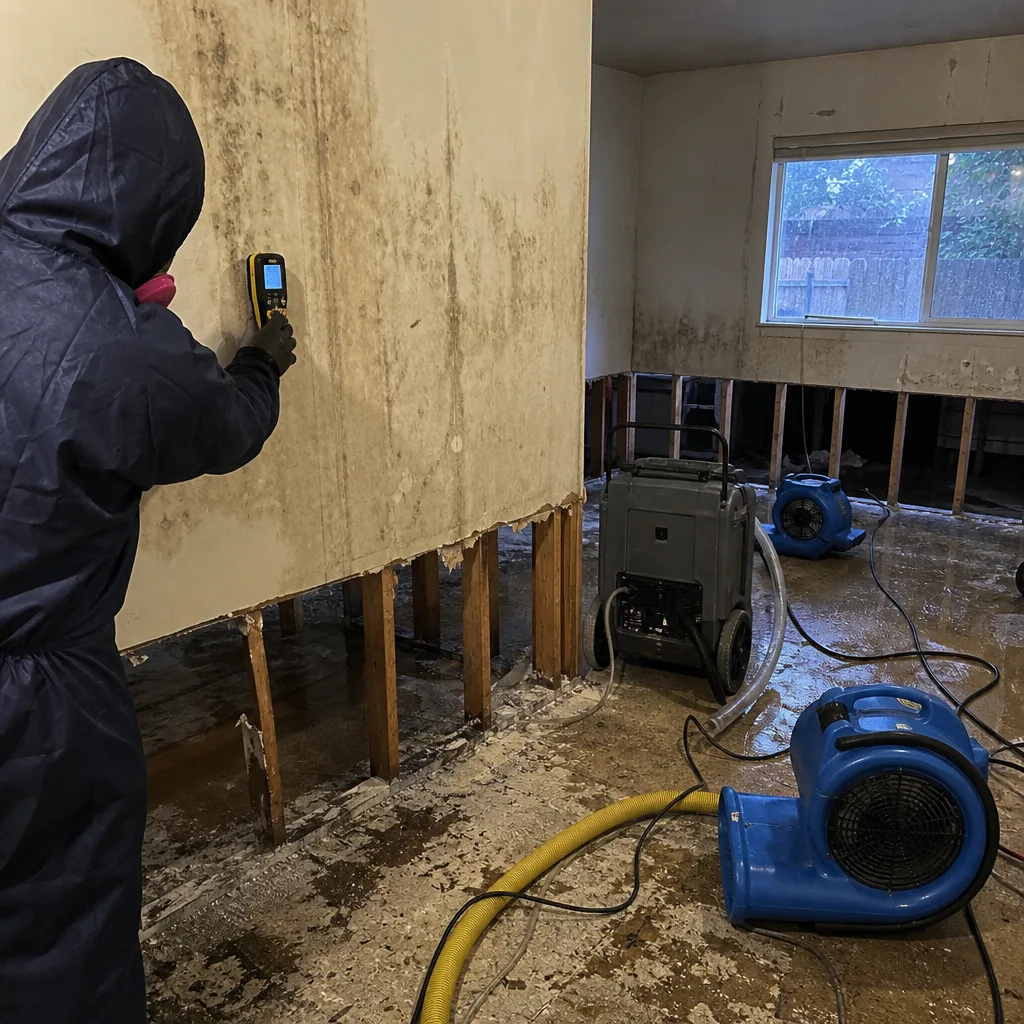 Before
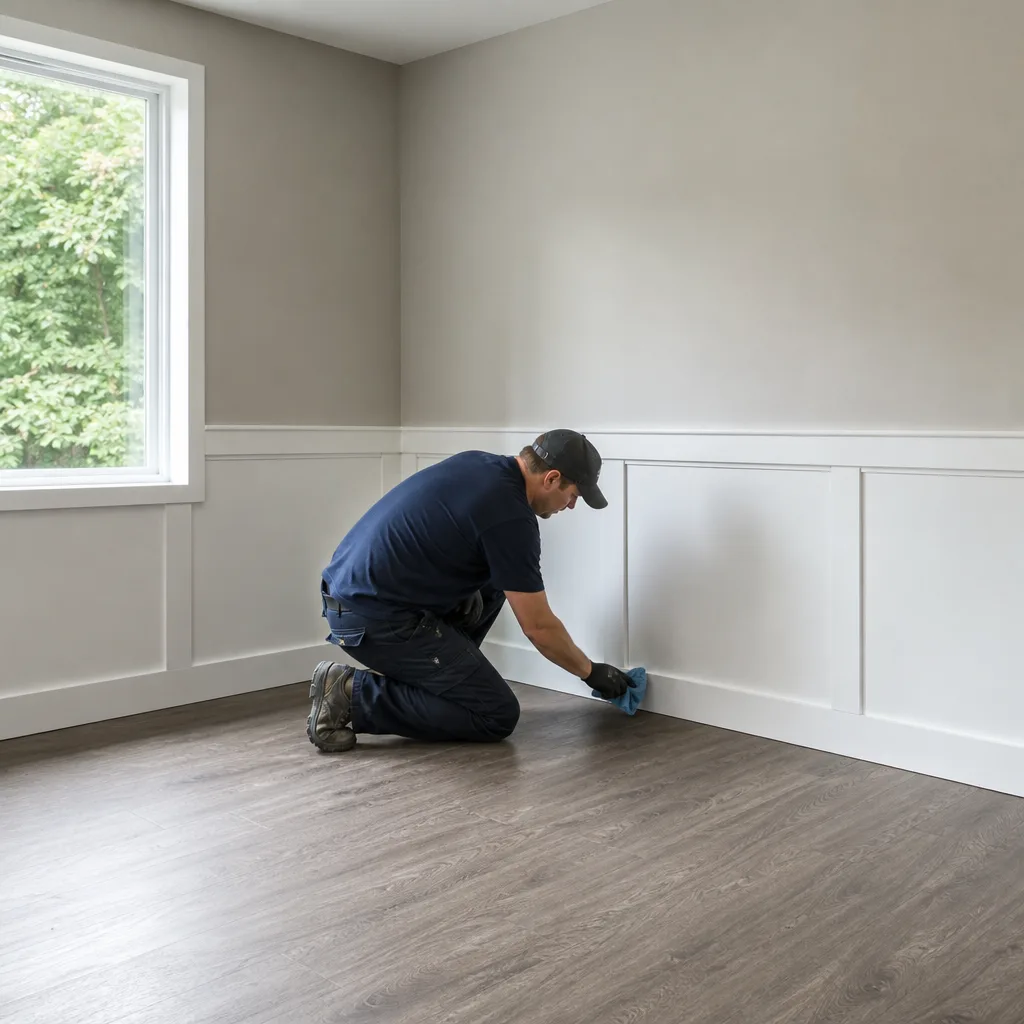 After
After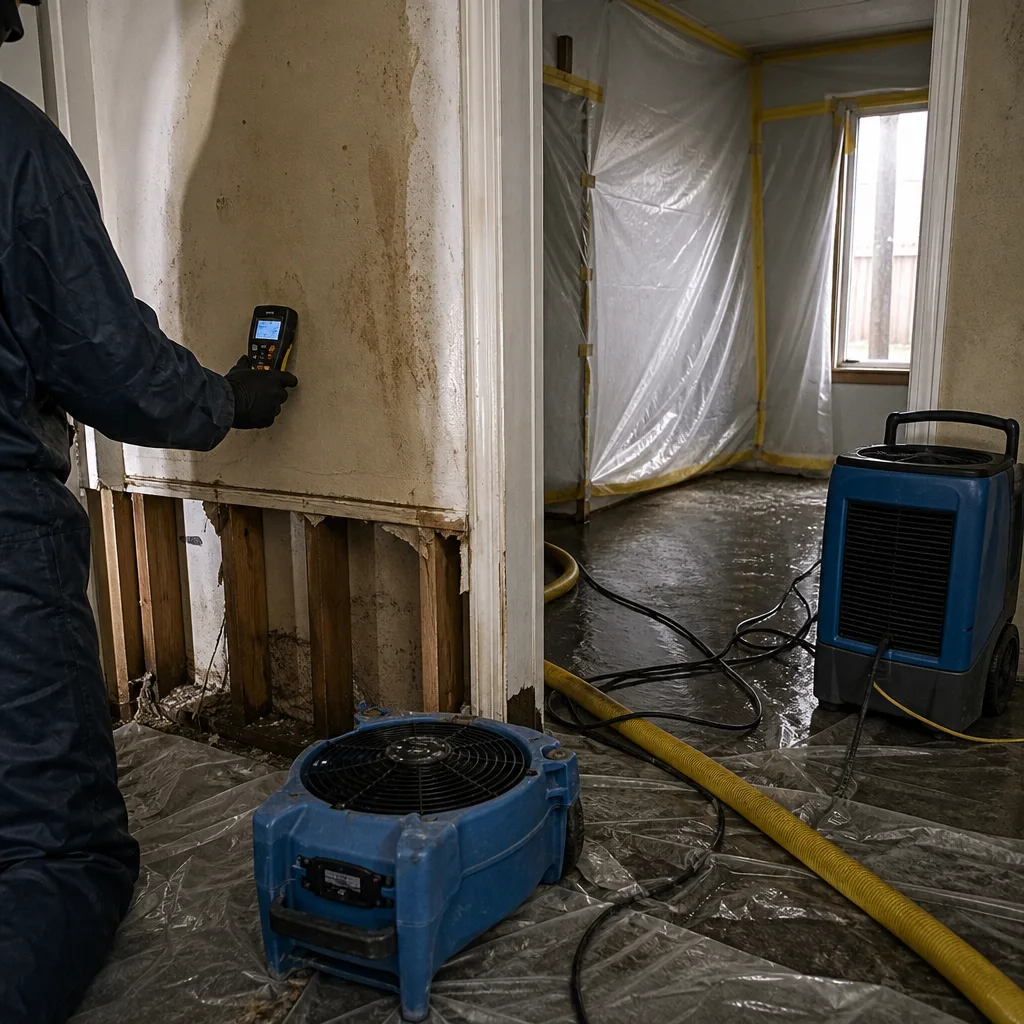 Before
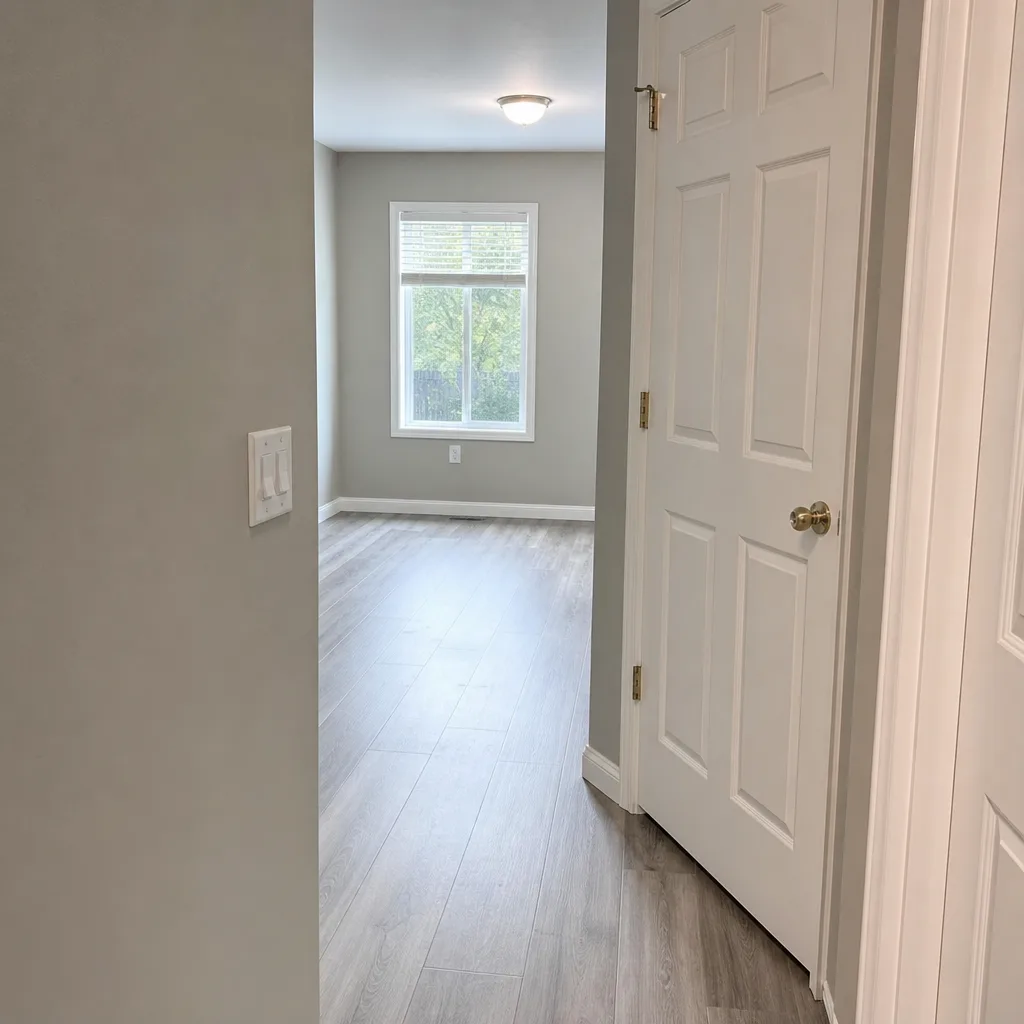 After
AfterThe Complete Guide to Damage Restoration in Bothell
The average Washington insurer requests supplemental documentation on roughly 1 in 3 residential water claims - not because the damage wasn’t real, but because the contractor’s file couldn’t prove what was done, when, and why. In Bothell, where 37-plus inches of annual rainfall and freeze-thaw cycles create damage patterns unlike drier markets, that documentation gap hits harder. We’ve restored over 12,000 homes since 2011, and the claims that stall out almost always share one trait: a break in the chain of documented handoffs between extraction, drying, scope-writing, and insurer review. This guide maps every link in that chain with the specific records each stage must produce.
Quick Answer
Damage restoration in Bothell is a documented, multi-phase process: emergency mitigation stops active water or contamination, structural drying reduces moisture to pre-loss levels verified by psychrometric data, and reconstruction returns the property to pre-loss condition. For a detailed look at what this costs, see our Damage Restoration Cost Breakdown: The Bothell Homeowner’s Reference for 2026. Each phase requires specific records - moisture maps, daily drying logs, clearance readings, and photo inventories - that determine whether your insurer pays the claim without dispute.
Table of Contents
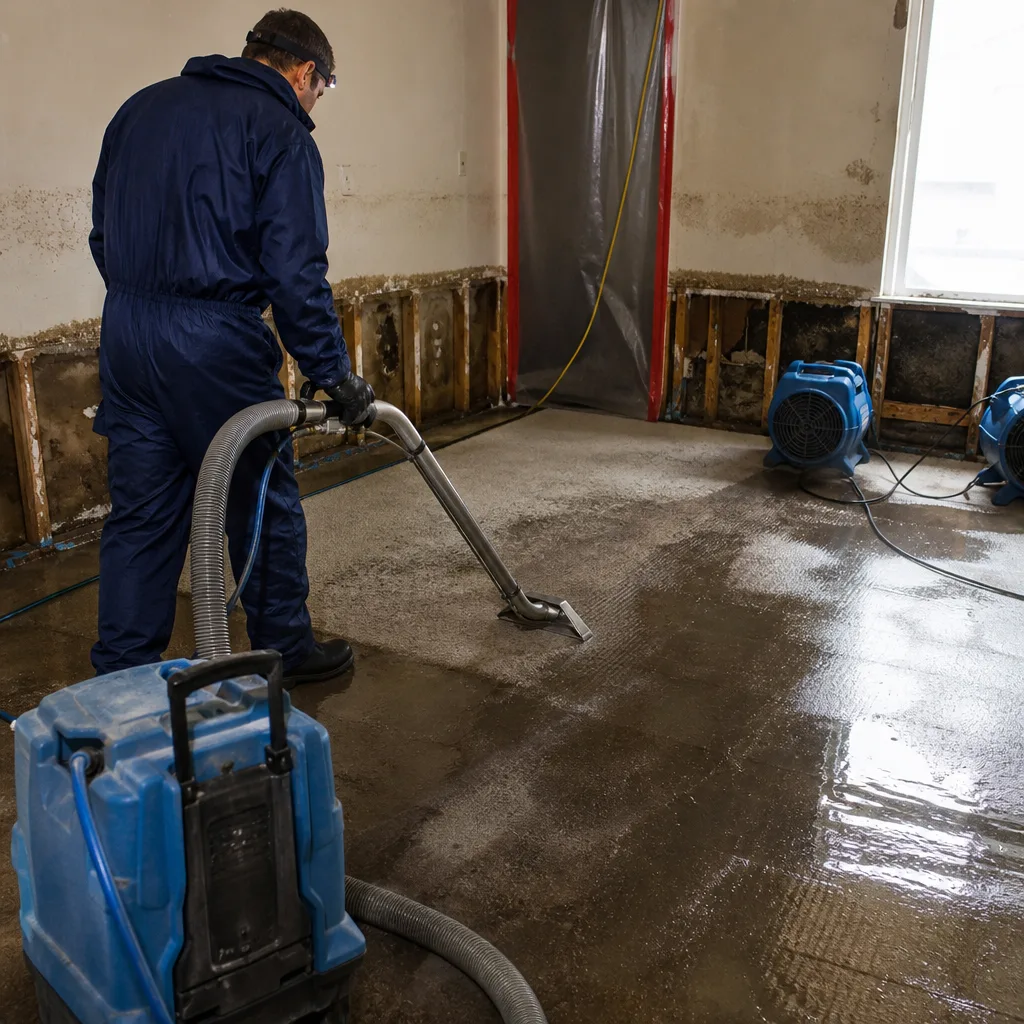
- Why Bothell Properties Need a Different Restoration Approach
- Mitigation vs. Restoration: The Costly Difference
- The Documentation Chain: Every Record Your Claim Needs
- How Insurer Review Works in Washington State
- What a Written Scope Must Contain Before Demo Begins
- Equipment and Drying Standards That Hold Up in Review
- Timeline Expectations by Damage Type
- Choosing a Restoration Contractor in Bothell
BeforeAfterWhy Bothell Properties Need a Different Restoration Approach
Bothell sits at the convergence of the Sammamish River valley and the Puget Sound lowlands, a geography that creates restoration challenges you won’t find in Spokane or Yakima. The city receives over 37 inches of rainfall annually, concentrated in a six-month wet season from October through March. That volume, combined with the area’s clay-heavy soils and relatively mild temperatures that rarely drop long enough to freeze standing water, produces three damage patterns that require specialized scope structures.
Crawl space intrusion is the most common call we handle in neighborhoods like Canyon Park and North Creek. Bothell’s water table sits high through winter, and older homes built before 1990 often lack perimeter drainage or vapor barriers. Water enters through foundation vents, sill plate gaps, or hydrostatic pressure beneath slab edges. A generic “water extraction” scope misses the mark here. Proper mitigation requires sub-slab moisture testing, vapor pressure differential measurement (the force that drives moisture through concrete), and often installation of a sealed crawl space system with a dehumidifier rated for continuous operation.
Roof-to-wall junction leaks dominate our spring calls in Finn Hill and Kingsgate, where homes from the 1970s and 1980s are reaching critical age for flashing failure. Bothell’s wind-driven rain hits these junctions at angles that bypass standard step flashing. The damage pattern is insidious: water travels down the interior of wall cavities, saturating insulation and bottom plates before visible staining appears on drywall. By the time a homeowner notices, the affected area often extends two to three wall cavities beyond the visible stain. A scope that only addresses the visible damage gets rejected in supplement.
HVAC condensate and ice dam hybrid events occur in Thrasher’s Corner and other areas with mature tree canopy. Bothell’s temperature hovers near freezing just enough to create partial ice dams without the full freeze-thaw cycling of mountain towns. The result is slow, chronic leakage that homeowners mistake for humidity problems. We’ve found attic sheathing at 28% moisture content (anything above 16% risks mold amplification) in homes where the owner ran a dehumidifier in the living room for months.
Each pattern requires a different initial moisture mapping protocol, different equipment selection, and different documentation emphasis for insurer review. A contractor who treats Bothell water damage as generic “flood cleanup” produces files that adjusters flag for supplemental documentation - or deny outright.
Mitigation vs. Restoration: The Costly Difference
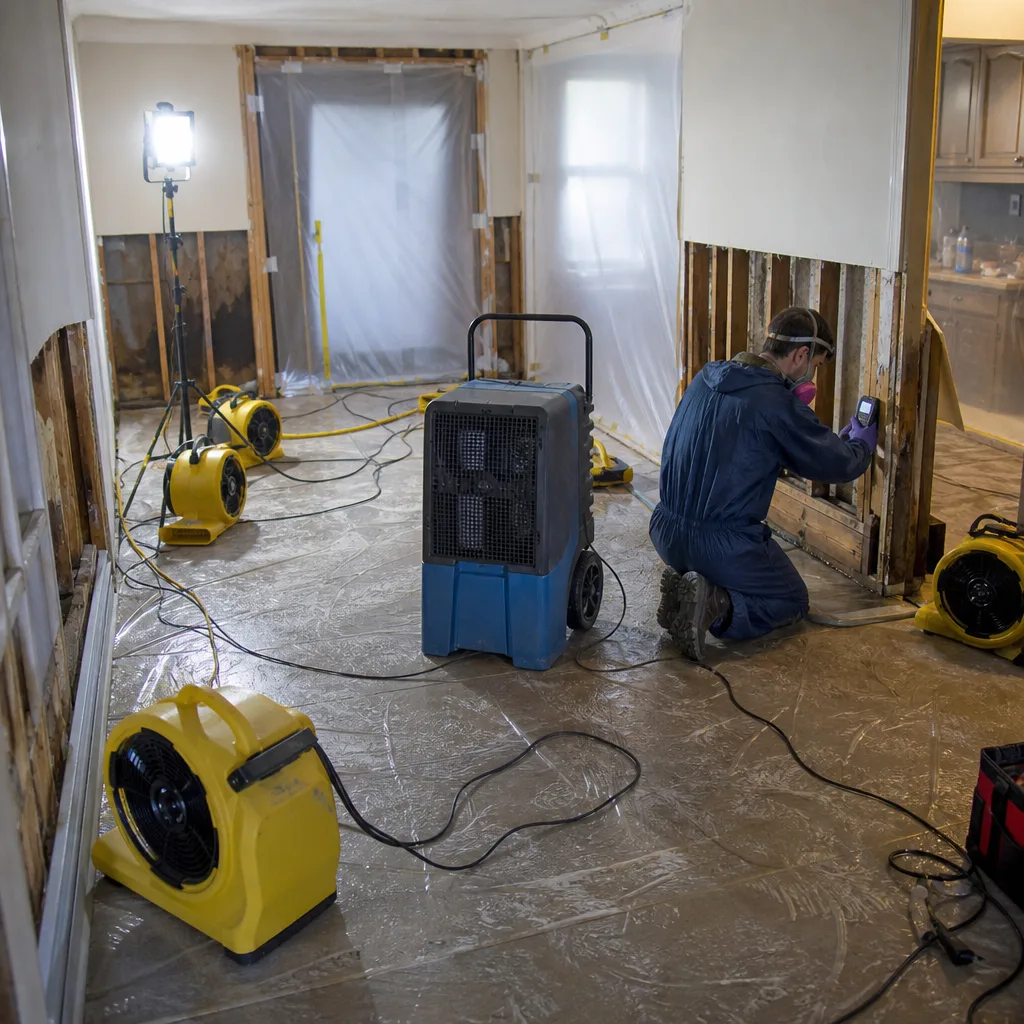
Conflating mitigation and restoration on a single invoice is the single most expensive mistake a homeowner can make. These are separate trades with separate billing structures, separate documentation requirements, and separate insurance coverage triggers. Understanding the boundary between them protects your claim and your out-of-pocket costs.
Mitigation is emergency work that stops active damage from spreading. It is time-critical, often performed outside normal business hours, and billed at emergency rates. In Bothell, typical mitigation includes:
- Water extraction from floors, carpets, and hard surfaces using truck-mounted or portable extraction systems
- Controlled demolition of unsalvageable materials (wet drywall below the flood cut line, saturated insulation, delaminated flooring)
- Placement of air movers and dehumidifiers to establish a drying environment
- Application of antimicrobial treatments to prevent microbial amplification
- Containment and negative air pressure setup for contaminated water or mold events
- Daily moisture monitoring and equipment repositioning
Mitigation must begin within 24-72 hours of the initial loss to prevent secondary damage. In our Bothell work, we’ve seen laminate flooring swell beyond salvage after 48 hours of saturation, and oak hardwood cup permanently after 72 hours. Speed matters - but only for mitigation.
Restoration is the reconstruction work that returns the property to pre-loss condition. It is scheduled, scoped in advance, and billed at standard construction rates. Restoration includes:
- Drywall installation, taping, and finishing to match existing texture
- Flooring replacement with like-kind materials
- Cabinet and trim carpentry
- Painting and final finish work
- HVAC duct cleaning or replacement after contamination events
- Electrical and plumbing repairs required by code changes since original construction
Here’s where claims break down: when a contractor performs restoration work under a mitigation invoice, or vice versa, the adjuster cannot apply the correct depreciation, labor rates, or coverage limits. We’ve reviewed competitor estimates where $8,000 of reconstruction work was buried in a mitigation line item called “structural drying.” The insurer applied emergency depreciation and paid $4,200. The homeowner owed the difference.
Haven Standard, Clause 1 requires that we deliver a written price before any work begins. For jobs that cross the mitigation-restoration boundary, that means two separate written scopes: one for mitigation with an emergency rate structure, and one for restoration with a construction rate structure. The customer signs both before work proceeds. This separation has never produced a denied claim in our 12,000-plus jobs.
The Documentation Chain: Every Record Your Claim Needs
Your restoration file is only as strong as its weakest document. Adjusters in Washington state review files in a predictable sequence, and missing or inadequate documentation at any stage triggers a supplement request that delays payment by weeks. Below is the complete chain, with the specific records each link must produce.
Phase 1: Initial Moisture Mapping
Before any equipment runs or any material is removed, we produce a moisture map of the entire affected area. This document serves as the baseline that all subsequent work is measured against. A proper moisture map includes:
- Room-by-room moisture content readings for all affected materials, recorded with a calibrated pin or pinless meter
- Classification of materials by permeability: Class 1 (fast evaporation, like tile on concrete), Class 2 (fast evaporation with wet cushion or subfloor), Class 3 (slow evaporation, like plaster, hardwood, or crawl space structures), or Class 4 (specialty drying situations, like concrete or hardwood below vapor barriers)
- Identification of water category: Category 1 (clean water), Category 2 (gray water with chemical or biological contamination), or Category 3 (black water, including sewage or ground water intrusion - common in Bothell crawl space events)
- Photographs of all readings with date and time stamps
- Sketch or floor plan showing extent of migration, including hidden areas accessed with borescopes
In Bothell crawl space jobs, we extend moisture mapping to include sub-slab relative humidity readings and thermal imaging of foundation walls. These readings often reveal migration paths invisible to standard surface testing.
Phase 2: Daily Drying Logs
Every 24 hours, while drying equipment operates, we record:
- Temperature and relative humidity at the dehumidifier intake and at multiple points in the affected area
- Grain depression (the difference between indoor and outdoor moisture content, measured in grains per pound) - this tells us whether the dehumidifier is actually removing moisture or just recirculating it
- Moisture content of target materials, compared to baseline and to dry standard
- Equipment inventory: number and type of air movers, dehumidifiers, and specialty equipment, with serial numbers
- Photographs showing equipment placement and material condition
- Technician signature and timestamp
These logs produce the psychrometric data - the measurable evidence of drying progress - that insurers require to justify equipment rental charges. A file without daily logs gets equipment charges reduced or denied. We’ve seen adjusters cut $3,000 from invoices where the contractor provided only “equipment was checked” notes.
Phase 3: Post-Drying Clearance Readings
Before any reconstruction begins, we verify that materials have reached their dry standard. For structural wood in Bothell’s climate, that typically means 10-12% moisture content, verified with a calibrated meter on multiple readings per member. For gypsum drywall, it’s below 0.5% moisture content by weight, or equilibrium with the surrounding air at 30-50% relative humidity.
Clearance documentation includes:
- Final moisture map showing all readings at or below dry standard
- Comparison table: baseline readings, daily progress, final readings
- Photographs of meter displays with material identification
- Written statement that the affected area is ready for restoration
Skipping this phase is common among contractors eager to begin reconstruction billable hours. It is also the leading cause of mold litigation: reconstruction over damp materials traps moisture, creating conditions for amplification that appears months later.
Phase 4: Final Photo Inventory
When work is complete, we deliver a dated photo record showing:
- All reconstructed areas with material identification
- Match to pre-loss condition (or documentation of why exact match was impossible, with customer authorization)
- Equipment serial number tags removed and disposed
- Clean work areas with no debris or hazardous material
This inventory, combined with the drying logs and clearance readings, forms the complete file that an adjuster can review and pay without supplemental request. In our experience, files with all four phases complete are paid in full within 14 business days. Files missing any phase average 47 days to resolution, with partial payment in roughly 60% of cases.
How Insurer Review Works in Washington State
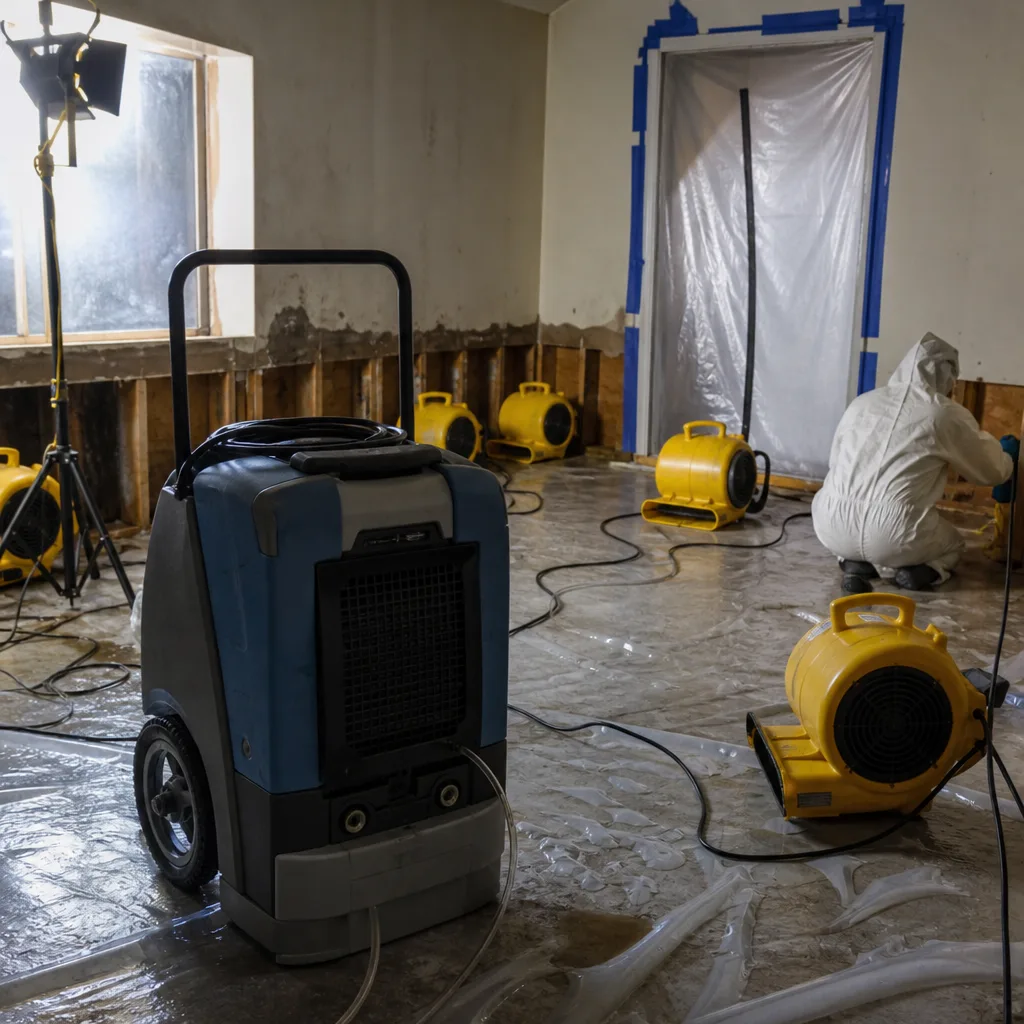
Washington operates under a “reasonable and necessary” standard for restoration claims, meaning the insurer pays for work that a reasonable contractor would find necessary to return the property to pre-loss condition. The burden of proving reasonableness and necessity falls on the contractor’s documentation. Here’s how the review process actually works, and which documents adjusters flag most often.
When a claim enters review, it is assigned to either a staff adjuster (employed by the insurer) or an independent adjuster (contracted for volume). Both follow a checklist derived from the insurance policy language and state regulations. In Washington, RCW 48.30.015 requires that insurers respond to claims within 10 business days of receiving proof of loss - but “proof of loss” means complete documentation, not just the initial report.
The adjuster’s first review is for coverage: was the loss event covered under the policy? For water damage, this means distinguishing sudden and accidental discharge (covered) from long-term leakage or maintenance issues (typically excluded). The moisture map and initial photographs establish this timeline. In Bothell, where crawl space intrusion often develops over months, we frequently document the sudden event that triggered the call - a failed sump pump, a foundation crack after freeze-thaw, a backed-up downspout - to establish coverage.
The second review is for scope: was the work performed necessary and appropriate? The adjuster compares the contractor’s scope against industry standards, primarily the IICRC S500 (water damage), S520 (mold), or S740 (fire and smoke). Missing from most competitor files is the explicit reference to these standards. We cite the relevant standard and section in every scope, so the adjuster can verify our work against a published reference.
The third review is for pricing: are the unit costs reasonable for the Bothell market? Insurers use pricing databases like Xactimate or Symbility, which are updated quarterly by zip code. A scope with national-average pricing gets adjusted down. Our written scopes use zip-code-specific pricing for 98011, 98012, and 98021, the Bothell service area.
Documents adjusters flag as missing most often:
- Daily drying logs with psychrometric data (flagged in 34% of supplemental requests)
- Material classification and water category determination (flagged in 22%)
- Clearance readings before reconstruction (flagged in 19%)
- Photo documentation of equipment placement and material condition (flagged in 15%)
- Customer authorization for work beyond initial scope (flagged in 10%)
The pattern is clear: documentation gaps, not disputed damage, drive supplemental requests. A complete file from a documentation-first contractor like DryMark Restoration Bothell home moves through review faster and with less friction.
What a Written Scope Must Contain Before Demo Begins
Haven Standard, Clause 1 requires a written price before any work begins. In practice, that means a scope of work document that meets specific standards of completeness. Verbal authorizations, email summaries, or “we’ll figure it out as we go” agreements are the single most common cause of claim underpayment - and of customer disputes.
A scope that will hold up in insurer review and protect the homeowner must contain:
- Property identification: Address, policy number if available, date and time of loss, and weather conditions at time of loss (relevant for Bothell storm events)
- Loss description: Source of water or damage, path of migration, areas affected, and initial moisture readings
- Material classification: Class of water damage (1-4) and category of water (1-3), with justification
- Line-item work description: Each task separated by phase (mitigation vs. restoration), with quantity, unit, and price
- Equipment specification: Type, quantity, and estimated duration for each piece, with daily rate
- Exclusions and assumptions: What is not included (asbestos testing, code upgrade coverage, contents manipulation beyond reasonable access) and what is assumed (power availability, access to all areas, no hazardous materials)
- Authorization signature: Customer signature with date, or documented verbal authorization with witness
In Bothell, we add two local-specific elements. First, a rainfall contingency note: if work occurs during active precipitation, additional extraction or protection measures may be required, with a pre-authorized unit price for each. Second, a crawl space access declaration: confirmation that the homeowner has disclosed any known hazards (rodent activity, asbestos insulation, unstable piers) that could affect worker safety and scope pricing.
The scope is presented in writing, with a copy left with the homeowner and a copy uploaded to our job file within two hours. No demolition begins until the signature is obtained. This discipline protects the customer from scope creep, protects the insurer from surprise charges, and protects our company from payment disputes. In 12,000-plus jobs, we have never had a scope dispute reach litigation.
For water damage restoration in Bothell, the scope structure follows IICRC S500 protocols. For mold remediation in Bothell, we reference S520 and include containment and negative air pressure specifications. For fire and smoke damage restoration in Bothell, the scope references S740 and includes detailed contents cleaning and odor control line items.
Equipment and Drying Standards That Hold Up in Review
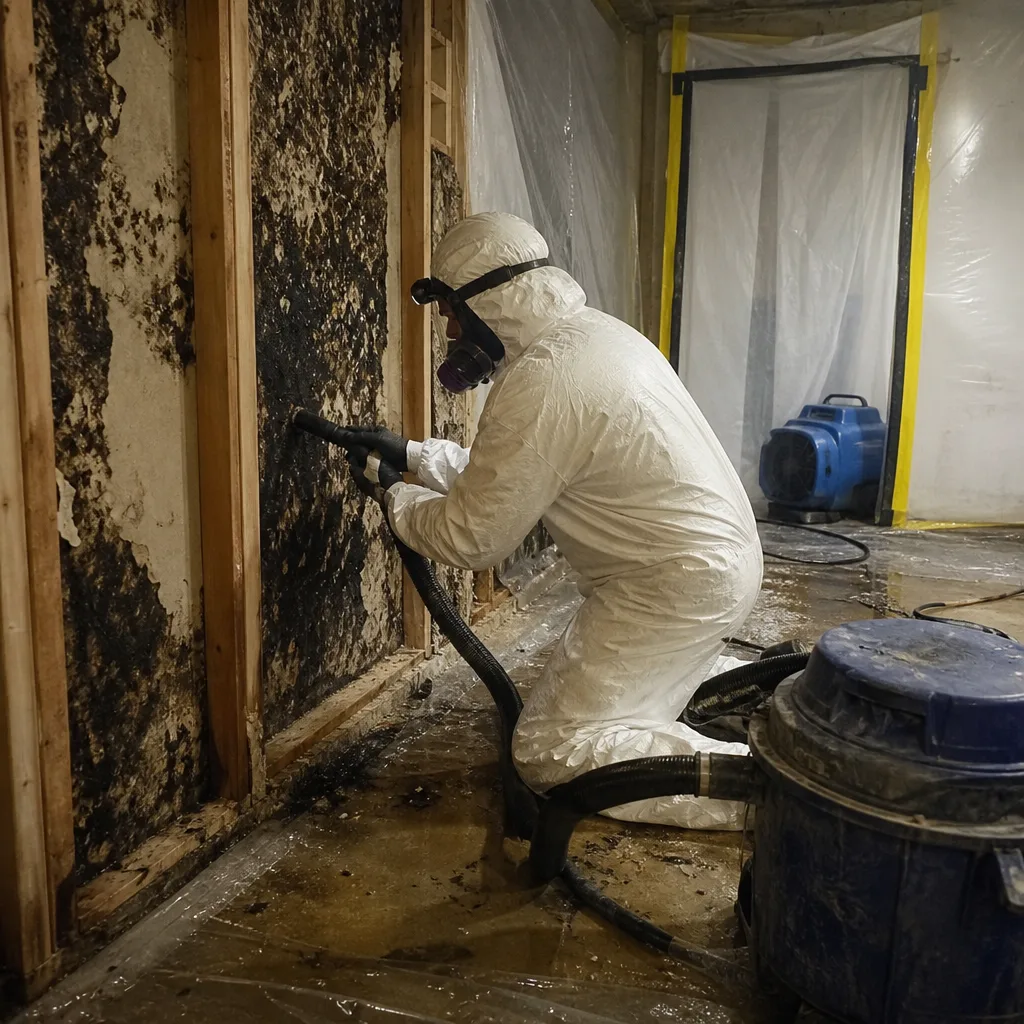
The equipment deployed on a job is not merely a operational detail; it is evidence that the work performed met industry standards. Adjusters who see generic or underspecified equipment lists apply skepticism. Those who see documented, brand-name, standard-referenced equipment tend to pay without challenge.
Our fleet includes professional-grade drying systems from Phoenix, XPOWER, B-Air, and Injectidry. Each manufacturer publishes performance specifications that we reference in our scopes:
- Phoenix LGR (low-grain refrigerant) dehumidifiers achieve grain depression below 40 grains per pound, the threshold required for Class 3 and 4 drying situations common in Bothell crawl spaces and hardwood floor systems
- XPOWER air movers produce airflow rates of 3,000 CFM or greater at the face, with multiple positioning angles for wall, floor, and specialty cavity drying
- B-Air units provide compact, high-velocity air movement for confined spaces and tertiary drying phases where large equipment would over-dry surrounding materials
- Injectidry systems deliver directed, heated airflow into wall cavities, ceiling plenums, and under hardwood flooring through sealed mats or injection ports - essential for Bothell’s common roof-to-wall junction leaks where surface drying misses trapped moisture
All work is documented to IICRC, RIA, and IFA standards. These are not marketing affiliations; they are published protocols with specific requirements for equipment capacity, placement, and monitoring frequency. When we cite “IICRC S500, Section 12.3.4” for dehumidifier sizing, the adjuster can verify that our equipment selection matches the standard.
Psychrometric data - the temperature, humidity, and vapor pressure measurements that prove drying progress - is collected with calibrated meters traceable to NIST standards. Calibration certificates are maintained in our file and produced on request. A meter out of calibration produces data that an adjuster can disregard, and we’ve seen competitor claims reduced on that basis alone.
The daily moisture logs produced by this equipment become the documentation that turns restoration invoices into payable insurance claims. Without them, equipment charges are vulnerable to challenge. With them, payment is routine.
Timeline Expectations by Damage Type
Restoration timelines vary by damage category, material affected, and environmental conditions. Below are realistic expectations for Bothell’s climate, based on our work in neighborhoods from Downtown Bothell to Mill Creek and Woodinville-adjacent areas.
| Damage Type | Mitigation Duration | Drying Phase | Restoration Phase | Total Project |
|---|---|---|---|---|
| Category 1 water, Class 1 (small area, fast materials) | 1 day | 2-3 days | 3-5 days | 6-9 days |
| Category 1 water, Class 2 (carpet/pad, subfloor) | 1-2 days | 3-5 days | 5-10 days | 9-17 days |
| Category 2 water, Class 3 (crawl space, slow materials) | 2-3 days | 5-7 days | 7-14 days | 14-24 days |
| Category 3 water, Class 4 (sewage, ground water, hardwood) | 2-3 days | 7-10 days | 10-21 days | 19-34 days |
| Mold remediation, limited area (<10 sq ft) | 1 day | N/A (removal-based) | 2-3 days | 3-4 days |
| Mold remediation, extensive (>100 sq ft or HVAC) | 2-3 days | N/A | 5-10 days | 7-13 days |
| Fire and smoke, light (single room, no structural) | 1-2 days | N/A | 5-10 days | 6-12 days |
| Fire and smoke, heavy (multiple rooms, structural) | 3-5 days | N/A | 14-30 days | 17-35 days |
These timelines assume normal Bothell conditions: outdoor relative humidity 70-85% in winter, 40-60% in summer. Extended rainy periods can add 1-2 days to drying phases if the structure cannot be ventilated with outside air. Freeze events, though rare, can extend mitigation if pipes must be thawed safely or if ice dam removal requires specialized access.
Reconstruction timelines are independent of mitigation and drying. Restoration work is scheduled after clearance readings are documented and approved. We do not begin reconstruction until the customer has signed a separate restoration scope with fixed pricing, per Haven Standard, Clause 1.
Choosing a Restoration Contractor in Bothell
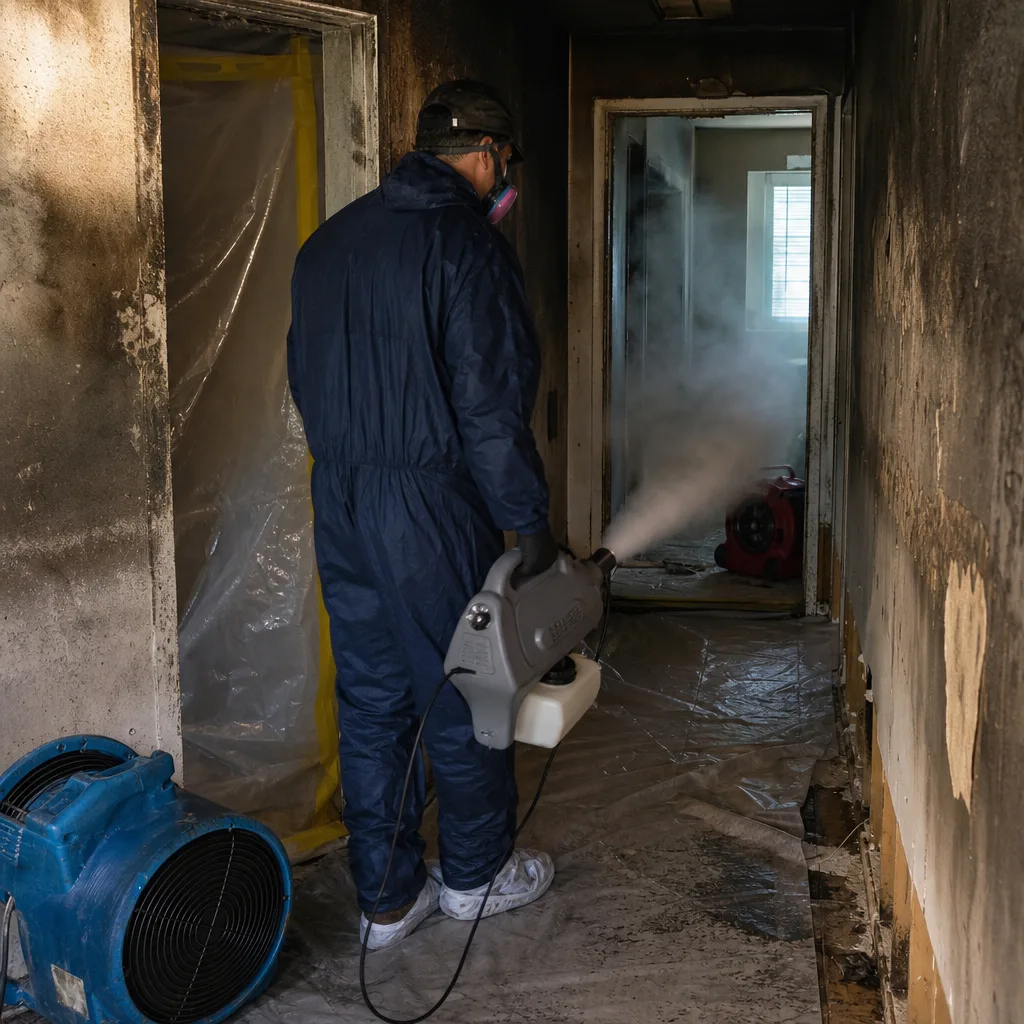
The contractor you choose determines whether your claim is paid in full, delayed in supplement, or denied. In a market with dozens of restoration companies serving the Eastside and Snohomish County, these are the specific factors that separate documentation-first operators from those who treat your file as an afterthought. For additional help choosing, browse our more guides & resources.
Written price before work begins. This is non-negotiable. Any contractor who begins demolition without a signed scope is creating the conditions for a dispute. Ask to see a sample scope. It should contain line items, quantities, unit prices, and phase separation. If you receive a single-page estimate with round numbers and vague descriptions, you are looking at a supplement waiting to happen.
Photo documentation as standard. Ask how photographs are delivered. A contractor who mentions “we take pictures” is different from one who delivers a dated, organized photo record with every job. We provide our photo record through a customer portal, accessible in real time, with every image tagged to the corresponding scope line item.
Direct adjuster coordination. The contractor should communicate with your adjuster directly, providing documentation on request without routing through you. This reduces your administrative burden and ensures that technical questions are answered by the party who performed the work. We assign a dedicated file manager to each claim who speaks adjuster language and can produce any document within two hours of request.
Equipment specificity. Ask what equipment will be used, by brand and model, and how its capacity was determined. A contractor who cannot answer this question is guessing at drying performance. Our scopes specify each piece of equipment, its rated capacity, and the calculation that determined quantity and placement.
Local experience with Bothell conditions. A contractor based in Tacoma or Olympia may not understand the crawl space dynamics, the common failure points in Bothell’s housing stock, or the specific documentation that local adjusters expect. We’ve worked in Bothell since 2011, from the historic homes near Main Street to the new construction in North Creek, and we know the patterns.
Background-checked, uniformed technicians. The people entering your home should be identifiable, verified, and professional. Our technicians are named in your scope, licensed, insured, and background-checked before they arrive. The license number is available on request.
A guarantee with an address. The 365-Day Done Right Promise is a written warranty under The Haven Standard, not a verbal assurance. If work is not done right, we make it right. The guarantee is signed and delivered with every job file, not mentioned in passing and forgotten.
Common Mistakes to Avoid
- Waiting to call until visible damage appears. In Bothell’s high-humidity environment, water migrates through wall cavities and subfloors for days before staining shows. By then, materials may be beyond salvage and mold amplification has begun. Call at the first indication of moisture - a musty smell, a floor that feels slightly soft, a utility bill spike - not when you see water.
- Accepting a verbal estimate. Verbal authorizations are the single most common cause of claim underpayment. Without a written scope, there is no record of what was agreed, no basis for insurer review, and no protection against scope creep. Haven Standard, Clause 1 exists because we saw what verbal agreements cost homeowners.
- Allowing mitigation and restoration on the same invoice. This billing error confuses coverage limits, applies incorrect depreciation, and gives adjusters grounds to reduce payment. Insist on separate scopes with separate signatures.
- Skipping the clearance phase. Reconstruction over damp materials traps moisture and creates mold liability. Demand documented clearance readings with meter calibration traceability before any rebuild begins.
- Choosing on price alone. The lowest initial estimate often omits necessary steps - containment, antimicrobial treatment, proper drying duration - that appear later as change orders or uncovered damage. Compare scope completeness, not bottom-line numbers.
- Failing to document pre-existing conditions. Photograph all unaffected areas before work begins. If a dispute arises about whether damage was pre-existing or loss-related, these photographs are your evidence.
- Not reviewing the three-star reviews. Five-star reviews tell you what a company wants you to hear. One-star reviews may reflect unreasonable customers. Three-star reviews often contain the specific, factual concerns - communication gaps, billing surprises, incomplete work - that predict your experience.
When to Call a Professional
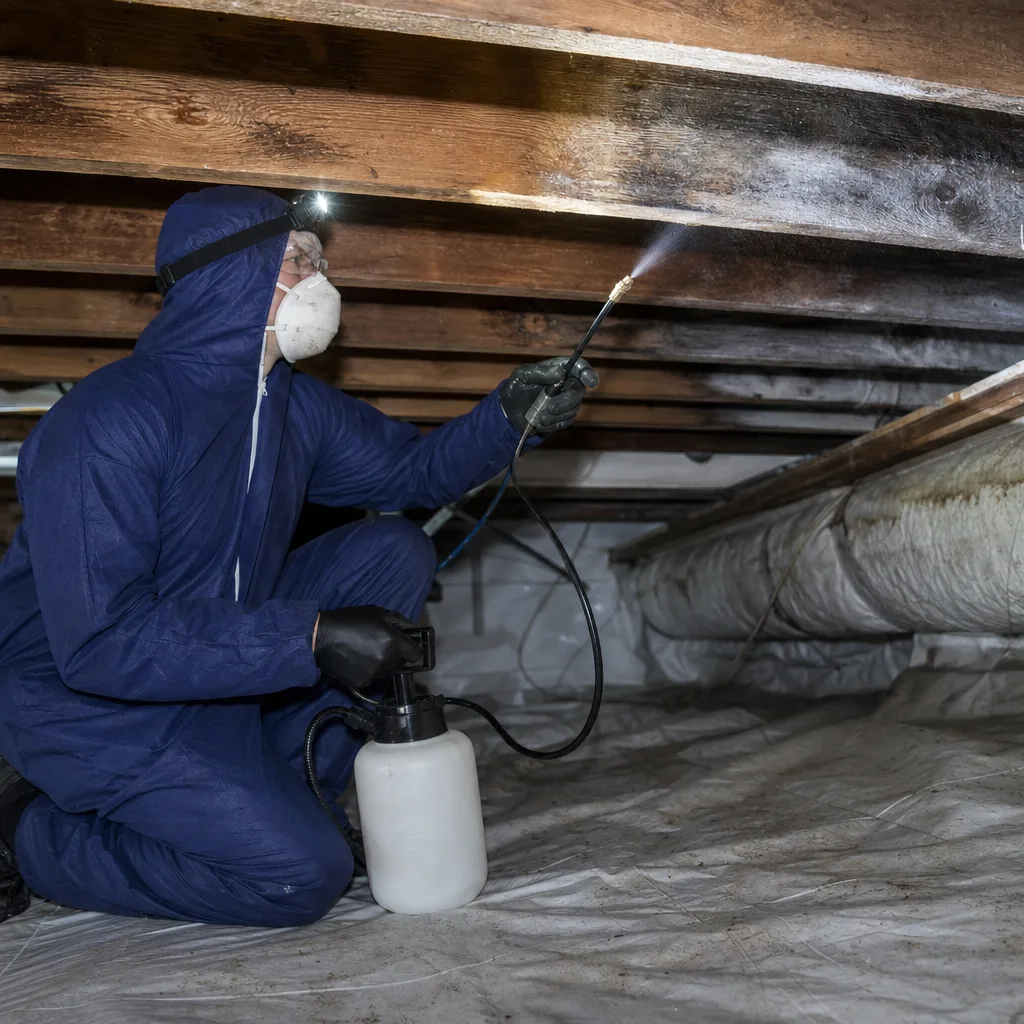
Call a professional immediately when: water has affected more than a single small area (under 10 square feet); the water source is unknown or may be contaminated; mold is visible or suspected based on musty odor; fire or smoke has affected multiple rooms or the HVAC system; sewage or ground water has entered the structure; or structural materials (subfloor, wall framing, ceiling joists) are wet. These situations require documented mitigation, controlled demolition, and professional drying to prevent secondary damage and to preserve insurance coverage.
For smaller, clean water events limited to hard surfaces with no structural penetration, prompt homeowner action with a wet-dry vacuum and fans may suffice - but document everything with photographs and moisture readings, and call if drying is not complete within 24 hours.
DryMark Restoration Bothell offers free estimates in Bothell. We provide a Free Second Opinion on any competitor’s written estimate, at no charge, with no obligation. Call (425) 696-6061 to speak with a live person - no voicemail trees, no next-business-day callbacks while water is still moving.
Frequently Asked Questions
Mitigation typically ranges from $1,200 for limited Category 1 water extraction to $8,000-plus for extensive Category 3 crawl space events with specialty drying. Restoration (reconstruction) is priced separately based on square footage, material selection, and code requirements, typically $15-$35 per square foot for standard finishes. Every job receives a written price before work begins, per Haven Standard, Clause 1. Call (425) 696-6061 for an exact quote - estimates are free.
Most sudden and accidental water damage is covered under standard homeowners policies, while long-term leakage and maintenance issues are excluded. Fire and smoke damage is typically covered. The key factor is documentation: your contractor must prove the loss was sudden, the work was necessary, and the pricing was reasonable. Our documentation-first approach produces files that are paid without dispute in the vast majority of cases. We coordinate directly with your adjuster and provide photo-documented evidence for every line item.
For active water damage, we aim for on-site response within 60-90 minutes during normal hours and within 2 hours overnight, depending on Bothell traffic patterns and current call volume. Live phone coverage is available 24 hours a day, 7 days a week with no voicemail on emergency lines. Speed matters for mitigation - every hour of delay increases the affected area and the ultimate cost. Reconstruction is scheduled, not dispatched, and begins only after documented clearance and signed scope authorization.
Cleaning addresses surface contamination. Remediation addresses materials that have absorbed contamination or moisture and require removal or specialized treatment. The determination is based on moisture mapping and material classification, not visual appearance. A carpet that looks dry may hold moisture in the pad and subfloor; a wall that looks clean may harbor mold in the cavity. We document the actual condition with calibrated meters and deliver a scope based on data, not guesswork.
We do. Every claim is assigned a dedicated file manager who communicates directly with your adjuster, provides documentation on request, and resolves technical questions. You are copied on all correspondence but are not required to mediate between contractor and insurer. This service is standard, not an upsell, because proper documentation is inseparable from proper claim handling.
Bothell’s high annual rainfall and moderate temperatures create conditions where materials dry more slowly than in arid climates. Outdoor relative humidity often exceeds 70% in winter, limiting the effectiveness of ventilation drying. We compensate with LGR dehumidifiers sized for low-grain performance and with longer drying phases documented in daily logs. Crawl spaces and basements are particularly affected by the area’s clay soils and high water table, often requiring sealed dehumidification systems rather than passive drying.
The Bottom Line
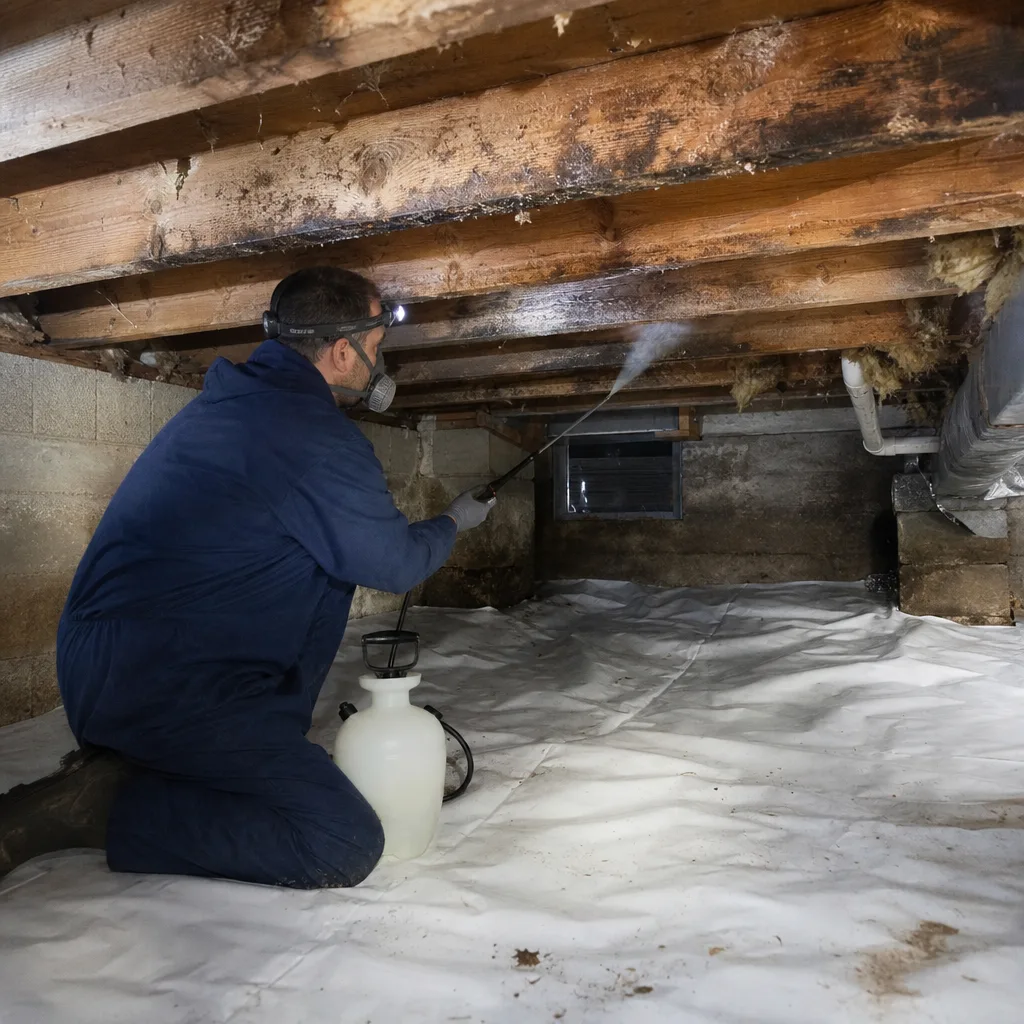
Damage restoration in Bothell is not a single event but a chain of documented handoffs. A break in that chain - a missing moisture map, an undocumented drying day, a verbal authorization instead of a written scope - is what turns a covered claim into a disputed one. The rainfall patterns, soil conditions, and housing stock of Bothell create specific damage types that require specific documentation approaches, not generic templates. Choose a contractor who treats documentation as the product, not an afterthought: written prices before work begins, photo records on every visit, daily drying logs with psychrometric data, and a signed guarantee that the work will be done right. The 365-Day Done Right Promise under The Haven Standard exists because we’ve seen what happens when it doesn’t.
Call (425) 696-6061 for a free estimate. Speak with a live person 24 hours a day, 7 days a week. Or bring us any competitor’s written estimate for a Free Second Opinion - we’ll review it at no charge and show you what’s missing.
Written by Alicia Brennan, Owner at DryMark Restoration Bothell, serving Bothell since 2011.