Free visual inspection and a written scope of work before any mitigation begins - photos, moisture readings, and drying logs go in your claim file
The scope we write is the scope we bill. Anything new gets shown to you, in writing, before we touch it.
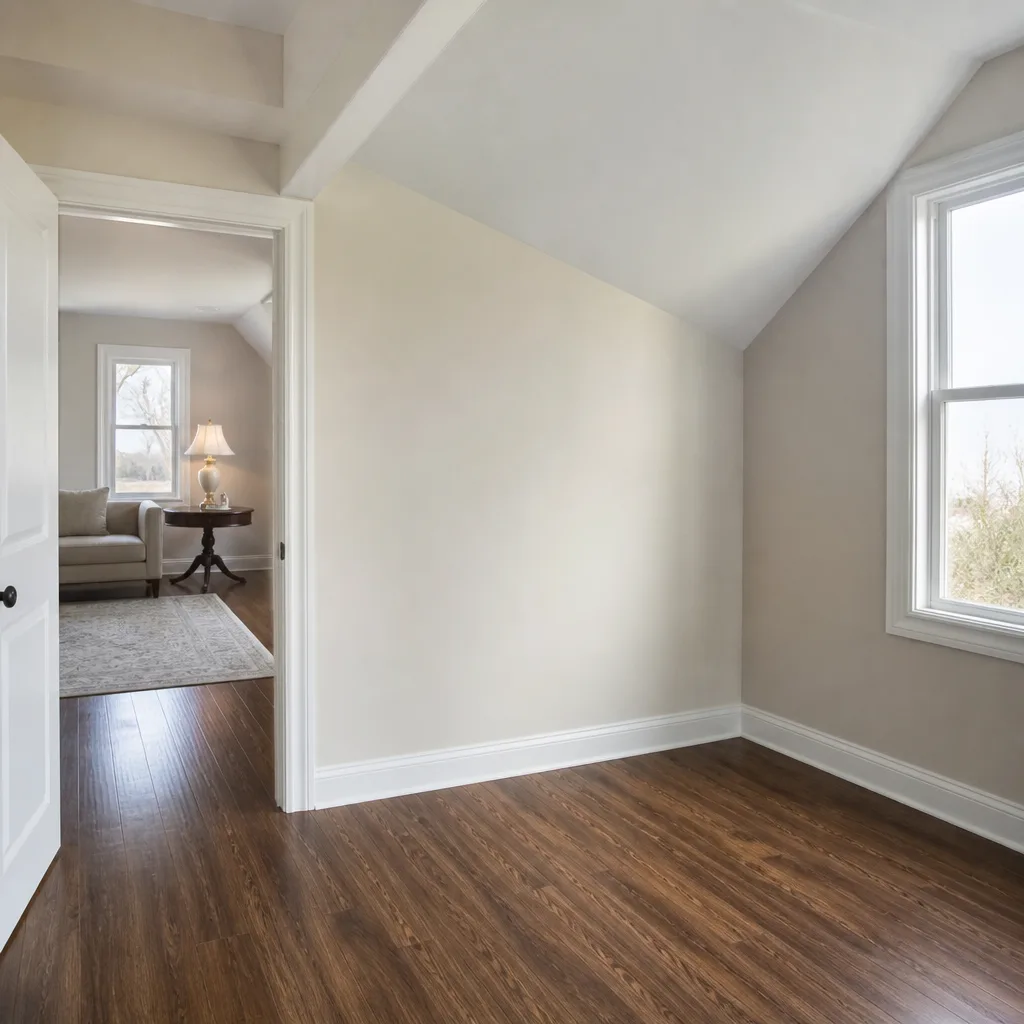
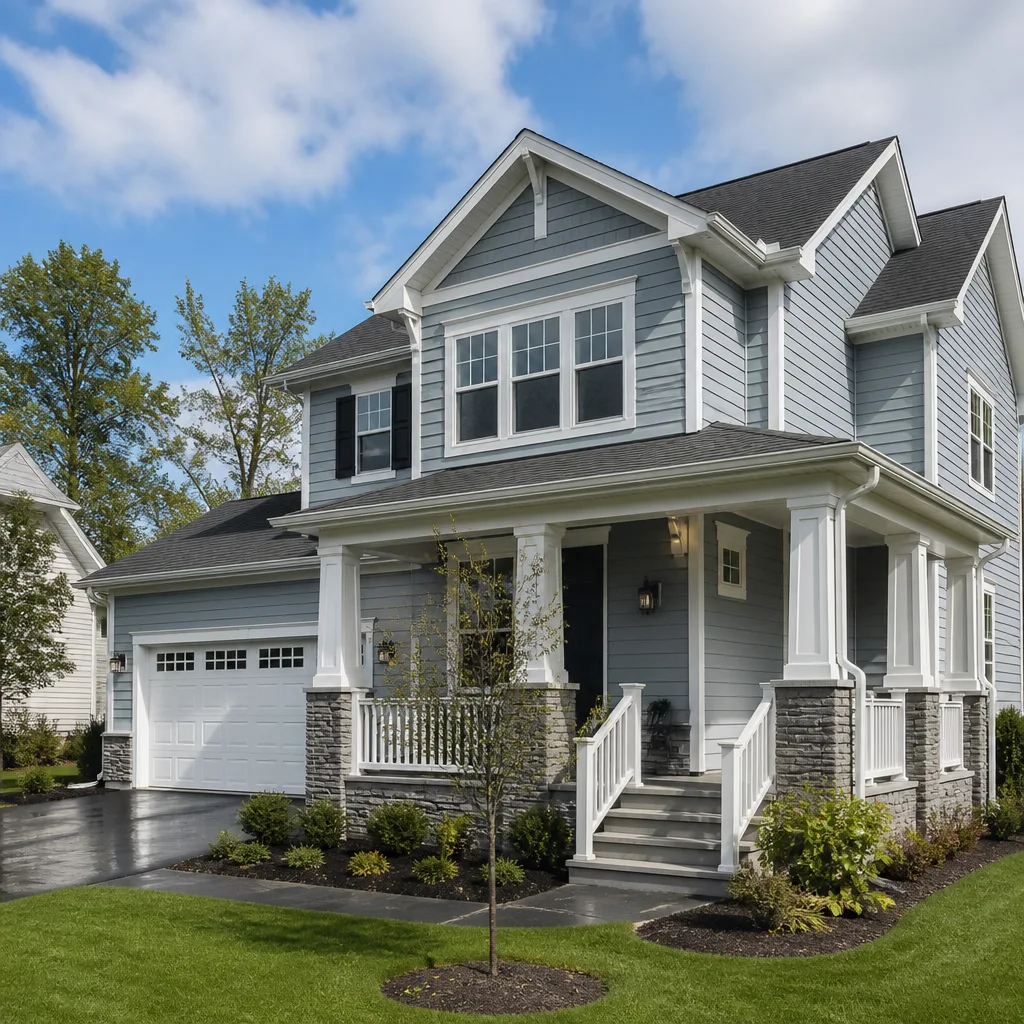
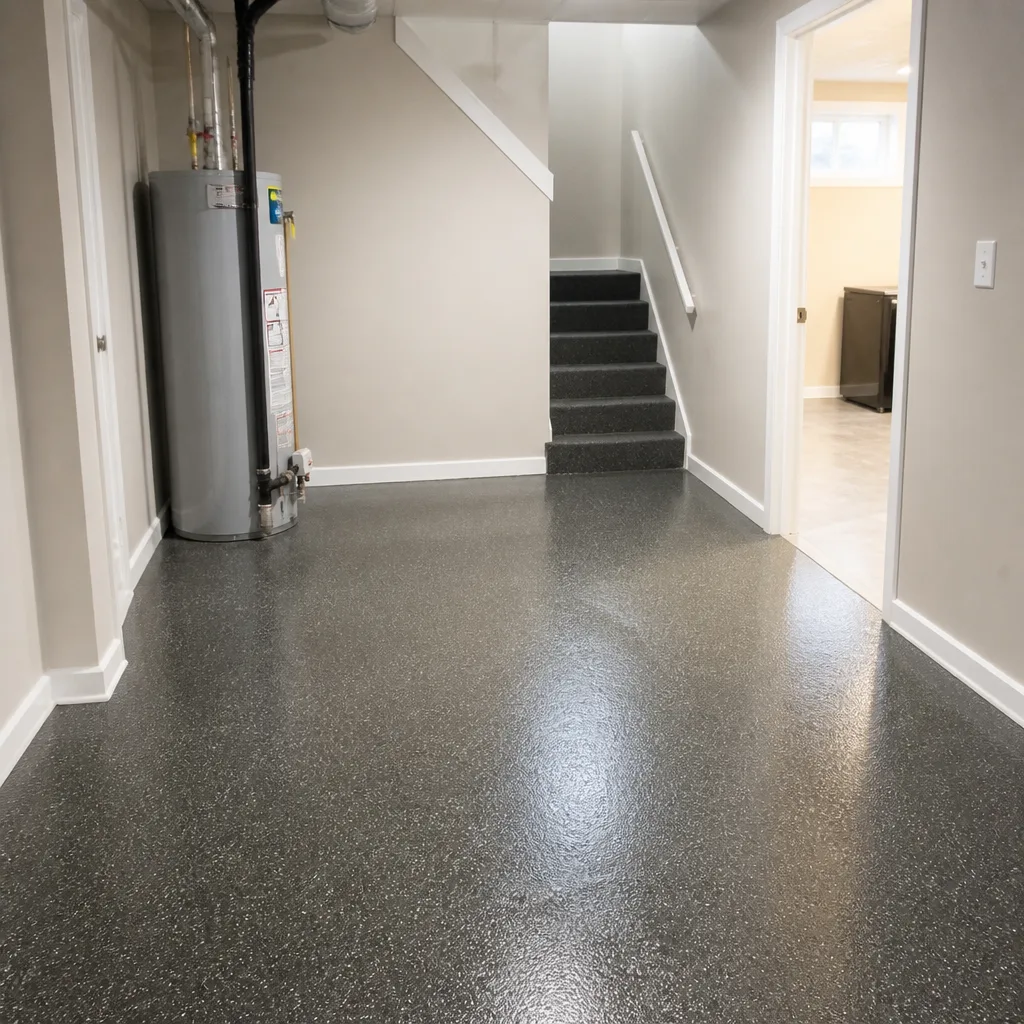
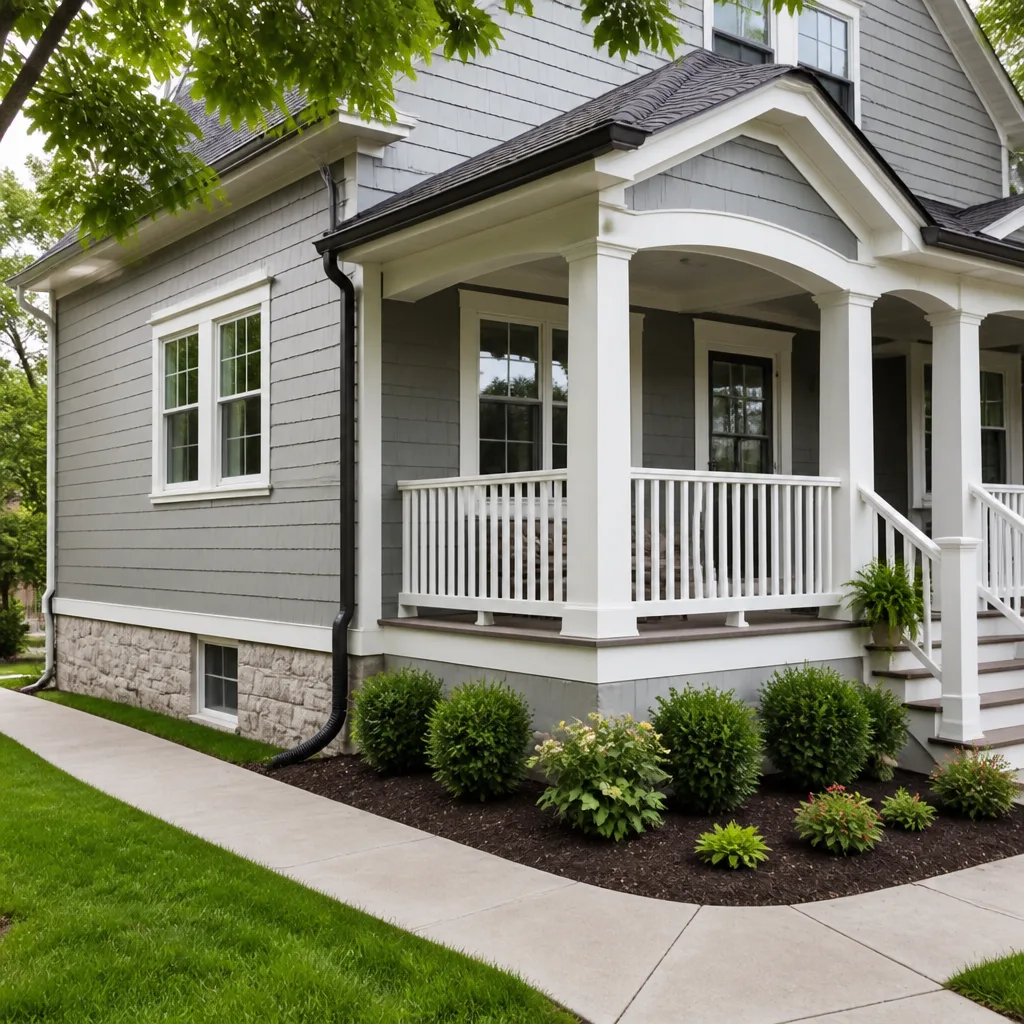
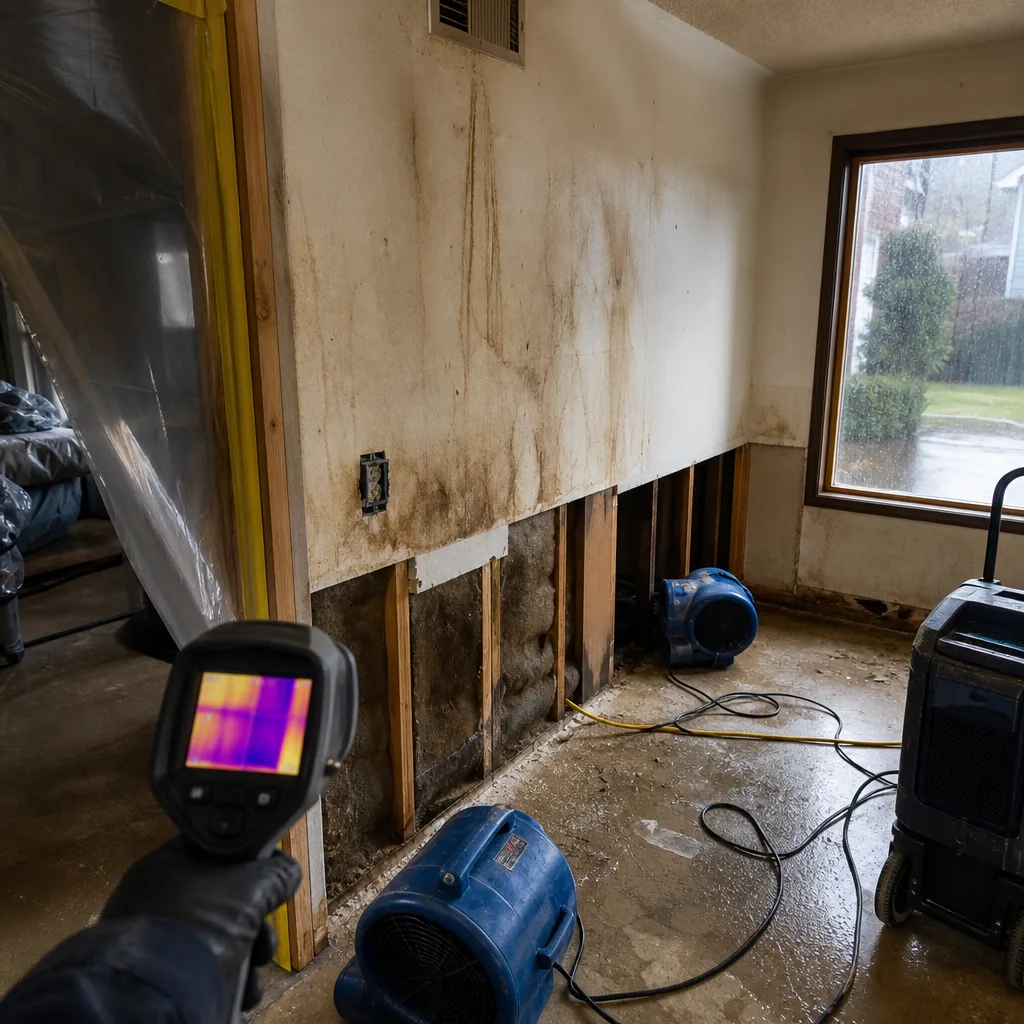 Before
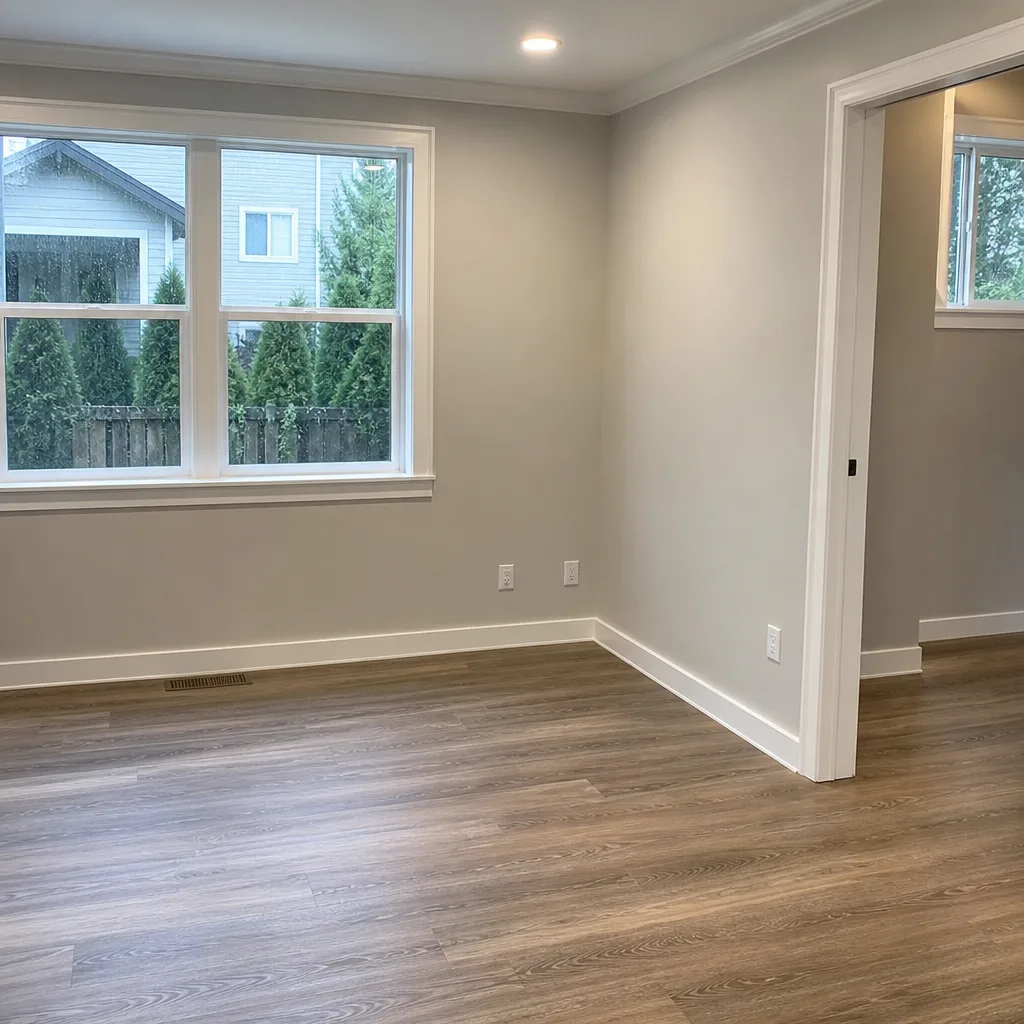 After
After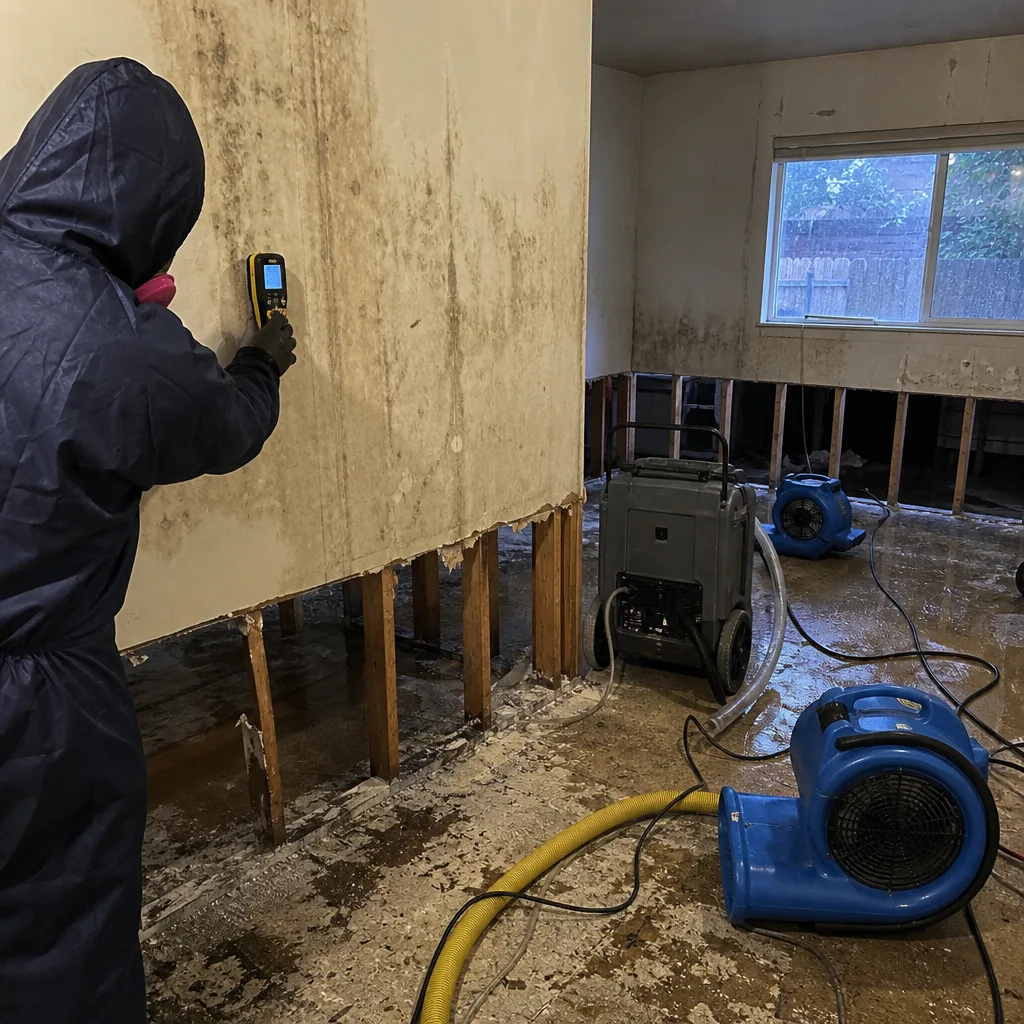 Before
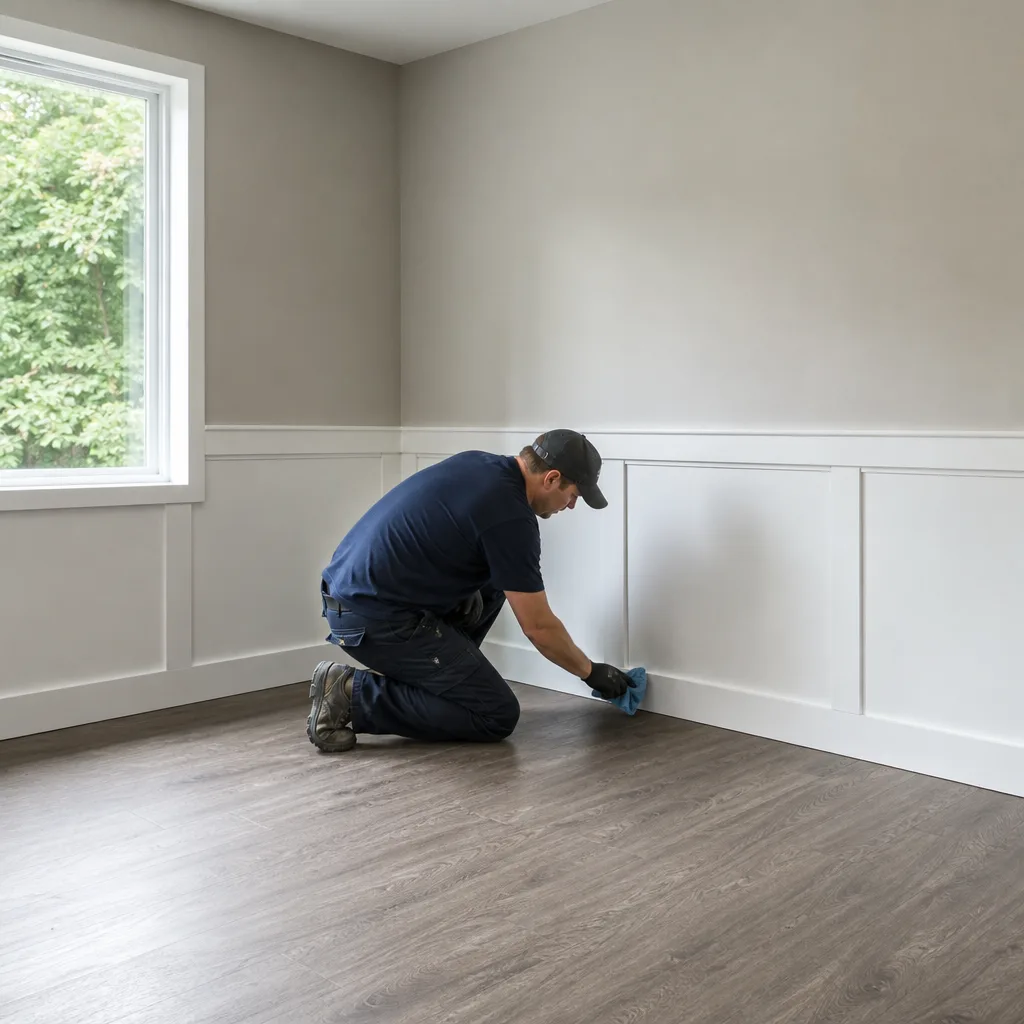 After
After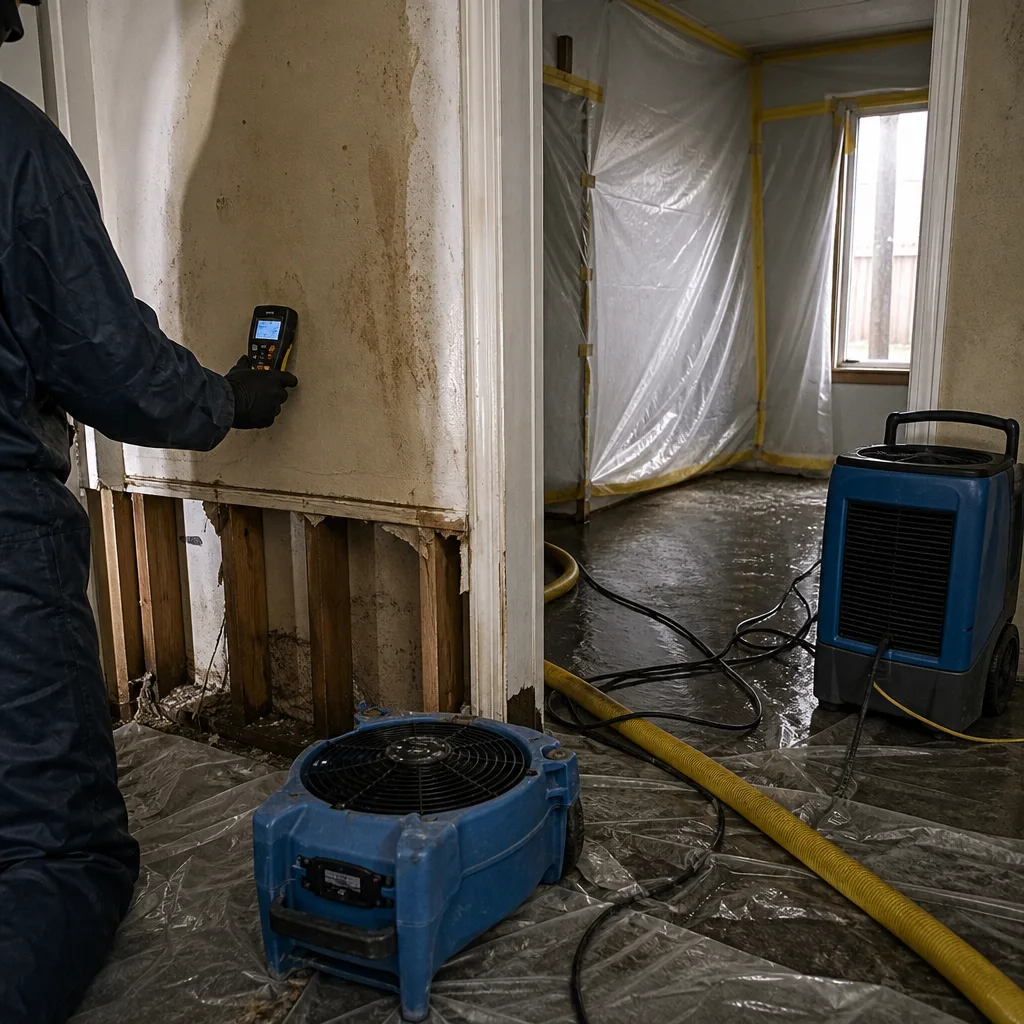 Before
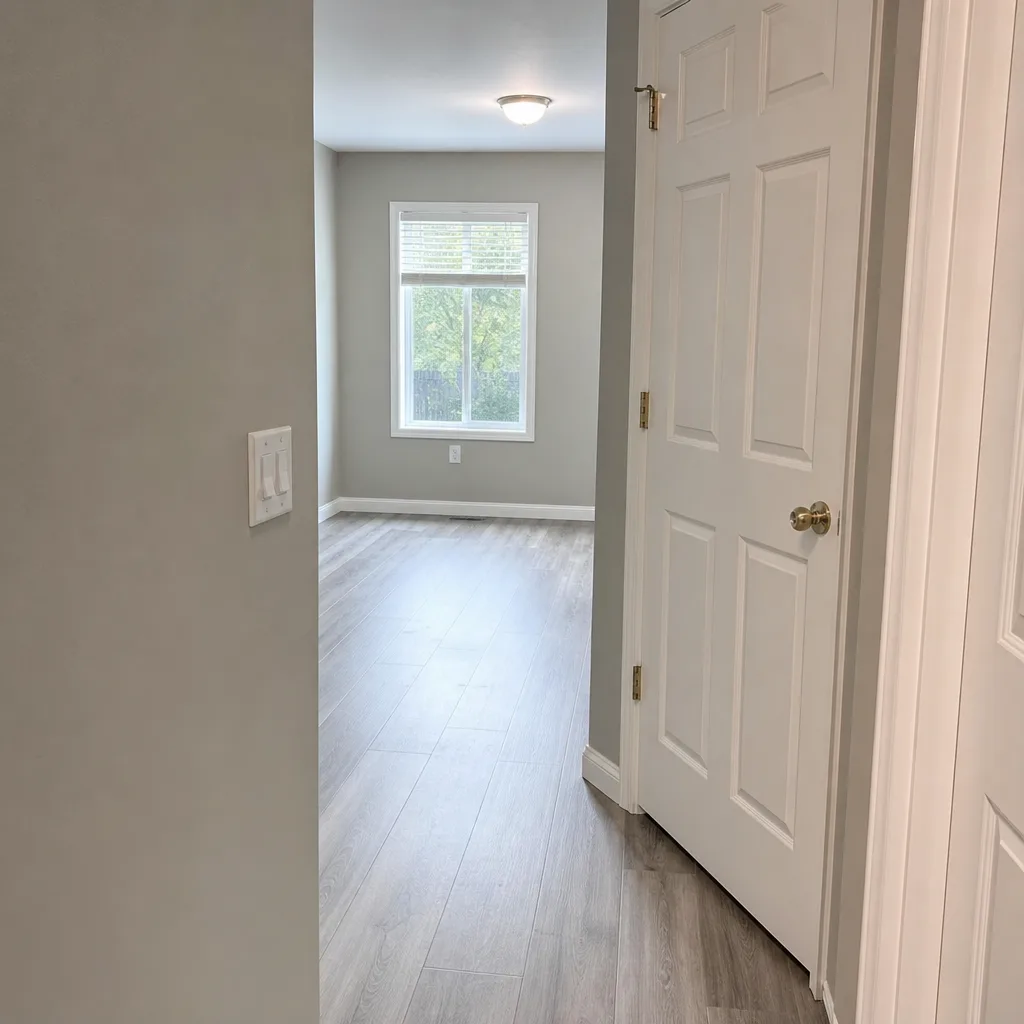 After
After24/7 Emergency Mold Remediation in Bainbridge Island
Mold remediation in Bainbridge Island typically costs $2,800-$7,500 depending on affected square footage and whether the loss is confined to a crawl space or has reached living areas. Most island jobs require containment, air scrubbing, and a multi-day drying cycle because the marine climate compresses colonization timelines. Call (425) 696-6061 now; we answer live 24 hours a day, 7 days a week, and our crews are already positioned on the island side to skip the ferry delay.
The first hour matters differently here than on the mainland. Because downtown Bainbridge is 35 ferry-minutes from the Seattle-side restoration depots and the run has limited overnight service, a crawl-space leak found after the last boat can sit wet for a full night in 55-inch-rain marine air. Every extra hour of unmitigated moisture compounds the damage. Our equipment is pre-positioned island-side, so we don’t wait for the morning ferry to start extraction, containment, and drying. We also provide a free visual inspection and a written price before any work begins, every time, under Haven Standard, Clause 1.
Understanding Mold Remediation Severity in Bainbridge Island Properties
We classify mold contamination by affected material, airborne spore load, and the moisture source that enabled it. Category 1 water - a clean supply-line break - becomes Category 2 within 24 to 48 hours in a damp crawl space, and Category 3 if sewage or ground intrusion is involved. The distinction determines what gets dried, what gets removed, and what antimicrobial protocol applies.
Bainbridge Island’s housing stock skews toward mid-century ranch and craftsman homes on wooded lots, alongside high-end waterfront builds from the 1990s to 2010s. Many older homes have crawl spaces and wood-frame construction that absorb and retain moisture aggressively under the dense forest canopy. We see this in Winslow, Eagledale, and along Rockaway Beach Road: joists that read saturated on a pinless moisture meter even when the subfloor above feels dry to the touch. Tertiary drying - the final phase where vapor pressure differential drives bound moisture out of dense framing - routinely takes longer here than standard IICRC protocols assume. We document psychrometric data daily so the drying log proves when the assembly is actually at pre-loss equilibrium, not just surface-dry.
Why Bainbridge Island Property Owners Choose DryMark Restoration Bothell
- Our 45-minute response commitment to Bainbridge Island properties, because ferry schedules don’t wait for water damage.
- 24/7 live answer by a real person, never an automated system - no voicemail trees while your crawl space saturates overnight.
- IICRC-certified crews holding WRT (Water Damage Restoration Technician) and AMRT (Applied Microbial Remediation Technician) certifications, with license numbers verified before arrival.
- Free visual inspection with a written scope delivered before any work starts, every time, under Haven Standard, Clause 1.
- Direct insurance billing with photo-documented estimates that adjusters recognize and pay without dispute.
- One team from mold containment through reconstruction - no handoffs between subcontractors that lose the job’s documentation thread.
BeforeAfterOur Mold Remediation Process
1. Inspection & Assessment
We moisture-map the full affected area using thermal imaging and pin-type hygrometers, then sample airborne spore loads to establish a baseline. On Bainbridge Island, we pay particular attention to crawl space perimeters where canopy shade traps humidity against foundation vents.
2. Containment & Air Filtration
We establish polyethylene containment barriers and run HEPA air scrubbers at negative pressure to prevent cross-contamination. In island homes with forced-air systems, we seal ductwork before disturbance begins.
3. Drying & Dehumidification
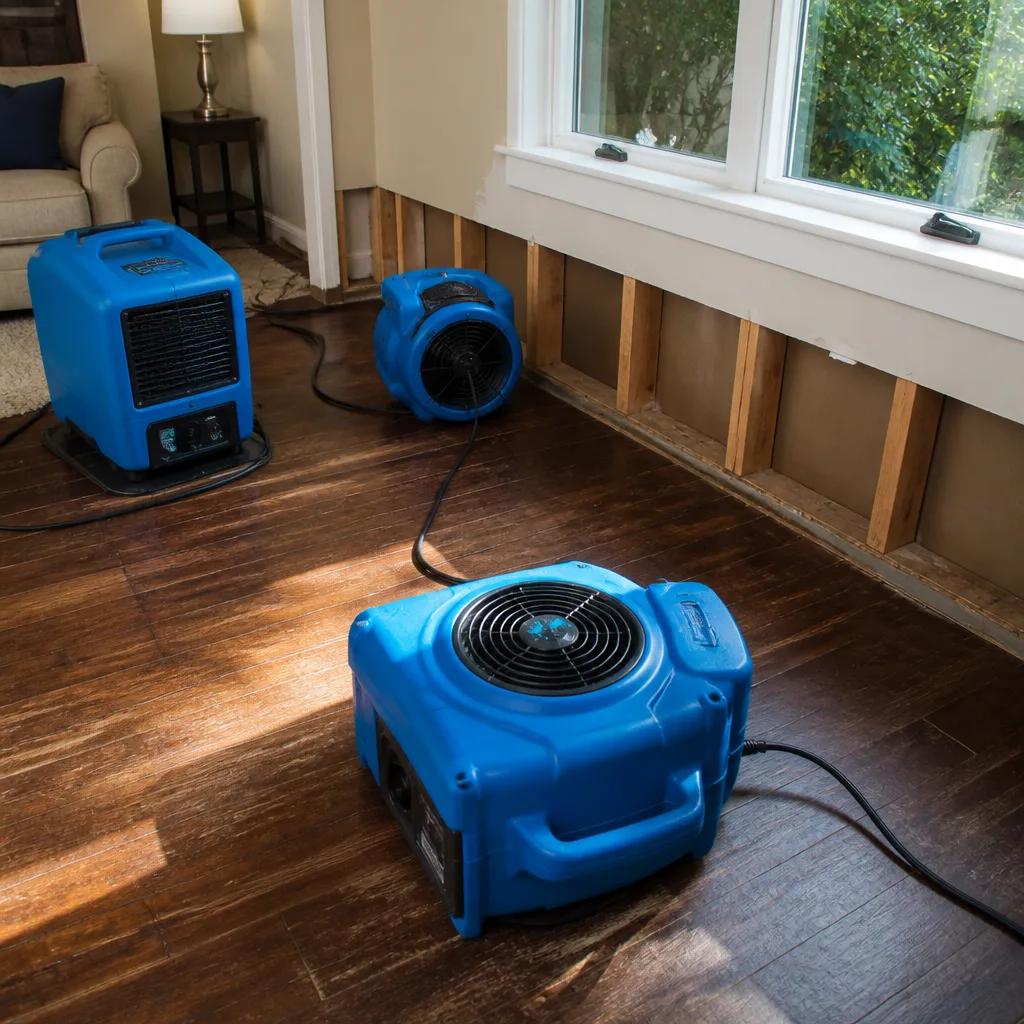
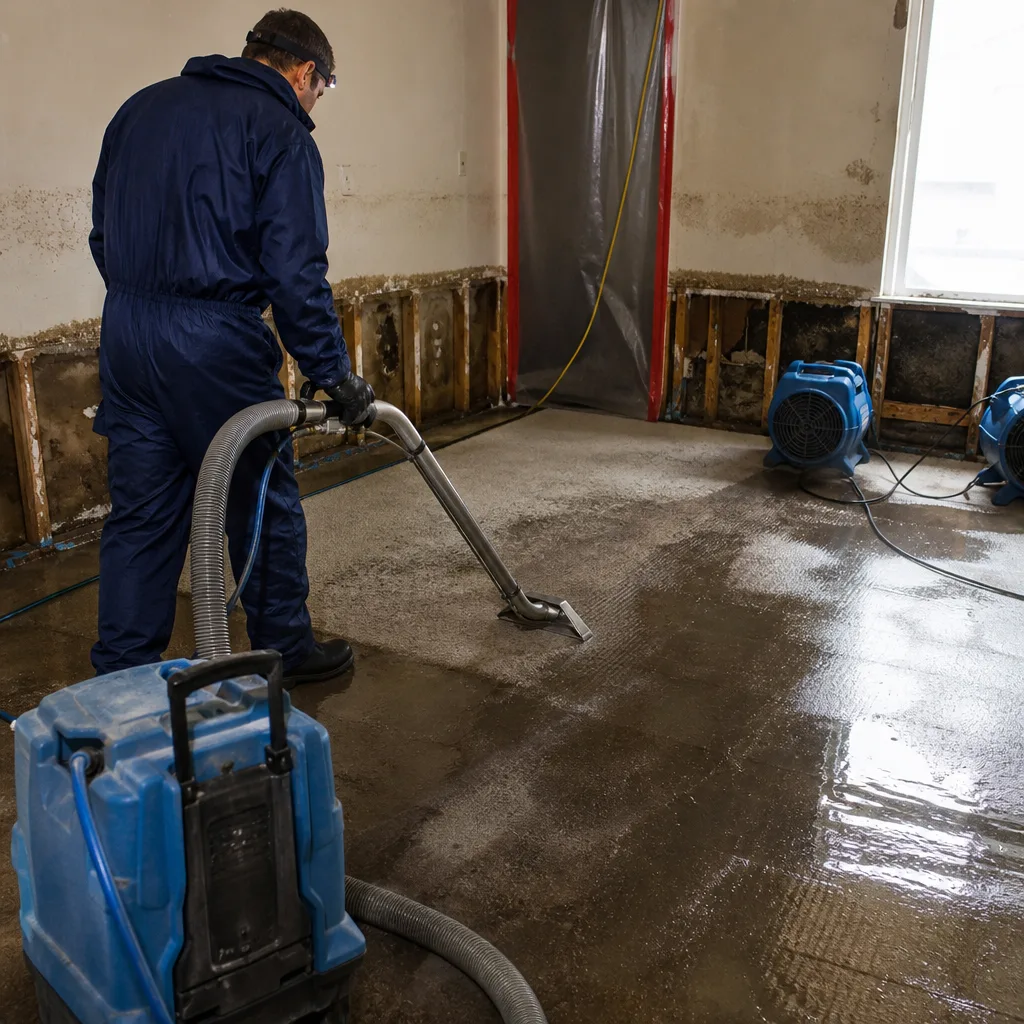
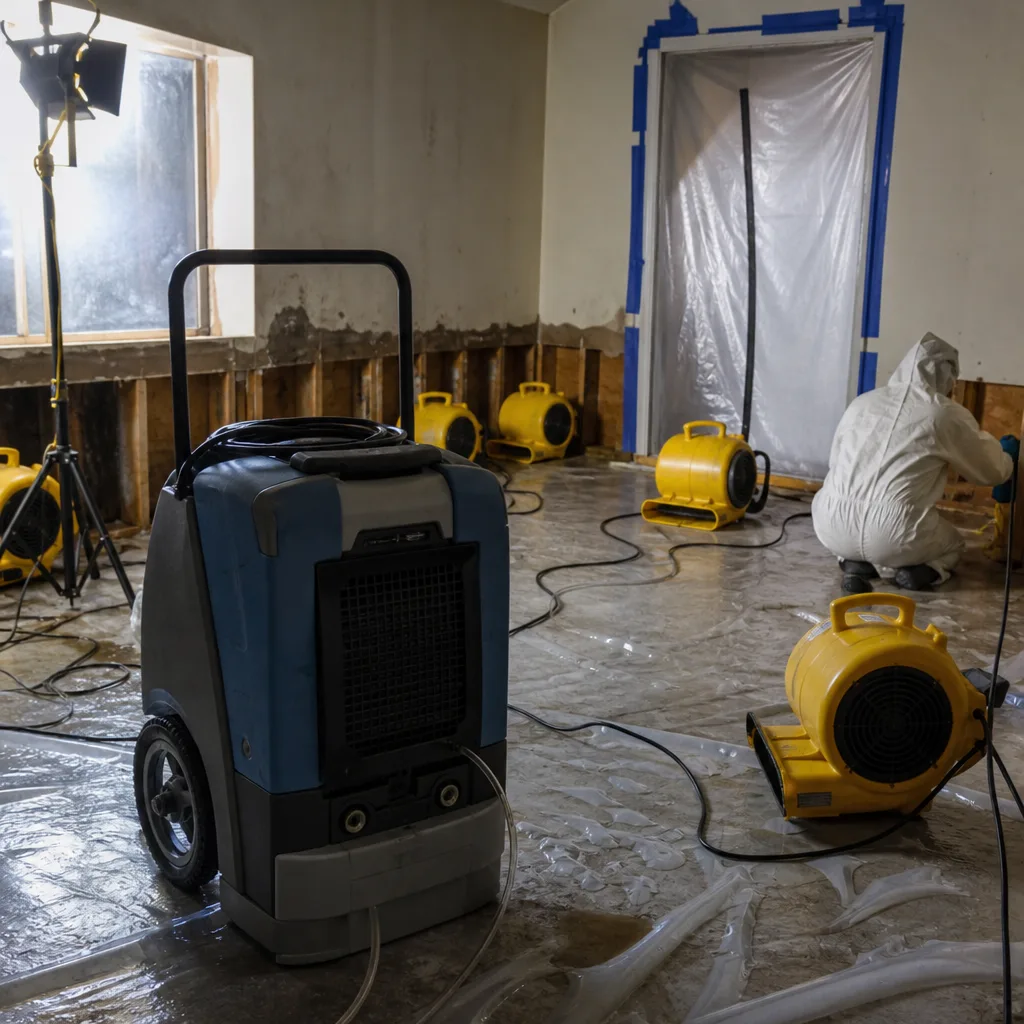
We deploy Phoenix dehumidifiers and XPOWER air movers sized to the cubic footage, then log specific humidity and grain depression readings each morning. Under Bainbridge’s dense Douglas fir, cedar, and big-leaf maple canopy, drying phases run longer than mainland protocols assume; we don’t shorten the cycle until the wood returns to pre-loss moisture content.
4. Cleaning & Antimicrobial Treatment
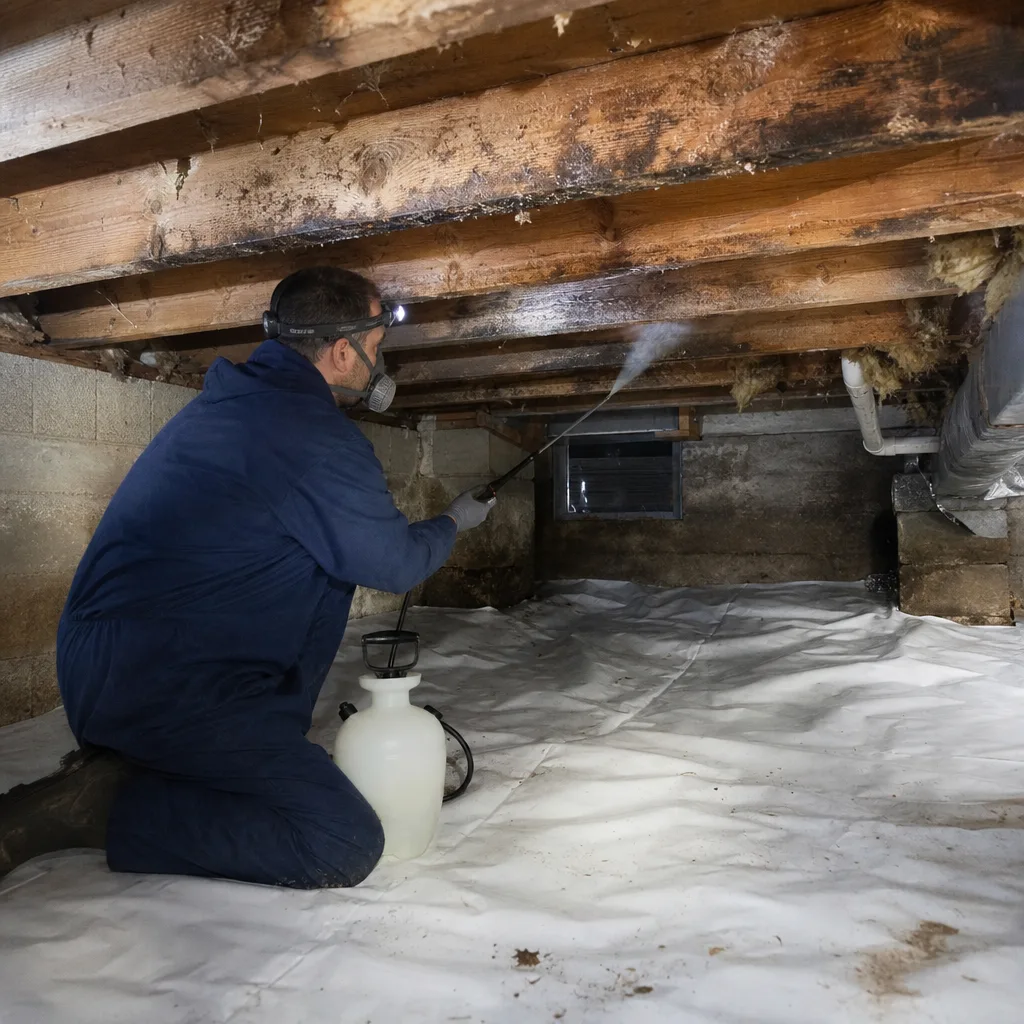
HEPA vacuuming precedes application of EPA-registered antimicrobial to framing and subflooring. For Category 2 or 3 water sources, we remove porous materials that cannot be sanitized to source - insulation, cardboard, and degraded vapor barriers.
5. Crawl Space Treatment & Moisture Control
We address the conditions that allowed mold to establish: installing or replacing vapor barriers, sealing foundation vents where appropriate, and recommending permanent dehumidification or encapsulation systems sized to the space’s volume and the island’s ambient humidity load.
6. Clearance Testing & Documentation
Third-party clearance sampling confirms airborne spore counts at or below outdoor baseline before we release containment. You receive the photo record, the drying log, the written scope, and the signed 365-Day Done Right Promise under The Haven Standard.
Need Emergency Mold Remediation in Bainbridge Island Now?
Crews minutes away, answering live 24 hours a day. The sooner we start, the less it costs.
Working With Your Insurance Company
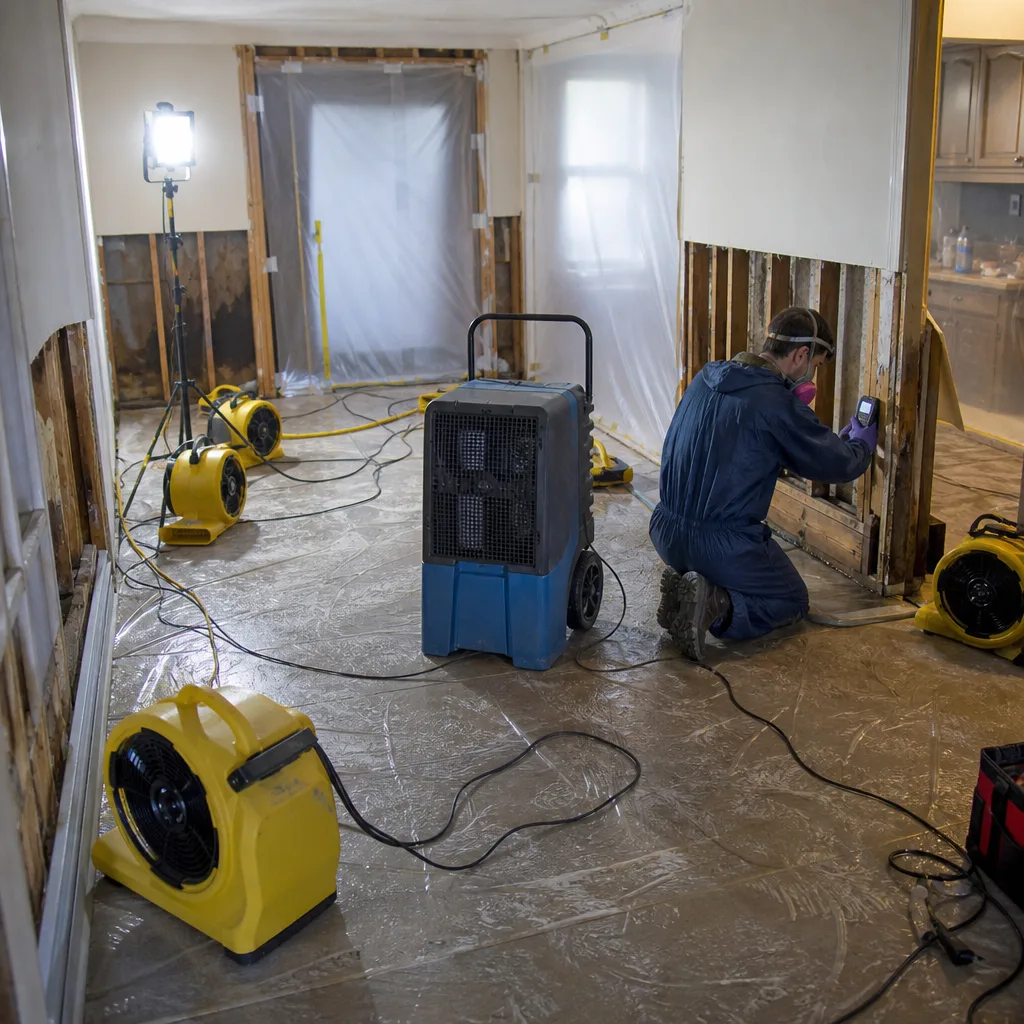
We built our documentation system around what adjusters actually need to approve a claim. From the first hour on site, we photograph every affected room, record moisture readings on a grid pattern, and maintain daily drying logs that show progress in measurable terms. Our estimates follow industry-standard Xactimate pricing, and we coordinate directly with your carrier’s adjuster so you’re not translating between two parties.
Alicia Brennan founded Back to Dry in 2011 after working as a claims adjuster and seeing how many restoration invoices were denied for thin documentation. That origin shapes every job we run: the photo record, the written scope, and the signed warranty are standard deliverables, never upsells.
What We Provide Your Insurer
- Thorough documentation of the loss
- Photos of all damage, room by room
- Moisture readings and drying logs
- A detailed, line-item scope of work
- Direct coordination with your carrier
Built for Bainbridge Island’s Loss Calendar
October through February brings Puget Sound wind events that drive old-growth and second-growth conifers through rooflines. Local restoration techs know remediation cannot begin until an arborist clears the tree, and coordinating that on an island with limited contractor availability means the sequence - arborist, tarping, structural assessment, mitigation - must be managed the same day to prevent saturation of interior assemblies. By January, saturated framing in unheated crawl spaces hits temperatures where mold colonization pauses but doesn’t die; once spring warming arrives, delayed colonization becomes visible.
March through May delivers the heaviest sustained rainfall, often overwhelming older gutter systems on Winslow-area craftsmans and driving water behind siding. Summer brings brief relief, but the canopy shade never really breaks, and homes with poor crawl space ventilation remain at risk. We pre-position dehumidifiers and air movers island-side before forecast wind events, because the ferry schedule doesn’t accommodate emergency logistics.
Mold Remediation Across Bainbridge Island’s Neighborhoods
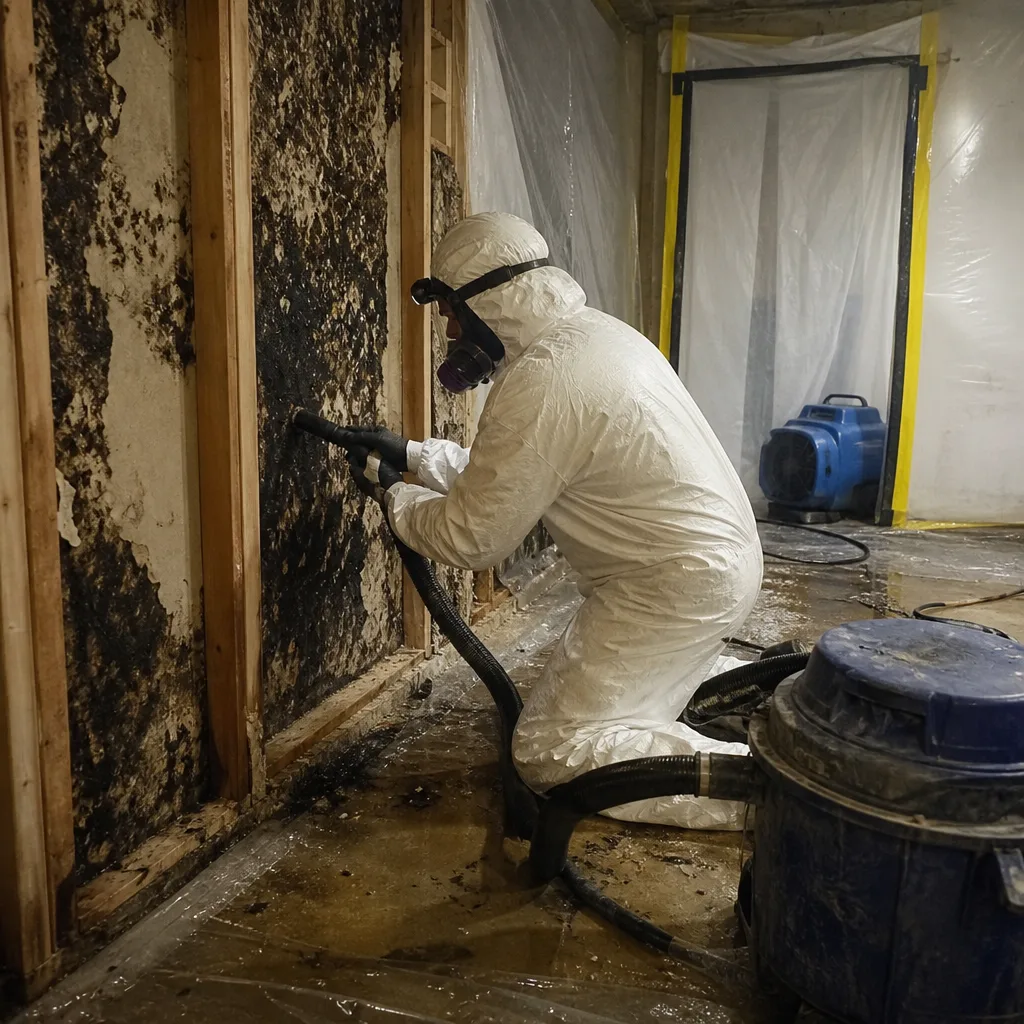
In Winslow, the island’s commercial and historic core, we work on early-1900s craftsmans with balloon framing and minimal vapor barriers. These homes dry slowly; their plaster and lath assemblies hold moisture long after the source is stopped, and we often need to open wall cavities for targeted drying rather than assume ambient dehumidification will suffice.
Eagledale and the Rockaway Beach Road corridor present a different profile: 1960s ranches on larger lots with extensive crawl spaces under the tree canopy. We got a call from the Eagledale area off Rockaway Beach Road after a supply-line failure under a 1960s ranch saturated a 14-inch crawl space; the homeowner had waited overnight for the first ferry, and our moisture mapping found readings well past the point where 24-to-48-hour mold colonization was already underway on the joists. After water extraction, we set containment, treated the framing with antimicrobial, ran XPOWER air movers under the vapor barrier, and placed a Phoenix dehumidifier on a four-day structural drying cycle, logging readings each morning until the wood returned to pre-loss condition and Dri-Eaz documentation backed the scope of work.
Fletcher Bay and the north end see more waterfront custom builds from the 1990s and 2000s, often with conditioned crawl spaces that failed when drainage was undersized for the site’s groundwater. These jobs tend to involve engineered lumber and synthetic floor coverings that trap moisture at the interface; we use non-invasive moisture meters to find the wet line without destructive probing.
Our Mold Remediation team serves all of these areas with equipment already staged on the island.
Specialized Mold Remediation Services We Offer in Bainbridge Island
Mold Inspection & Testing
We start with a visual assessment, moisture mapping, and air sampling to establish spore species and concentration. In Bainbridge Island’s marine climate, we often find Stachybotrys in chronically wet crawl spaces and Aspergillus in attics with failed ventilation. The inspection report includes photo documentation, moisture readings by location, and a written scope with line-item pricing before any remediation begins.
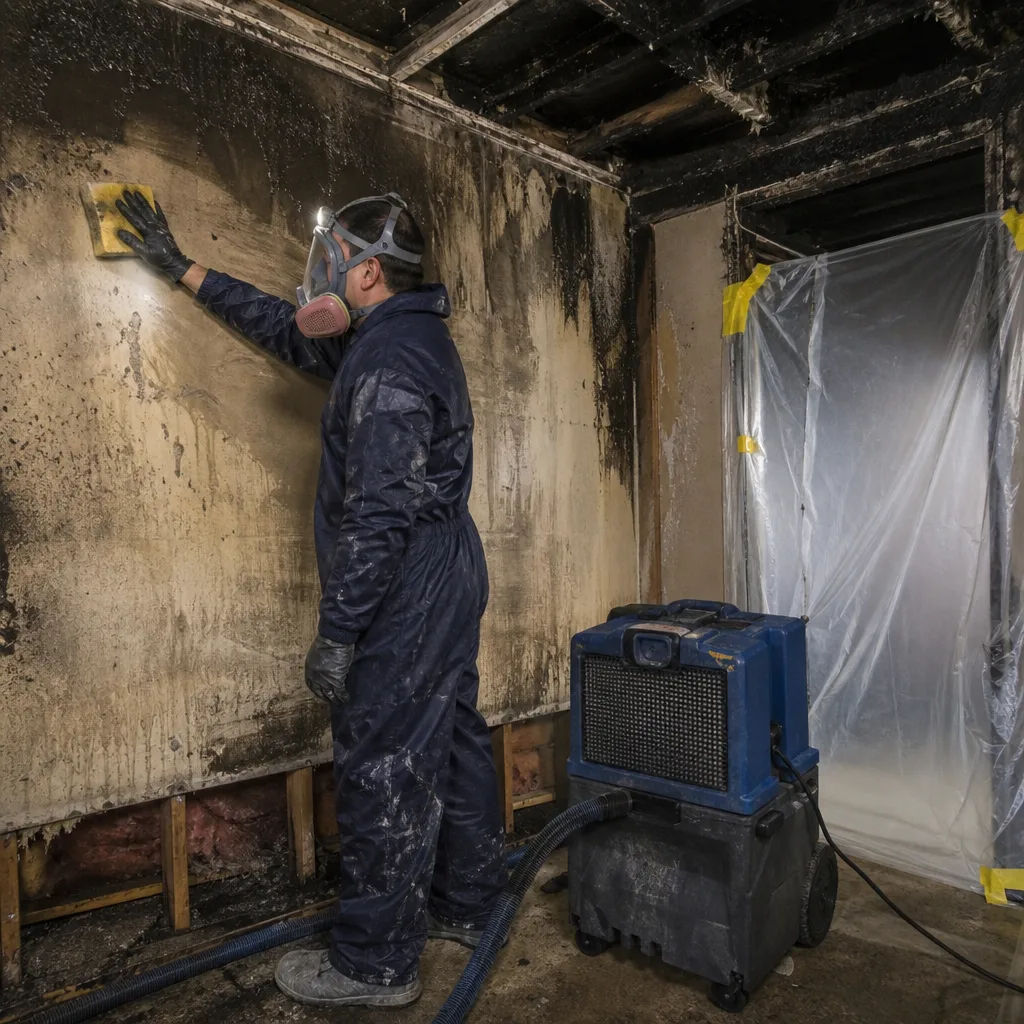
Mold Removal
Removal follows containment and negative-air establishment. We HEPA-vacuum all surfaces, remove non-salvageable porous materials, and treat remaining framing with antimicrobial. On island jobs, we pay particular attention to whether the moisture source is resolved; without that, removal is temporary.
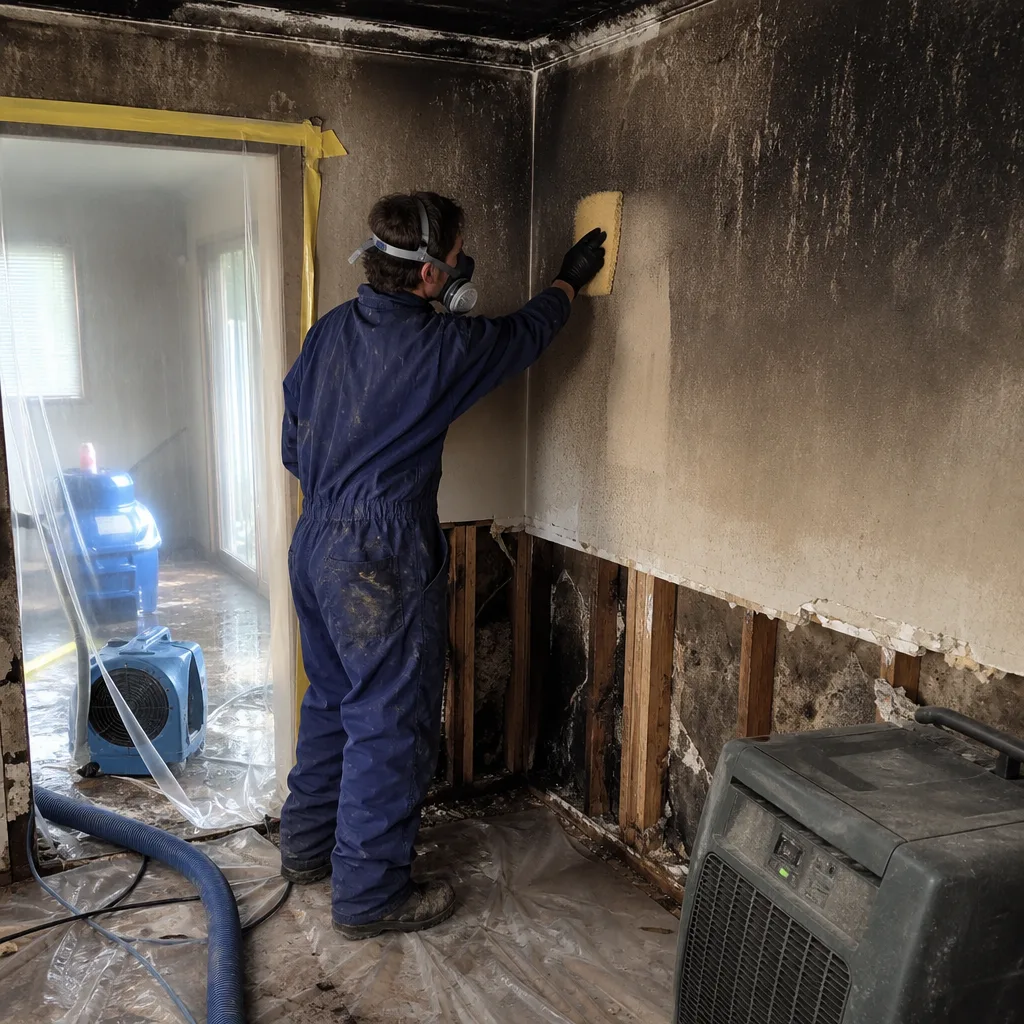
Black Mold Remediation
Stachybotrys chartarum requires full containment, PAPR respirators, and controlled demolition of affected drywall, insulation, and subflooring. We don’t treat black mold as a marketing category; we treat it as a contamination level requiring specific protocol, documented to RIA and IFA standards, with third-party clearance before reoccupancy.
Air Quality Restoration
After remediation, we run HEPA filtration and may recommend duct cleaning if the HVAC system was active during contamination. We verify results with post-remediation air sampling, not guesswork.
Crawl Space Treatment
This is where Bainbridge Island mold work concentrates. We remove degraded vapor barriers, treat joists and subflooring, install new barriers sealed to foundation walls, and size dehumidification to the space’s volume and the island’s ambient humidity. Mold Remediation in Bainbridge Island often means crawl space treatment first, because that’s where the moisture lives.
What happens when you call
- 1
A real person answersNo phone trees - you reach a local pro.
- 2
You get an upfront price rangeHonest numbers before anyone is dispatched.
- 3
A background-checked tech heads outLicensed & insured, dispatched right away.
- 4
You approve before work beginsNothing starts until you say go.
Mold Remediation Costs in Bainbridge Island, WA
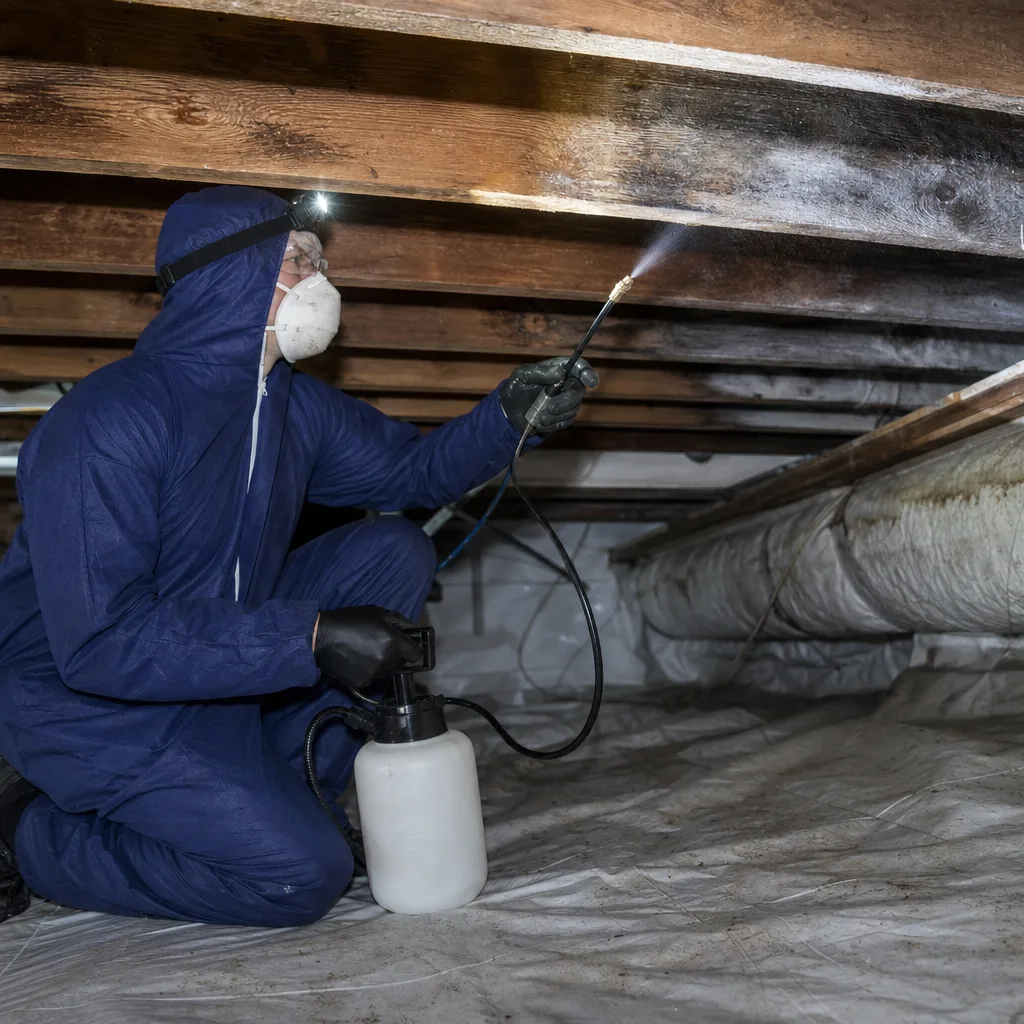
A typical crawl space mold remediation in Bainbridge Island runs $2,800-$4,500 for a contained area under 1,000 square feet with limited material removal. Jobs involving living-area drywall, HVAC contamination, or structural drying of engineered assemblies range $5,500-$7,500. Full-home remediation with multiple containment zones and reconstruction can exceed $12,000.
| Service | Typical Range in Bainbridge Island |
|---|---|
| Crawl space mold inspection & testing | $350-$650 |
| Contained crawl space remediation (under 1,000 sq ft) | $2,800-$4,500 |
| Living-area remediation with drywall removal | $5,500-$7,500 |
| Full-home remediation with reconstruction | $10,000-$15,000+ |
What moves the price: affected square footage, material classification (Category 1 vs. 2 or 3 water source), whether the HVAC system is involved, and whether reconstruction is included. Insurance typically covers sudden and accidental water damage and resulting mold if reported promptly; long-term maintenance-related moisture is usually excluded. We provide a written scope before work begins so you know exactly what you’re paying for, and we offer a Free Second Opinion on any competitor’s written estimate.
We Also Serve Cities Near Bainbridge Island
Our crews dispatch from the Seattle office and serve Bainbridge Island locally with pre-positioned equipment. We also provide mold remediation to homeowners in Seattle, Kenmore, Bellevue, and Mercer Island - each with their own climate and building-stock considerations, but none with Bainbridge Island’s ferry-dependent response logistics.
Serving Bainbridge Island, WA - Our Local Coverage Area
We’re based in the Bainbridge Island area and know this community well. Use the map below to see our service coverage - if you’re nearby, we can almost certainly help.
Bainbridge Island Mold Remediation Questions, Answered
Why does mold grow so much faster in Bainbridge Island crawl spaces than across the water in Seattle?
The combination of 55 inches of annual rainfall, dense tree canopy that blocks sunlight and traps humidity, and marine air that rarely drops below 60% relative humidity means crawl spaces here stay wet longer and warm enough for colonization year-round. Seattle has more exposed lots and better natural ventilation; Bainbridge Island’s wooded lots create a microclimate where standard drying timelines don’t apply. Call (425) 696-6061 for a moisture assessment - estimates are free.
I found water in my crawl space after the last ferry left - what should I do before a crew can get here?
Shut off the water source if it’s a supply line, then document with photos from the crawl space access point without entering if there’s electrical risk or structural compromise. Don’t run a household dehumidifier; it’s undersized for the space and the humidity load, and it can delay proper drying by giving a false sense of progress. Our equipment is pre-positioned island-side, so we don’t wait for the morning ferry. Call (425) 696-6061 - we answer live overnight.
Does the Category of water matter for what gets dried and what comes out in a Bainbridge crawl space?
Yes. Category 1 clean water can often be extracted and dried in place if caught within 24 hours. Category 2 gray water requires antimicrobial treatment and removal of porous materials like insulation and cardboard. Category 3 black water means removal of all porous materials and controlled demolition of affected structural elements. Because Bainbridge Island’s marine climate can push Category 1 to Category 2 in under 48 hours, we test and classify on arrival, not assumption. Call (425) 696-6061 for same-day classification.
Why does the arborist have to come before mold mitigation during a wind-storm tree strike?
During October-February Puget Sound wind events, falling conifers through rooflines are routine on the island. Remediation cannot begin until the tree is cleared and the structure is tarped; working under an unstable load is unsafe and can compound damage. Coordinating arborist → tarping → structural assessment → mitigation the same day is critical, because every hour of exposed interior in 55-inch-rain marine air saturates assemblies deeper. We manage that sequence for our Bainbridge Island clients. Call (425) 696-6061 and we’ll coordinate the response.
How do you document that a crawl space is actually dry before closing it back up?
We log specific humidity, grain depression, and wood moisture content daily using calibrated meters, and we don’t release containment until readings hold at pre-loss baseline for 48 hours. You receive the drying log, the photo record, and third-party clearance sampling results. Surface-dry is not dry; we prove equilibrium with data, not touch. Call (425) 696-6061 to review our documentation standards.
Will my insurance cover mold remediation in Bainbridge Island?
Most policies cover mold resulting from sudden and accidental water damage - a burst pipe, appliance failure, or storm intrusion - if reported promptly and mitigated without delay. Long-term leaks, maintenance neglect, or groundwater seepage are typically excluded. We document the loss origin, provide photo evidence, and coordinate directly with your adjuster to establish coverage. Call (425) 696-6061 and we’ll review your situation.
How long does mold remediation take in Bainbridge Island?
Contained crawl space jobs typically run 3-5 days of active remediation plus 2-4 days of structural drying, longer than mainland timelines because of the island’s humidity load. Living-area jobs with drywall removal add reconstruction time. We don’t rush drying; we log data until the assembly is proven dry. Call (425) 696-6061 for a timeline specific to your loss.
Can my family stay in the home during mold remediation?
For contained crawl space work with no HVAC cross-contamination, often yes. For living-area remediation involving black mold, extensive demolition, or airborne spore levels above outdoor baseline, we recommend temporary relocation until clearance testing confirms safe reoccupancy. We make that recommendation in writing, with data to support it. Call (425) 696-6061 to discuss your specific situation.
Written by Alicia Brennan, Owner at Back to Dry Restoration, serving Bainbridge Island since 2011.
Mold Remediation in Nearby Areas