
Free visual inspection and a written scope of work before any mitigation begins - photos, moisture readings, and drying logs go in your claim file
The scope we write is the scope we bill. Anything new gets shown to you, in writing, before we touch it.
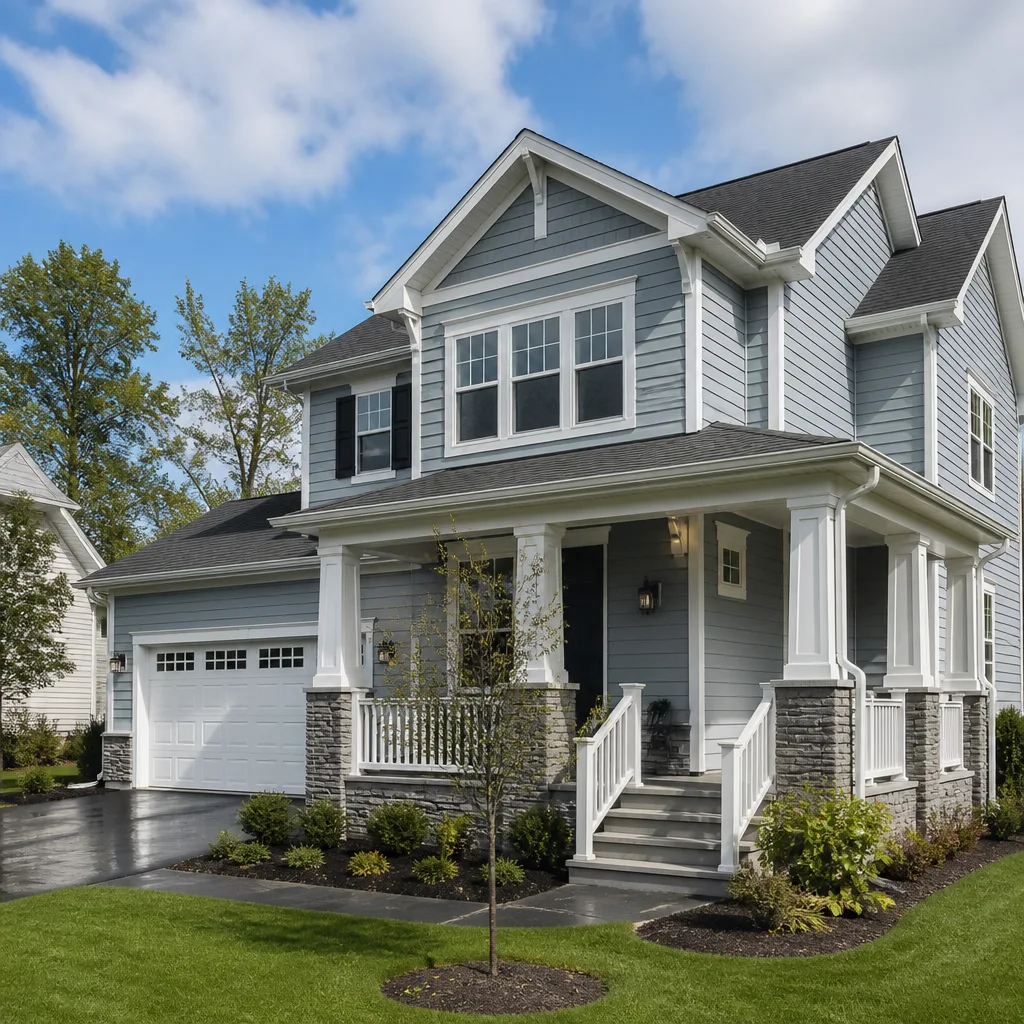
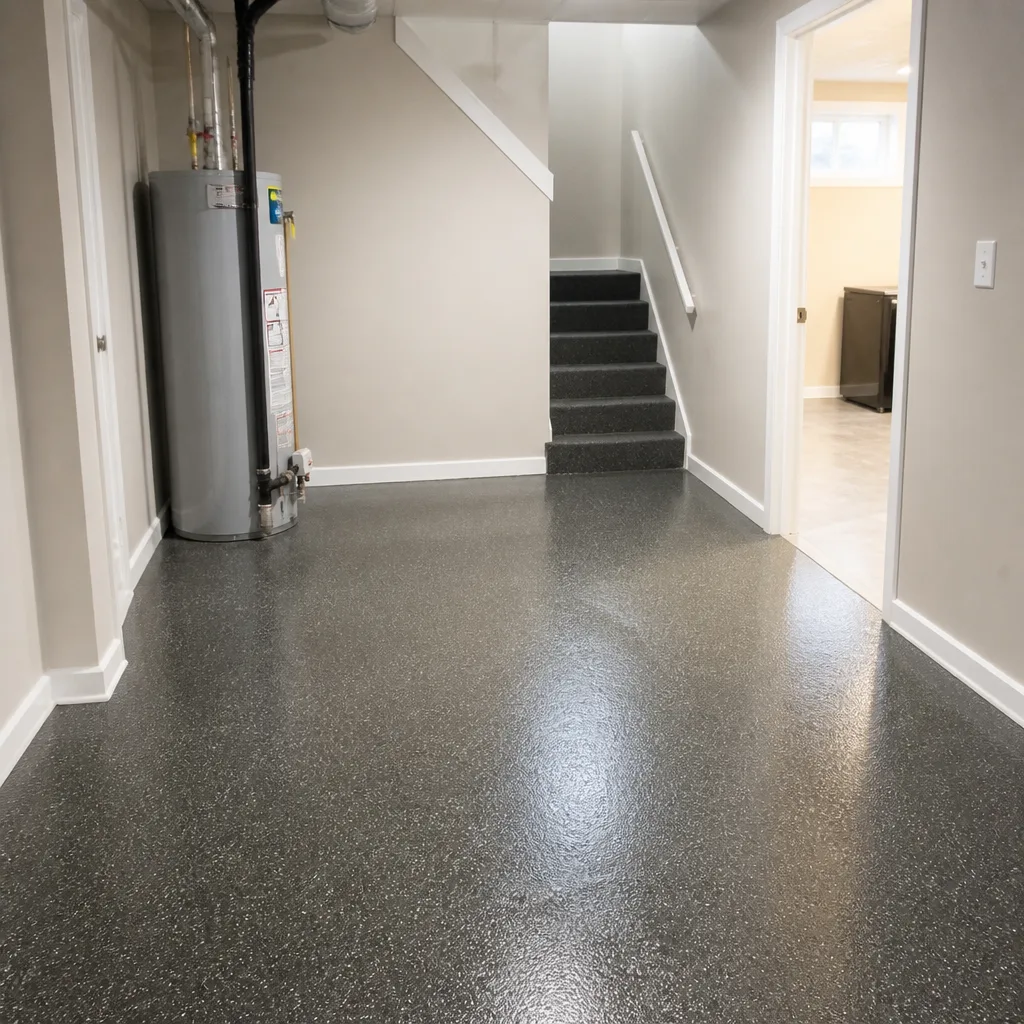
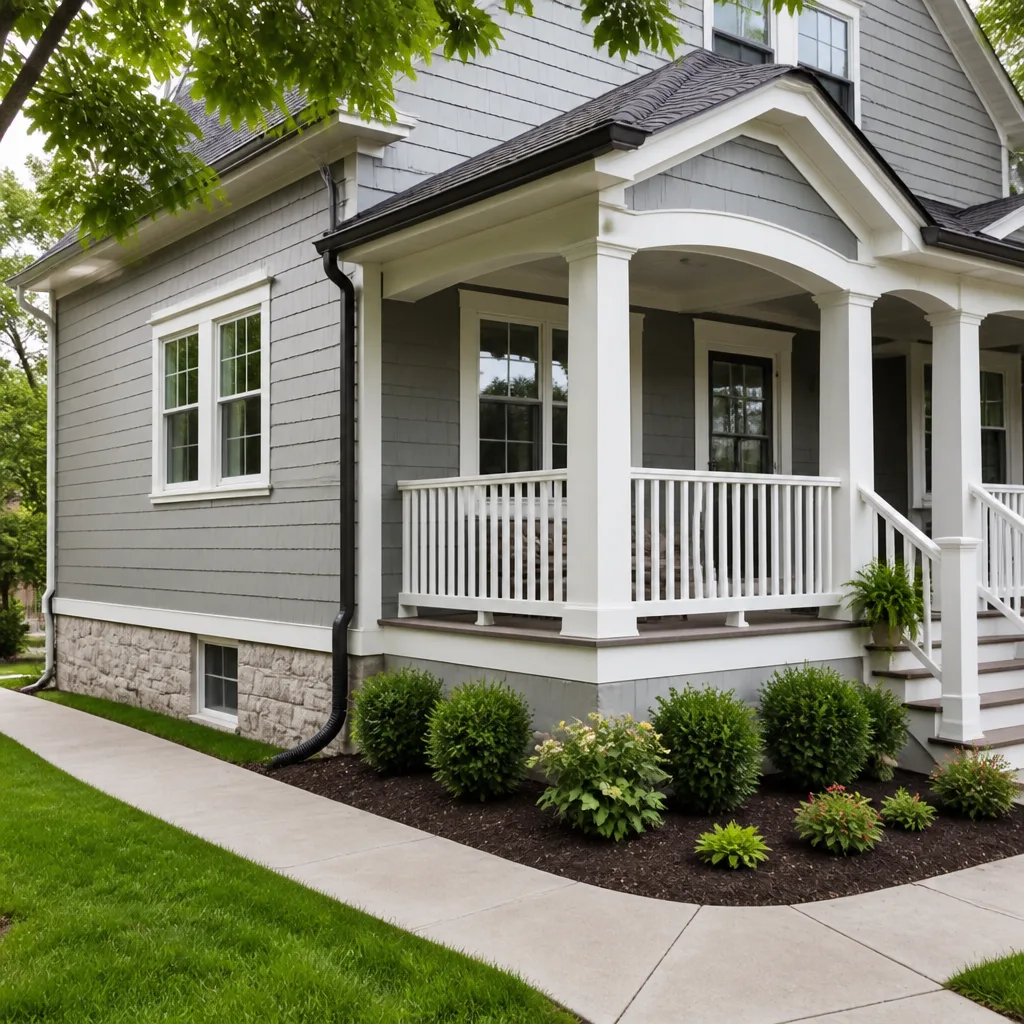
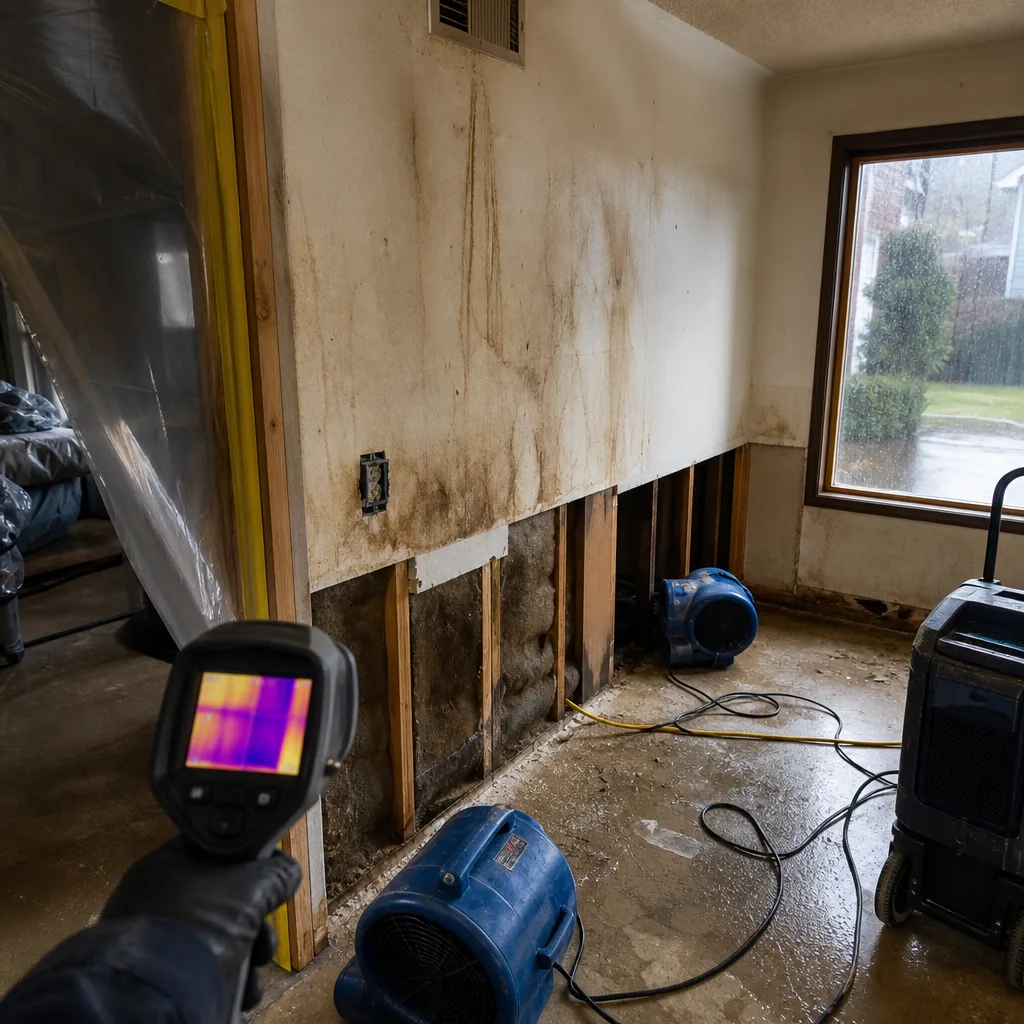 Before
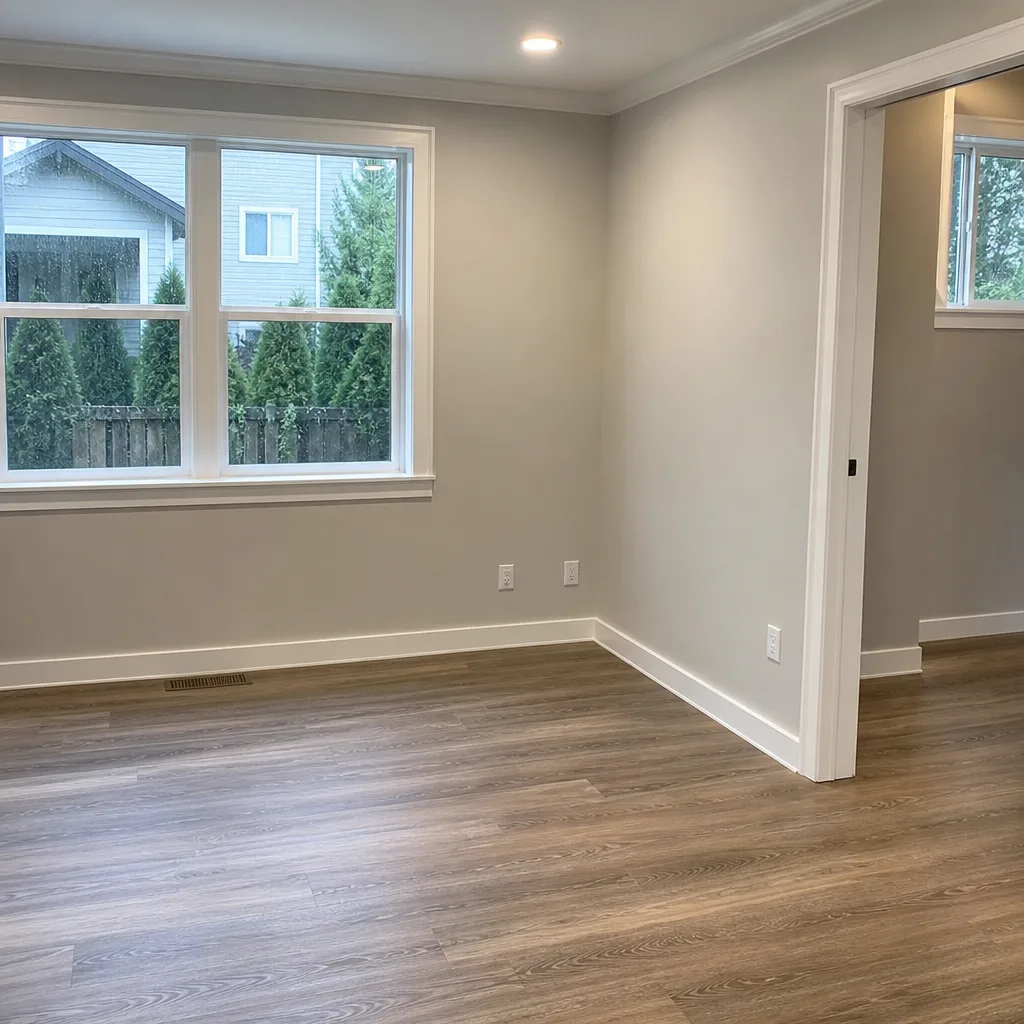 After
After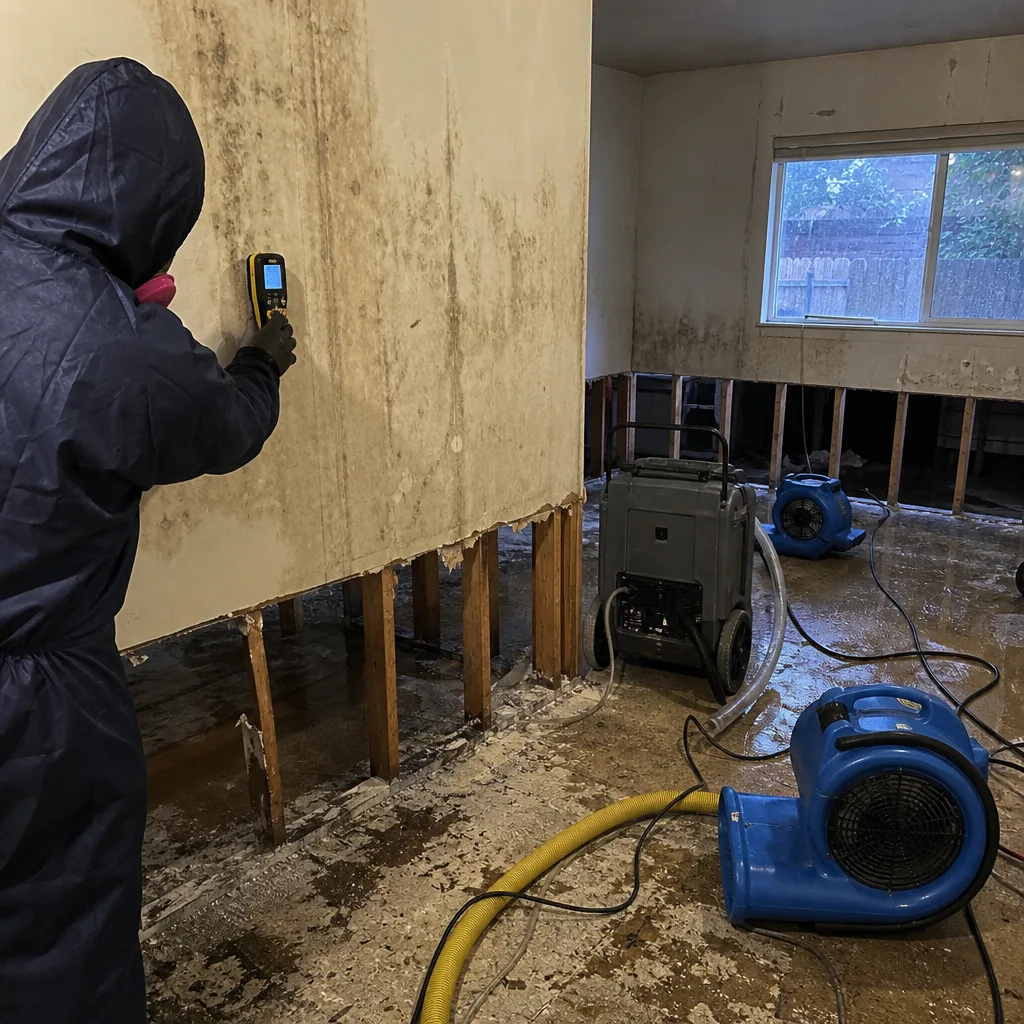 Before
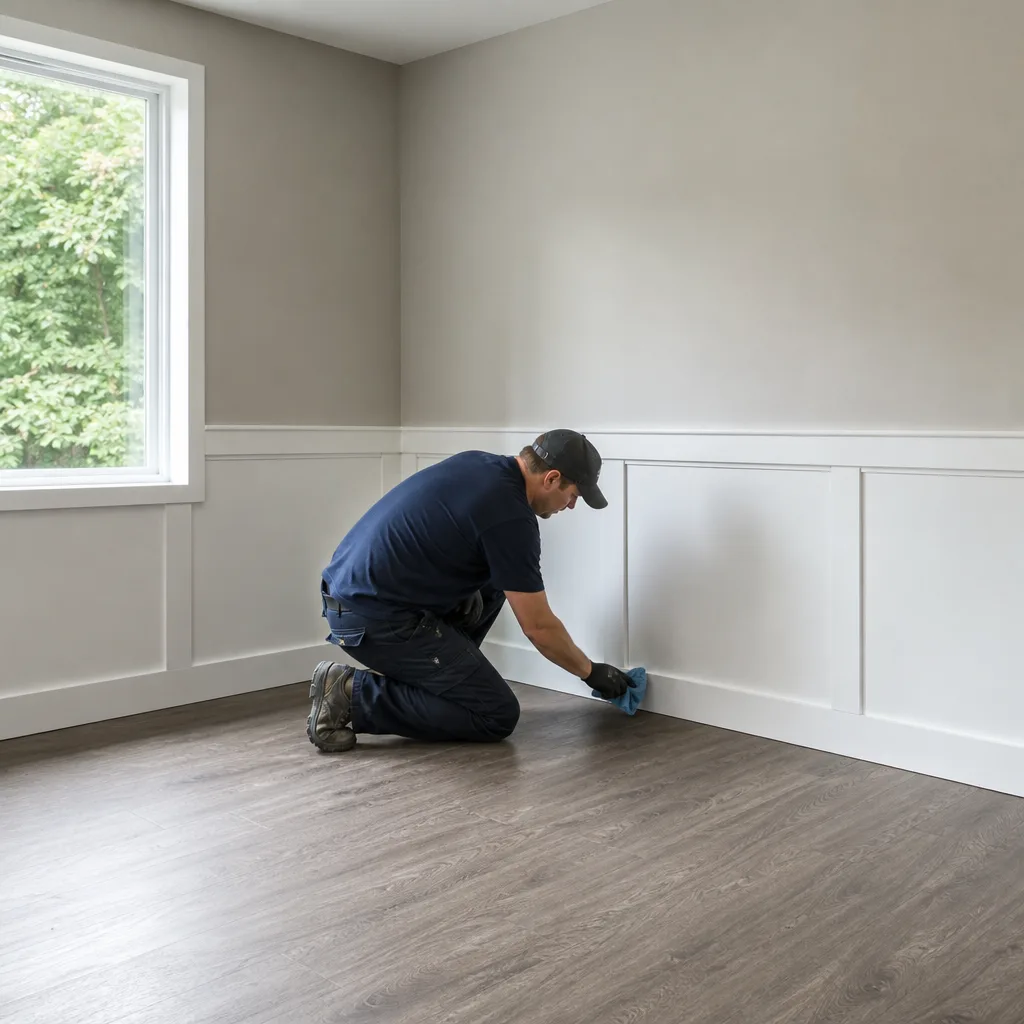 After
After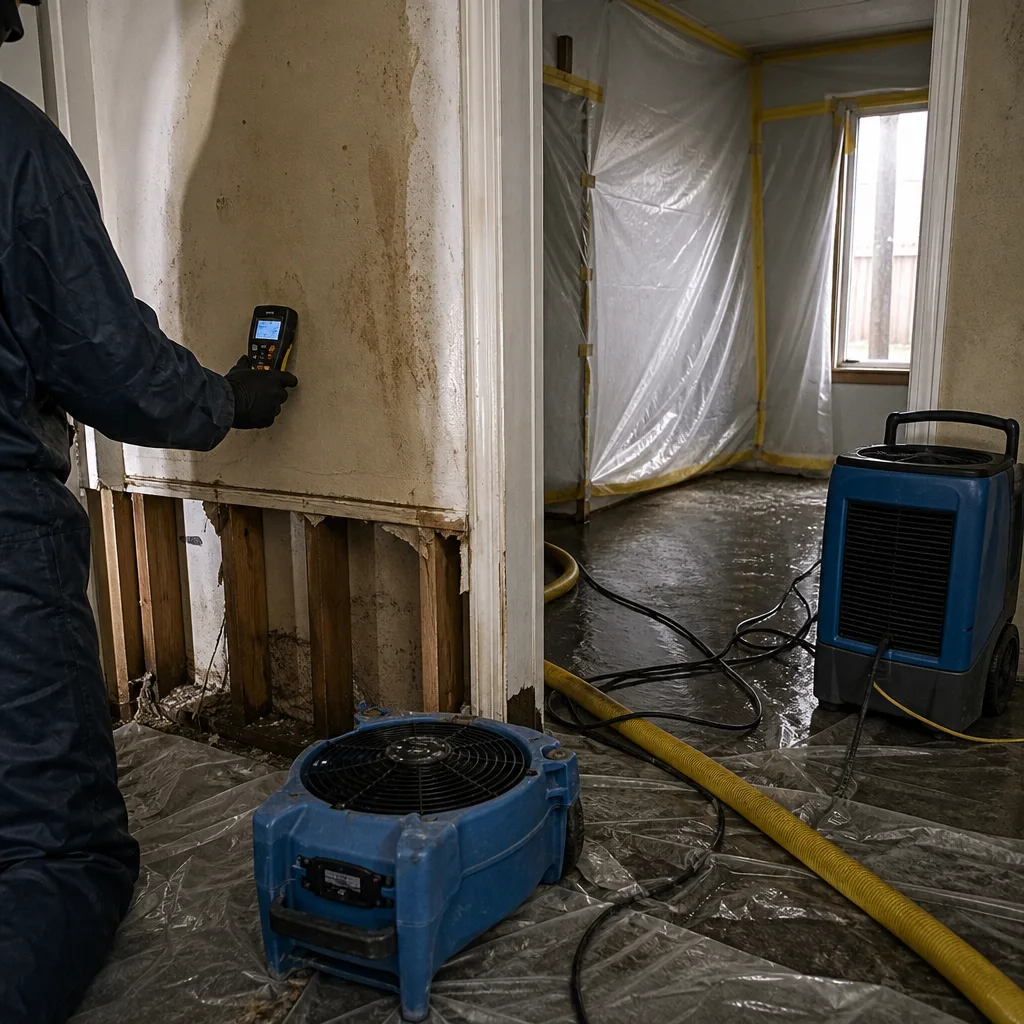 Before
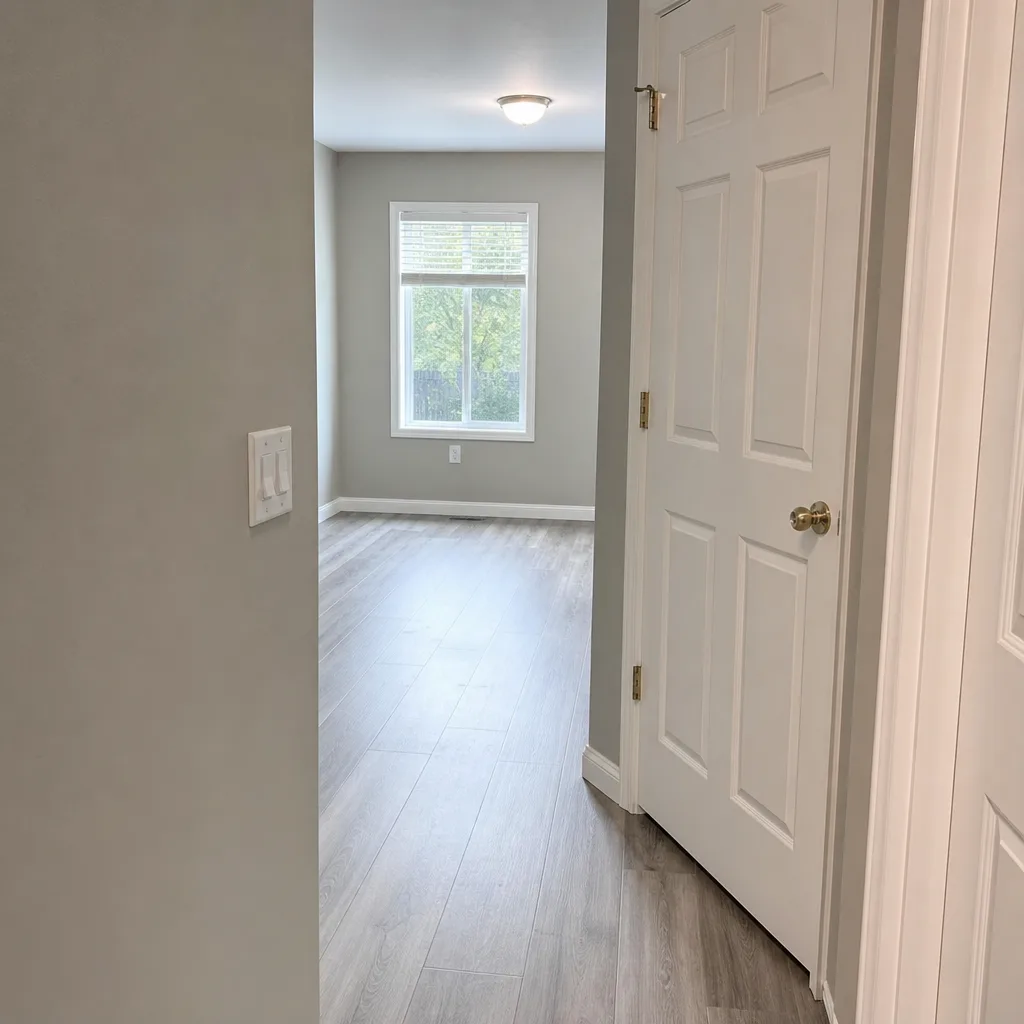 After
After24/7 Emergency Mold Remediation in Kirkland
Mold remediation in Kirkland typically costs $1,800-$6,500 depending on affected square footage and whether the source is a contained crawl space or has spread into living areas; most jobs begin with a free visual inspection and written scope the same day. Our crews answer live at (425) 696-6061, 24 hours a day, with no voicemail trees or next-business-day callbacks while moisture is still moving through your walls. We dispatch from our Seattle office to Kirkland properties with containment equipment, HEPA air scrubbers, and moisture mapping tools already loaded. The first 24-48 hours after water intrusion are critical - mold colonizes drywall at 16% wood moisture content, and Kirkland’s marine climate keeps ambient humidity high enough that once started, growth accelerates without aggressive mechanical drying.
Understanding Mold Remediation Severity in Kirkland Properties
Mold severity in Kirkland is graded by affected square footage, material porosity, and whether the underlying moisture source is resolved or ongoing. Category 1 contamination - limited to non-porous surfaces in a single room with a resolved leak - requires surface treatment and 48 hours of negative-air containment. Category 2 extends to semi-porous materials like subfloor or drywall with visible colonization, demanding removal of unsalvageable materials and structured drying to IICRC S520 standards. Category 3, or black mold remediation, involves extensive colonization of structural framing, HVAC contamination, or conditions where moisture has been uncontrolled for more than 72 hours.
Kirkland’s housing stock drives a disproportionate share of Category 2 and 3 calls. The 1950s-1970s split-levels in Rose Hill, Houghton, and Norkirk were built with unencapsulated crawl spaces and original black polyethylene vapor barriers now well past their 20-30 year service life. By the time homeowners smell mustiness or see surface growth on interior walls, the real damage has been underway for years - rim joists and subfloor sheathing rotted from below by chronic ground moisture. Our Mold Remediation crews map moisture across the full foundation perimeter, not just where mold is visible, because in Kirkland’s hillside neighborhoods the hydrostatic pressure point is almost always on the uphill footing where clay subsoil traps water against the foundation wall.
Why Kirkland Property Owners Choose DryMark Restoration Bothell
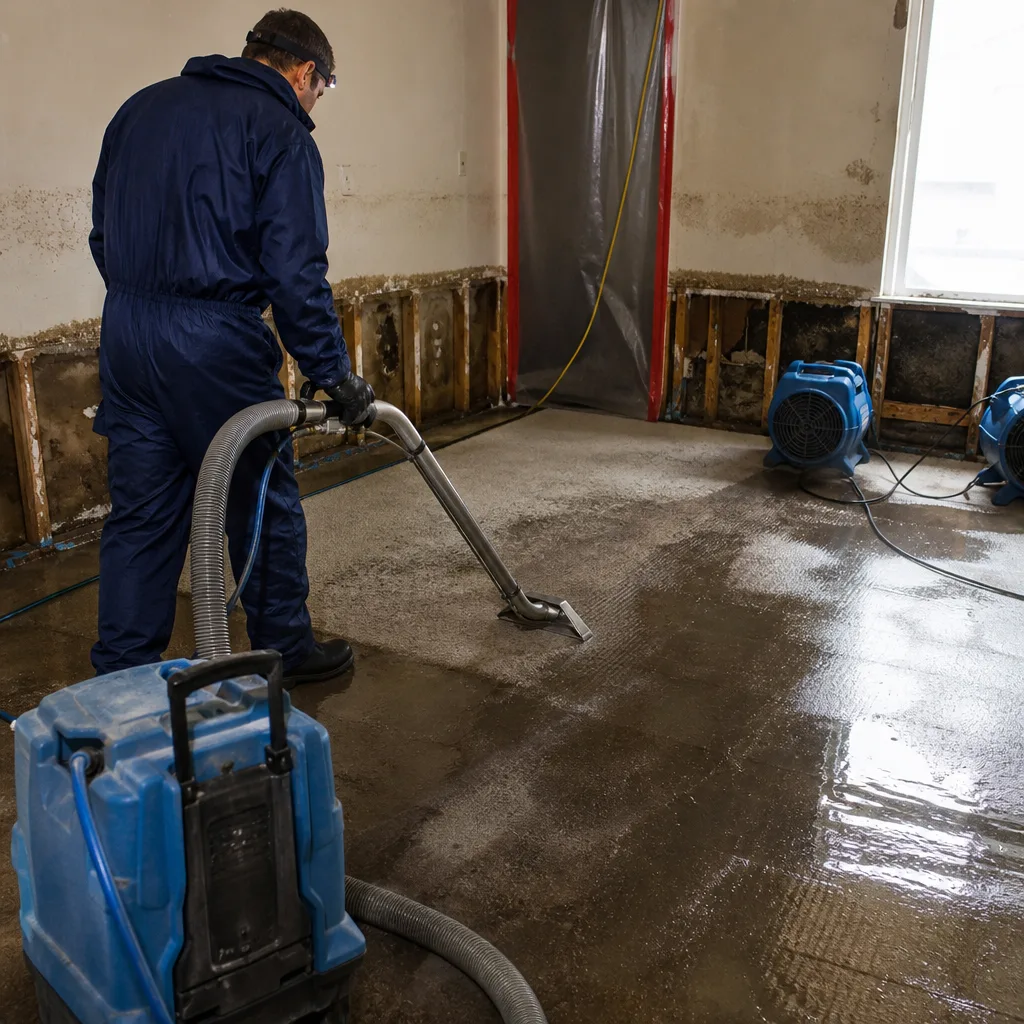
- 45-minute response commitment to Kirkland properties for active water or mold emergencies - crews are staged from our Seattle office with equipment loaded.
- 24/7 live answer by a real person, never an automated system; your call is documented and dispatched immediately, not queued for a morning callback.
- IICRC-certified crews holding WRT (Water Damage Restoration Technician), AMRT (Applied Microbial Remediation Technician), and FSRT (Fire & Smoke Restoration Technician) credentials where the job scope requires cross-trained expertise.
- Free visual inspection with moisture readings and a written scope delivered before any work begins - Haven Standard, Clause 1.
- Direct insurance billing with photo-documented loss records, room-by-room moisture logs, and adjuster coordination as a standard service, never an upsell.
- One team from containment through reconstruction - the same crew that sets your drying plan finishes the rebuild, so nothing is lost in handoffs.
BeforeAfterOur Mold Remediation Process
Inspection & Assessment
We start with moisture mapping using thermal imaging and penetrating hygrometers to find the water source, not just the visible mold. In Kirkland’s hillside neighborhoods, this means checking the uphill foundation wall and crawl space perimeter even when the interior damage appears minor. Every reading is logged with time, location, and photo documentation.
Containment & Air Filtration
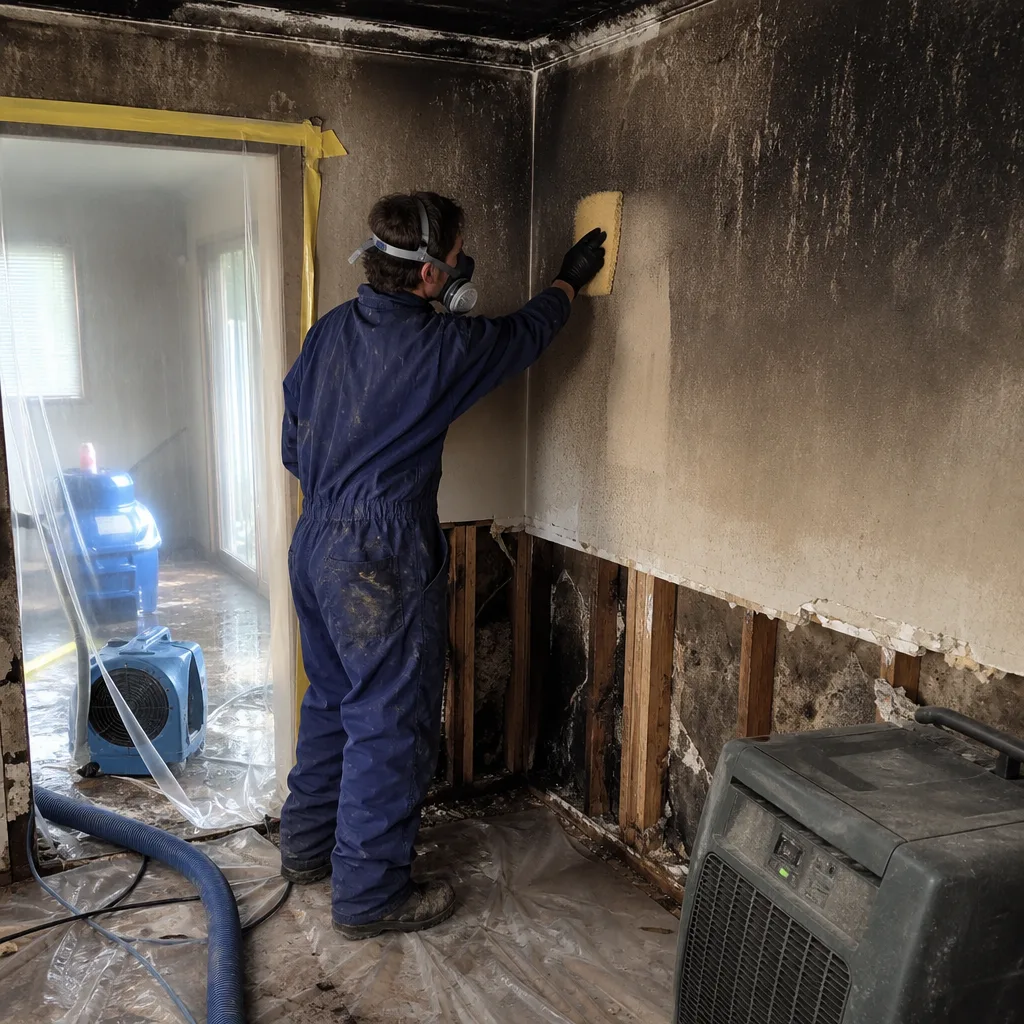
We establish negative-air containment with 6-mil polyethylene barriers and HEPA air scrubbers running at 4-6 air changes per hour to prevent cross-contamination during remediation. Occupied homes in Juanita and Totem Lake get dedicated clean-air pathways so residents can often remain upstairs during crawl space work.
Source Removal & Material Extraction
Unsalvageable materials - degraded vapor barriers, rotted rim joists, mold-compromised drywall - are removed under containment and bagged for proper disposal. We do not seal new barriers over rotted framing; structural integrity is restored before any encapsulation begins.
Structural Drying & Dehumidification
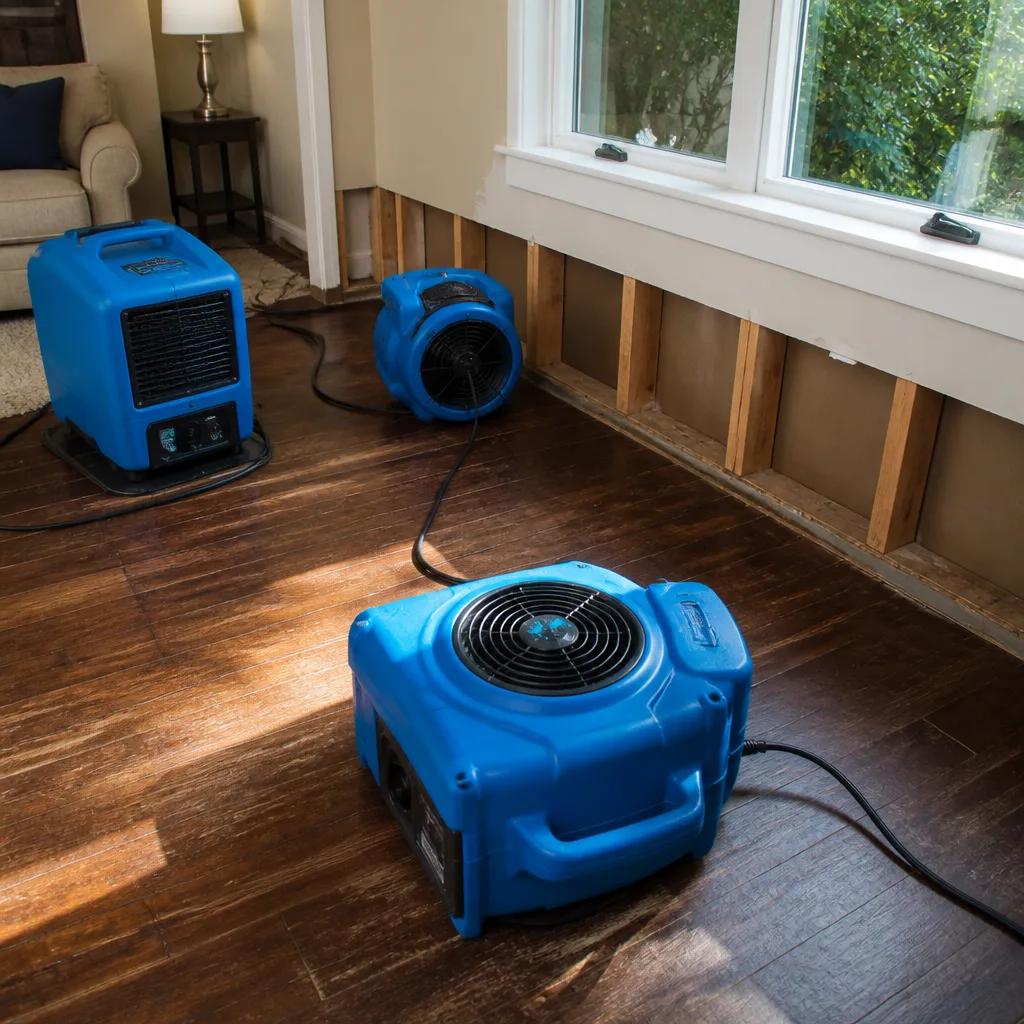
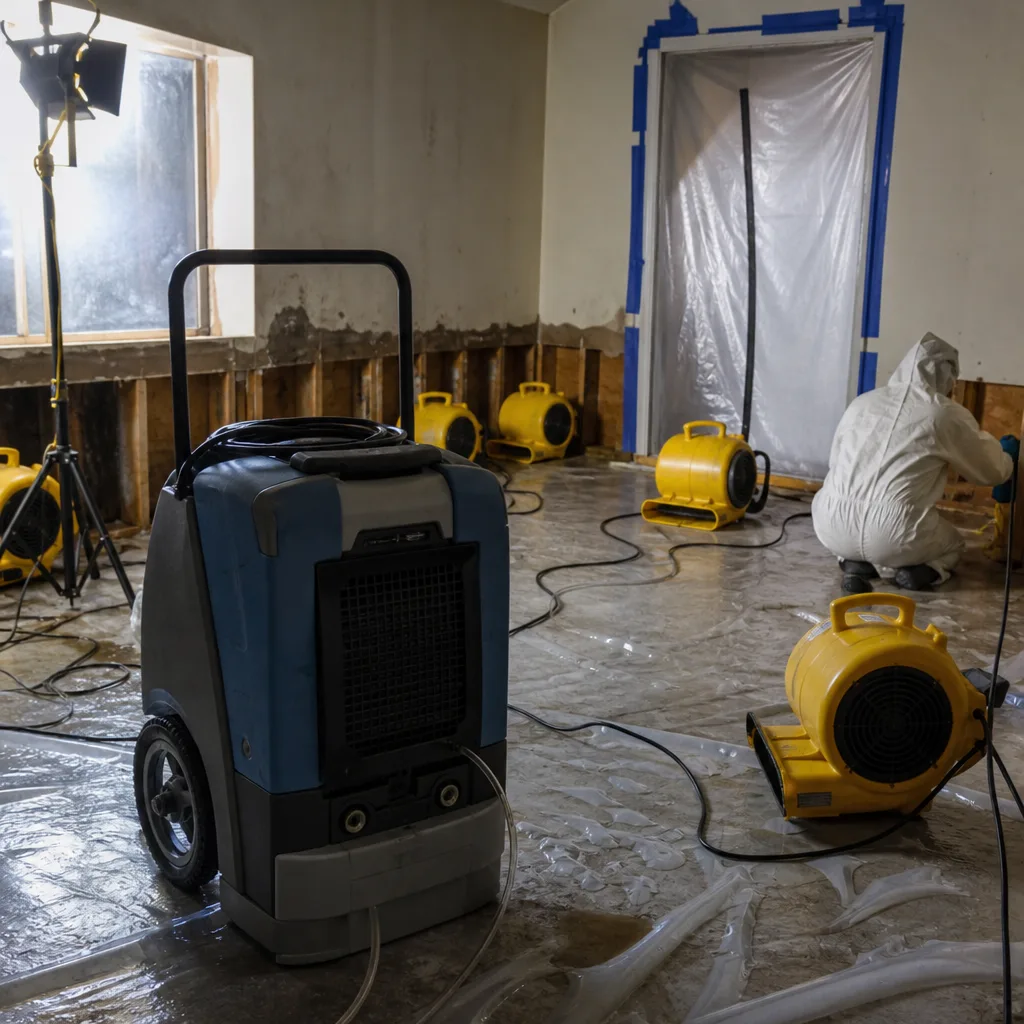
Professional-grade Dri-Eaz and Phoenix dehumidifiers, supplemented with Injectidry cavity-drying systems for enclosed wall voids, reduce wood moisture to below 16% - the threshold where mold cannot colonize. Daily moisture logs track progress and are delivered to you and your adjuster.
Antimicrobial Treatment & Crawl Space Encapsulation
EPA-registered antimicrobial agents are applied to affected framing, followed by installation of a reinforced crawl space vapor barrier sealed at all seams and foundation walls. In Kirkland’s chronic-failure zones, we often add mechanical dehumidification to maintain sub-60% relative humidity year-round.
Clearance Testing & Restoration
Third-party air quality testing or our internal spore-trap analysis confirms remediation success before containment is removed. Reconstruction - subfloor, drywall, flooring - is scoped in writing and executed by the same team that performed remediation, with the 365-Day Done Right Promise on all work.
Need Emergency Mold Remediation in Kirkland Now?
Crews minutes away, answering live 24 hours a day. The sooner we start, the less it costs.
Working With Your Insurance Company
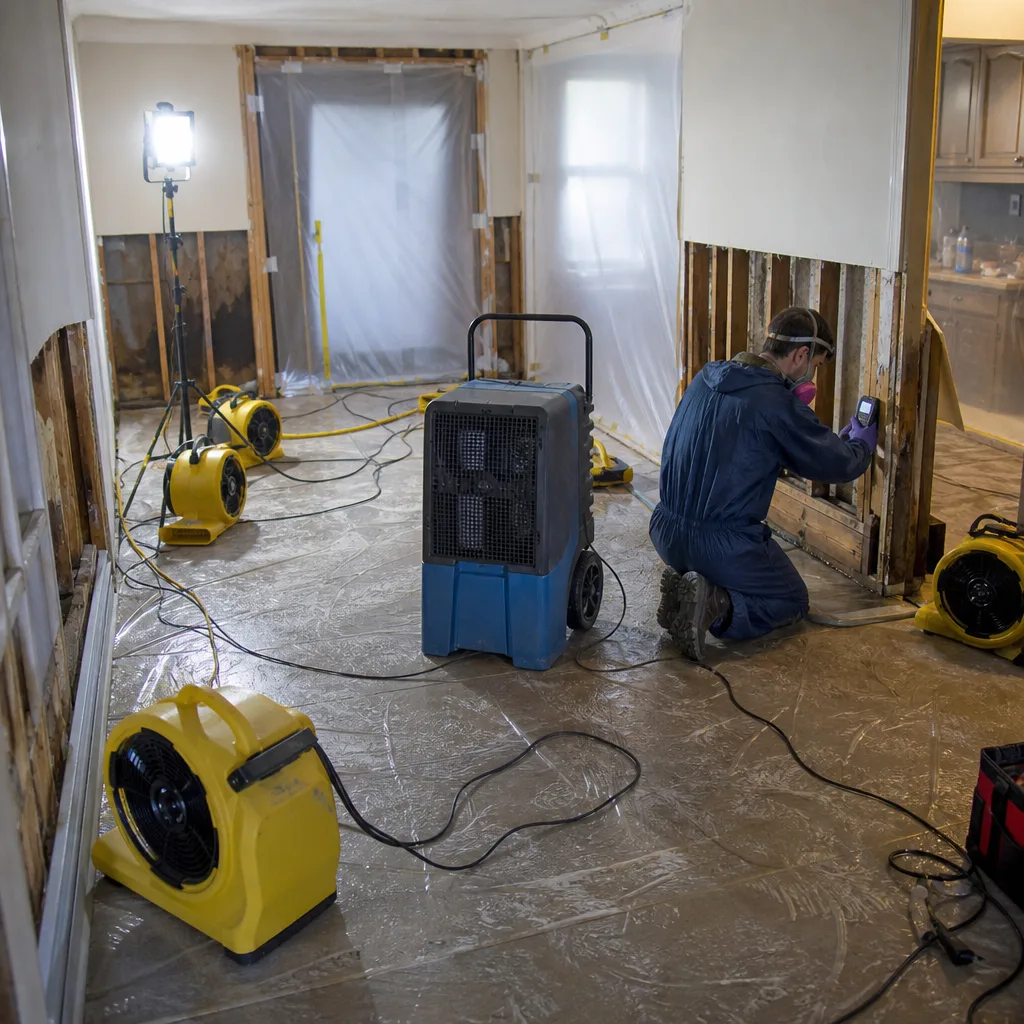
Insurance claims for mold damage succeed or fail on documentation. From the first hour on your Kirkland property, we photograph every affected area, record moisture readings with make and model of instrument, and maintain daily drying logs that meet IICRC, RIA, and IFA standards. Our estimates are structured as line-item scopes with unit pricing, not lump-sum bids that adjusters reject for lack of detail.
We coordinate directly with your carrier’s adjuster, providing the evidence package that turns a restoration invoice into a payable claim. Alicia Brennan founded Back to Dry in 2011 after years as a claims adjuster watching homeowners lose coverage fights over documentation gaps; our process was built to close those gaps before they open.
What We Provide Your Insurer
- Thorough documentation of the loss
- Photos of all damage, room by room
- Moisture readings and drying logs
- A detailed, line-item scope of work
- Direct coordination with your carrier
Built for Kirkland’s Loss Calendar
Kirkland’s mold season runs October through April, driven not by dramatic storms but by the persistent low-intensity drizzle that defines the city’s marine climate. Roughly 38 inches of annual rainfall arrive as weeks-long saturation events that keep clay subsoils swollen and hydrostatic pressure constant against uphill foundation walls. The October-March wet season is when we see the spike in calls from Rose Hill and Houghton - not because of a single catastrophic leak, but because the cumulative moisture load finally overwhelms a degraded vapor barrier that has been failing for years.
Spring brings a secondary pattern: homeowners open crawl spaces for the first time in months and discover winter’s damage - white mold on joists, sagging subfloor, musty air migrating through floor registers. Summer’s brief dry window is when we schedule the encapsulation and structural repairs that couldn’t begin until moisture levels dropped. By September, proactive Kirkland property owners in Norkirk and Juanita call for pre-season inspections, knowing the cycle is about to repeat.
Mold Remediation Across Kirkland’s Neighborhoods
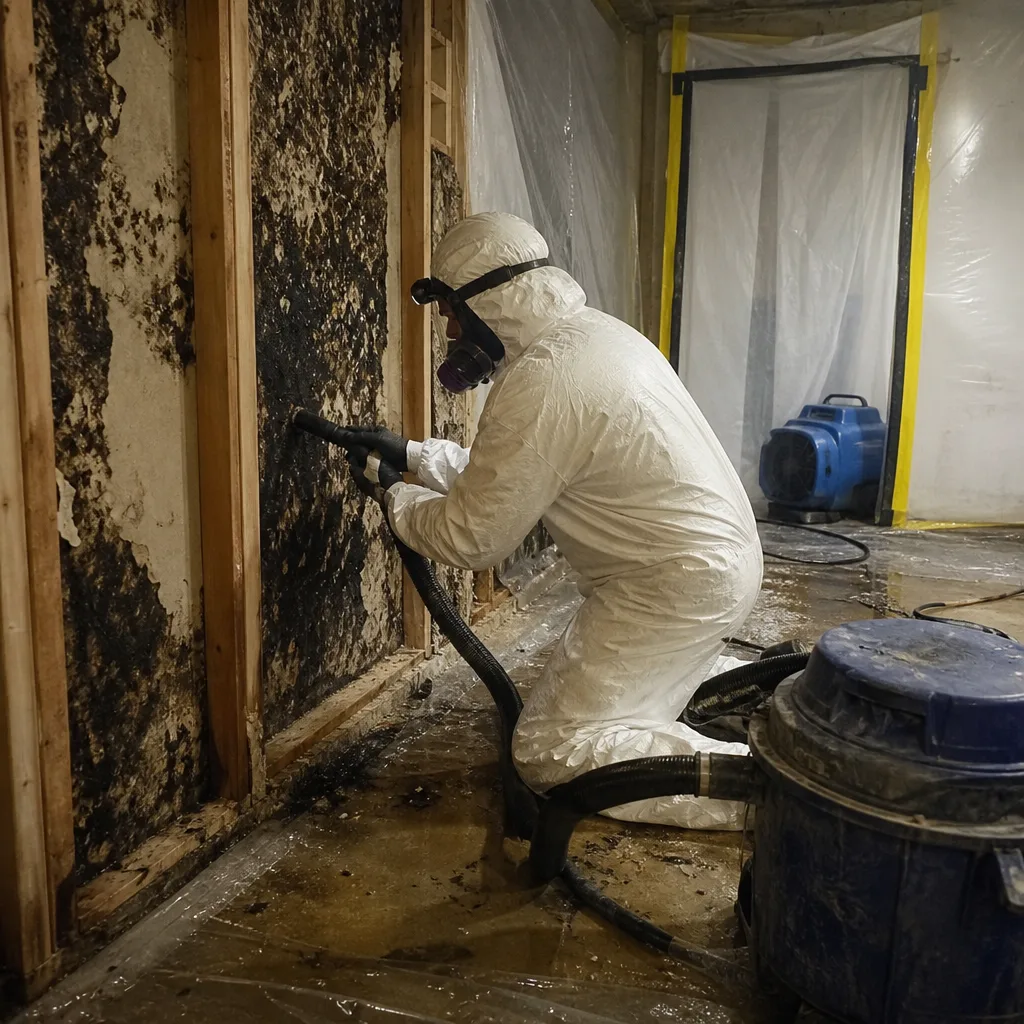
Mold Remediation in Kirkland varies sharply by neighborhood because the building stock and geology are not uniform. In Rose Hill, the concentration of 1960s split-levels on sloped lots means we encounter the classic failure pattern: original black poly vapor barriers in brittle fragments, rim joists rotted from below, and homeowners who smelled nothing until the subfloor started bouncing. Crews working Rose Hill carry extra subfloor sheathing and framing lumber because structural repair is part of most remediation jobs here.
Houghton presents the same era of housing with steeper grades and closer proximity to Lake Washington’s water table. The hydrostatic pressure is more acute, and we often find standing water in crawl spaces that have no perimeter drain or sump system. Moisture mapping in Houghton requires checking the full foundation wall height, not just the mud sill, because water wicks higher on these pressured slopes.
Norkirk’s ranch homes from the same period have simpler crawl space geometries but often lack adequate ventilation - a code requirement that was minimal or ignored in 1960s construction. Mold colonization here tends to be more uniform across the crawl space rather than concentrated at the uphill wall, which changes our drying strategy from targeted to whole-space.
Juanita and the Totem Lake corridor mix older craftsman construction with newer tech-era builds. The newer homes aren’t immune - we see mold in improperly vented attics and around window assemblies where flashing failed - but the remediation is typically smaller in scope and doesn’t involve the crawl-space archaeology that defines our Rose Hill and Houghton work.
Specialized Mold Remediation Services We Offer in Kirkland
Mold Inspection & Testing
Our inspections start with moisture mapping, not guesswork. In Kirkland, we use thermal imaging to identify the hydrostatic intrusion points that drive most local mold growth, then confirm with penetrating hygrometers. Air and surface sampling is available when insurance or health concerns require documented spore identification, but we never sell testing as a substitute for finding the moisture source.
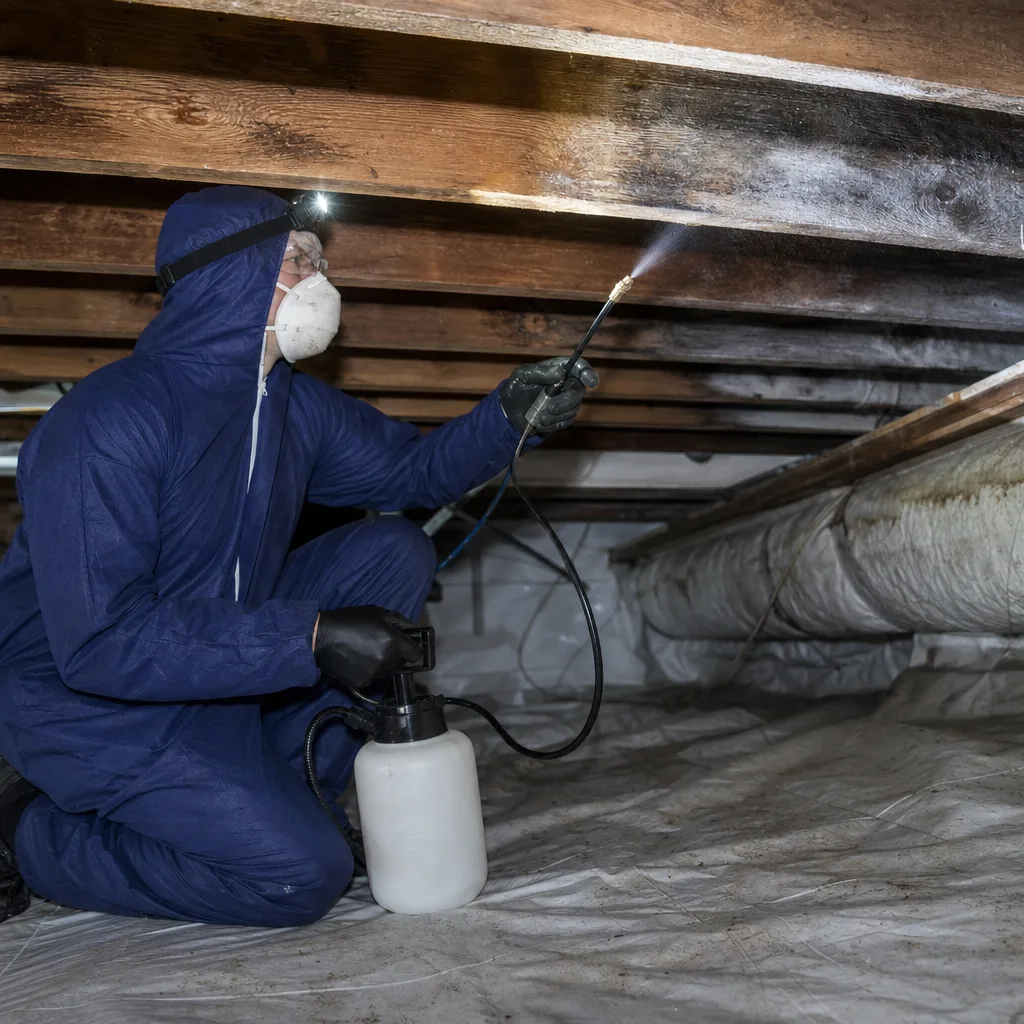
Mold Removal
Removal is performed under containment with HEPA-filtrated negative air pressure, following IICRC S520 protocols. For Kirkland’s typical crawl space jobs, this means removing degraded vapor barriers, rotted structural members, and mold-compromised insulation before any treatment or encapsulation begins. We do not paint over mold or seal it behind new barriers.
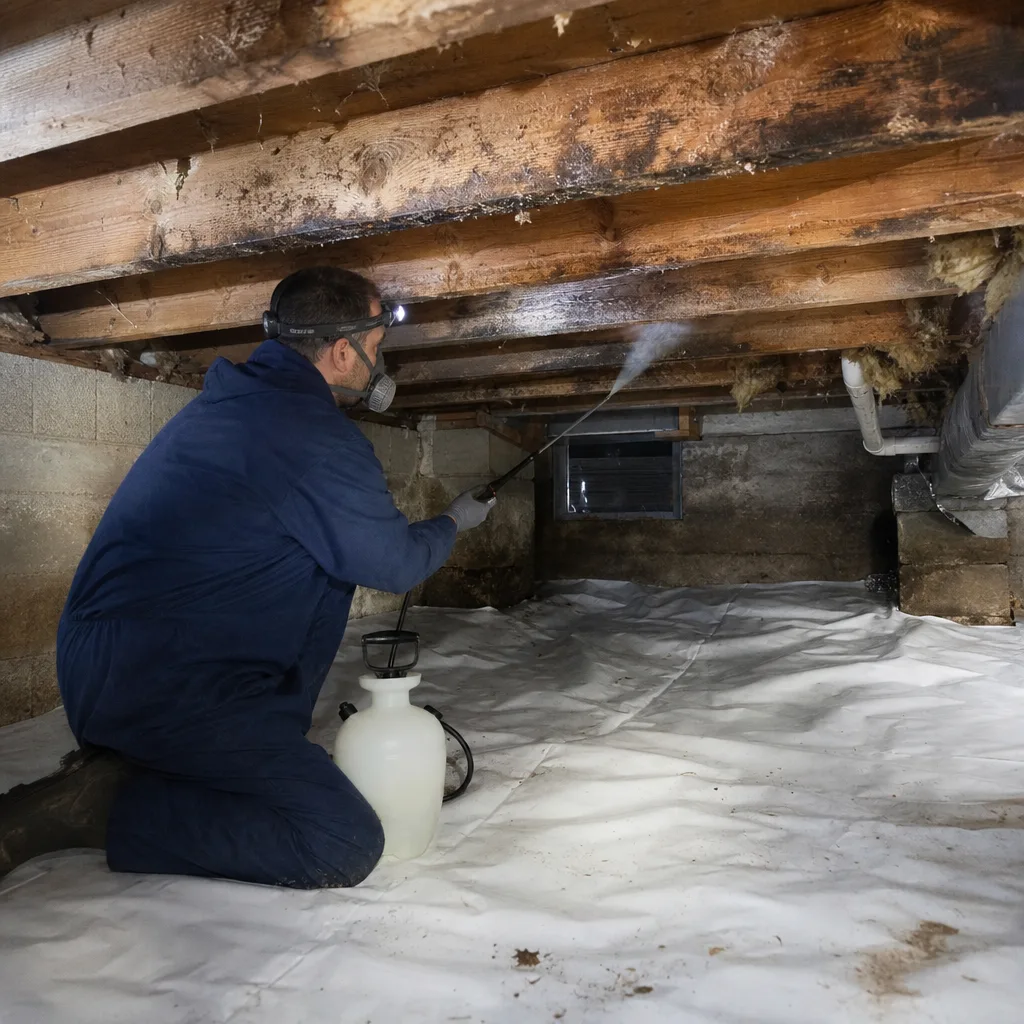
Black Mold Remediation
Stachybotrys and other toxigenic species require enhanced containment, specialized personal protective equipment, and strict disposal protocols. In Kirkland, black mold calls are disproportionately from crawl spaces where chronic moisture has gone unaddressed for years - the Rose Hill and Houghton pattern of slow failure rather than sudden flooding.
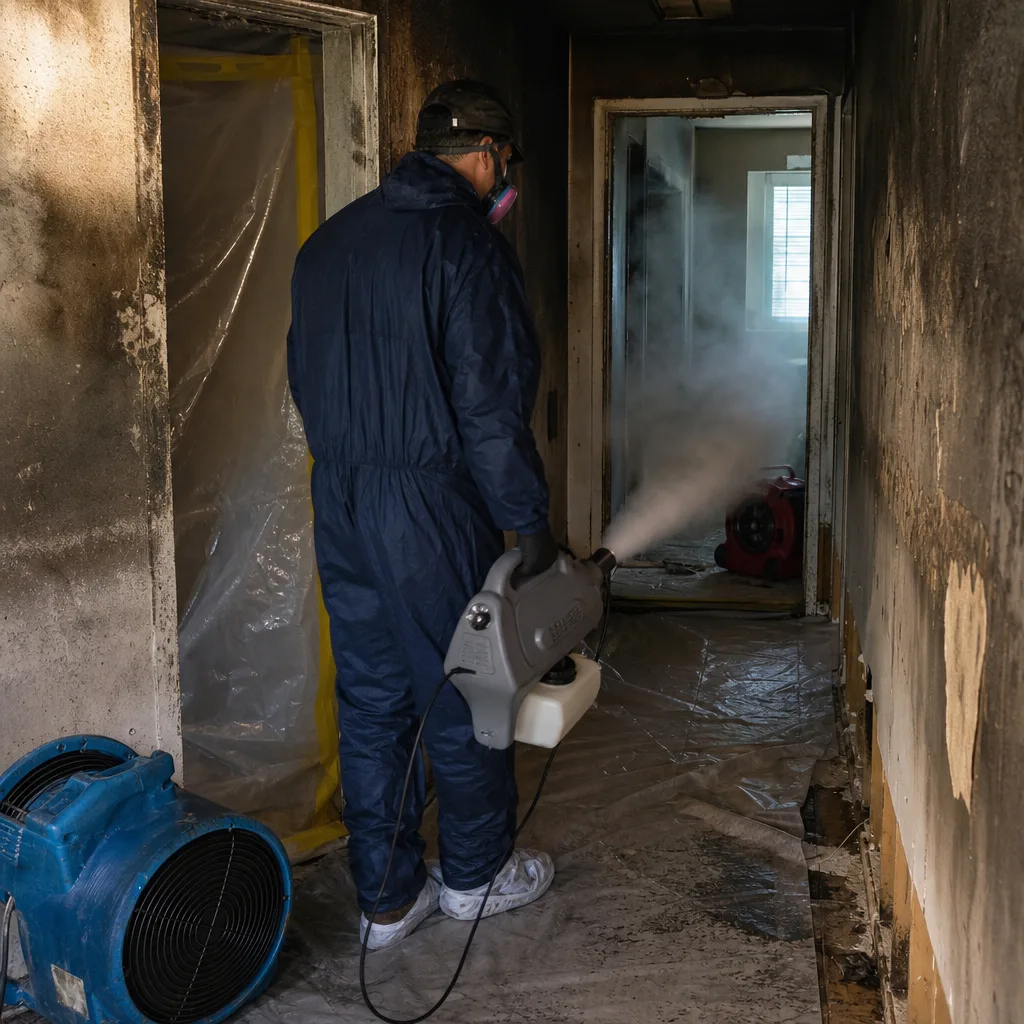
Air Quality Restoration
After remediation, we verify air quality through spore-trap analysis or third-party clearance testing. For Kirkland homes with HVAC systems that drew crawl space air through floor registers, duct cleaning and register sealing are often part of restoring breathable indoor air.
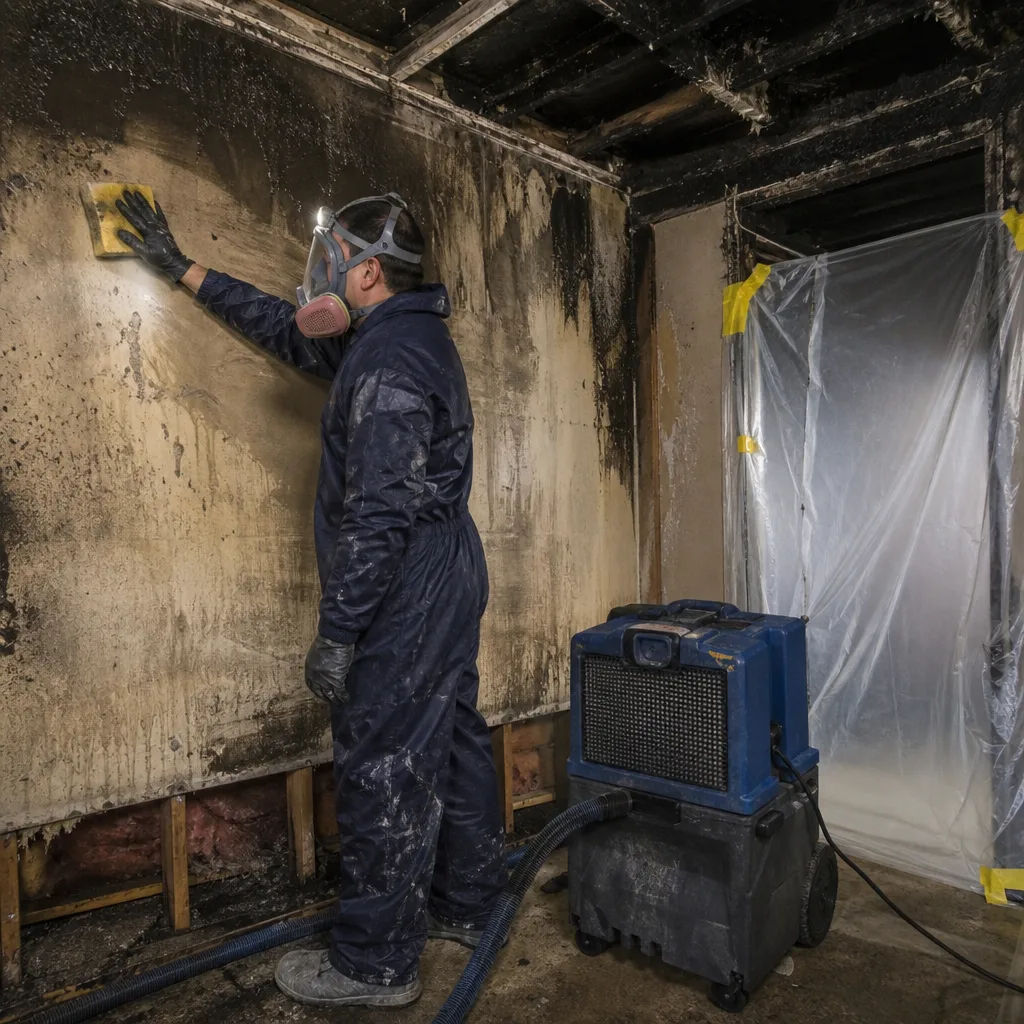
Crawl Space Treatment
This is our most frequent Kirkland service. We remove the failed original vapor barrier, treat affected framing with antimicrobial agents, repair or replace rotted structural members, install reinforced polyethylene encapsulation sealed at all seams, and add mechanical dehumidification where the space geometry and moisture load require it. Every step is photo-documented and logged.
What happens when you call
- 1
A real person answersNo phone trees - you reach a local pro.
- 2
You get an upfront price rangeHonest numbers before anyone is dispatched.
- 3
A background-checked tech heads outLicensed & insured, dispatched right away.
- 4
You approve before work beginsNothing starts until you say go.
Mold Remediation Costs in Kirkland, WA
A typical crawl space mold remediation in Kirkland runs $2,800-$5,500 for a standard 1,200-1,800 square foot footprint with localized mold and intact structural framing. Jobs requiring rim joist replacement, subfloor repair, or full encapsulation with dehumidification range $4,500-$8,200. Whole-home remediation where mold has migrated through HVAC into living areas can exceed $10,000.
What moves the price: the square footage of affected area, whether structural repair is needed, the accessibility of the crawl space (some Rose Hill hillside homes have access hatches too small for standard equipment), and whether the moisture source is resolved or requires drainage work. Insurance typically covers mold remediation when the underlying cause is a covered water loss - burst pipe, appliance failure, storm intrusion - but may exclude long-term maintenance failures like a degraded vapor barrier. We review your policy language and document the loss to support your claim. Haven Standard, Clause 1: your written price is delivered before any work begins, with no scope-creep additions once the crew is inside. Call (425) 696-6061 for a free inspection and firm scope.
We Also Serve Cities Near Kirkland
Our crews respond throughout the Eastside from our Seattle office, including Redmond (where flatter, better-drained lots see fewer crawl-space failures), Bellevue (plateau neighborhoods with different hydrostatic patterns), Bothell (similar vintage housing with its own soil conditions), and Kenmore (lake-proximity homes with high water table concerns). Each city’s geology and housing stock shape the remediation approach; we adjust our moisture mapping and drying plans accordingly.
Serving Kirkland, WA - Our Local Coverage Area
We’re based in the Kirkland area and know this community well. Use the map below to see our service coverage - if you’re nearby, we can almost certainly help.
Kirkland Mold Remediation Questions, Answered
Why do Kirkland crawl spaces grow mold so much faster than nearby cities?
Kirkland’s combination of steep hillside neighborhoods, King County’s water-retaining glacial clay soils, and a concentration of 1960s homes with original vapor barriers now in brittle fragments creates a chronic moisture trap that flatter, better-drained Redmond and the Bellevue plateau simply don’t replicate. The clay sheds rather than absorbs rainfall, funneling water against foundations for months of sustained drizzle. Call (425) 696-6061 for a free inspection of your crawl space conditions.
How fast does mold start growing after water gets into my Kirkland home?
Mold colonization begins on wet organic materials within 24-48 hours at temperatures above 60°F, which Kirkland’s mild climate provides nearly year-round. At 72 hours, visible growth is likely; by day 5-7, what started as a small leak can require full containment remediation. Speed matters, but so does finding the source - surface cleaning without drying the substrate just resets the clock. Call (425) 696-6061 for immediate response.
Do you have to remove the old black vapor barrier in my 1960s Rose Hill crawl space?
Yes - sealing a new barrier over degraded original poly traps existing moisture against the subfloor and locks in rot. We remove the brittle fragments, treat the exposed framing, and verify wood moisture below 16% before any new encapsulation. Skipping this step is why some Kirkland homeowners see mold return within a season after “remediation.” Call (425) 696-6061 for a crawl space assessment.
Is the mold in my crawl space Category 3 water damage?
Crawl space mold is not automatically Category 3; the classification depends on the water source and duration. Ground moisture wicking through soil is Category 2; if sewage backup or prolonged standing water is involved, it escalates to Category 3 with corresponding remediation protocols. We test and classify during inspection, then document the category for your insurer. Call (425) 696-6061 for classification and scope.
What does mold remediation typically involve in a Kirkland crawl space?
Containment setup, removal of degraded vapor barriers and unsalvageable materials, antimicrobial treatment of affected framing, structural repair if rim joists or subfloor are compromised, installation of reinforced encapsulation sealed at seams, and mechanical dehumidification where needed. Every step is photo-documented with moisture logs delivered to you and your adjuster. Call (425) 696-6061 for a written scope specific to your crawl space.
Will my insurance cover mold remediation in Kirkland?
Insurance covers mold remediation when the underlying cause is a sudden, accidental water loss - burst pipe, appliance failure, storm damage - but typically excludes damage from long-term maintenance failures like a degraded vapor barrier. We document the loss timeline, moisture readings, and cause to support your claim, and coordinate directly with your adjuster. Call (425) 696-6061 for a free inspection and policy review.
How long does mold remediation take in a typical Kirkland home?
Contained crawl space remediation with no structural repair takes 3-5 days; jobs requiring rim joist replacement or subfloor repair extend to 7-10 days. Full-home remediation with HVAC involvement can run 10-14 days. Drying to below 16% wood moisture is the controlling factor - we don’t rush the logs that prove completion to your insurer. Call (425) 696-6061 for a timeline based on your specific conditions.
Can my family stay in the home during mold remediation?
For contained crawl space work in Kirkland’s split-levels and ranches, residents often remain upstairs with HVAC isolated from the work zone. Whole-home remediation or toxigenic species (black mold) may require temporary relocation for 2-5 days. We establish clean-air pathways and advise based on containment scope before work begins. Call (425) 696-6061 to discuss your home’s layout and occupancy options.
Written by Alicia Brennan, Owner at Back to Dry Restoration, serving Kirkland since 2011.
Mold Remediation in Nearby Areas