
Free visual inspection and a written scope of work before any mitigation begins - photos, moisture readings, and drying logs go in your claim file
The scope we write is the scope we bill. Anything new gets shown to you, in writing, before we touch it.
 Before
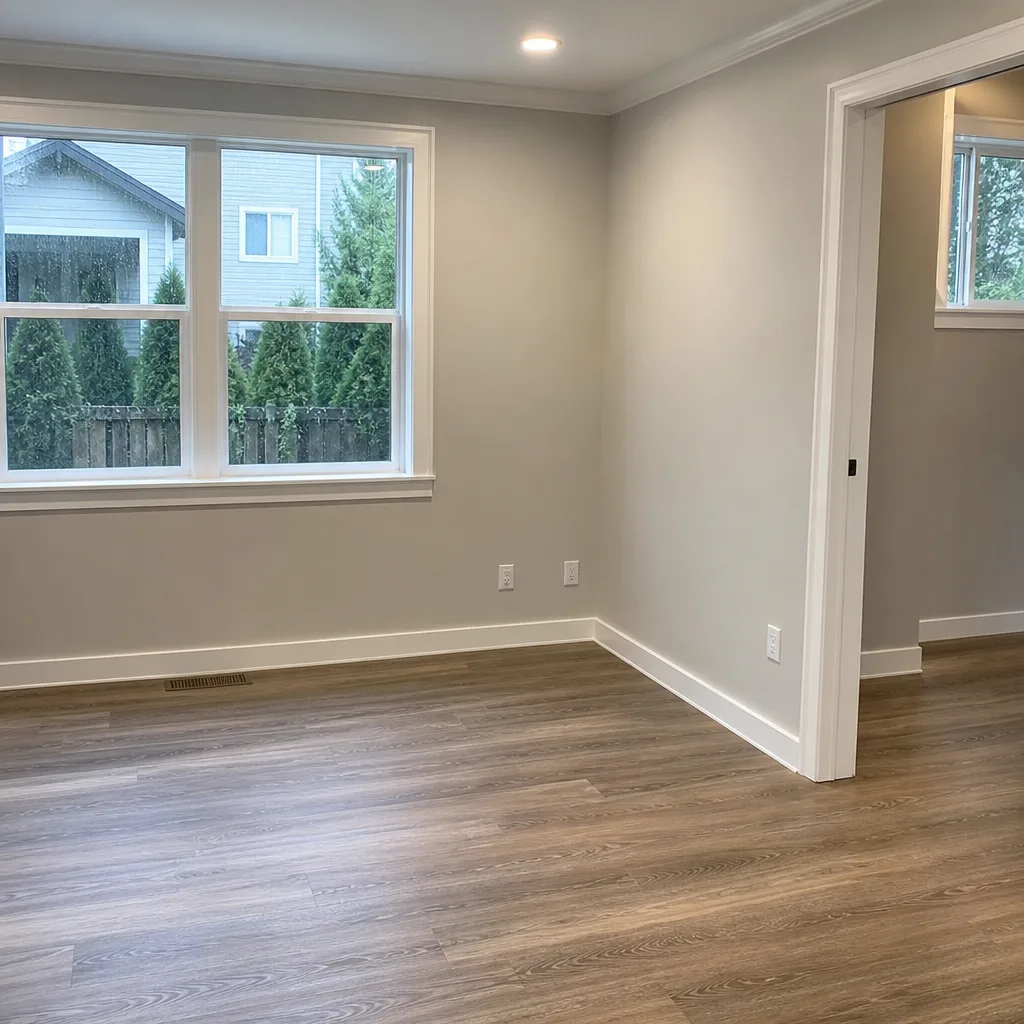 After
After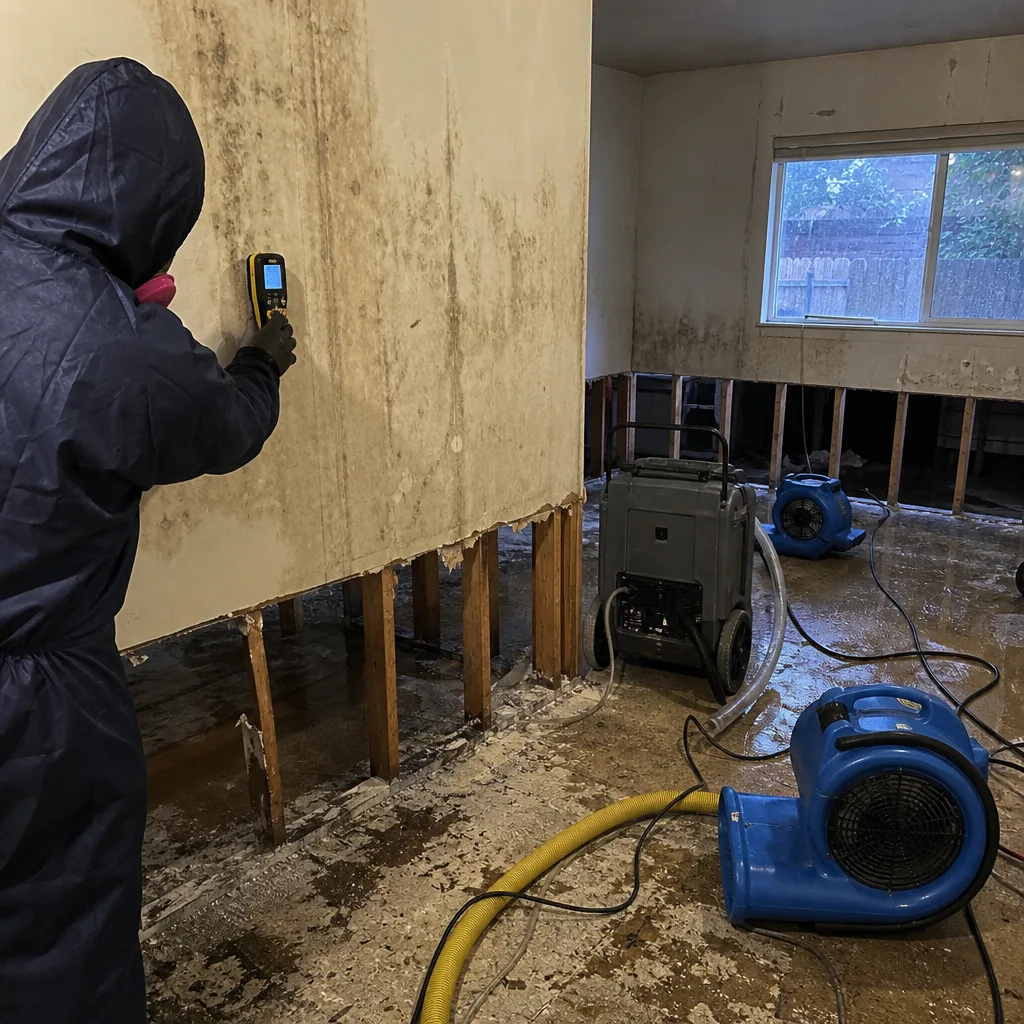 Before
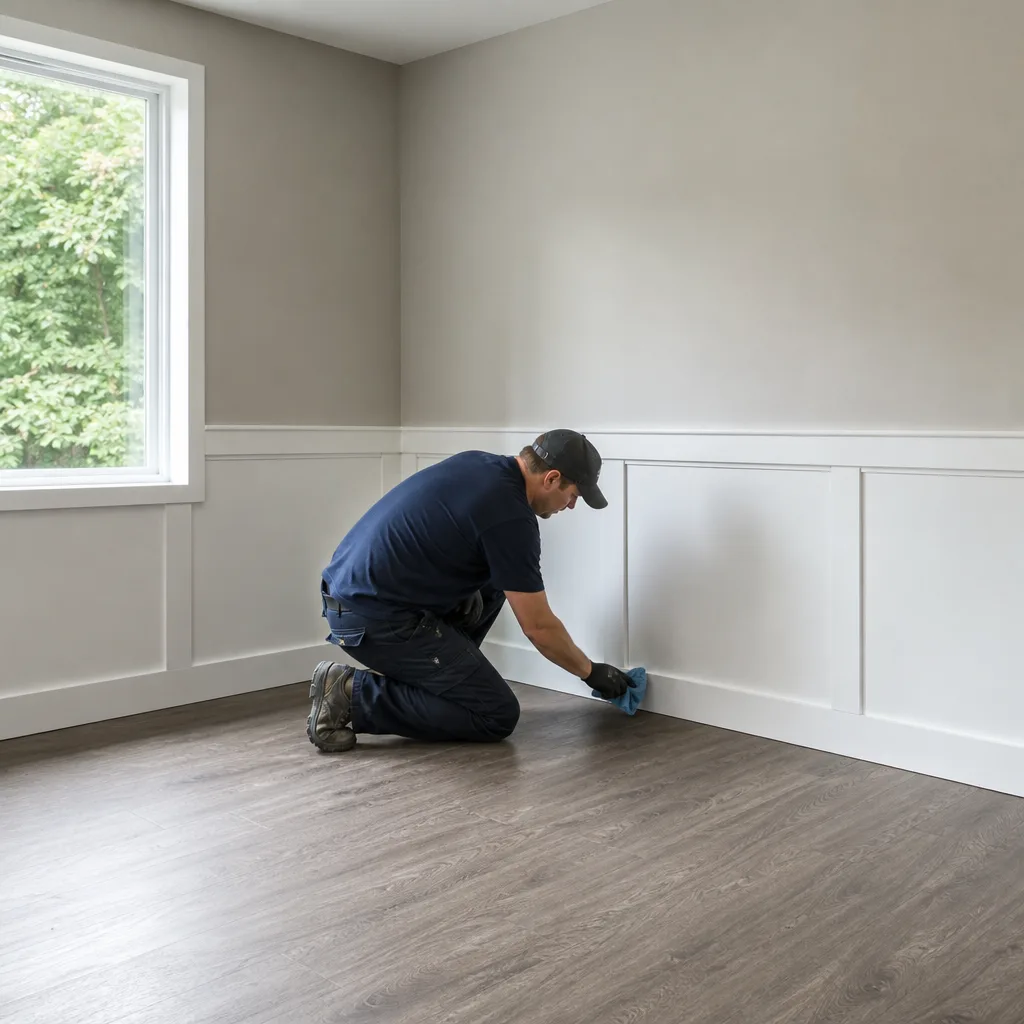 After
After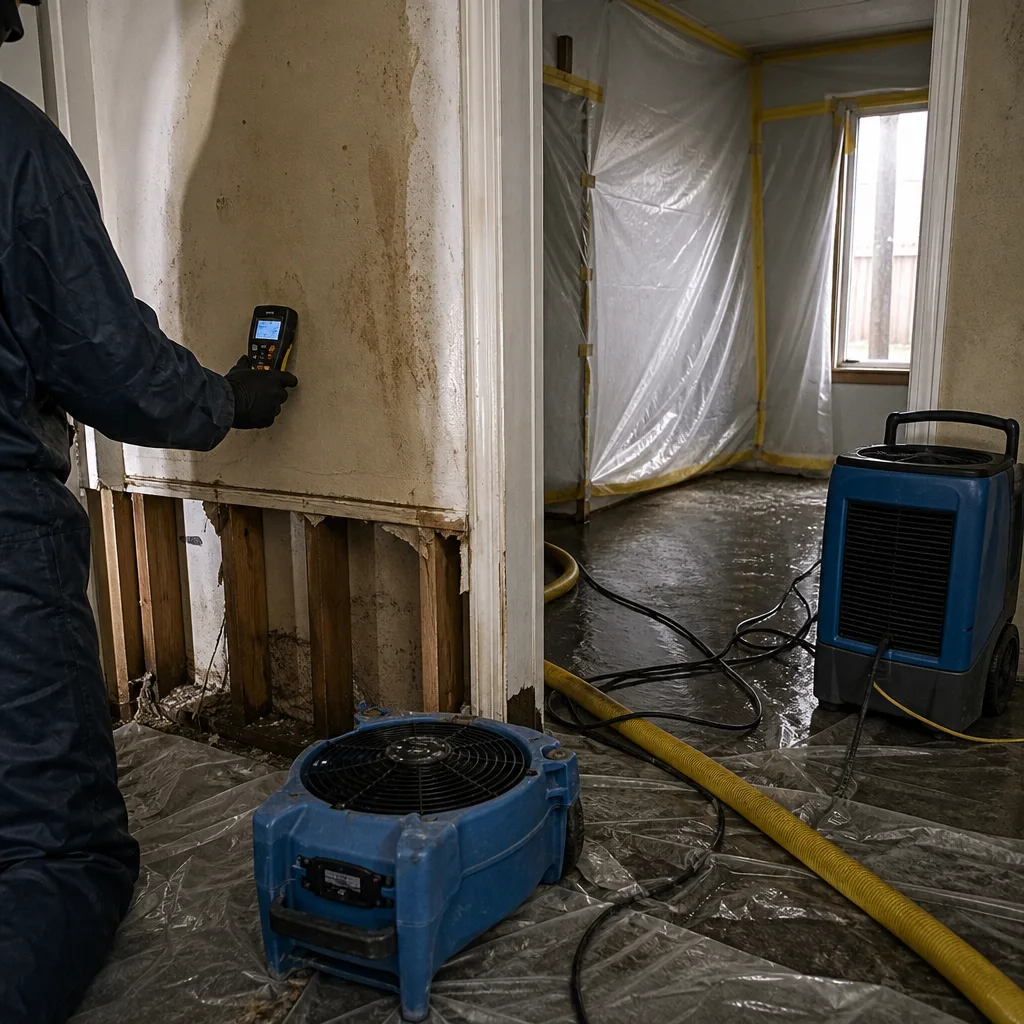 Before
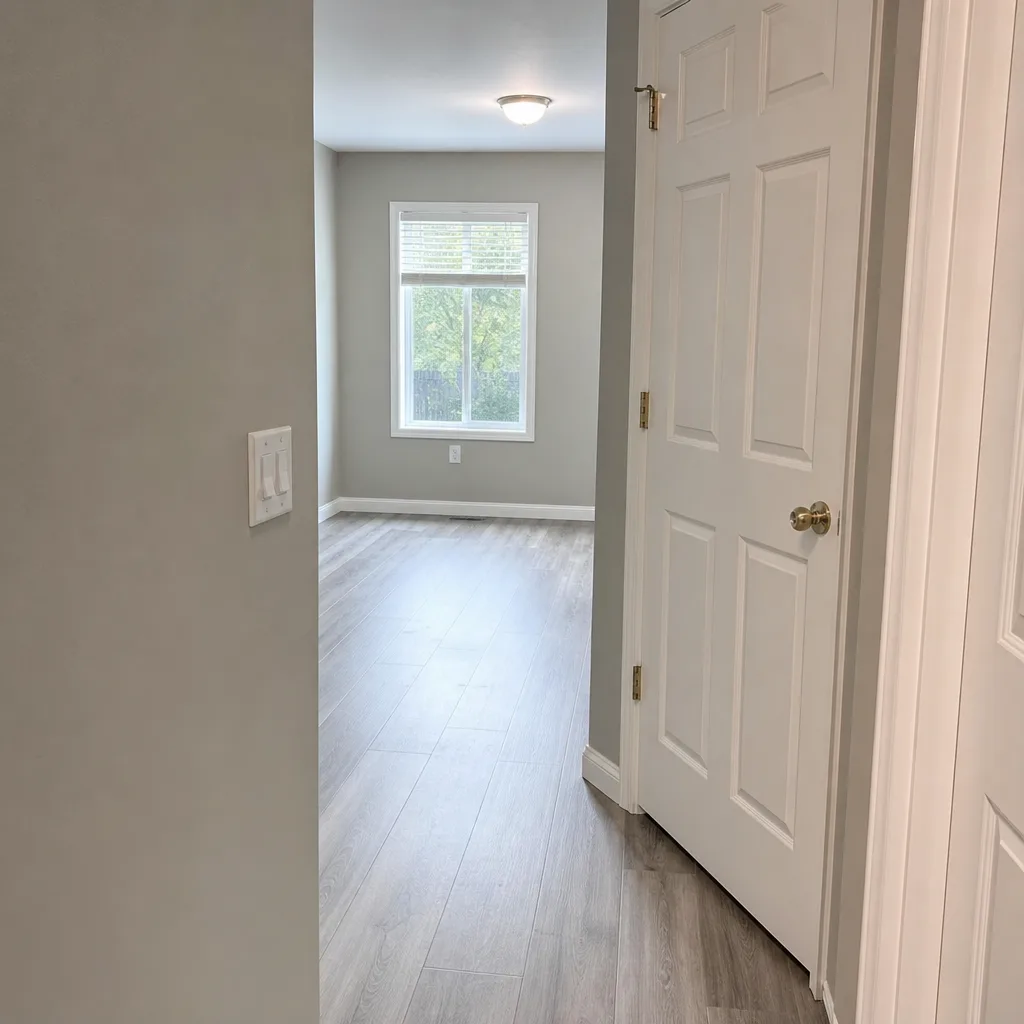 After
After24/7 Emergency Mold Remediation in Monroe
Mold remediation in Monroe typically costs $1,800-$6,500 depending on affected square footage, and crews can be on-site within 45 minutes of your call. Call (425) 696-6061 now - our lines are answered live, 24 hours a day, by a real person who can dispatch a team immediately.
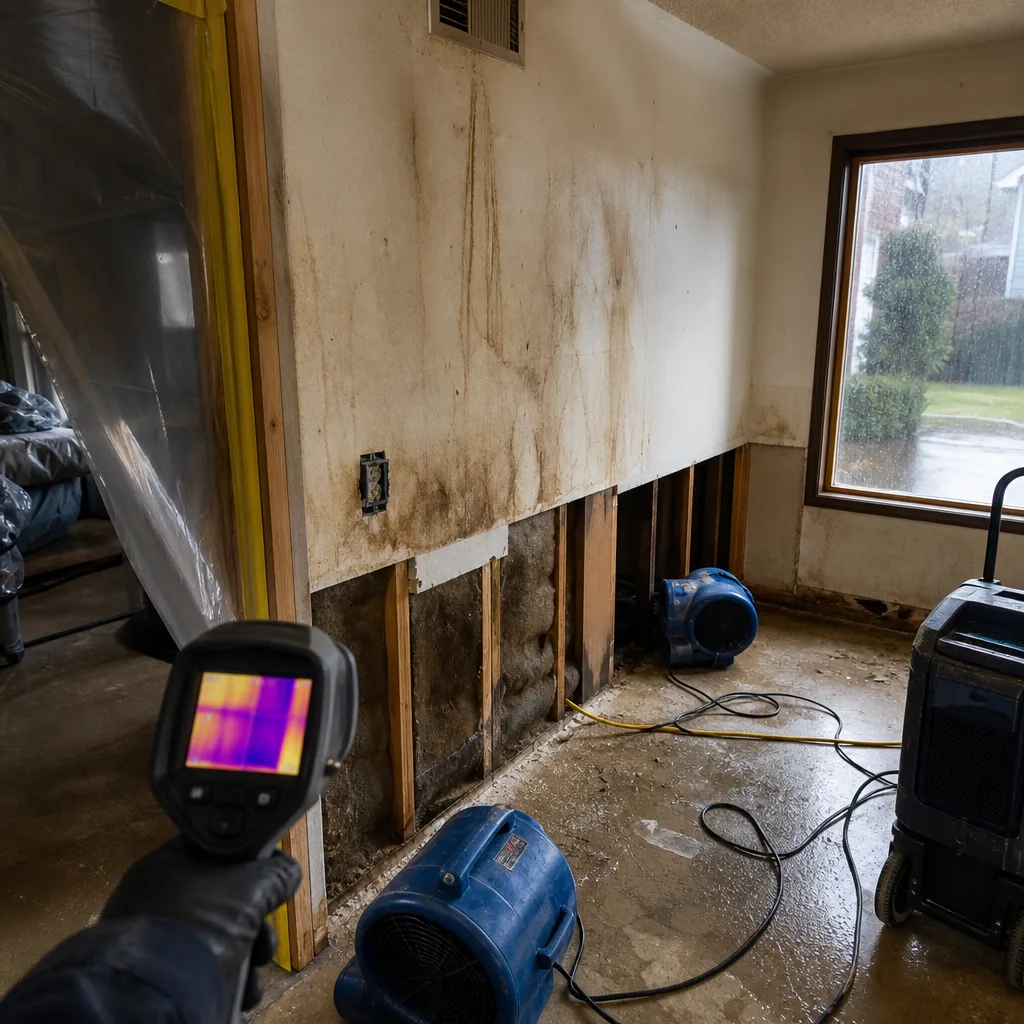
Monroe’s position in the Skykomish River valley creates a compressed response window that most homeowners don’t realize until it’s too late. When the river rises from rain-on-snow events or atmospheric river saturation, valley-floor crawl spaces flood with Category 3 water that carries organic loading from river sediment. In Monroe’s elevated-humidity foothills climate, mold colonization behind baseboards and in sub-floor framing can begin within 24-48 hours. Waiting for “business hours” means the difference between contained remediation and full gutting of wall cavities. We offer free visual inspections with moisture mapping, and our Mold Remediation crews carry containment barriers, HEPA air scrubbers, and thermal imaging on every truck.
Understanding Mold Remediation Severity in Monroe Properties
Mold severity in Monroe falls into three practical categories that map directly to IICRC protocols. Level 1 contamination covers isolated growth on a single ceiling tile or small wall section, typically under 10 square feet, contained without cross-contamination risk. Level 2 spans 10-100 square feet across multiple surfaces, requiring full containment with negative air pressure and HEPA filtration. Level 3 exceeds 100 square feet or involves HVAC contamination, demanding critical barrier isolation and possible temporary relocation.
Monroe’s housing stock skews the severity distribution. Early-to-mid 20th-century homes from the logging and farming era - common near Old Owen Road and the original downtown grid - often have balloon framing that lets mold travel vertically through wall cavities with no fire blocking to stop it. The 1990s-2000s suburban tract construction in Fryelands and Chain Lake areas brought crawl-space foundations built close to the seasonal water table, creating chronic sub-floor moisture conditions that pre-condition framing for rapid colonization. We classify every Monroe job by material type (soft goods, semi-porous, non-porous), document vapor pressure differential readings, and establish psychrometric targets before any demolition begins. Tertiary drying - the final phase where bound moisture releases from dense materials - takes longer in Monroe’s older homes with layered plaster and lath than in modern drywall construction.
Why Monroe Property Owners Choose DryMark Restoration Bothell
- 45-minute response commitment to Monroe addresses, confirmed at dispatch with crew name and ETA.
- 24/7 live answer: a real person, never an automated system or voicemail tree, on every call to (425) 696-6061.
- IICRC-certified crews holding WRT (Water Damage Restoration Technician), AMRT (Applied Microbial Remediation Technician), and FSRT (Fire & Smoke Restoration Technician) credentials where dual-loss scenarios apply.
- Free visual inspection with thermal imaging and moisture meter readings, documented before any scope is proposed.
- Direct insurance billing with adjuster coordination handled by our in-house claims team, not outsourced.
- One team from microbial remediation through reconstruction - no handoff to a separate contractor who didn’t see the original loss conditions.
BeforeAfterOur Mold Remediation Process
1. Inspection & Assessment
We arrive with thermal imaging cameras, pin and pinless moisture meters, and borescopes for wall-cavity investigation. In Monroe, we specifically probe crawl-space perimeter framing and baseboard rear surfaces where layered Monroe Water Damage Restoration commonly hides. Every reading is logged with location, material classification, and time stamp.
2. Containment & Air Filtration
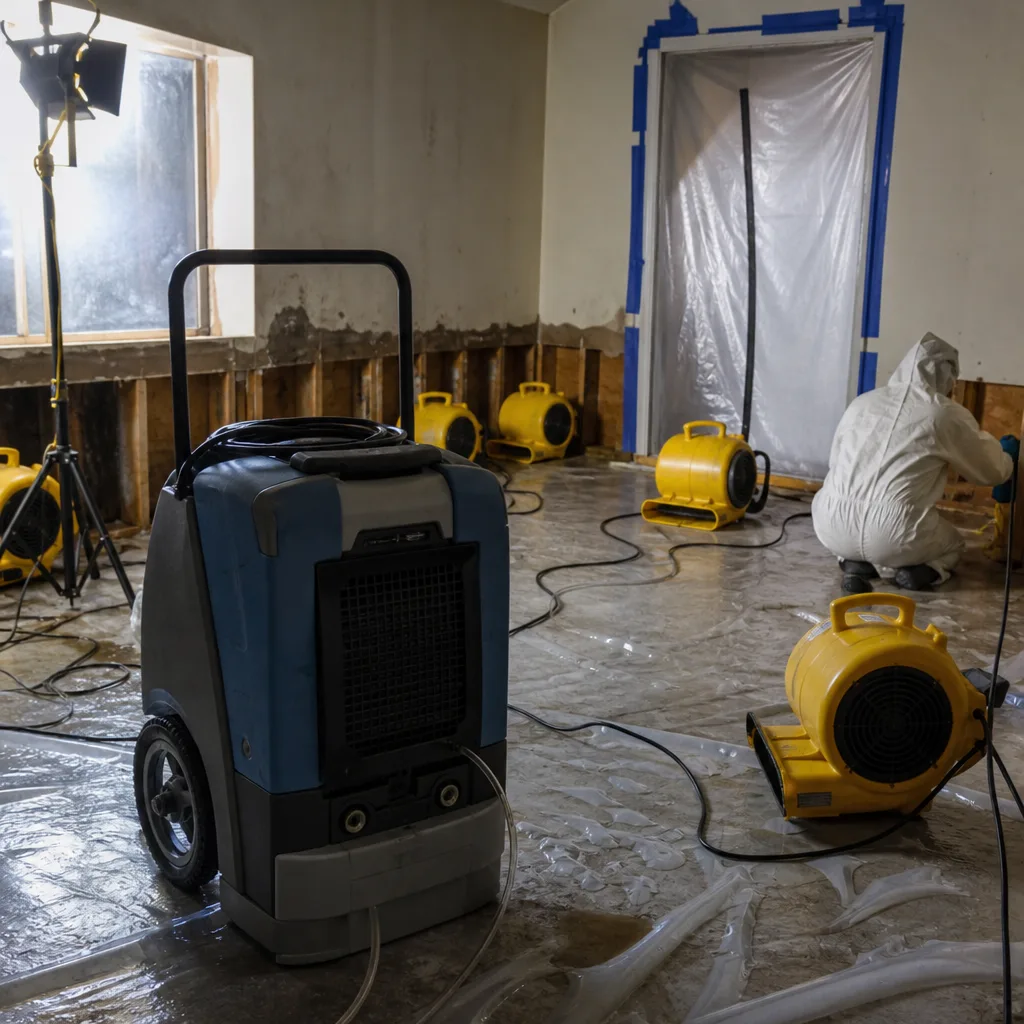
Polyethylene barriers create negative-pressure work zones. HEPA air scrubbers run continuously, capturing 99.97% of particles 0.3 microns and larger. In Monroe’s tighter modern construction, we calculate air changes per hour to prevent cross-contamination to unaffected zones.
3. Moisture Extraction & Controlled Drying
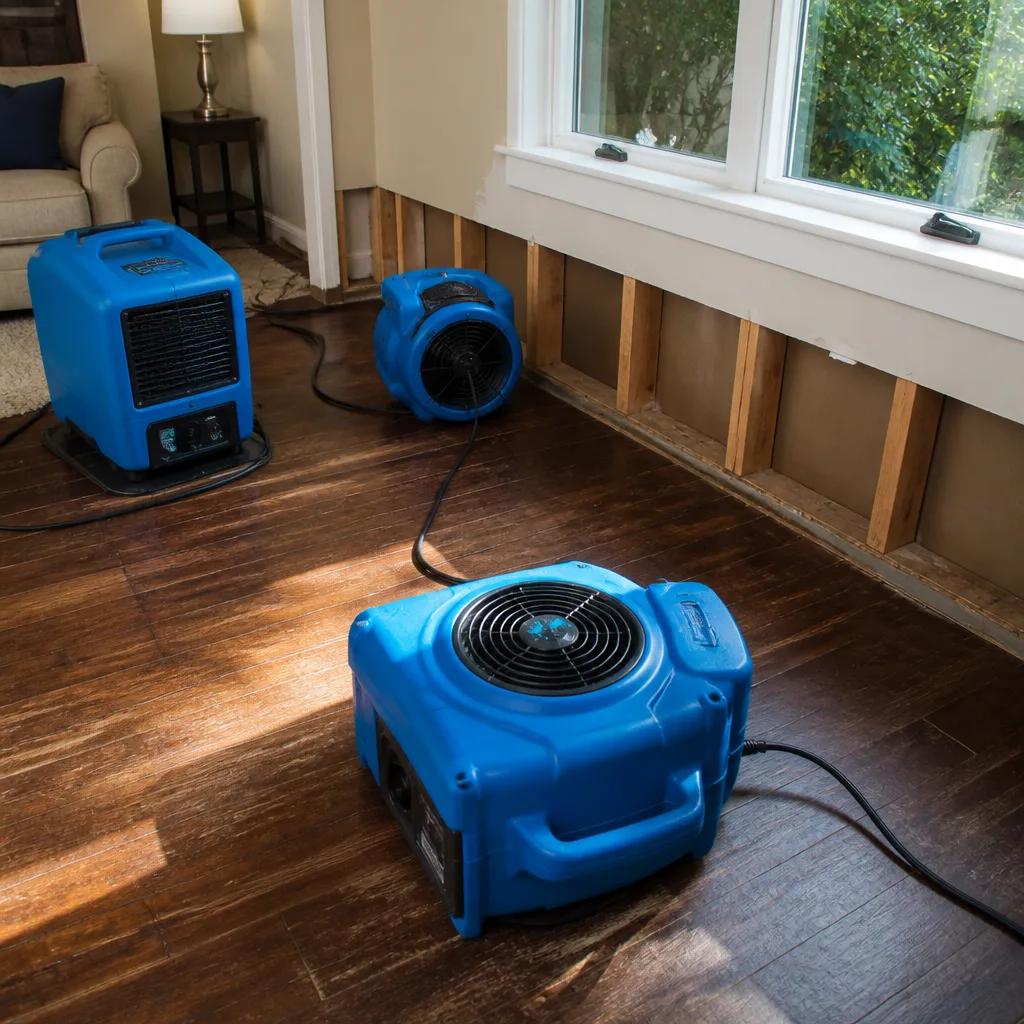
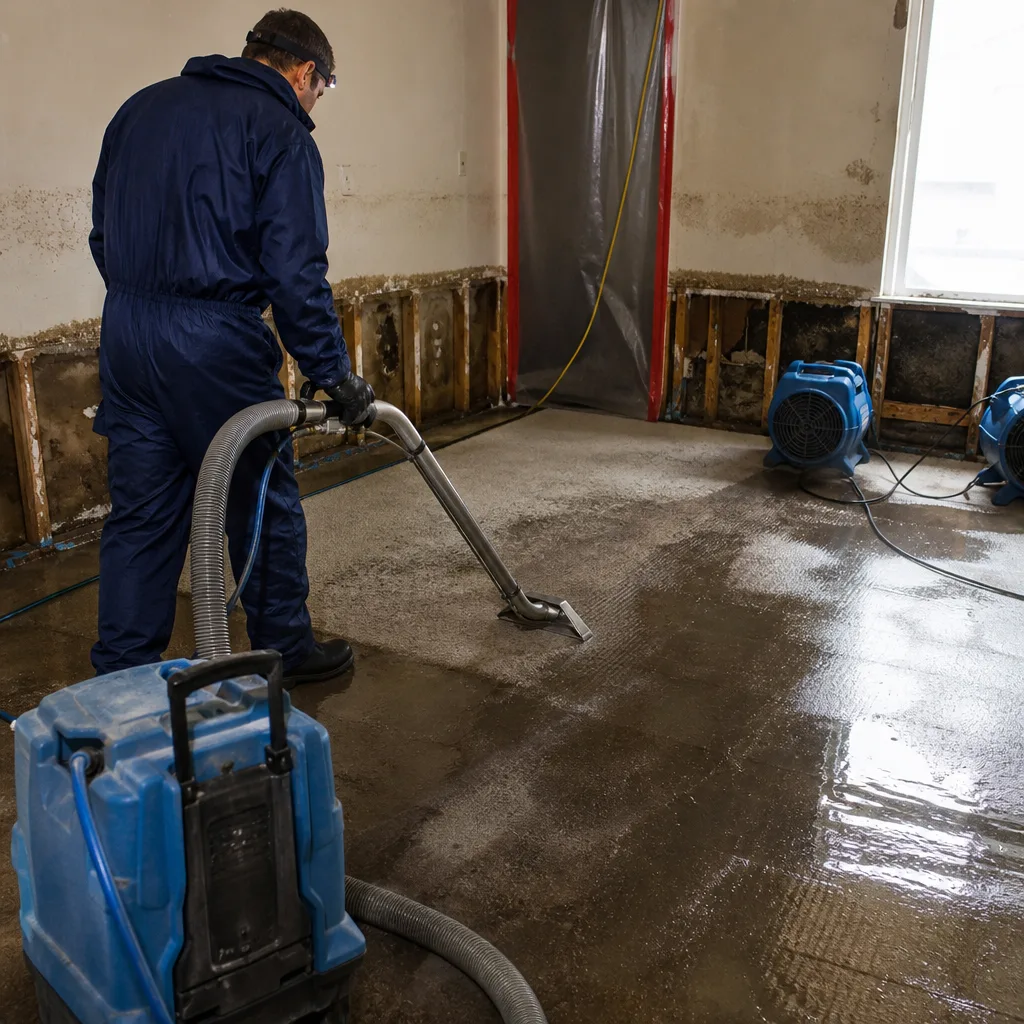
We deploy Injectidry systems for wall-cavity drying, XPOWER and Dri-Eaz air movers for surface evaporation, and Phoenix or Dri-Eaz LGR dehumidifiers to pull vapor from the air. Moisture readings are logged twice daily until materials reach pre-loss equilibrium.
4. Removal of Contaminated Materials
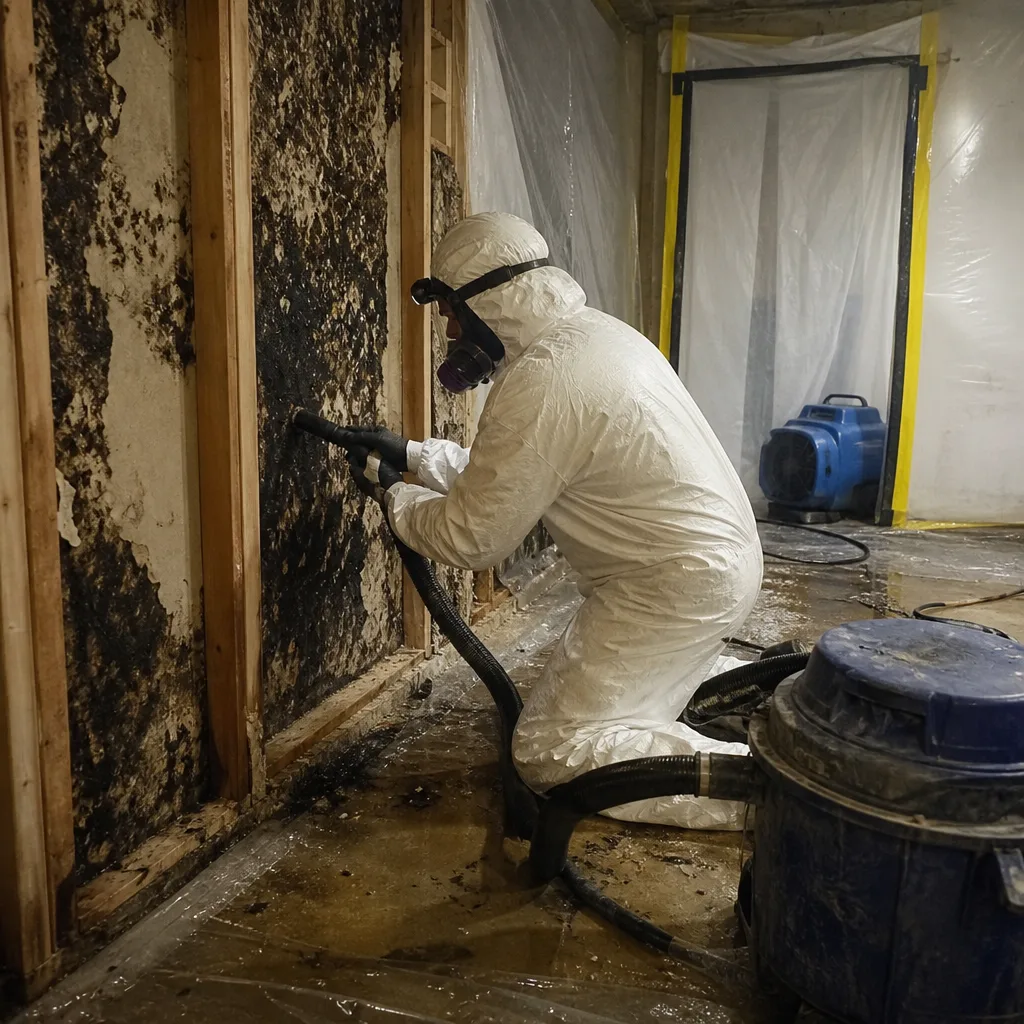
Non-salvageable drywall, insulation, and sub-floor materials are removed with source containment. We photograph every cut line and structural member before and after removal. In Monroe’s older homes, we test for asbestos in pre-1980 materials before disturbance.
5. Antimicrobial Treatment & Air Quality Restoration
EPA-registered antimicrobial agents are applied to remaining structural materials. HEPA vacuuming follows every treatment cycle. We then run post-remediation air sampling for spore count comparison, with third-party lab analysis available for clearance documentation.
6. Repairs, Reconstruction & Documentation
Our reconstruction team rebuilds to match existing finishes. Every phase is photo-documented, moisture logs are compiled, and a written completion certificate is delivered with the 365-Day Done Right Promise under The Haven Standard.
Need Emergency Mold Remediation in Monroe Now?
Crews minutes away, answering live 24 hours a day. The sooner we start, the less it costs.
Working With Your Insurance Company
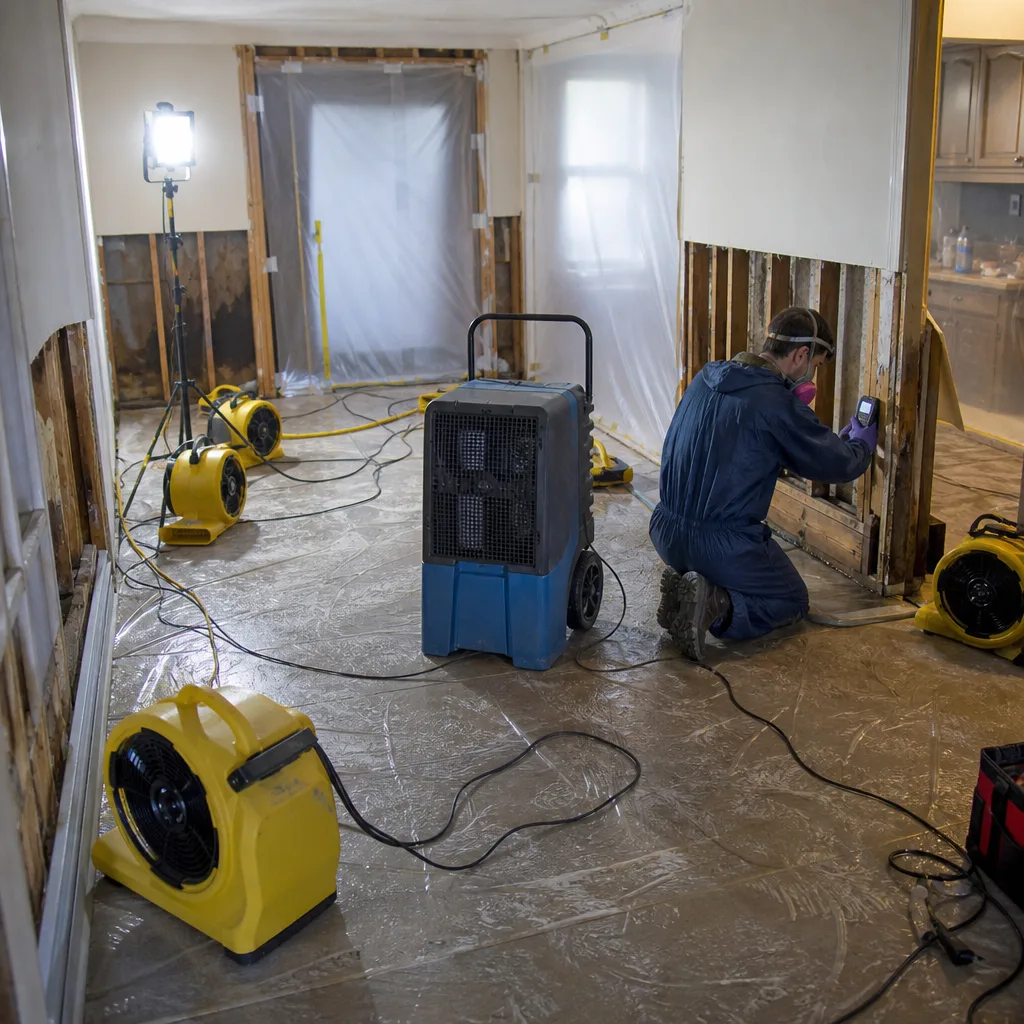
Insurance claims for mold damage fail most often on documentation gaps, not coverage exclusions. We close those gaps from the first hour. Our technician photographs every affected surface before anything is moved. Moisture readings establish the water source and timeline. Drying logs prove that remediation was conducted to IICRC S520 standards, not cosmetic cleanup.
We write estimates to Xactimate pricing, the industry standard adjusters recognize. Our in-house claims team speaks directly with your adjuster, submits supplemental documentation when hidden damage extends the scope, and disputes denials with the photo record and moisture data that makes a claim payable. Haven Standard, Clause 1: a written price before work begins, every time, with no scope-creep additions once the crew is inside.
What We Provide Your Insurer
- Thorough documentation of the loss
- Photos of all damage, room by room
- Moisture readings and drying logs
- A detailed, line-item scope of work
- Direct coordination with your carrier
Built for Monroe’s Loss Calendar
Monroe’s mold season doesn’t follow the calendar most homeowners expect. November through March brings rain-on-snow events on the upper Skykomish watershed that can spike river levels 10 feet in 24 hours. The valley floor floods, crawl spaces fill, and homeowners pump out water without addressing the saturated sub-floor framing. By February, we’re remediating mold in homes that flooded in December and were “dried” with shop vacs and box fans.
Spring atmospheric rivers compound the problem: saturated soil can’t absorb more water, so hydrostatic pressure pushes moisture through crawl-space vapor barriers that were never sealed properly. Summer brings a false lull - warm air feels dry, but Monroe’s orographic humidity keeps crawl-space wood moisture content above 20%, the threshold for fungal growth. Fall leaf accumulation in gutters and drainage swales creates localized ponding that feeds foundation moisture. We schedule preventive crawl-space inspections in September for this reason, before the rain-on-snow cycle begins.
Mold Remediation Across Monroe’s Neighborhoods
Monroe’s geography creates distinct mold risk profiles by area, and our response routes are planned accordingly.
Fryelands and the valley floor near Highway 2: These 1990s-2000s subdivisions sit on former dairy land with high water tables and minimal natural drainage. Crawl spaces here flood predictably during Skykomish overflow events. We commonly find layered damage: a home that took water in 2021’s atmospheric river season was never fully dried, so mold established in floor joist bays, then the 2023 rain-on-snow event added fresh Category 3 loading on top of existing colonization. Remediation here is almost always multi-phase.
Chain Lake area, south of town: Slightly elevated but built on glacial till with poor percolation. Homes here don’t flood from river overflow but suffer chronic crawl-space moisture from groundwater seepage. We install vapor barrier systems and permanent dehumidification as part of remediation, not as an upsell, because without it, mold returns within 18 months.
Old Owen Road corridor and original Monroe grid: Pre-war and mid-century homes with balloon framing, minimal insulation, and foundations that have settled over decades. Mold in these structures travels vertically through walls and horizontally across plaster keys. Remediation requires surgical demolition and specialized HEPA containment because the framing cavities interconnect across multiple rooms.
Woodland Avenue and hillside construction east of downtown: Better drainage but exposed to wind-driven rain on the Cascades-facing slopes. We see roof leak patterns that saturate attic sheathing and migrate down exterior walls, with mold discovered only when interior paint bubbles. Thermal imaging is essential here; the visible damage is rarely the full extent.
Specialized Mold Remediation Services We Offer in Monroe
Mold Inspection & Testing
Every Monroe inspection includes thermal imaging, moisture mapping, and air sampling with third-party lab analysis. We don’t guess at contamination boundaries; we measure them. After a rain-on-snow event near Fryelands, our crew pulled Category 3 water from a crawl space and found hidden mold behind baseboards that a previous owner had never fully dried. We set up containment, ran Injectidry and XPOWER air movers with Dri-Eaz dehumidification, logged moisture readings for the drying logs, and applied antimicrobial treatment to the affected framing before rebuilding the scope of work around a second-phase remediation.
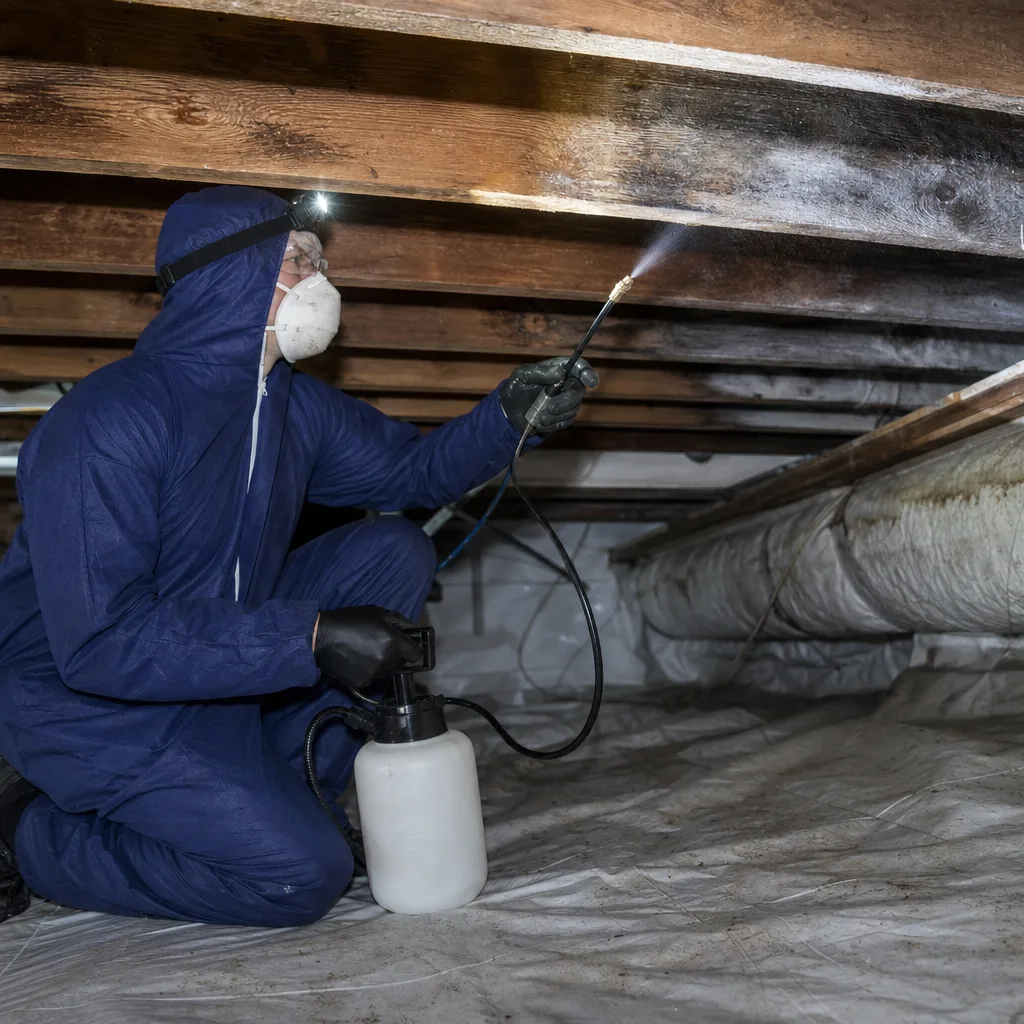
Mold Removal
Removal follows IICRC S520 standards for containment, source removal, and clearance verification. In Monroe’s older homes near Old Owen Road, we test for lead and asbestos before disturbing pre-1980 materials. The removed materials are documented by weight and disposal manifest for insurance records.
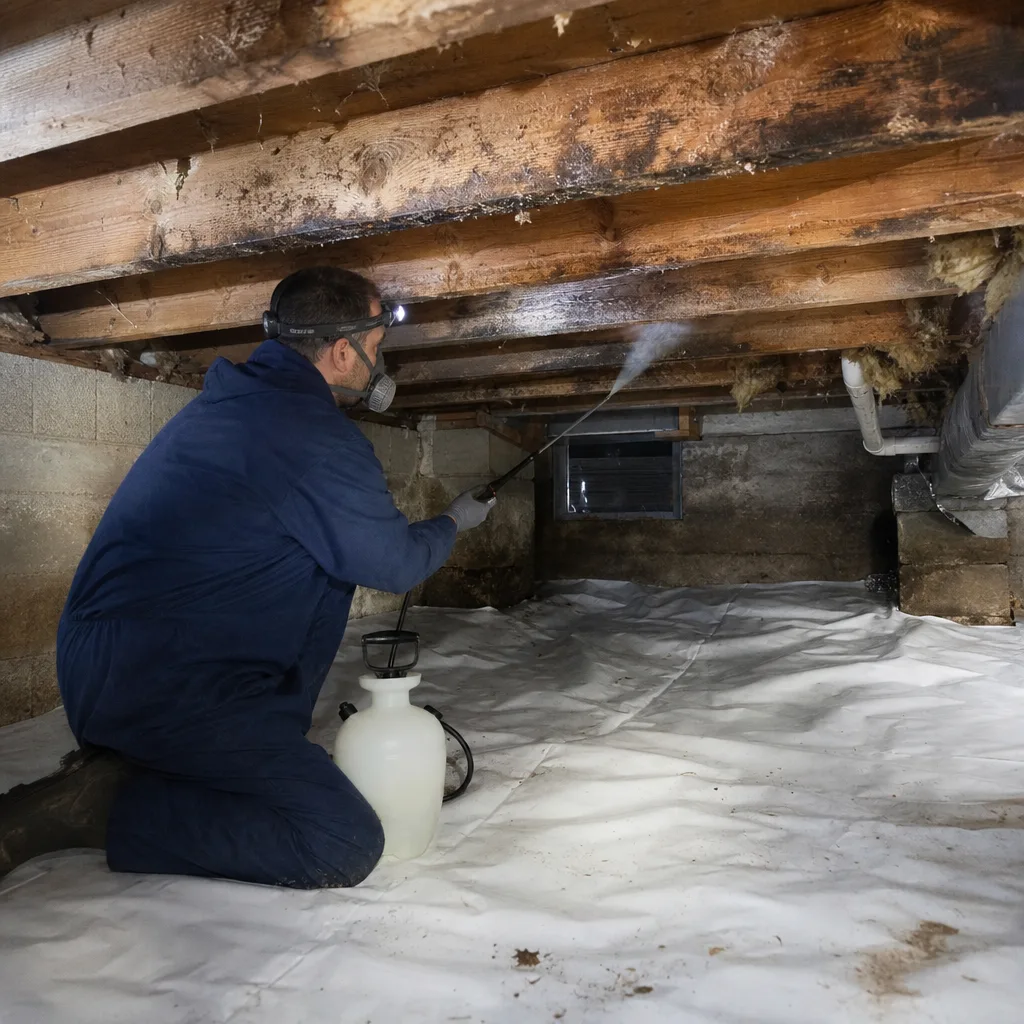
Black Mold Remediation
Stachybotrys chartarum and other toxigenic species require enhanced PPE and strict containment. We don’t use scare tactics; we use spore count data. If toxigenic species are present, we establish critical barriers and run continuous HEPA filtration until post-remediation air sampling confirms safe levels.
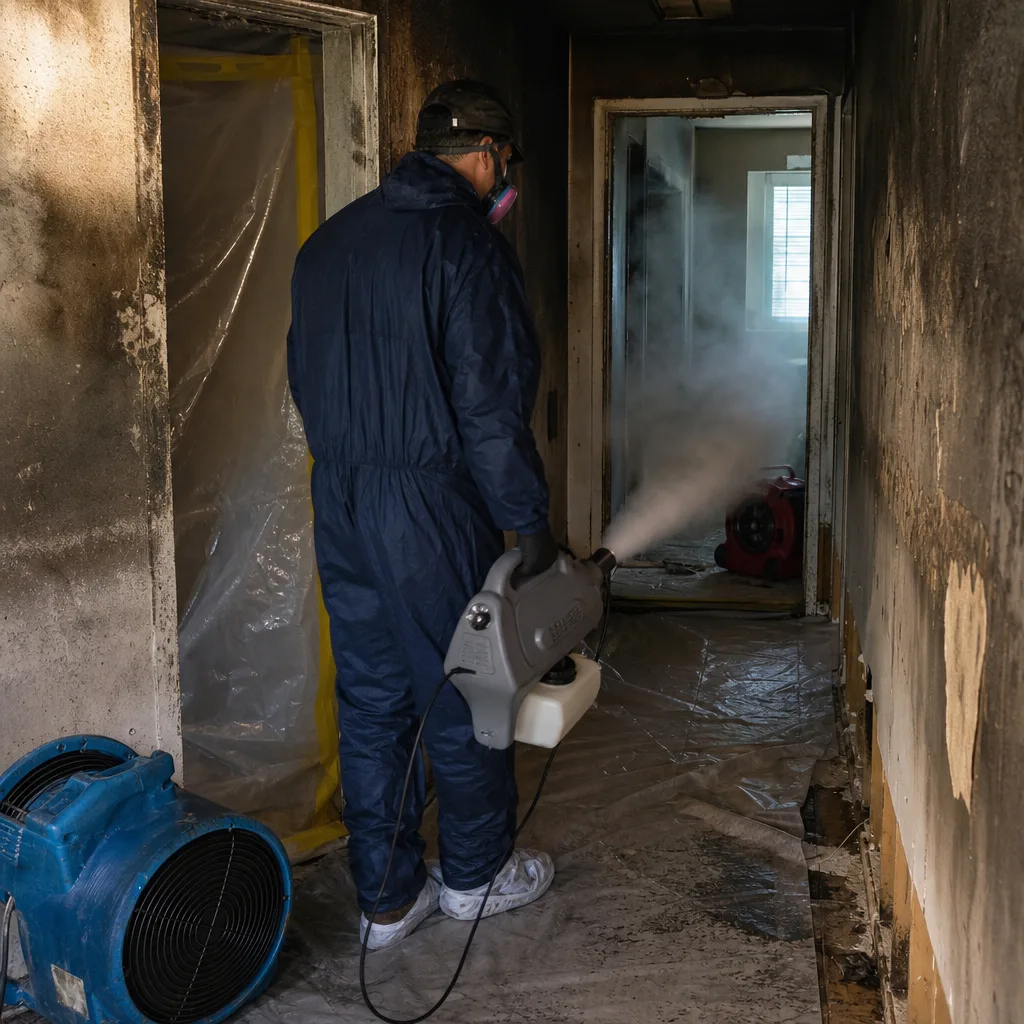
Air Quality Restoration
Post-remediation air scrubbing runs 24-48 hours beyond the last visible removal. We measure particulate counts with laser particle counters and compare to outdoor baseline readings. Monroe’s elevated ambient humidity means our drying targets are stricter than drier inland markets.
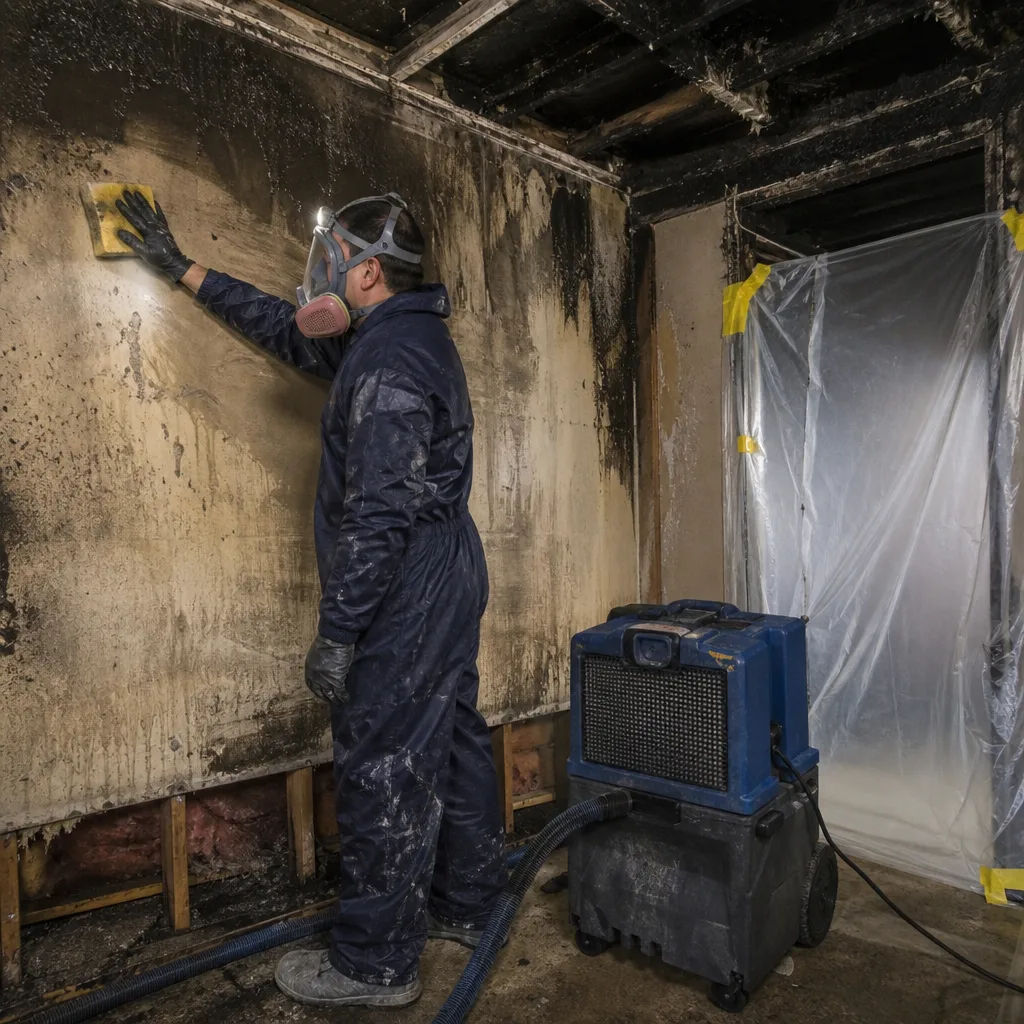
Crawl Space Treatment
Monroe’s valley-floor crawl spaces are our highest-call sub-service. We remove contaminated vapor barriers, treat framing with EPA-registered antimicrobials, install new sealed barriers, and specify permanent dehumidification sized to the crawl-space volume and ventilation rate.
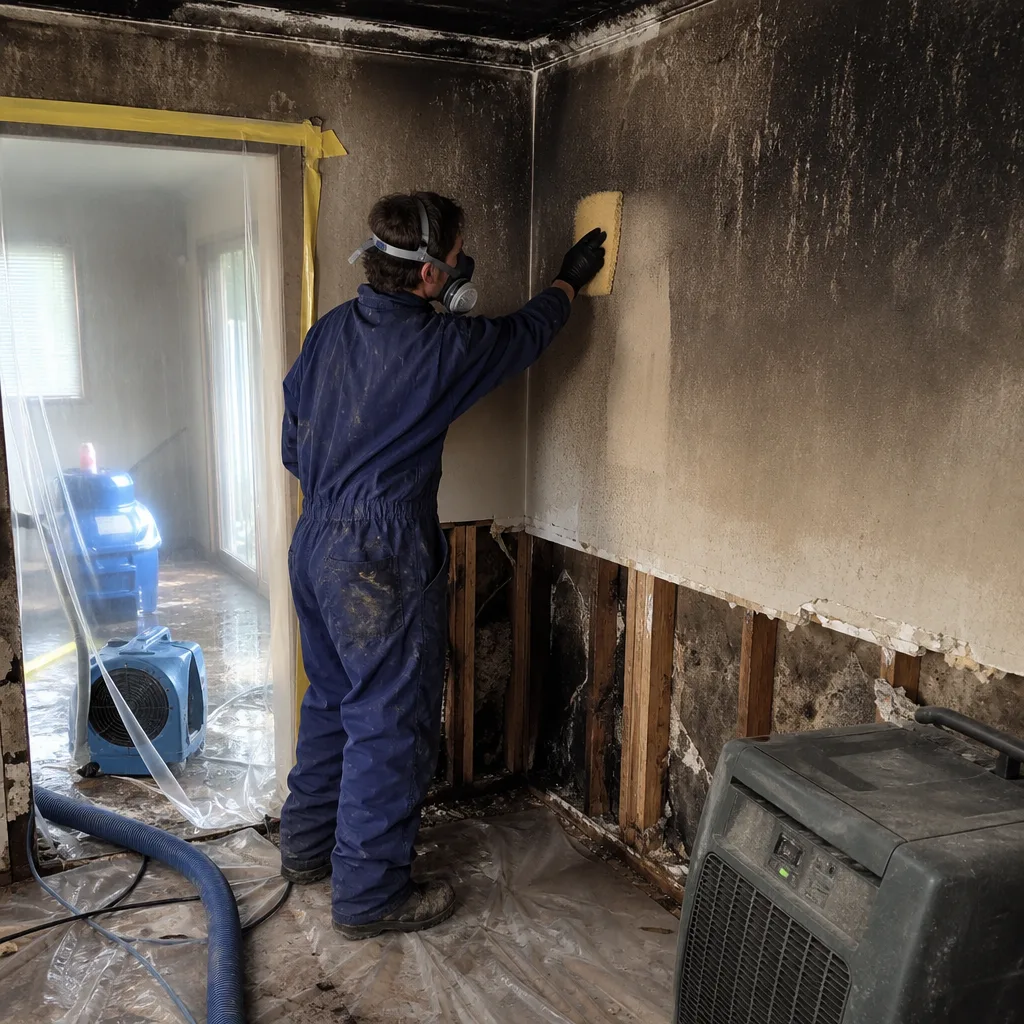
Moisture & Humidity Control
Remediation without humidity control fails in Monroe’s climate. We specify dehumidifier capacity by cubic footage and target 50-55% relative humidity at 70°F. For homes with chronic groundwater intrusion, we coordinate with drainage contractors for exterior French drain installation.
What happens when you call
- 1
A real person answersNo phone trees - you reach a local pro.
- 2
You get an upfront price rangeHonest numbers before anyone is dispatched.
- 3
A background-checked tech heads outLicensed & insured, dispatched right away.
- 4
You approve before work beginsNothing starts until you say go.
Mold Remediation Costs in Monroe, WA
A typical contained crawl-space remediation in Monroe runs $1,800-$3,400. Whole-house remediation with multiple affected rooms ranges $4,200-$6,500. Air quality testing and third-party clearance sampling adds $350-$600. These ranges reflect Monroe’s labor market and disposal costs; they’re comparable to Everett but run 10-15% below Redmond-Bellevue pricing due to shorter crew dispatch distances from our Seattle office.
What moves the price: affected square footage, material type (plaster and lath costs more than drywall), layered damage from prior unremediated floods, and whether asbestos or lead abatement is required. Insurance typically covers mold remediation when the underlying water damage is a covered peril - burst pipes, storm intrusion, or in Monroe’s case, structural flooding from the Skykomish. Long-term maintenance moisture or unresolved drainage issues are usually excluded.
Haven Standard, Clause 1: you’ll receive a written price before any work begins. No exceptions. We also offer a Free Second Opinion on any competitor’s written estimate. Call (425) 696-6061 for an exact scope and price - inspections are free.
We Also Serve Cities Near Monroe
Our crews respond throughout the Skykomish and Snoqualmie valley corridors, including Monroe, Woodinville, Bothell, Everett, and Redmond. Dispatch and scheduling are coordinated from our Seattle office; technicians serving Monroe live in the area and know the local roads, flood patterns, and building stock.
Serving Monroe, WA - Our Local Coverage Area
We’re based in the Monroe area and know this community well. Use the map below to see our service coverage - if you’re nearby, we can almost certainly help.
Monroe Mold Remediation Questions, Answered
How fast can mold grow in a Monroe crawl space after Skykomish flooding?
Mold colonization can begin within 24-48 hours in Monroe’s elevated-humidity foothills climate, significantly faster than in drier inland areas. The Skykomish River valley’s ambient moisture means wood framing in crawl spaces stays above the 20% moisture content threshold for fungal growth long after standing water is pumped out. We recommend emergency extraction and drying within 6 hours of flood recession, not the 48-72 hour window that applies to drier climates. Call (425) 696-6061 for immediate dispatch.
Why does mold keep coming back in older Monroe homes near the river?
Layered damage from prior flood events is the primary cause. A home that took Skykomish water in a previous season and was never fully dried retains hidden mold in wall cavities and crawl-space framing. The next flood event adds fresh moisture and organic loading on top of existing colonization, and surface cleaning doesn’t reach the established hyphae in framing members. We use borescopes and thermal imaging to find prior damage before quoting any new remediation. Call (425) 696-6061 for a full assessment.
What makes Monroe mold remediation different from the rest of Snohomish County?
Monroe’s position directly in the path of rain-on-snow events and atmospheric rivers creates flood-driven mold patterns that differ from the roof leaks and burst pipes dominant in Everett, Snohomish, or Mill Creek. The valley-floor water table and orographic humidity mean mold establishes faster and persists longer without professional drying. Our Monroe protocols specify lower moisture content targets and longer drying phases than our crews use in drier western Snohomish County markets. Call (425) 696-6061 for Monroe-specific remediation.
Do you test before removing mold in a Monroe home?
Yes. We conduct pre-remediation air sampling and surface testing to identify species and establish baseline spore counts. In Monroe’s layered-damage scenarios, testing often reveals multiple species from different moisture events, which changes the antimicrobial selection and containment level. Post-remediation clearance testing confirms safe levels before containment is removed. Documentation goes to your insurer and your file. Call (425) 696-6061 to schedule testing.
How do you dry a Monroe crawl space without tearing the whole floor apart?
Injectidry systems pull air through wall cavities and sub-floor spaces using targeted injection ports and extraction mats, drying from the inside out. For crawl spaces with limited access, we use low-grain refrigerant dehumidifiers with ducting to create controlled drying zones. This approach works when framing moisture is caught within the first 48 hours; established mold requires removal of the contaminated material. We map every reading and won’t recommend demolition unless the data supports it. Call (425) 696-6061 for moisture mapping.
Will my insurance cover mold remediation in Monroe?
Insurance covers mold remediation when the underlying water damage is from a covered peril - in Monroe, this typically means Skykomish River flooding on properties with flood coverage, or storm-driven rain intrusion through damaged roofing. Long-term maintenance issues like failed vapor barriers or poor drainage are usually excluded. We document the water source, timeline, and material damage to establish coverage, and we coordinate directly with your adjuster. Call (425) 696-6061 and we’ll review your policy specifics.
How long does full mold remediation take in Monroe?
Contained crawl-space remediation typically requires 3-5 days of active work plus 2-3 days of post-remediation air scrubbing and clearance testing. Whole-house remediation with multiple affected rooms runs 7-14 days. Monroe’s elevated humidity extends drying phases compared to drier markets; we don’t rush the data. Daily moisture logs track progress, and containment stays in place until readings confirm pre-loss conditions. Call (425) 696-6061 for a timeline based on your specific damage.
Can we stay in our Monroe home during mold remediation?
For Level 1 contamination under 10 square feet in a single room, yes, with containment isolation. For Level 2 or 3, or any toxigenic species, we recommend temporary relocation until clearance testing confirms safe air quality. In Monroe’s older homes with balloon framing, even localized contamination can affect air quality in distant rooms through interconnected wall cavities. We test air in occupied zones daily and will tell you directly if relocation is warranted. Call (425) 696-6061 to discuss your situation.
Monroe sits in the Skykomish River valley at the foot of the Cascades, making it one of the most repeatedly flood-affected incorporated cities in Snohomish County. Unlike neighboring communities further from the mountains, Monroe is directly in the path of rain-on-snow events and atmospheric rivers that send the Skykomish out of its banks, so damage restoration here is disproportionately driven by structural river flooding across FEMA-designated floodplain properties - not just the roof leaks and burst pipes that dominate restoration work in the broader Seattle metro. This is why our Mold Remediation in Monroe protocols are built around rapid response to Category 3 water intrusion, comprehensive moisture mapping, and documentation that satisfies both IICRC standards and insurance adjuster review.
Written by Alicia Brennan, Owner at Back to Dry Restoration, serving Monroe since 2011.