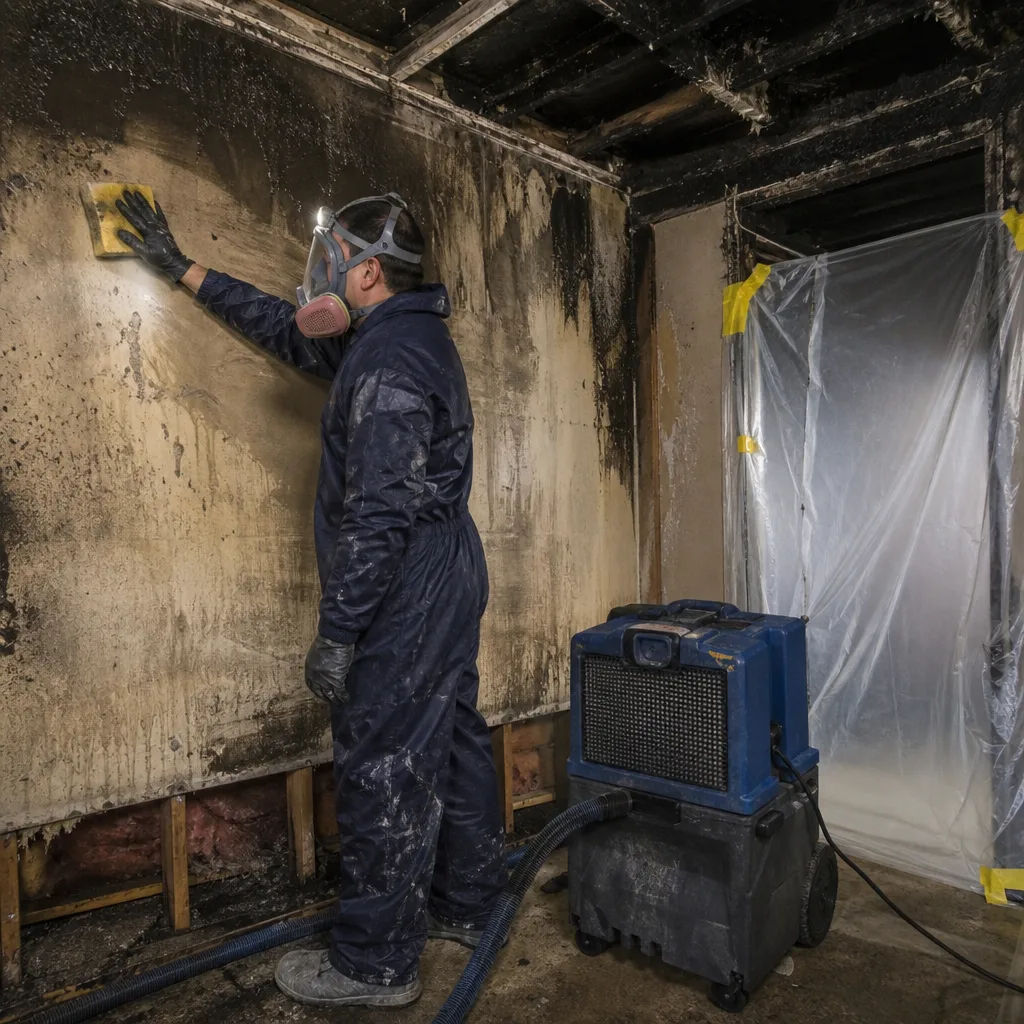
Free visual inspection and a written scope of work before any mitigation begins - photos, moisture readings, and drying logs go in your claim file
The scope we write is the scope we bill. Anything new gets shown to you, in writing, before we touch it.
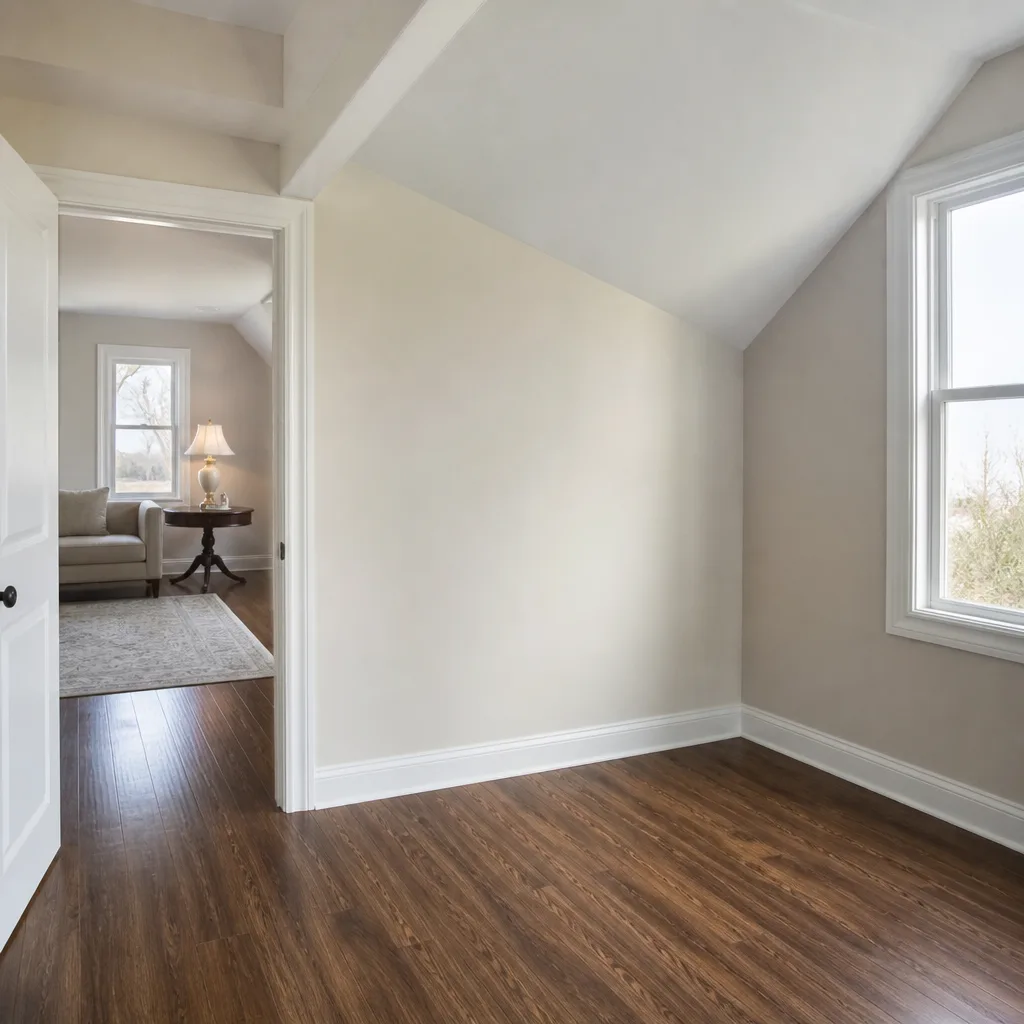
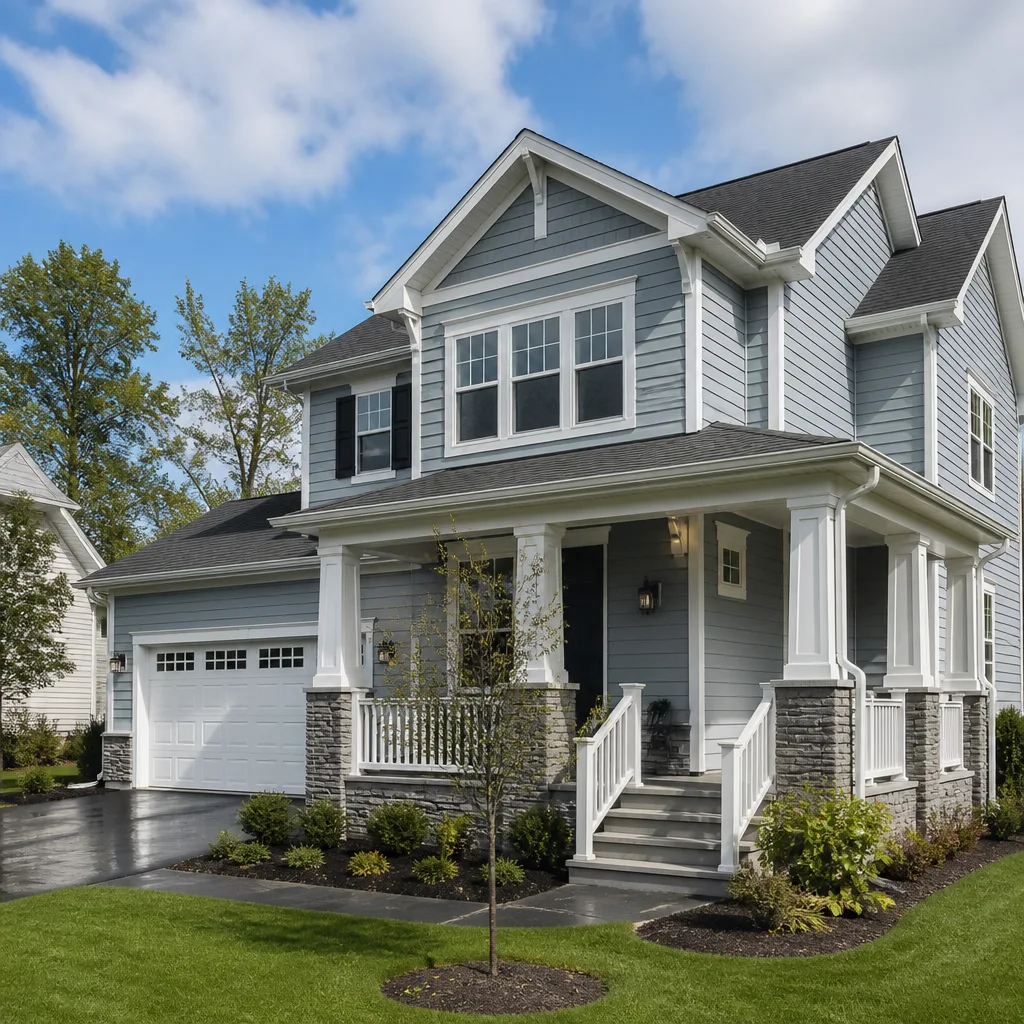
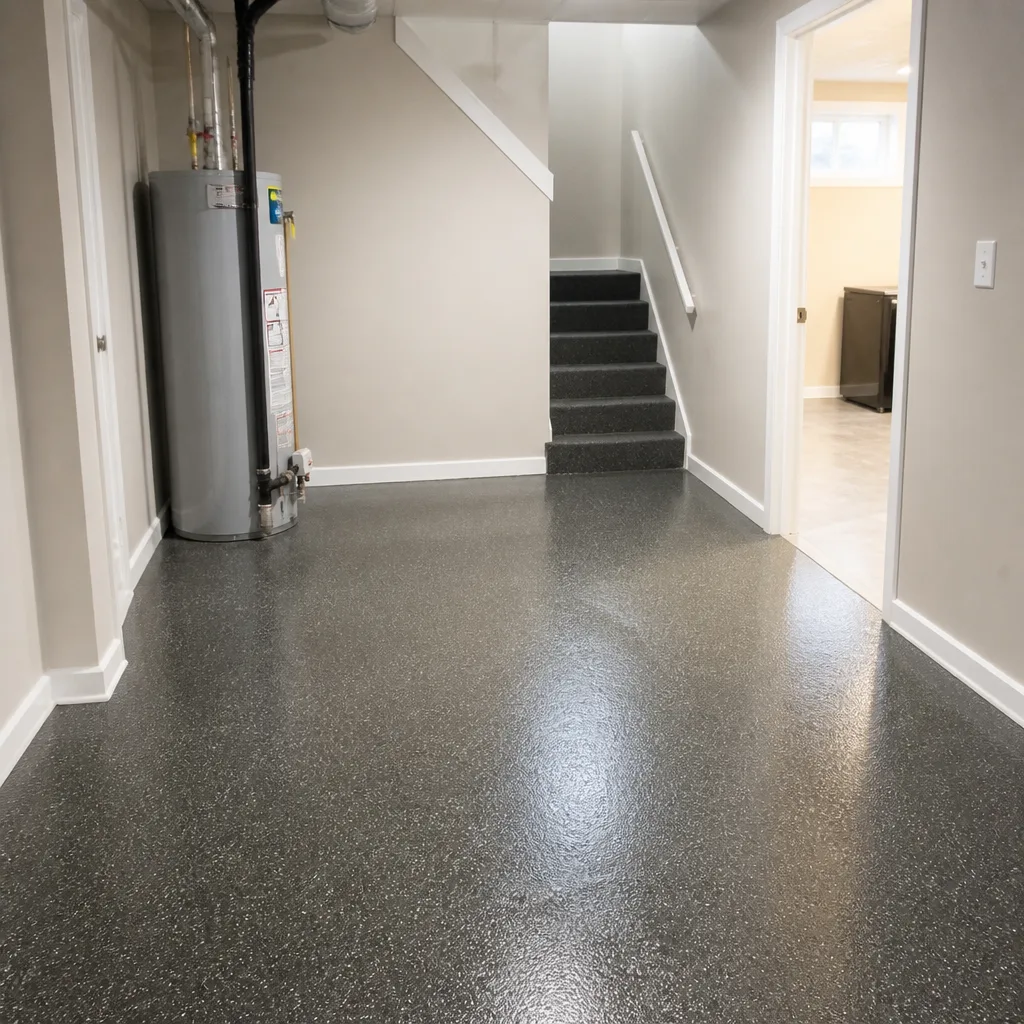
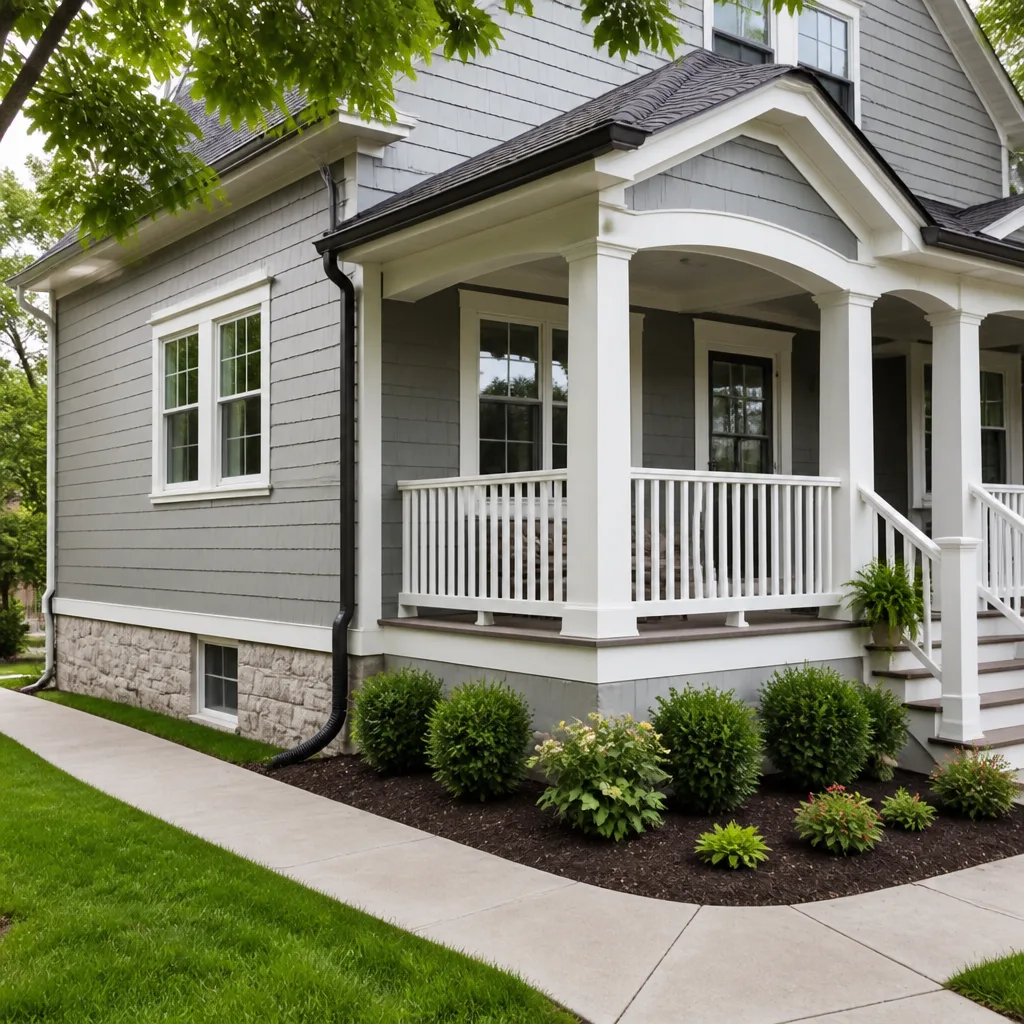
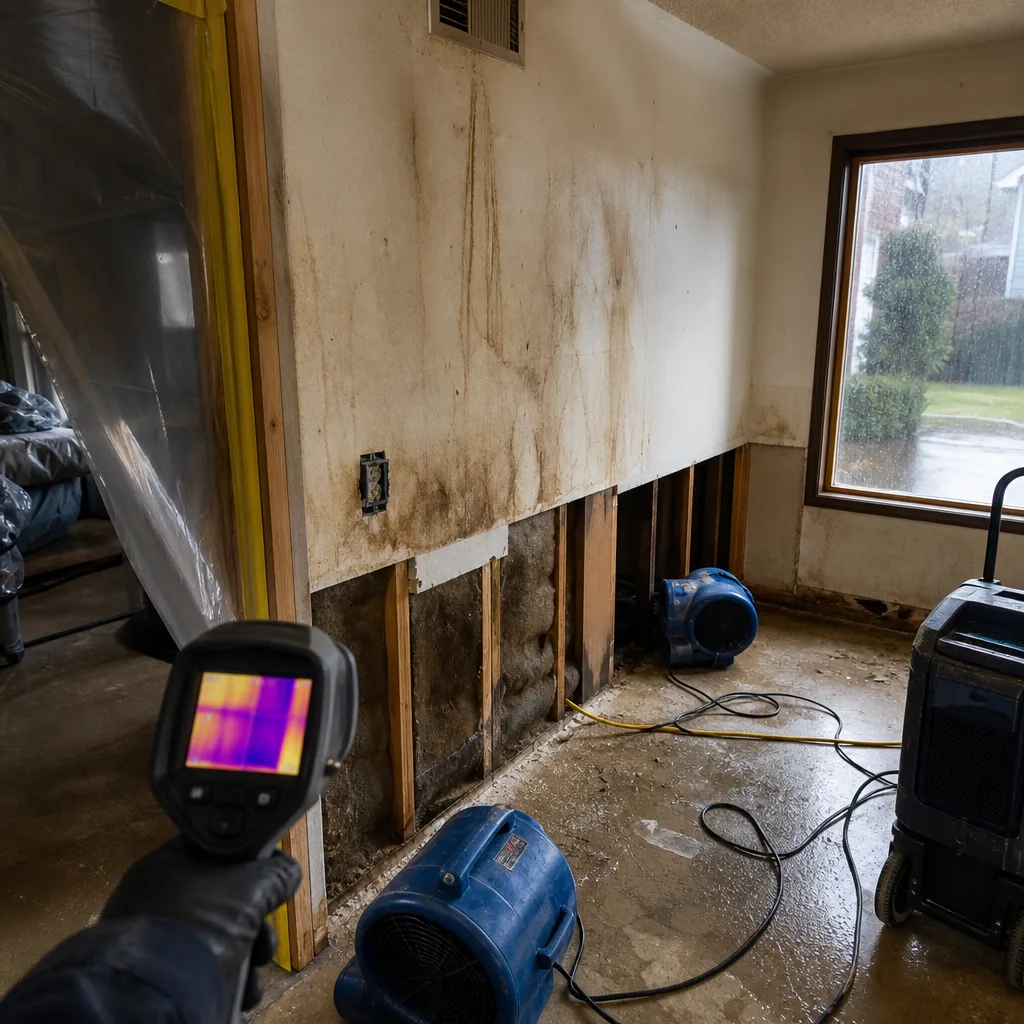 Before
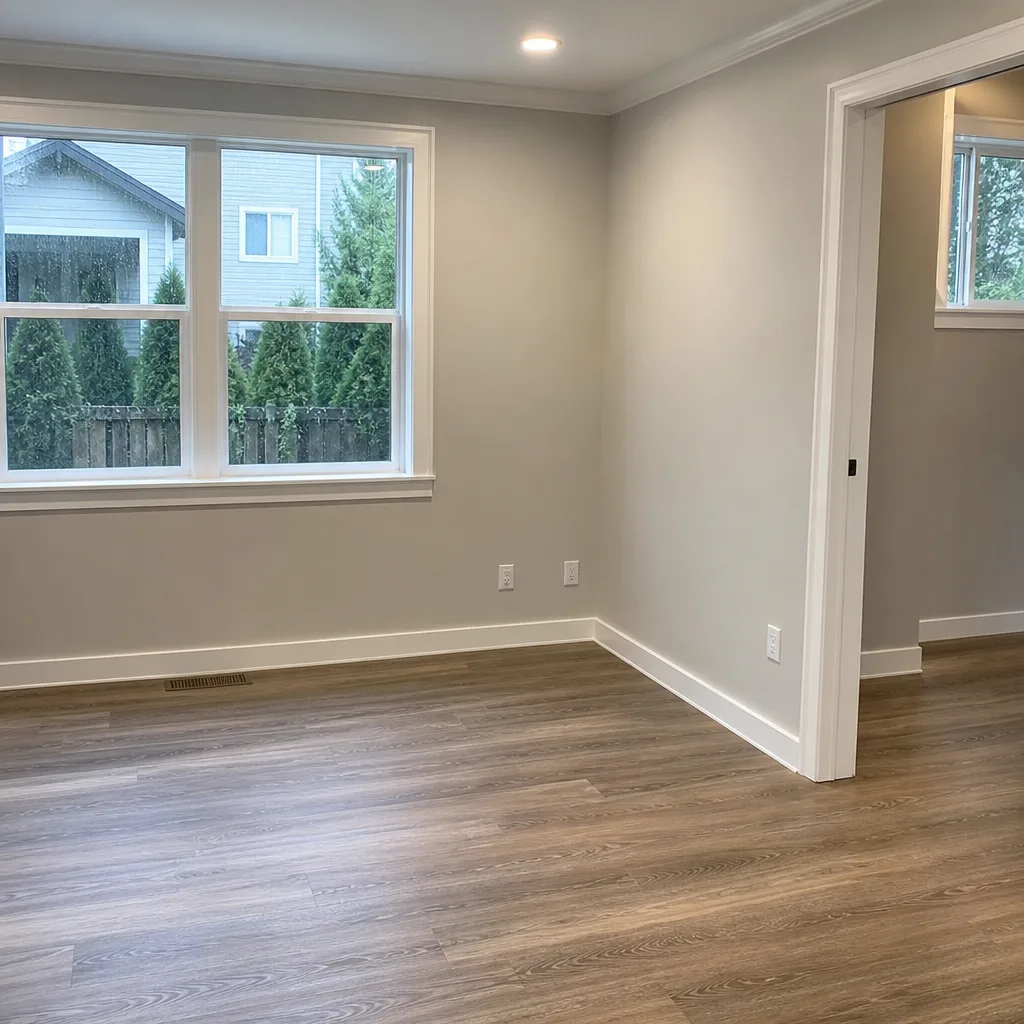 After
After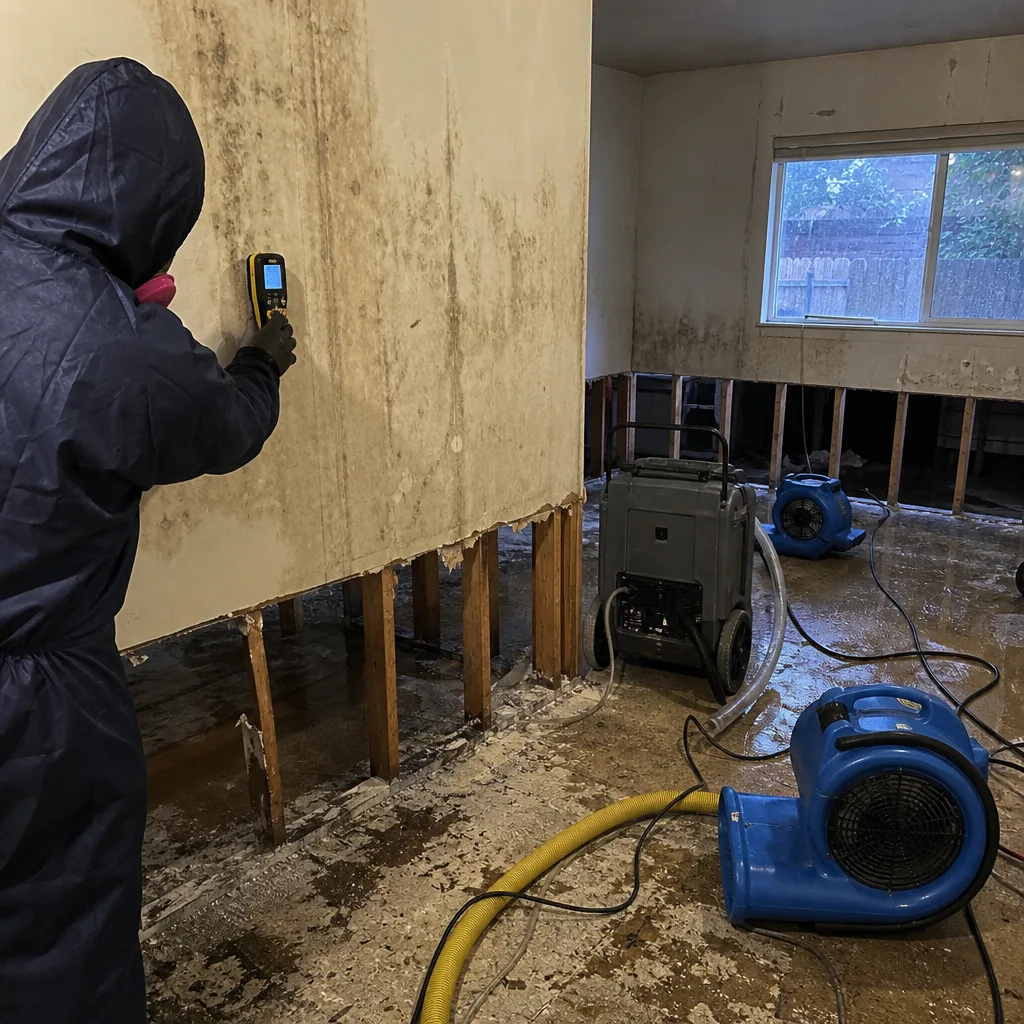 Before
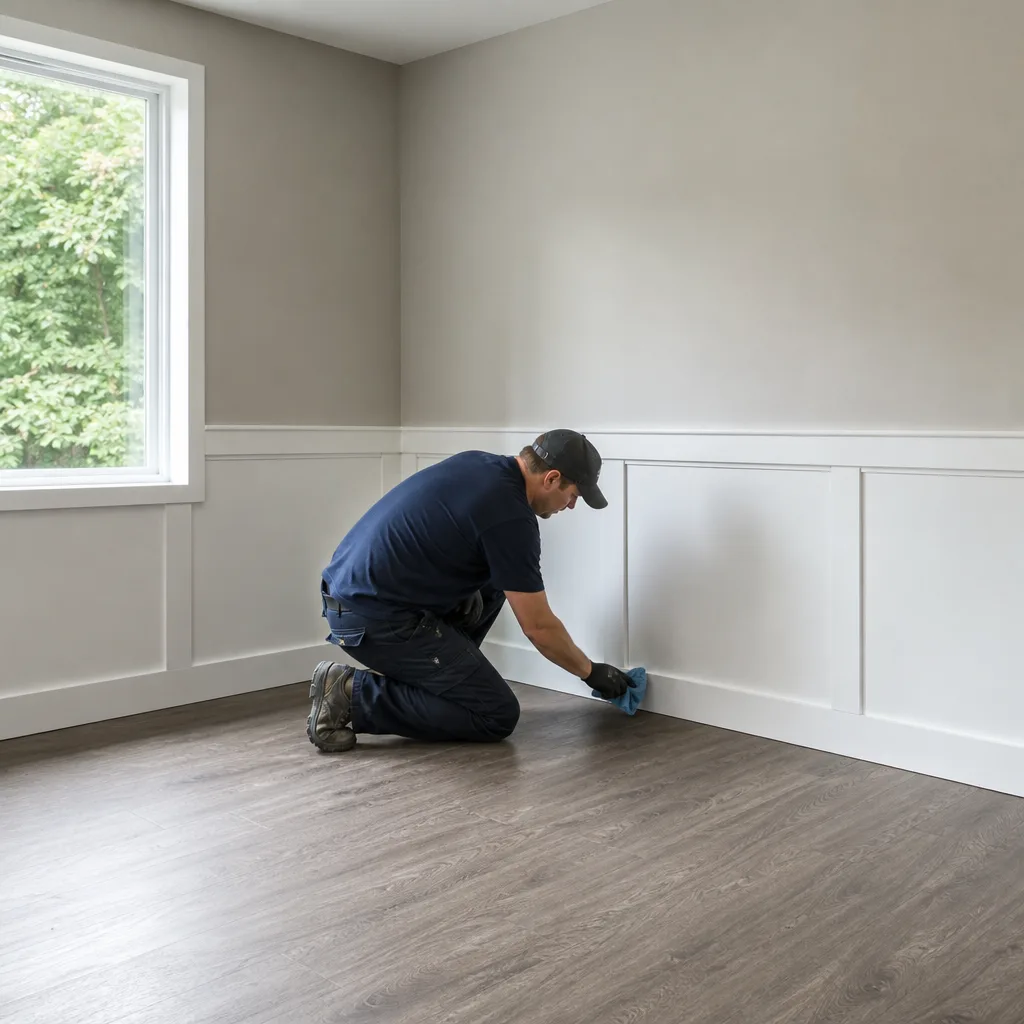 After
After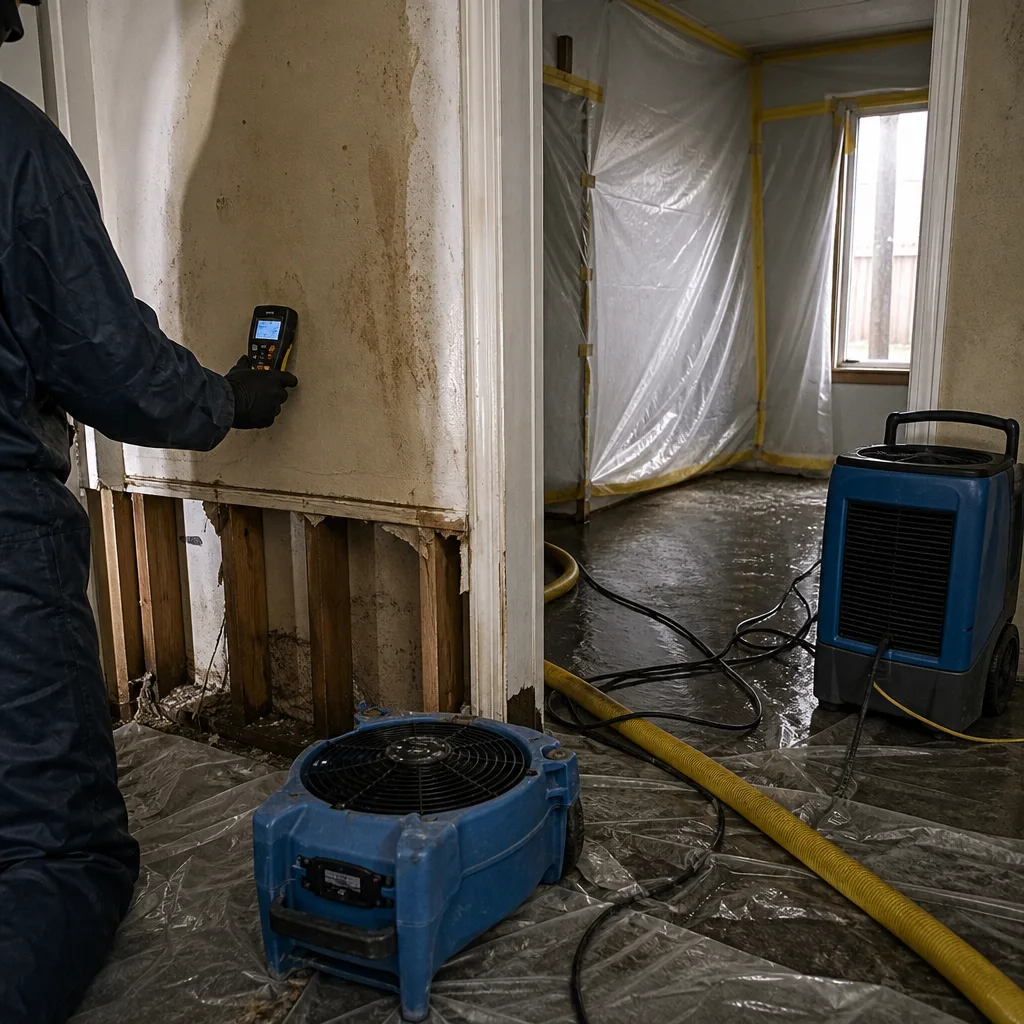 Before
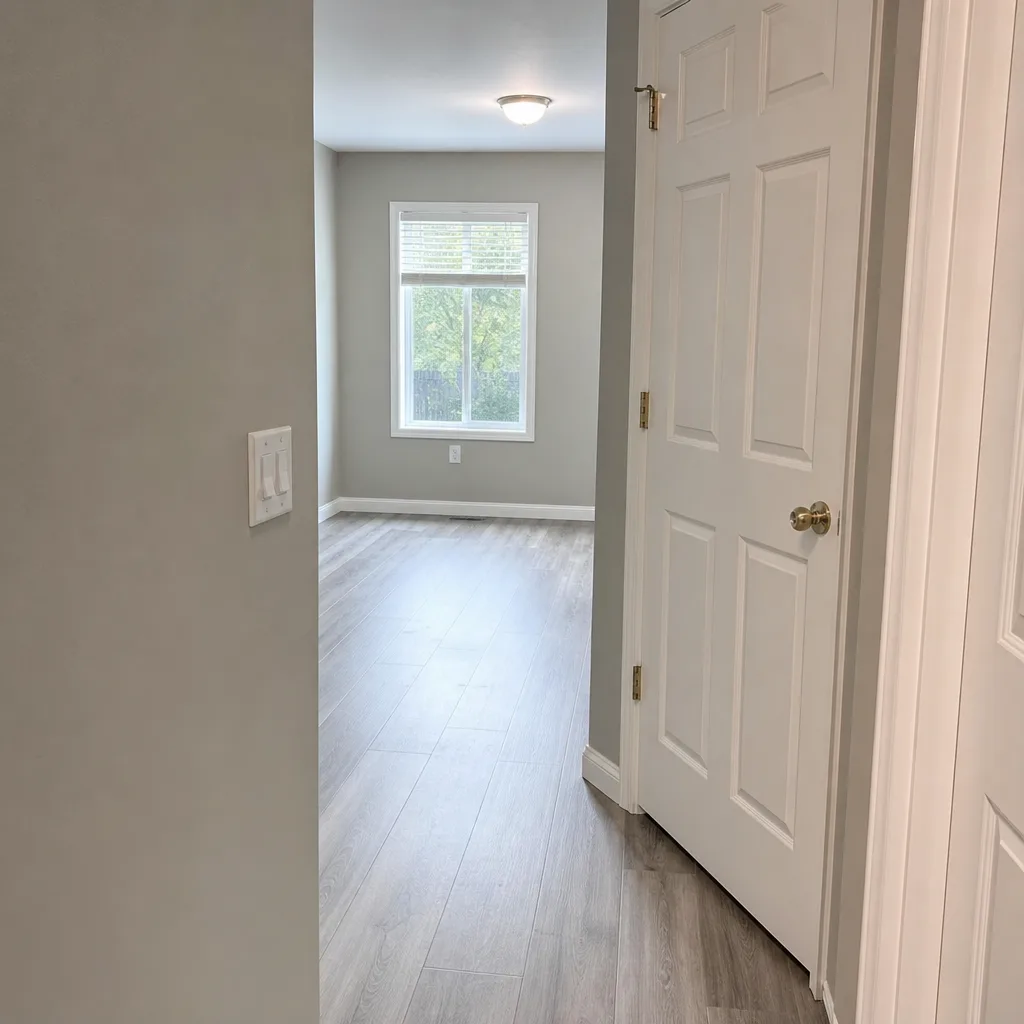 After
After24/7 Emergency Fire & Smoke Damage Restoration in Seattle
Fire and smoke damage restoration in Seattle typically costs $4,200-$18,500 depending on the fire class and square footage affected, with emergency board-up and stabilization completed same day when you call (425) 696-6061. Our crews answer live 24 hours a day, 7 days a week - no voicemail, no callback queues - and we dispatch throughout Seattle from our local coordination office. The first hour after a fire determines whether smoke residues set permanently into porous materials and whether water from suppression efforts migrates into wall cavities and subflooring. We provide a free visual inspection, document everything with photos from arrival, and deliver a written scope and price before any work begins under Haven Standard, Clause 1.
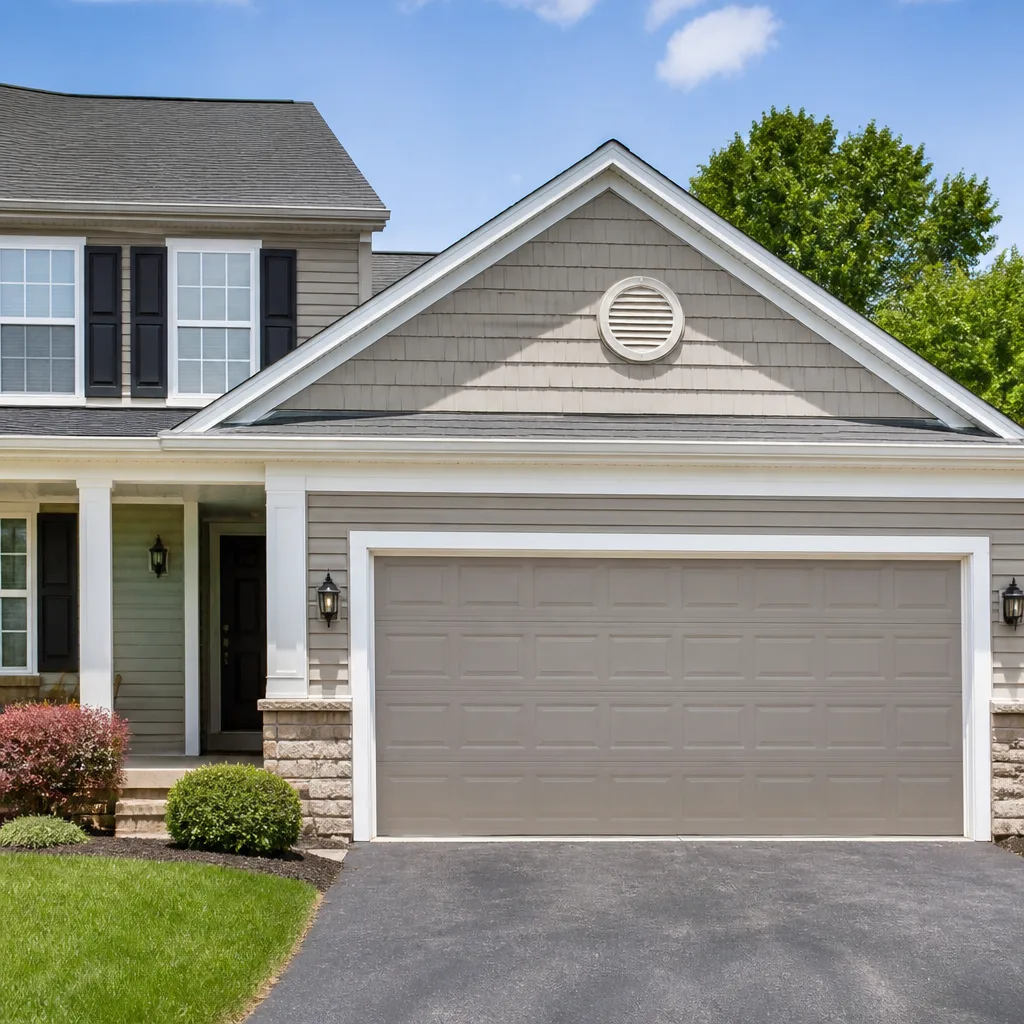
Seattle’s coastal position creates a secondary damage pattern most restoration guides ignore: salt-laden marine air accelerates corrosion on garage-door hardware, so fire-damaged garages frequently reveal severely compromised springs, hinges, and tracks even when the fire itself was contained elsewhere. Our crews are trained to assess corrosion as a parallel damage category, not an afterthought.
Understanding Fire & Smoke Damage Restoration Severity in Seattle Properties
Fire damage severity in restoration trade terms breaks down by the fire class (Class A through Class D), the smoke residue type (dry smoke, wet smoke, protein residue, or fuel oil soot), and the extent of smoke migration through HVAC systems and wall cavities. Seattle’s housing stock intensifies these classifications in specific ways. The early-20th-century Craftsman bungalows and Victorian-era homes in Capitol Hill, Ballard, Fremont, and the Central District retain original old-growth fir framing and uninsulated vented crawlspaces that absorb smoke odors deeply and wick firefighting water into subfloor assemblies. Post-WWII construction in Rainier Valley and South Seattle often lacks adequate vapor barriers, so suppression water combines with existing crawlspace moisture to produce Category 3 water - grossly contaminated, requiring full mitigation beyond standard fire scope.
Dry smoke from fast-burning, high-heat fires produces powdery, non-smearing residue that penetrates cracks in older plaster and lath. Wet smoke from slow, oxygen-starved fires - common in Seattle’s tightly sealed modern renovations - leaves sticky, smearing residue that bonds to corroded metal surfaces and pitted chrome fixtures. Protein residue from kitchen fires, nearly invisible but pungent, embeds in unfinished fir framing and requires enzymatic treatment. Our crews classify residue type on arrival using IICRC FSRT protocols, then match cleaning chemistry to substrate: alkaline cleaners for wet smoke on painted drywall, solvent-based agents for dry smoke on metal, enzyme digesters for protein on raw wood.
Why Seattle Property Owners Choose DryMark Restoration Bothell
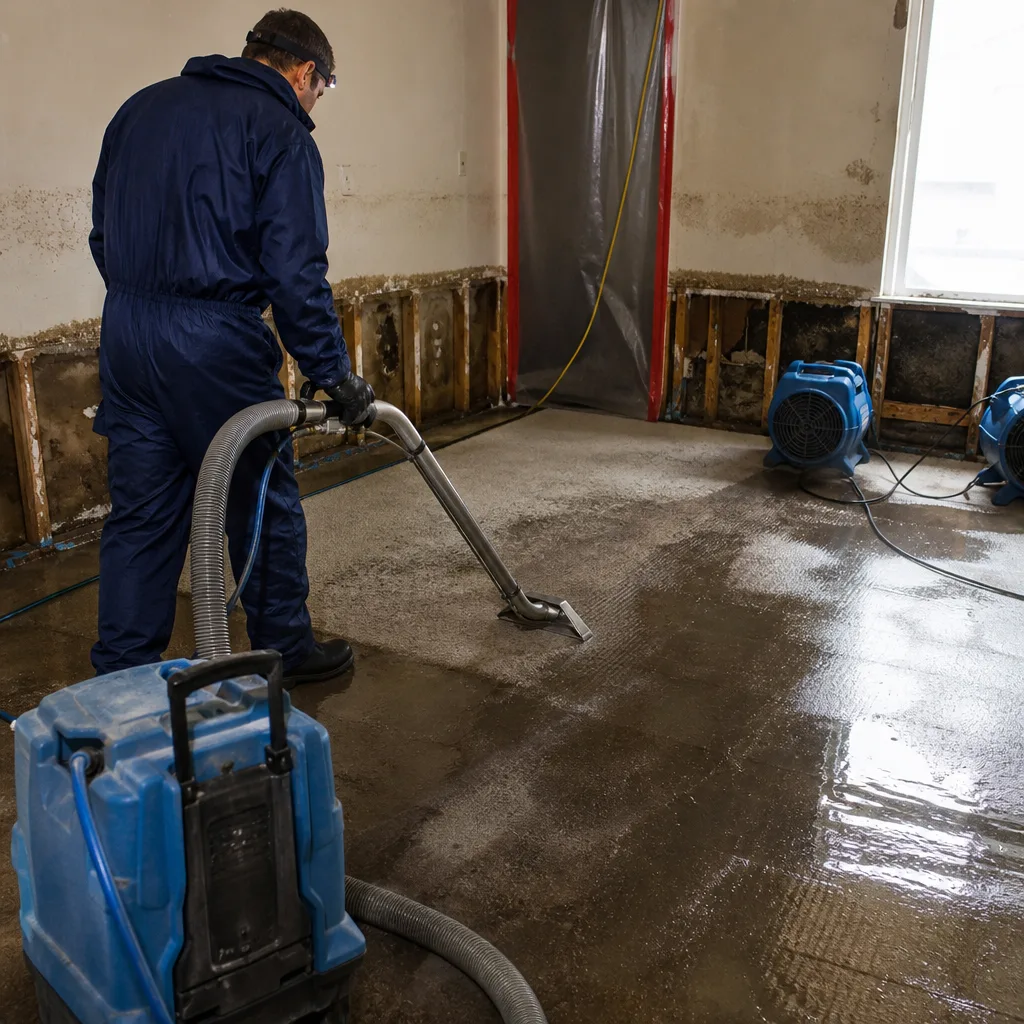
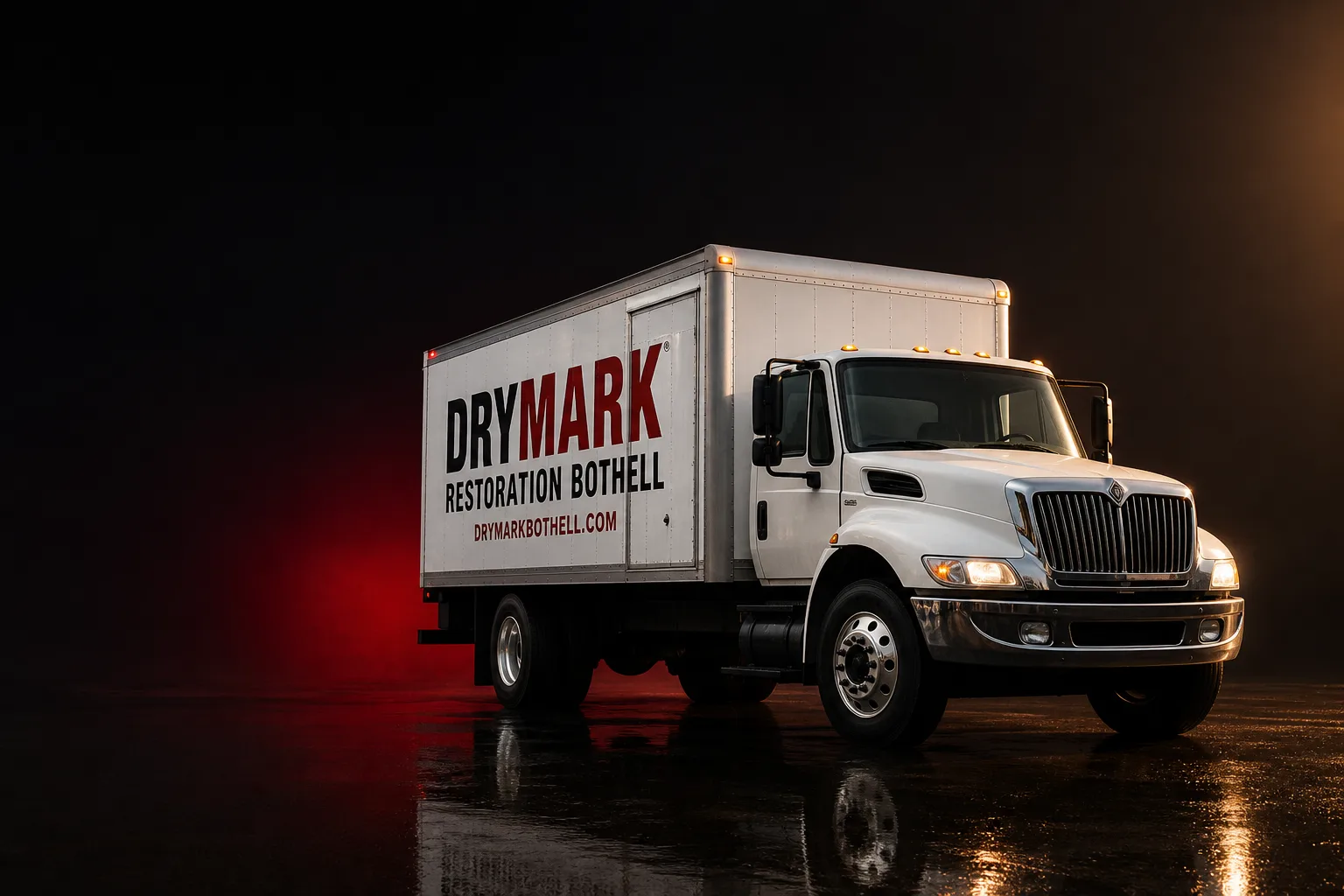
- 45-minute response commitment to Seattle addresses from dispatch, with crews carrying full board-up and stabilization equipment on every truck.
- 24/7 live answer - a real person, never an automated system or voicemail tree, picks up every call to (425) 696-6061 within three rings.
- IICRC-certified crews holding FSRT (Fire and Smoke Restoration Technician), WRT (Water Damage Restoration Technician), and AMRT (Applied Microbial Remediation Technician) certifications, with license numbers documented on every job file.
- Free visual inspection with photo documentation starting at arrival, no obligation, no pressure to authorize work on the spot.
- Direct insurance billing with adjuster coordination handled by our in-house claims team, including line-item estimates in Xactimate format.
- One team from board-up to reconstruction - no handoffs between mitigation and rebuild contractors, no gaps in documentation or accountability.
BeforeAfterOur Fire & Smoke Damage Restoration Process
1. Inspection & Assessment
We arrive with thermal imaging cameras, moisture meters, and hygrometers to map visible fire damage, smoke migration paths, and hidden moisture from suppression. In Seattle’s older homes, we specifically inspect garage-door hardware for salt-air corrosion that may have compromised structural integrity. Every finding is photographed and logged before any stabilization begins.
2. Emergency Board-Up & Stabilization
Broken windows, compromised roofing, and damaged doors are secured with plywood and weatherproof tarps to prevent secondary water intrusion from Seattle’s persistent drizzle. If garage-door springs or tracks have failed due to corrosion, we install temporary bracing and flag full replacement in the written scope.
3. Water Extraction & Structural Drying
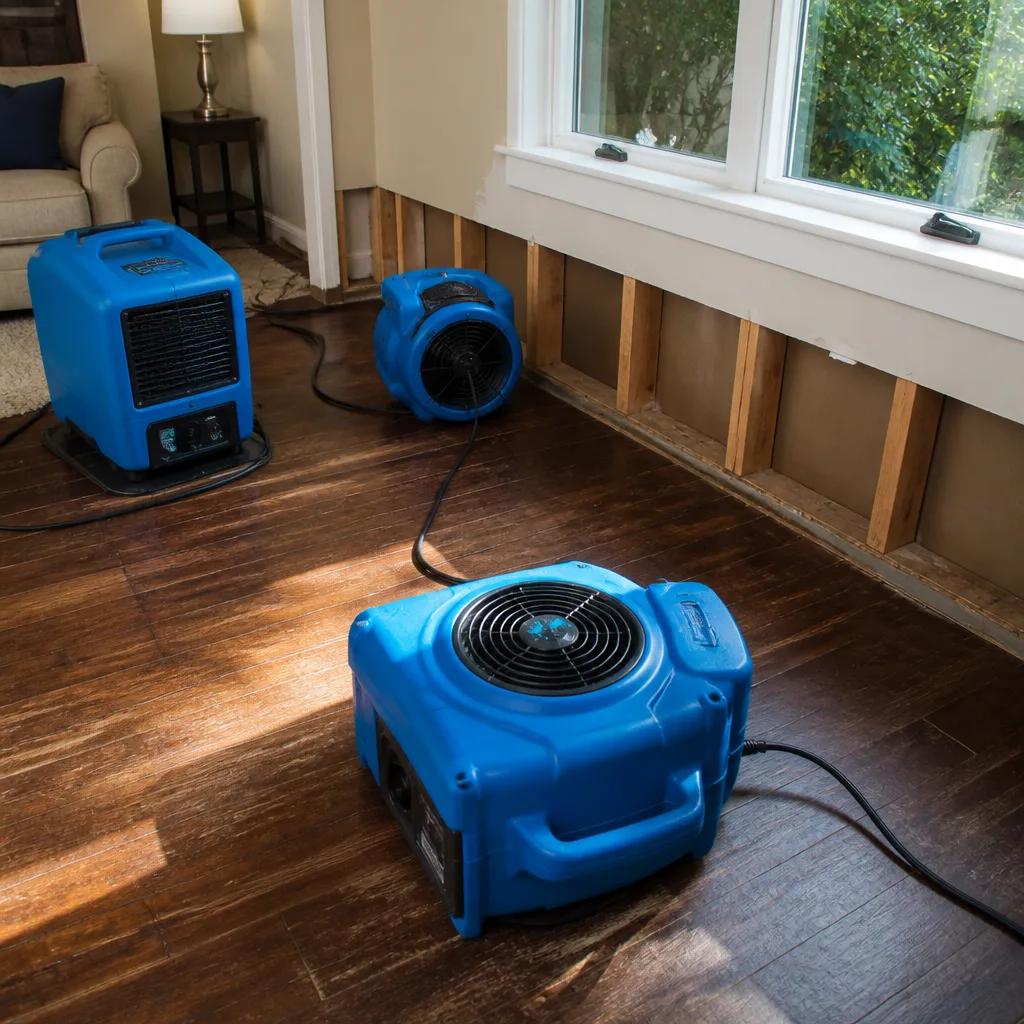
Firefighting water is extracted using truck-mounted systems, then we deploy Dri-Eaz and Phoenix dehumidifiers with axial air movers to establish vapor pressure differential - the measurable force that drives moisture from wet materials into dry air. Daily psychrometric data (temperature, relative humidity, grains per pound) is logged and shared with your adjuster.
4. Smoke & Soot Removal
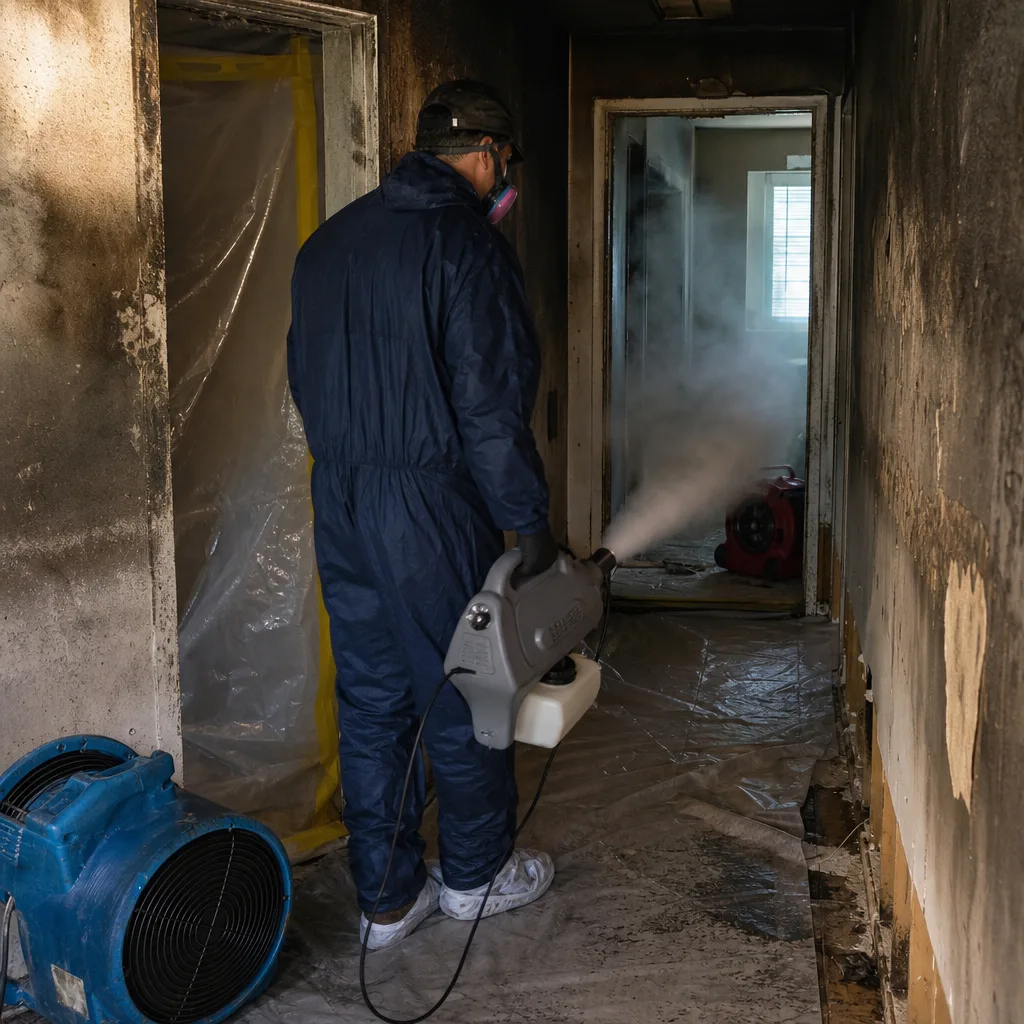
HEPA air scrubbers run continuously during cleaning to capture airborne particulates. Surfaces are treated with chemistry matched to residue type: dry smoke gets vacuuming and dry sponging, wet smoke requires solvent cleaning, protein residue needs enzymatic digestion. Corroded metal surfaces receive corrosion-inhibiting pre-treatment before standard soot removal.
5. Odor Neutralization & Contents Processing
We deploy hydroxyl generators and thermal fogging for odor penetration in Seattle’s dense old-growth framing, where smoke odors persist for months without proper treatment. Salvageable contents are packed out to our Bothell facility for ultrasonic cleaning and ozone treatment; non-salvageable items are documented with photos for insurance inventory.
6. Structural Repair & Restoration
Damaged framing, drywall, flooring, and finishes are rebuilt to pre-loss condition. In fire-damaged garages, we replace corroded hardware with galvanized springs and stainless hinges rated for marine environments, documenting the upgraded specification in the final scope. All work is covered by our 365-Day Done Right Promise under The Haven Standard.
Need Emergency Fire & Smoke Damage Restoration in Seattle Now?
Crews minutes away, answering live 24 hours a day. The sooner we start, the less it costs.
Working With Your Insurance Company
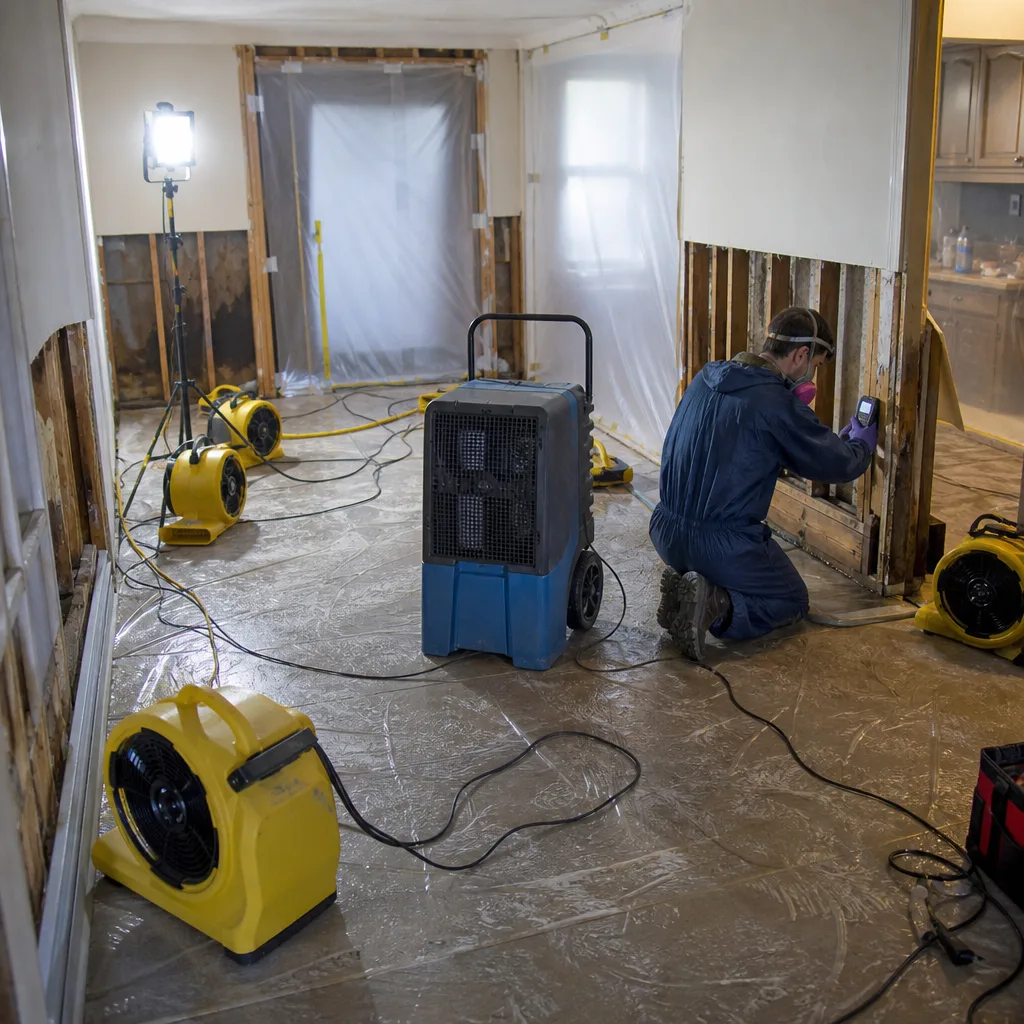
From the first hour on site, we build a claim file that adjusters can pay without dispute. Alicia Brennan founded Back to Dry Restoration in 2011 after working as a claims adjuster and witnessing how documentation gaps - missing photos, vague scopes, undocumented moisture readings - cost homeowners their full settlements. We do not repeat that pattern. Our crew photographs every room from multiple angles, records moisture content in every affected material, and produces daily drying logs that trace the restoration timeline in Xactimate-compatible format.
We communicate directly with your carrier’s adjuster, not through you as a relay. Our estimates use industry-standard pricing databases with line-item detail for every action, every material, every hour of labor. If your adjuster questions any element, we provide the supporting documentation: the photo, the reading, the standard reference. Haven Standard, Clause 1 requires a written price before work begins; Haven Standard, Clause 3 requires that same documentation standard for every insurer interaction.
What We Provide Your Insurer
- Thorough documentation of the loss
- Photos of all damage, room by room
- Moisture readings and drying logs
- A detailed, line-item scope of work
- Direct coordination with your carrier
Built for Seattle’s Loss Calendar
Seattle’s fire damage calendar differs from drier climates. January through March brings the highest residential fire frequency as homeowners rely on space heaters, wood stoves, and aging electrical systems in drafty Craftsman homes with knob-and-tube wiring still active in walls. Kitchen fires spike during the holiday cooking season and again in deep winter when families cook more meals at home. April through June sees an increase in garage and workshop fires as residents resume outdoor projects and misstore oily rags or overcharge lithium batteries near flammables.
July and August bring the driest conditions, but Seattle’s wildfire smoke season - increasingly severe from regional forest fires - introduces a distinct damage type: exterior smoke infiltration through soffit vents and window seals, leaving odor and residue without any structural fire. September through November’s return of marine drizzle creates the most complex restoration scenarios: fires that occur during rain events require simultaneous water mitigation, and salt-air corrosion on garage hardware accelerates as humidity rises. December’s short daylight hours and heavy heating loads stress electrical systems in older homes, particularly in Capitol Hill and Ballard’s vintage housing stock.
Fire & Smoke Damage Restoration Across Seattle’s Neighborhoods
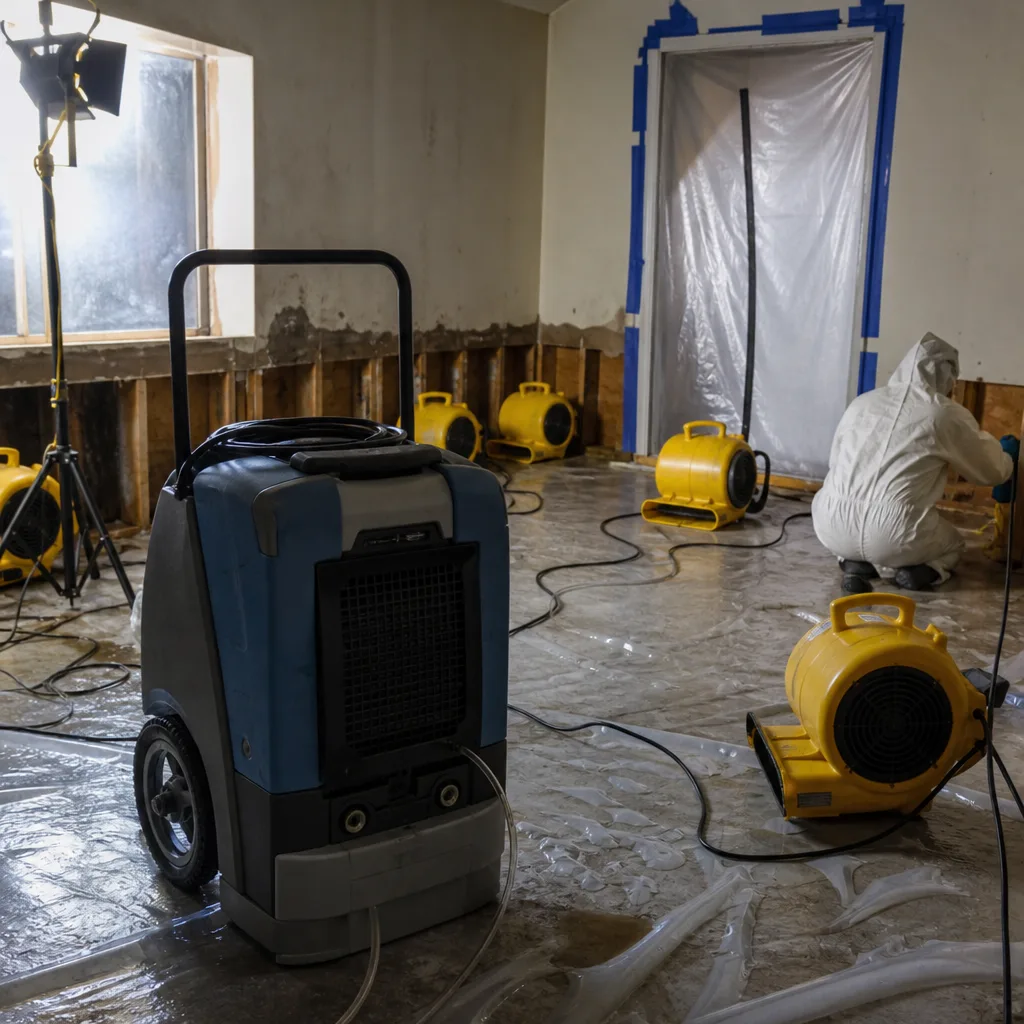
Capitol Hill’s dense Victorian and Craftsman housing presents narrow lot lines and limited street parking that complicate equipment staging and debris removal. Our crews coordinate with Seattle DOT for temporary parking permits and use compact equipment configurations when access is tight. Ballard’s waterfront-adjacent blocks face the most severe salt-air corrosion; garage-door hardware there often shows advanced rust within 8-10 years of installation, compared to 15-20 years inland. We stock marine-rated replacement components specifically for these calls.
Fremont’s hillside homes on steep grades require specialized water extraction setups when suppression water migrates downhill through shared crawlspaces or into lower-unit condominiums. Queen Anne and Magnolia’s glacially carved hillsides create persistent foundation moisture patterns that amplify firefighting water damage, with water tracking along bedrock shelves into basements far from the original fire. Rainier Valley’s post-war tract homes frequently have minimal crawlspace vapor barriers and aging galvanized plumbing, so a kitchen fire with suppression often triggers simultaneous water line failure requiring full Category 3 mitigation. Our Seattle crews know these patterns and arrive prepared for the specific building type.
Specialized Fire & Smoke Damage Restoration Services We Offer in Seattle
Fire Damage Cleanup
We remove charred structural materials, debris, and compromised contents, then treat remaining substrates with cleaning chemistry matched to fire class and residue type. In Seattle’s older homes, we test for lead and asbestos before disturbing pre-1978 finishes, with abatement coordinated through certified subcontractors when required.
Smoke & Soot Removal
Smoke migrates through HVAC ducts, electrical chases, and plumbing penetrations to affect rooms far from the fire origin. We trace migration paths with thermal imaging and particle counters, then clean or seal each affected surface. Corroded metal in coastal Seattle garages receives specialized treatment before standard soot removal.
Odor Removal & Deodorization
Seattle’s persistent marine humidity traps odor molecules in porous materials, making temporary masking ineffective. We use hydroxyl generators safe for occupied spaces, thermal fogging for severe penetration, and activated charcoal filtration in contained areas, with odor clearance verified by sensory testing before rebuild.
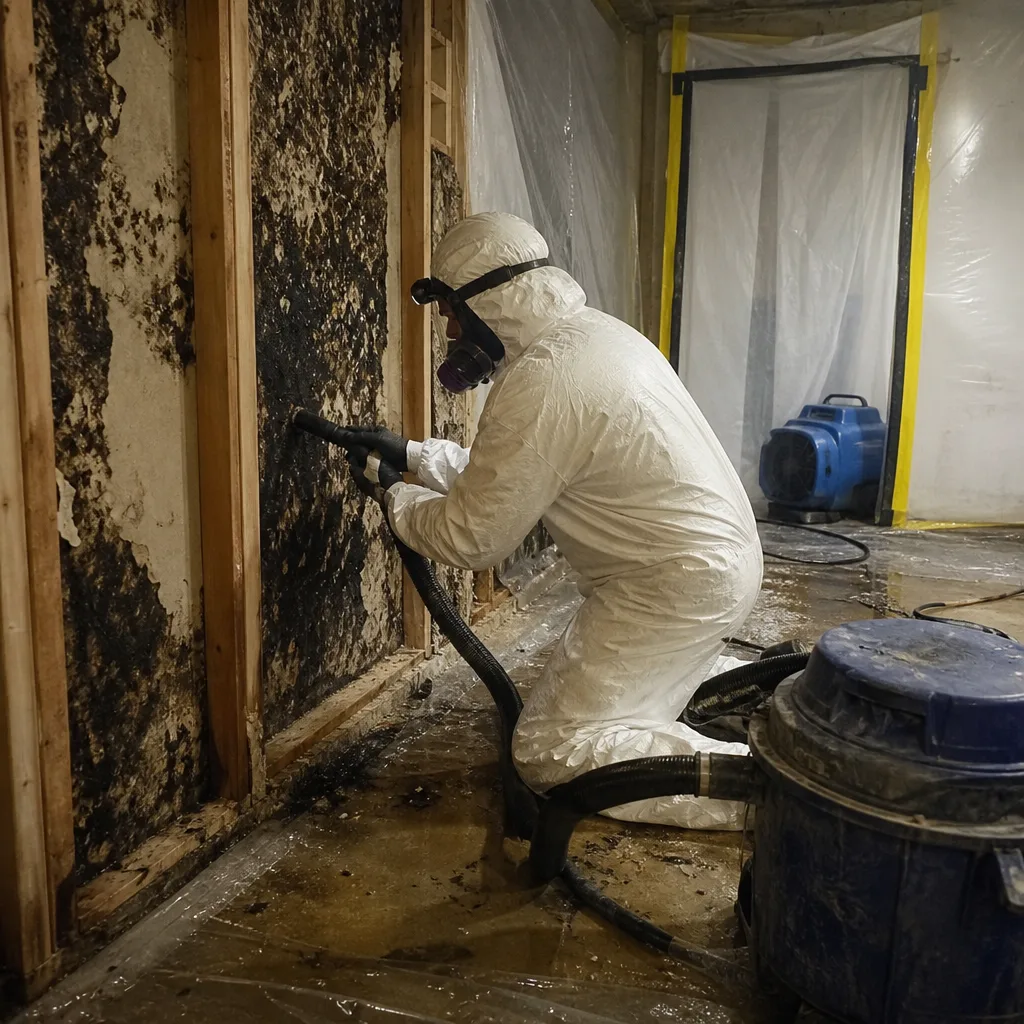
Contents Cleaning & Pack-Out
Salvageable items are inventoried, photographed for insurance, and transported to our Bothell facility for ultrasonic cleaning, dry cleaning, or ozone treatment. Non-salvageable items are documented with replacement cost research to support your personal property claim.
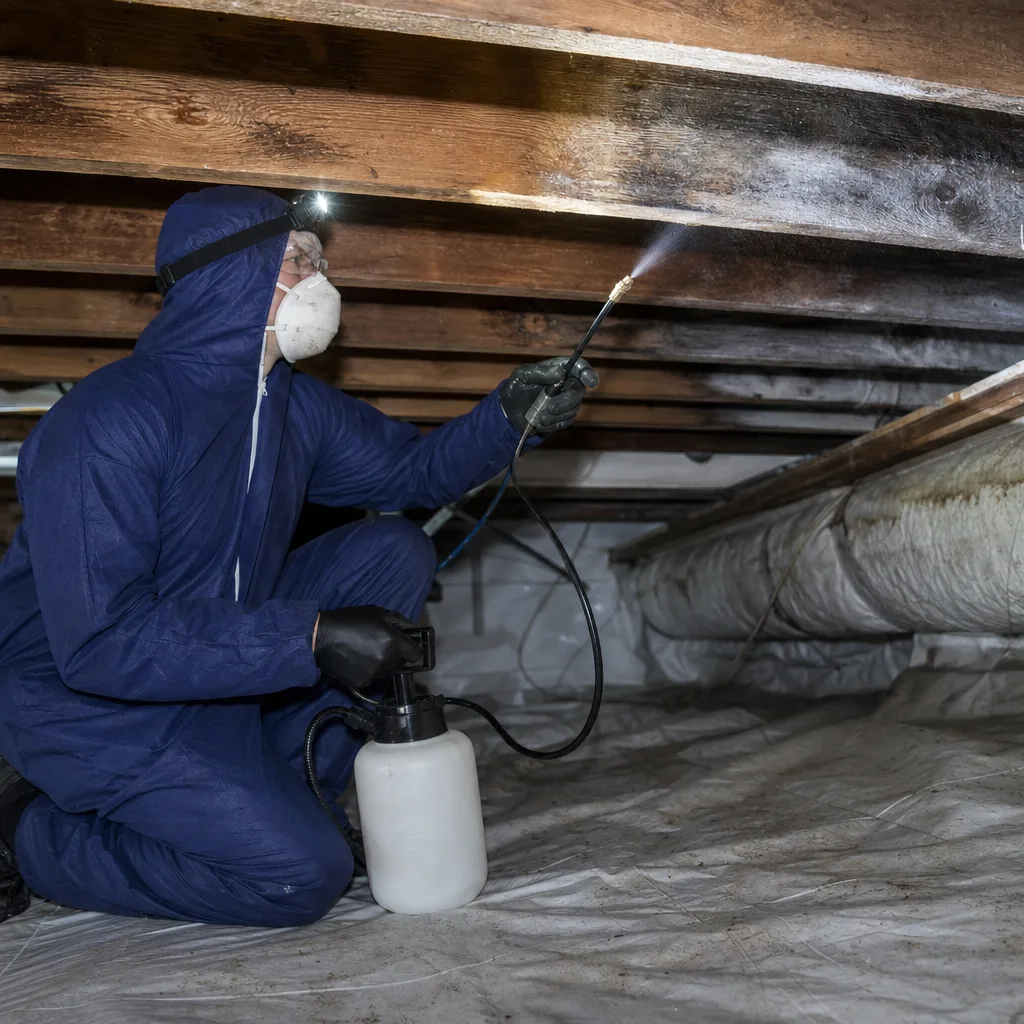
Emergency Board-Up & Tarping
Broken windows, compromised roofing, and damaged garage doors are secured against Seattle’s drizzle within hours of your call. If corrosion has weakened garage-door hardware, we install temporary bracing and include full replacement in the restoration scope.
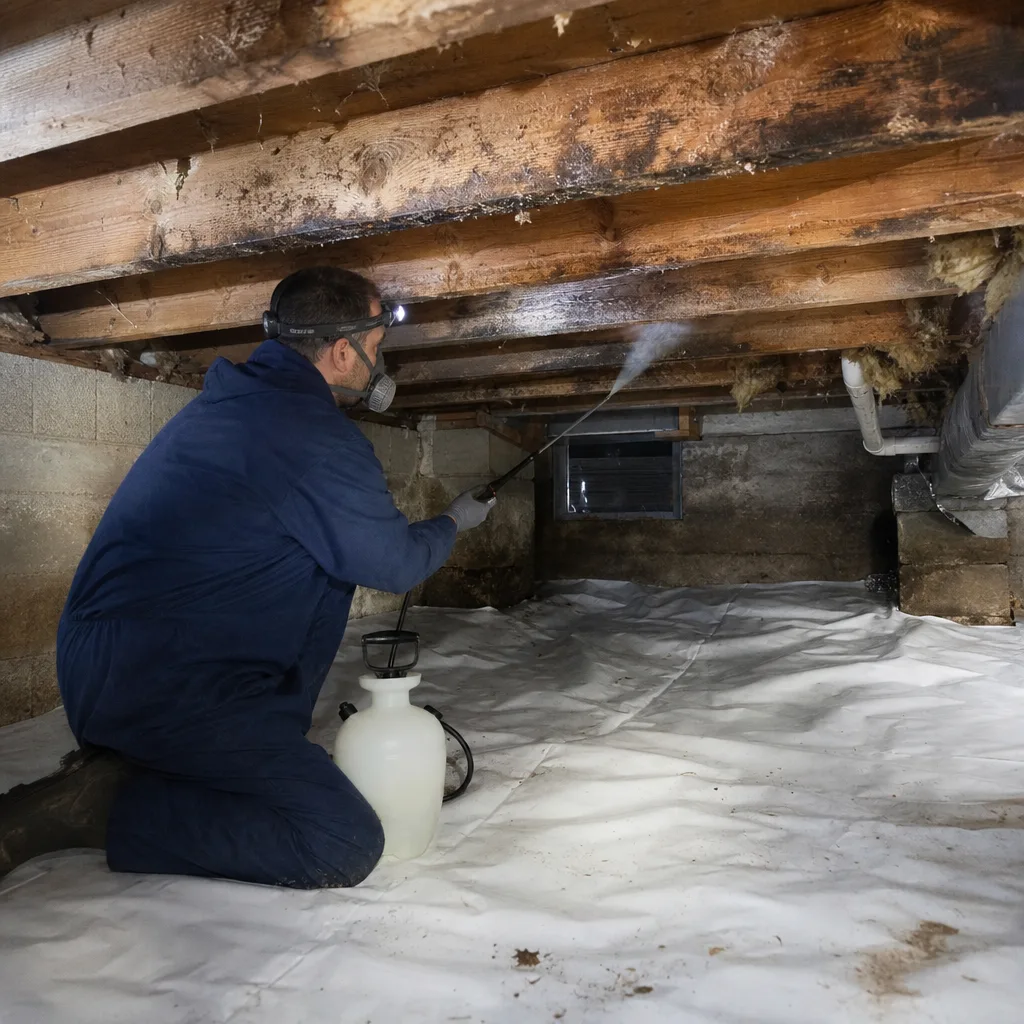
Structural Fire Repair
Our Fire & Smoke Damage Restoration team rebuilds damaged framing, sheathing, roofing, and finishes to pre-loss condition. In Seattle’s seismic zone, we inspect for structural compromise beyond fire damage, particularly in homes with unreinforced masonry or aging foundation systems.
What happens when you call
- 1
A real person answersNo phone trees - you reach a local pro.
- 2
You get an upfront price rangeHonest numbers before anyone is dispatched.
- 3
A background-checked tech heads outLicensed & insured, dispatched right away.
- 4
You approve before work beginsNothing starts until you say go.
Fire & Smoke Damage Restoration Costs in Seattle, WA
Emergency board-up and stabilization in Seattle typically runs $800-$2,400 depending on access difficulty and the number of openings secured. Smoke and soot cleanup for a single affected room ranges $1,800-$4,500; whole-house smoke remediation runs $6,500-$14,000. Structural repairs vary widely by scope: localized drywall and flooring replacement in a fire-damaged kitchen might cost $4,200-$8,500, while full reconstruction of a garage with corroded hardware replacement and upgraded marine-rated components runs $8,000-$18,500. Contents cleaning and pack-out adds $1,200-$3,800 for a typical Seattle home.
What moves the price: the fire class (protein fires require more labor than dry smoke), the square footage affected, whether smoke entered the HVAC system, and whether suppression water created secondary damage. Most residential fire damage in Seattle is covered by standard homeowner’s insurance, including additional living expenses if displacement is required. We provide a free visual inspection and written scope with firm pricing before any work begins - Haven Standard, Clause 1 - and we offer a Free Second Opinion on any competitor’s written estimate.
We Also Serve Cities Near Seattle
Our crews respond throughout the metro area, including Bellevue across Lake Washington, Mercer Island via I-90, Kirkland on the Eastside, and Bainbridge Island with ferry-coordinated dispatch. Each community receives the same documentation-first standard: written price before work, photo record on every visit, and direct adjuster coordination.
Serving Seattle, WA - Our Local Coverage Area
We’re based in the Seattle area and know this community well. Use the map below to see our service coverage - if you’re nearby, we can almost certainly help.
Seattle Fire & Smoke Damage Restoration Questions, Answered
Why does fire damage in Seattle garages often involve corroded hardware?
Seattle’s salt-laden marine air accelerates corrosion on garage-door springs, hinges, rollers, and tracks years faster than inland climates. When fire or suppression efforts force these already-compromised components, they frequently fail completely, adding structural damage and injury risk to the restoration scope. We inspect all garage hardware on fire calls and document corrosion as secondary damage for insurance inclusion. Call (425) 696-6061 for a free inspection.
How does Seattle’s climate affect smoke odor removal after a fire?
Seattle’s persistent marine humidity - roughly 150 days of measurable precipitation annually - traps odor molecules in porous materials like old-growth fir framing and unsealed plaster, making temporary deodorization ineffective. Our crews use hydroxyl generators and thermal fogging with longer dwell times than drier climates require, and we verify odor clearance with sensory testing rather than assuming treatment is complete. Call (425) 696-6061 to discuss your specific situation.
Can fire damage restoration in Seattle address both fire and water damage from suppression?
Yes, and it must. Firefighting water in Seattle’s older homes with vented crawlspaces frequently creates Category 3 water contamination, requiring full water mitigation alongside fire cleanup. Our FSRT and WRT-certified crews handle both damage types in one mobilization, producing separate documentation streams for your insurer that clearly attribute each cost to its cause. Call (425) 696-6061 for a unified assessment.
What should Seattle homeowners do if they suspect mold after a fire?
Fire suppression water in Seattle’s humid climate can trigger mold growth within 48-72 hours, particularly in uninsulated crawlspaces common in Capitol Hill and Ballard Craftsman homes. We conduct moisture mapping and air sampling as part of our fire assessment, with AMRT-certified technicians available if mold is detected. Early intervention prevents scope expansion; call (425) 696-6061 for immediate evaluation.
Does Seattle’s seismic activity affect fire damage restoration?
Seattle’s dual seismic exposure - the shallow Seattle Fault and the offshore Cascadia Subduction Zone - means fire-damaged structures may have pre-existing or fire-exacerbated structural compromise that standard restoration scopes miss. Our crews inspect for seismic-related damage patterns, particularly in unreinforced masonry and aging foundation systems, and coordinate with structural engineers when indicated. This assessment is documented for insurance inclusion. Call (425) 696-6061 to schedule.
How fast can DryMark Restoration Bothell actually get to my Seattle home?
We commit to 45-minute response times to Seattle addresses from dispatch, with live phone coverage 24 hours a day. Crews carry full board-up, extraction, and stabilization equipment on every truck, so work begins immediately upon arrival, not after a return trip. The first hour determines whether smoke residues set permanently and how far suppression water migrates. Call (425) 696-6061 now.
Will my insurance cover the full cost of fire and smoke restoration?
Most standard homeowner’s policies cover fire, smoke, and suppression water damage, including additional living expenses during displacement. Our documentation-first approach - photos, moisture logs, line-item scopes in Xactimate format - produces claim files that adjusters pay without dispute. We coordinate directly with your carrier and provide the evidence they need to approve each element. Call (425) 696-6061 and bring your policy number for a coverage review.
What should I do in the first 30 minutes after a fire is extinguished?
Do not re-enter until the fire department clears the structure. Call (425) 696-6061 immediately; our live answer means no delay. If safe from outside, photograph visible damage through windows for initial documentation. Do not attempt to clean soot yourself - improper cleaning can set residues permanently and void insurance coverage for professional remediation. Our crew will arrive, secure the structure, and begin assessment within the hour.
We responded to a fire in a Capitol Hill Craftsman bungalow where the fire started in the attached garage and spread smoke through the home. Our techs found the original overhead-door torsion springs had snapped from salt-air corrosion, and the smoke had infiltrated the corroded tracks, requiring full replacement with galvanized springs and stainless hardware. After a full pack-out of contents to our Bothell facility and antimicrobial treatment of affected framing, we installed corrosion-resistant components and documented the upgraded hardware in the scope of work, restoring both fire and corrosion damage in one mobilization.
Every job we take in Seattle carries the same guarantees: a written price before work begins under Haven Standard, Clause 1; a documented photo record on every visit; and the 365-Day Done Right Promise backed by The Haven Standard, not a verbal assurance. Since 2011, we have restored more than 12,000 homes with this documentation-first approach, and we bring it to every fire and smoke damage call we answer.
Call (425) 696-6061 for a free visual inspection and written estimate. Our phone is answered live 24 hours a day, and our Seattle crews are ready to respond.
Written by Alicia Brennan, Owner at Back to Dry Restoration, serving Seattle since 2011.
Fire & Smoke Damage Restoration in Nearby Areas