
Free visual inspection and a written scope of work before any mitigation begins - photos, moisture readings, and drying logs go in your claim file
The scope we write is the scope we bill. Anything new gets shown to you, in writing, before we touch it.
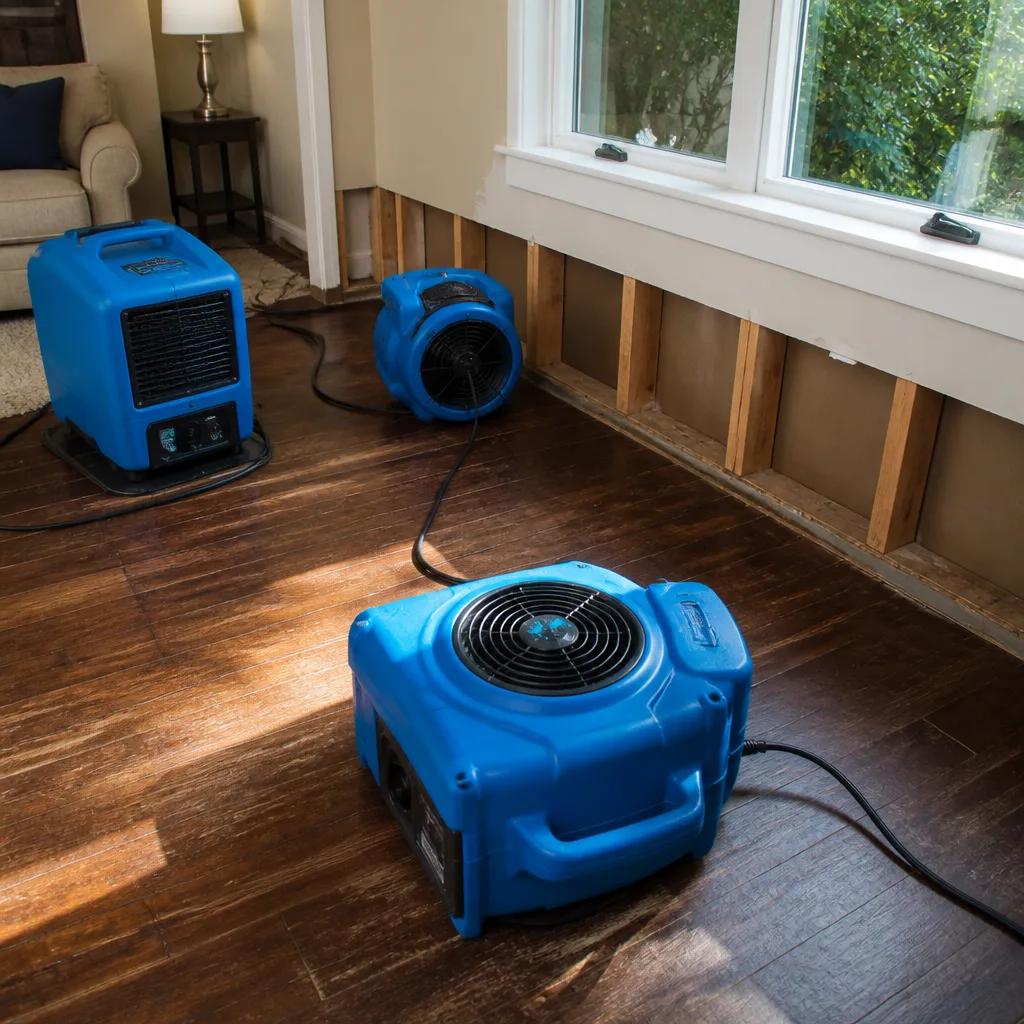
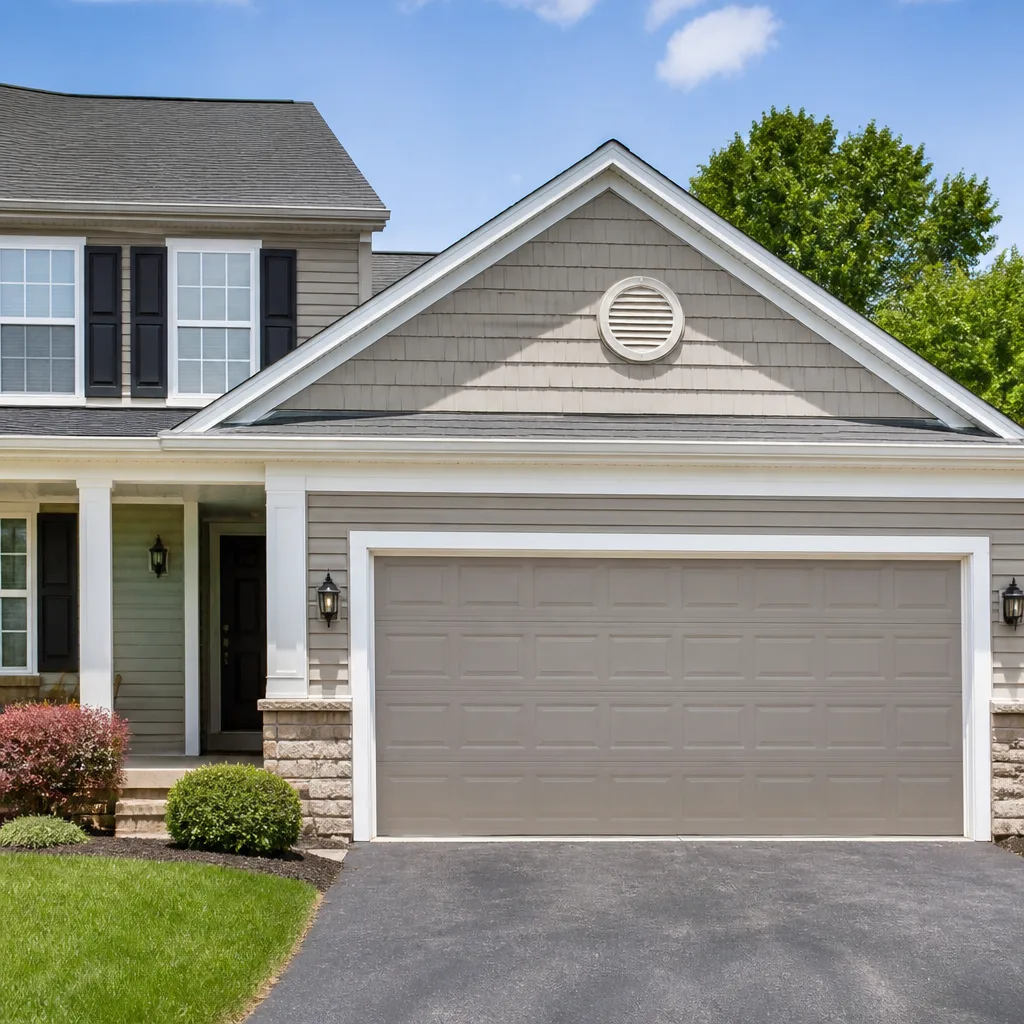
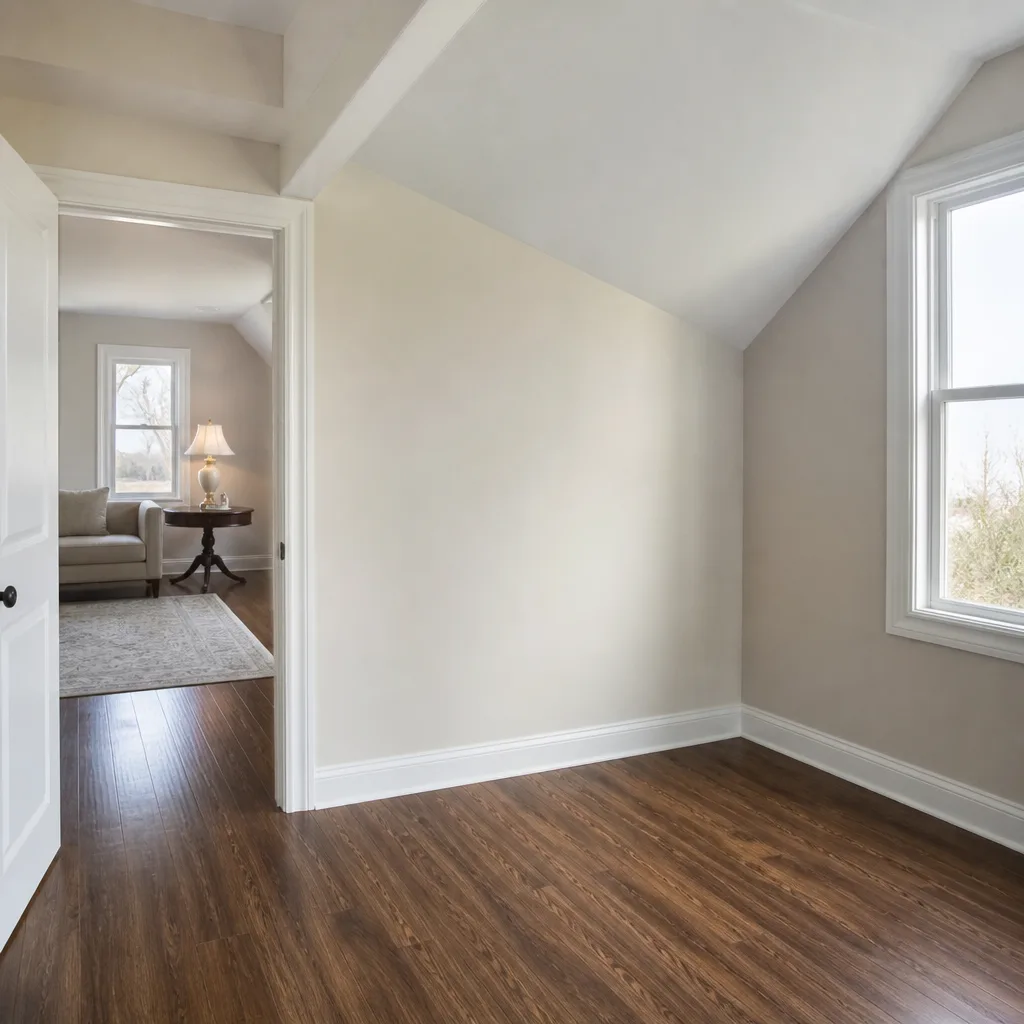
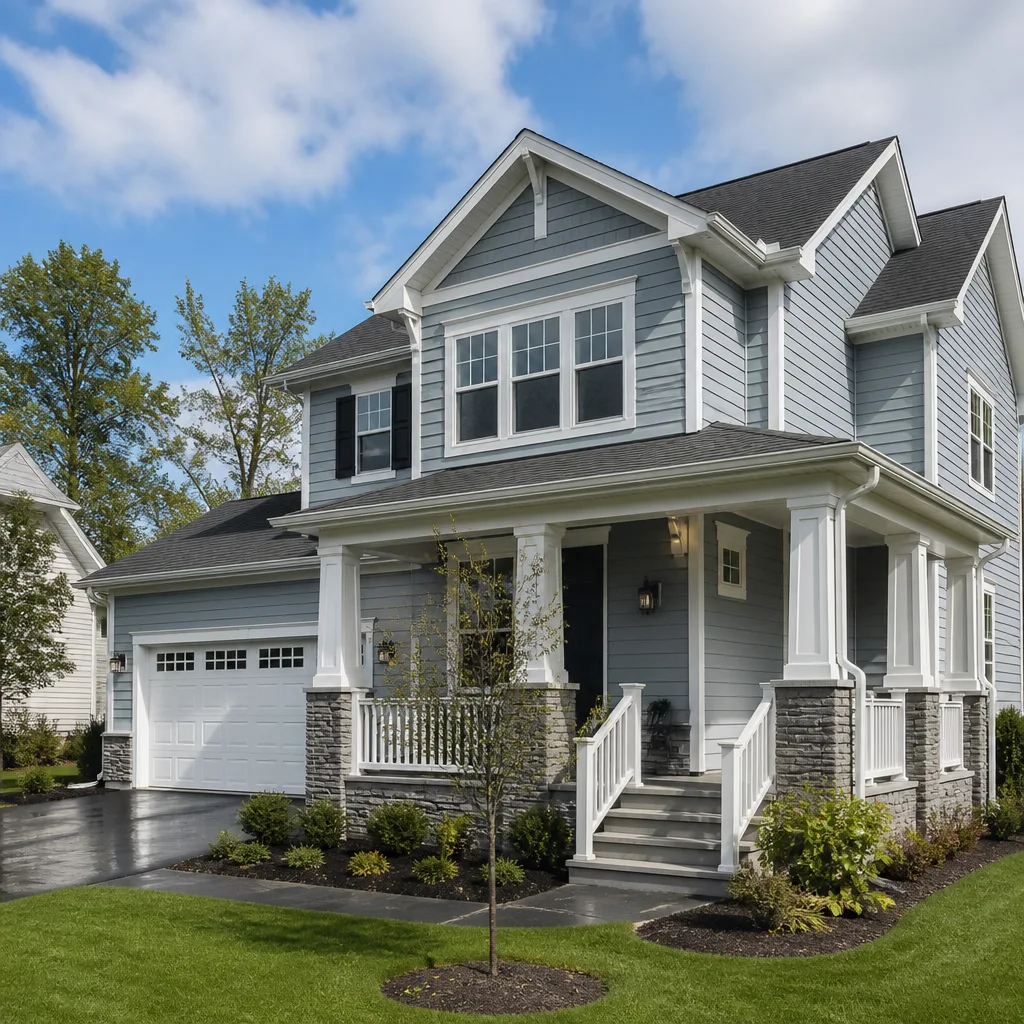
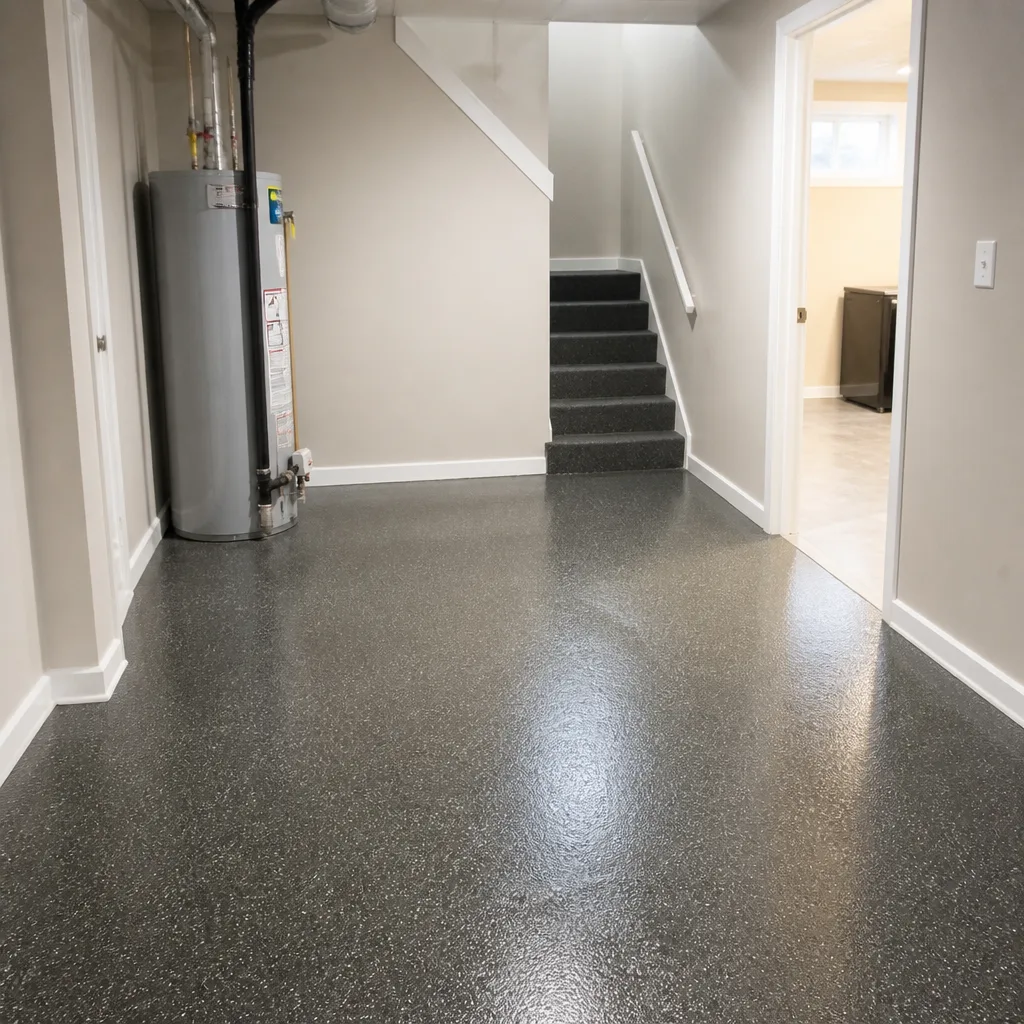
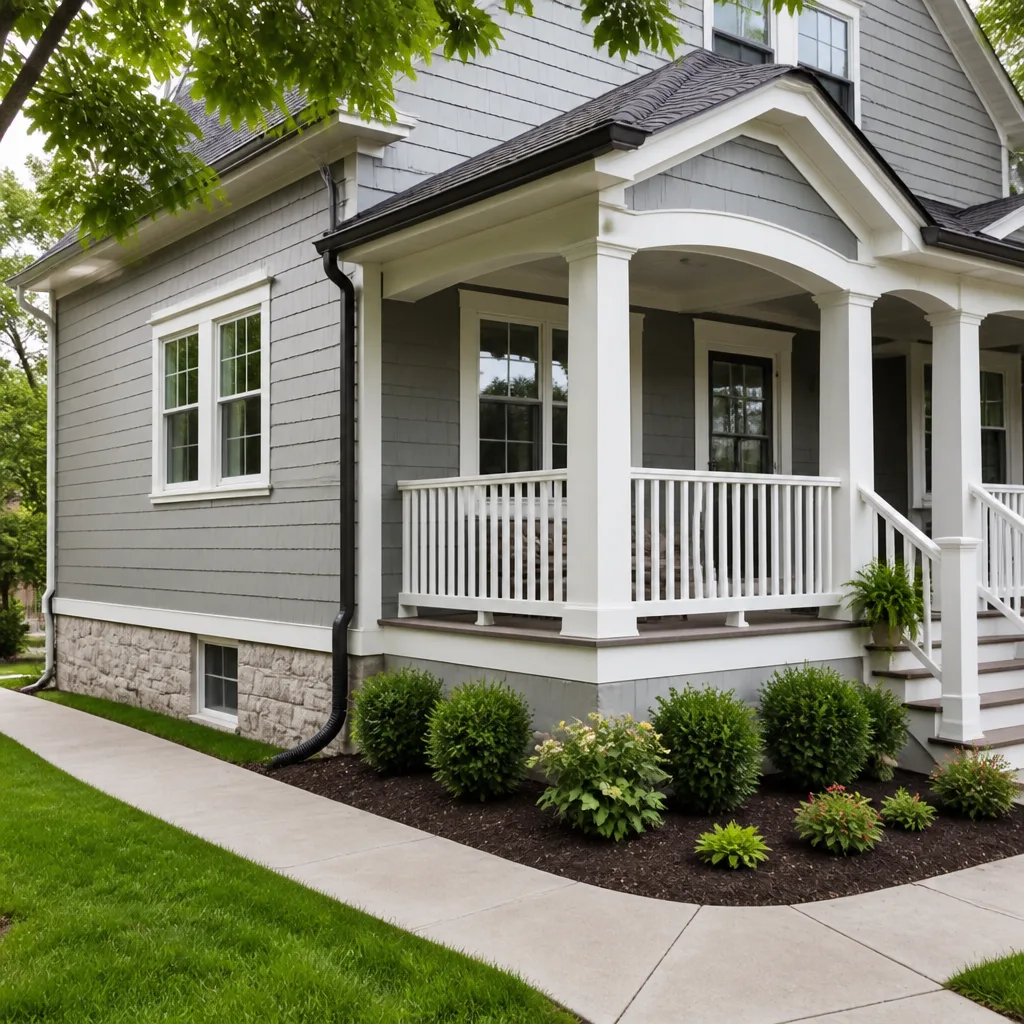
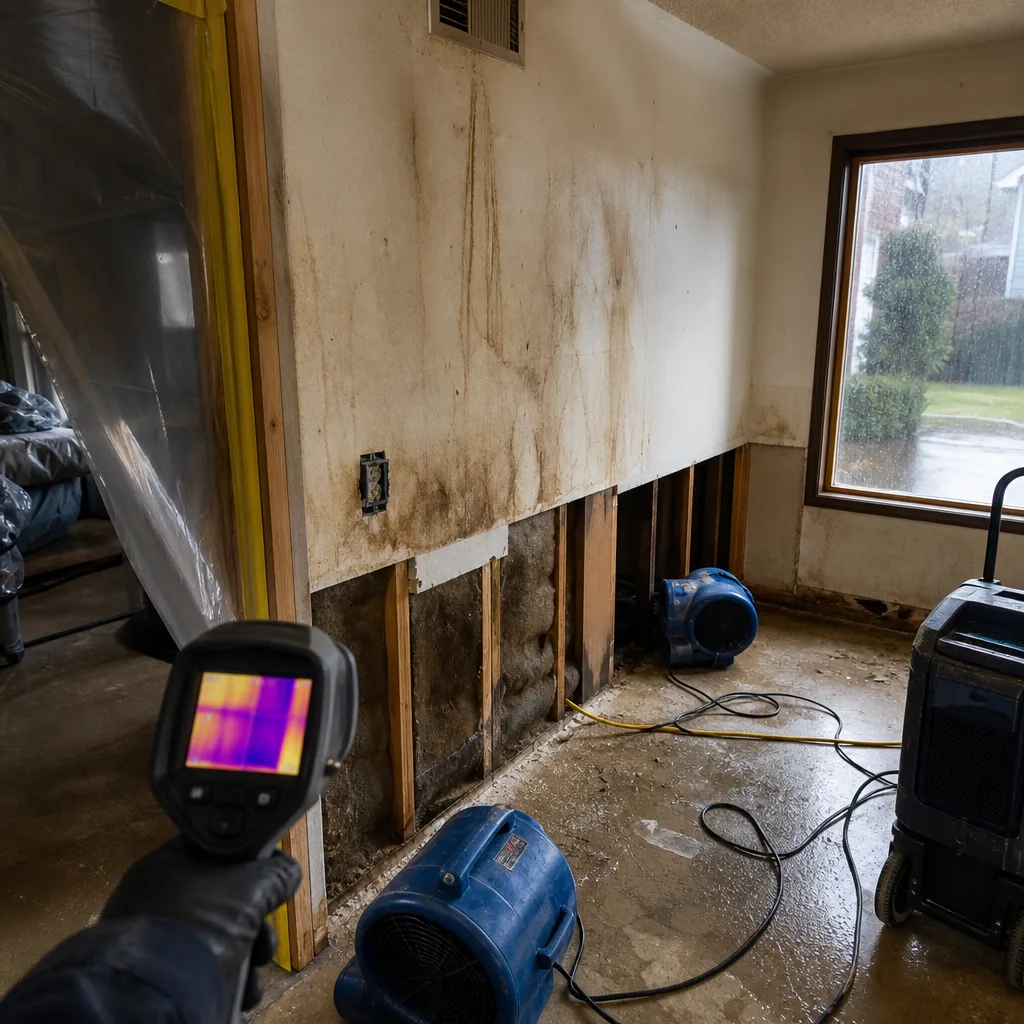 Before
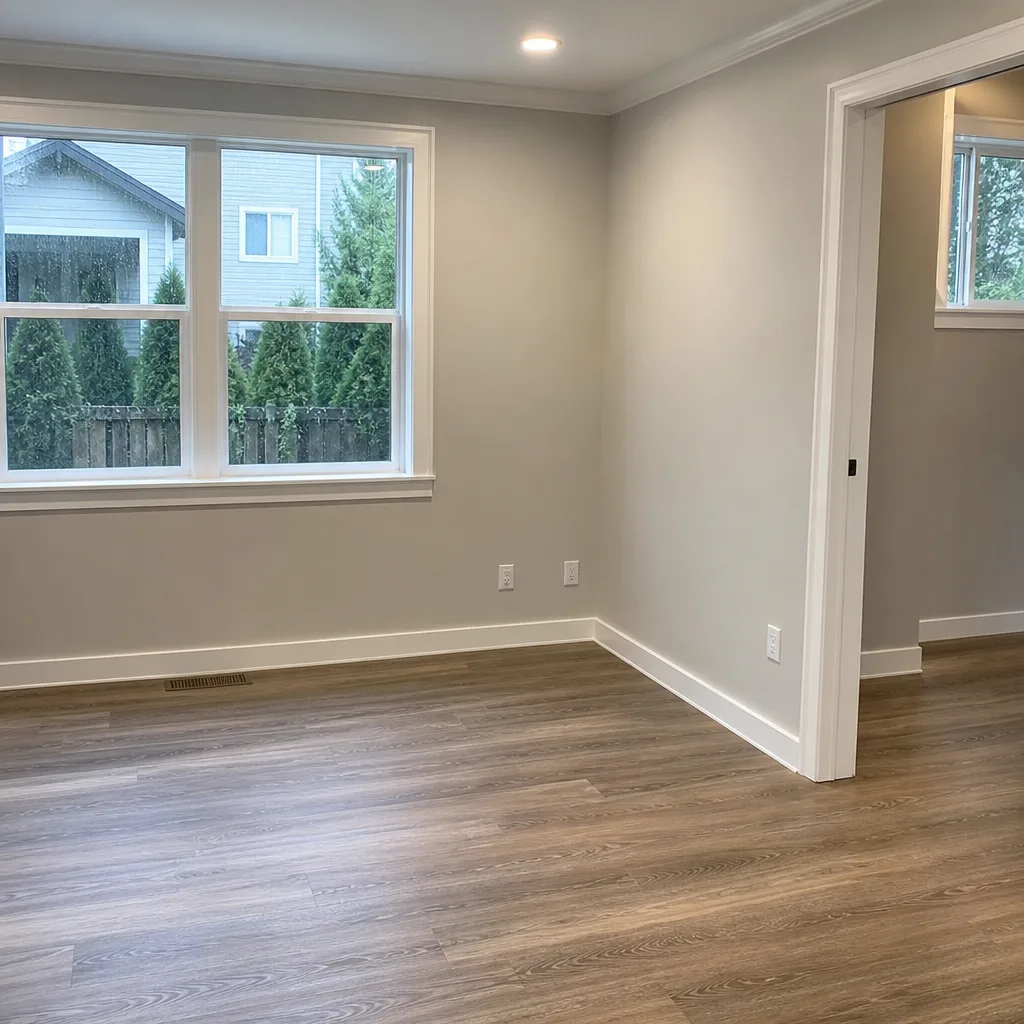 After
After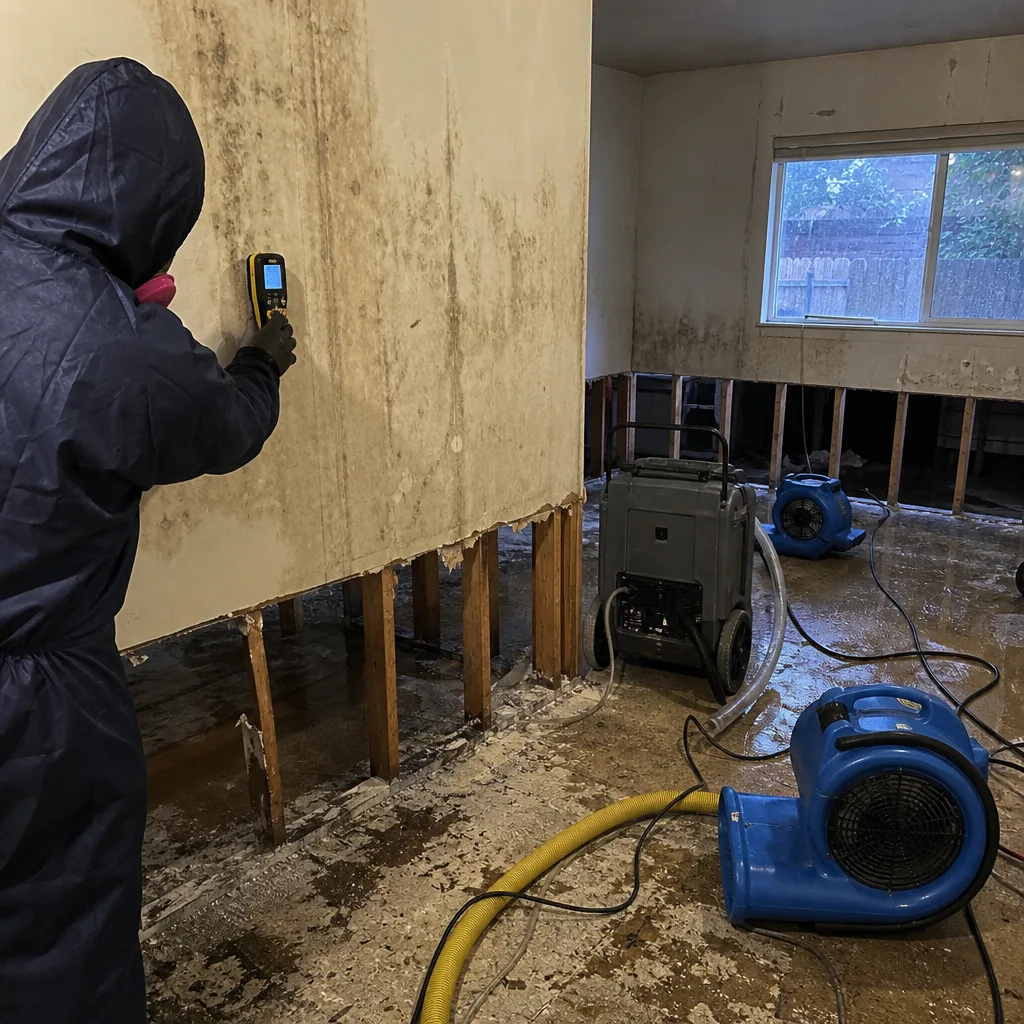 Before
 After
After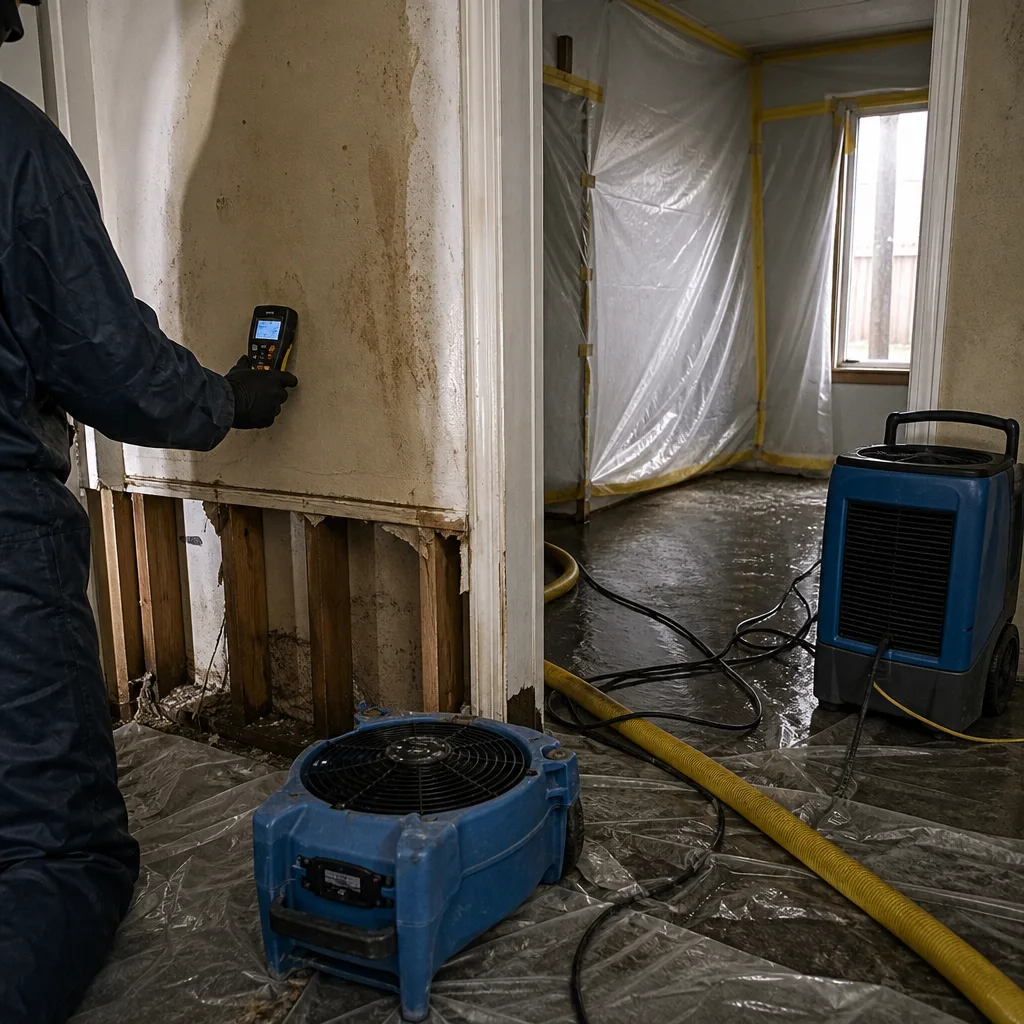 Before
 After
AfterStructural Drying & Dehumidification in Bothell, WA
Structural drying and dehumidification is the science of removing trapped moisture from building materials like subfloors, wall cavities, and framing to prevent mold growth and secondary structural damage. In Bothell, WA, a typical structural drying project ranges from $1,200 to $4,500 depending on the square footage affected and the material saturation, with most residential jobs completed within 3 to 5 days. At DryMark Restoration Bothell, we provide a written price before any work begins, ensuring you know exactly what the restoration will cost before our crew starts the drying process. Call us at (425) 696-6061 to schedule an assessment.
When water intrudes into your home, it doesn’t just sit on the surface. It wicks into drywall, soaks into insulation, and penetrates subflooring. If these materials aren’t dried to their original moisture content-a process we document using psychrometric data-they become breeding grounds for mold and bacteria. We don’t just set up fans and leave; we use industrial-grade equipment from manufacturers like Injectidry to pull moisture out of wall cavities and floor systems. This is a critical component of our broader Water Damage Restoration in Bothell services. Because we operate under The Haven Standard, we provide a documented photo record on every visit, so you have evidence of the drying progress for your insurance carrier.
When You Need Structural Drying & Dehumidification
You need professional structural drying when moisture has moved beyond the surface and into the structure of your home. If the water has been present for more than 24 hours, or if you can feel the material is damp to the touch, immediate intervention is necessary.
* Subfloor Saturation: After a pipe burst in your kitchen or bathroom, water often pools beneath your vinyl or hardwood flooring. We use moisture meters to determine if the subfloor requires specialized drying equipment or removal to prevent rot.
* Insulation Damage: In Bothell basements, fiberglass insulation often acts like a sponge. If it stays wet for more than 48 hours, it loses its thermal properties and becomes a risk for microbial growth, requiring professional removal and drying of the surrounding joists.
* Drywall Cavity Moisture: Water often wicks up walls during localized flooding. If we detect high moisture content behind your baseboards, we use Injectidry systems to push dry air into those cavities without needing to demolish your entire wall.
* Hardwood Floor Cupping: When hardwood floors absorb moisture from beneath, the edges rise, causing a “cupped” appearance. We use specialized floor drying mats to reverse this process, provided the damage hasn’t reached the point of permanent fiber failure.
* High Humidity Levels: Even if you don’t see standing water, high indoor humidity caused by a leak can warp cabinetry and damage wood furniture. We monitor the vapor pressure differential to ensure the environment is actively drying, not just circulating humid air.
Our Structural Drying & Dehumidification Process
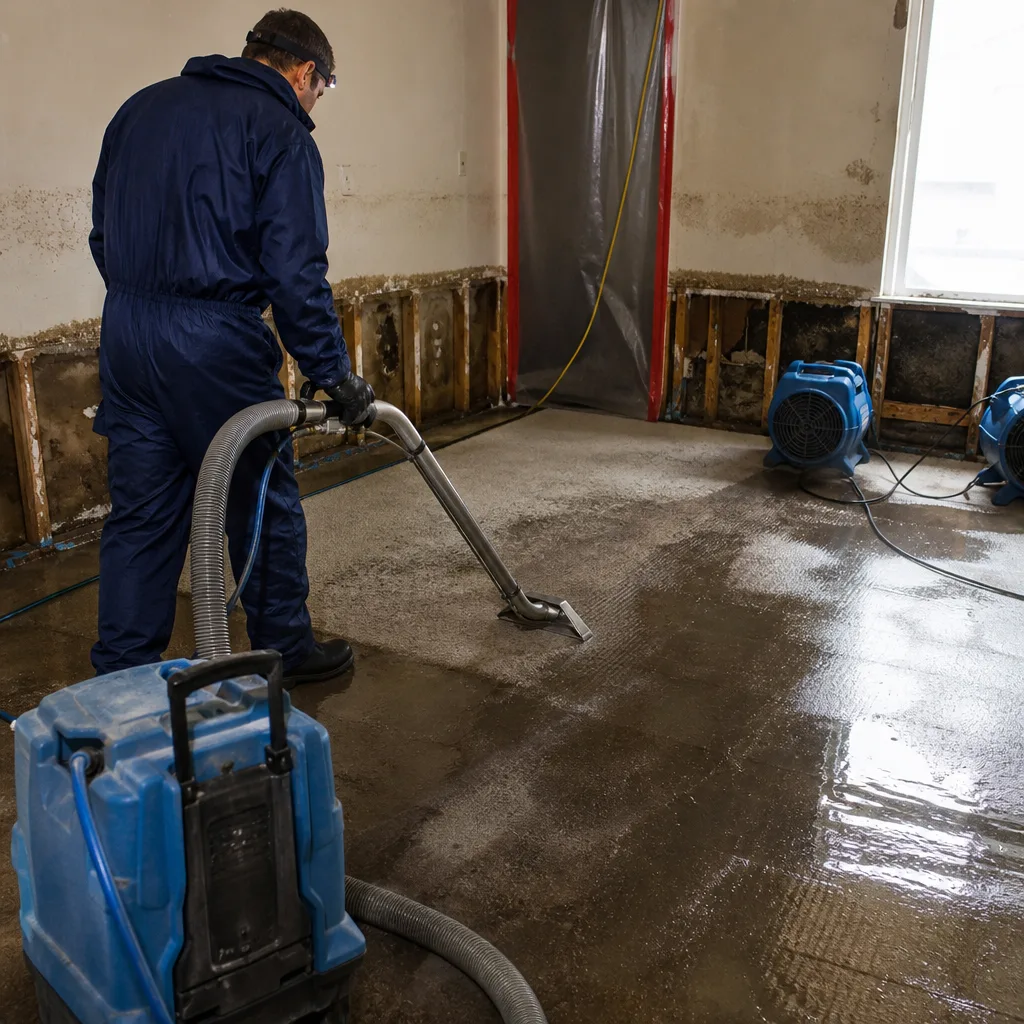
We follow IICRC standards for all drying projects. This process is documented in our daily logs, which serve as the foundation for your insurance claim.
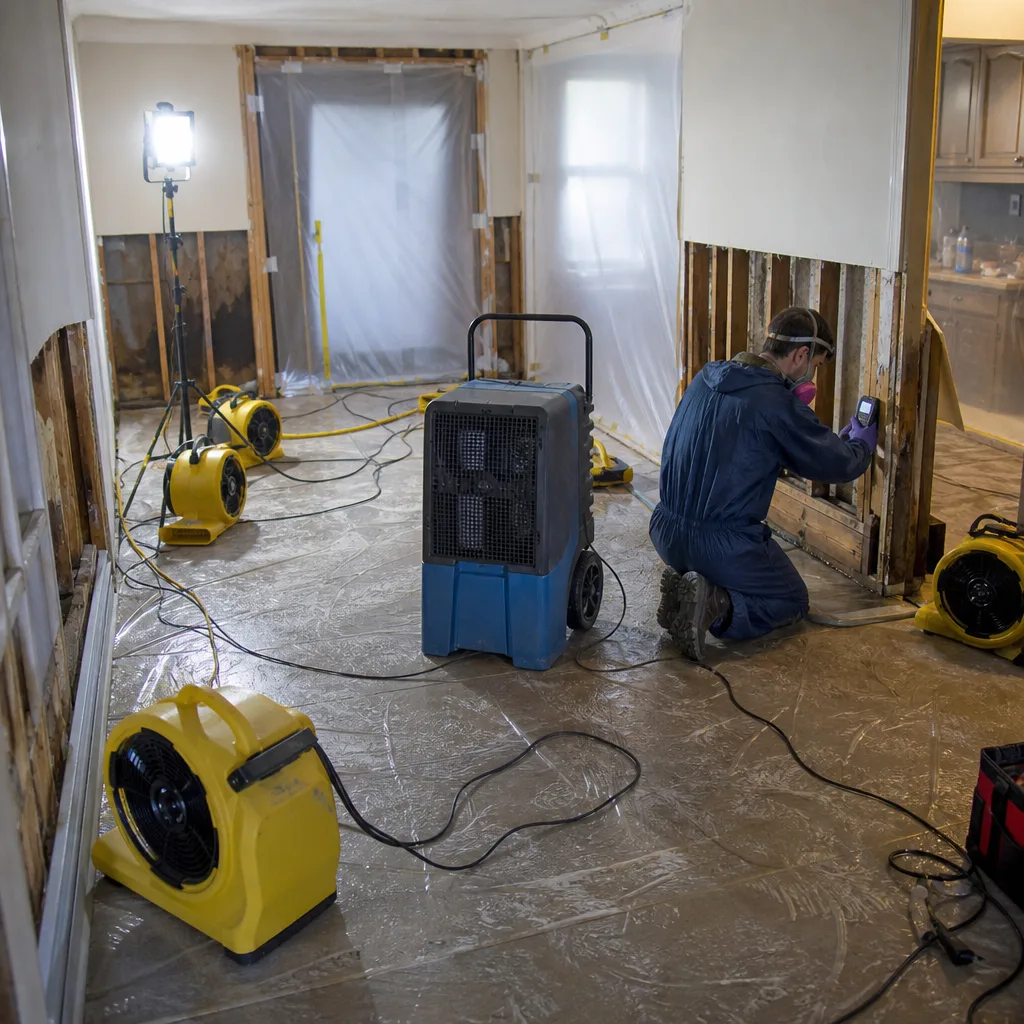
1. Initial Moisture Mapping: We arrive and use penetrating and non-penetrating moisture meters to map exactly where the water has traveled. We take photos of every affected area, creating a documented record that serves as the basis for your written scope.
2. Extraction and Source Control: Before drying begins, we stop the water source if it hasn’t been addressed. We then perform physical extraction of any standing water using high-suction pumps to remove the bulk of the moisture.
3. Equipment Setup: We deploy professional-grade dehumidifiers and air movers based on the cubic footage of the affected rooms. We calculate the required grain depression to ensure we are actually removing moisture from the air, not just moving it around.
4. Daily Monitoring and Log Maintenance: We visit your property daily to check moisture readings. We record the temperature, relative humidity, and moisture content of materials in our daily drying logs. If the readings aren’t dropping, we adjust the equipment setup immediately.
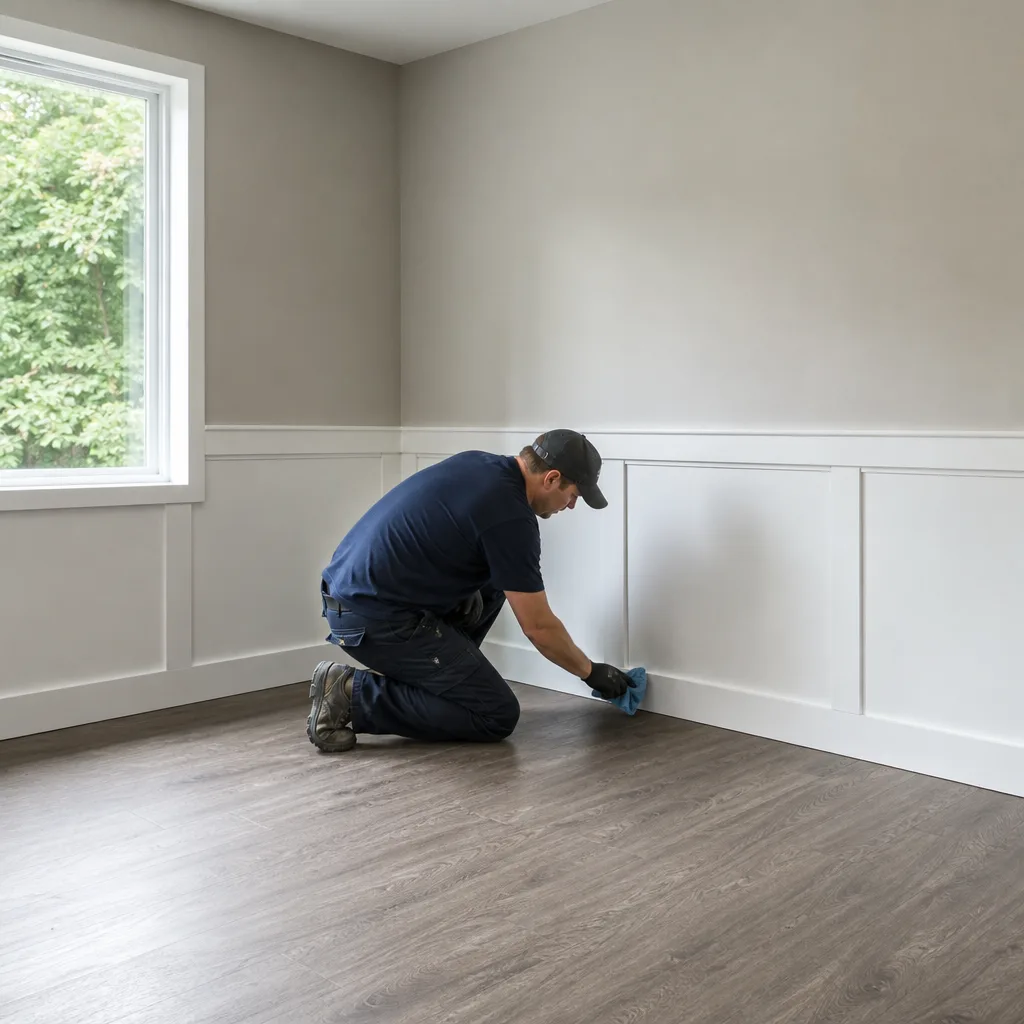
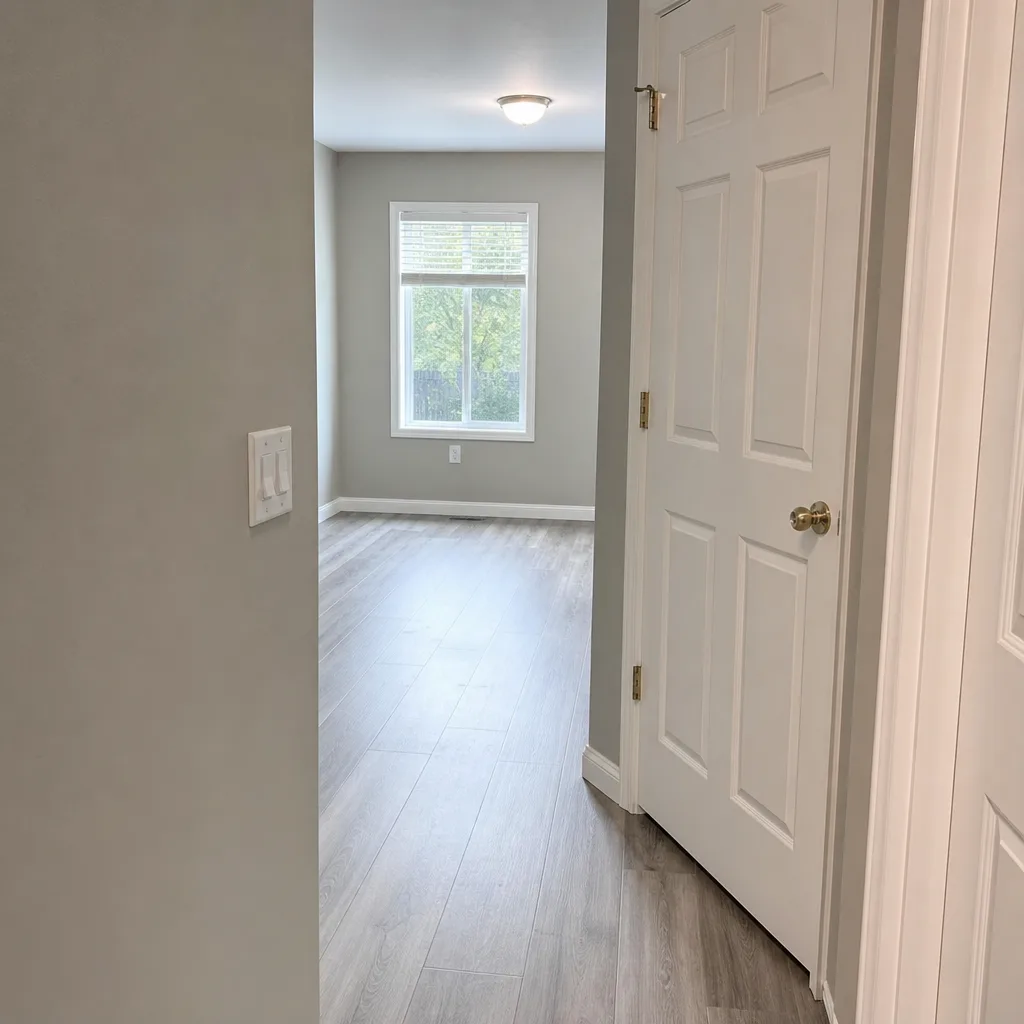
5. Verification of Dry Standard: Once the materials reach their target moisture content-defined by the “dry standard” for that specific material-we provide the final documentation. This confirms the structure is safe, dry, and ready for any necessary repairs.
BeforeAfterStructural Drying & Dehumidification Pricing in Bothell
We believe in transparency. Under Haven Standard, Clause 1, we provide a written price before any work begins. We do not use “call for a quote” tactics; we provide a clear scope of work so you aren’t surprised by the final invoice.
| Service Component | Typical Price Range |
| :— | :— |
| Initial Assessment & Moisture Mapping | $250 – $450 |
| Daily Equipment Rental & Monitoring (per day) | $300 – $600 |
| Targeted Injectidry Cavity Drying | $600 – $1,200 |
| Full Structural Drying (3-5 days) | $1,200 – $4,500 |
*Note: The cost varies based on the class of water damage (how porous the materials are) and the total square footage affected. We offer a Free Second Opinion on any competitor’s written estimate if you have already received a quote.*
FAQs - Structural Drying & Dehumidification
How long does the drying process typically take in Bothell homes?
Most structural drying jobs in this area take between 3 and 5 days, depending on the severity of the water intrusion and the materials involved. We monitor the drying progress daily and will give you an estimated completion time during our first visit, which is included in your written scope. Call (425) 696-6061 if you need an immediate assessment.
Can I just use a dehumidifier from the hardware store to dry my home?
Hardware store dehumidifiers are designed for comfort, not restoration, and generally lack the capacity to remove water from building materials like subfloors and wall studs. Professional-grade equipment, such as those made by Phoenix or Dri-Eaz, is required to achieve the necessary grain depression to dry a structure to IICRC standards before mold sets in.
Is it cheaper to repair or replace water-damaged materials?
It is almost always more cost-effective to dry materials in place if they haven’t reached the point of structural failure or heavy microbial contamination. We evaluate the material classification and moisture levels to determine if drying is a viable option, saving you the expense of unnecessary demolition and reconstruction.
What happens if the drying process doesn’t work?
Under our 365-Day Done Right Promise, if we determine a material cannot be dried to standard, we will provide a clear, written explanation of why demolition is necessary. We don’t guess; we rely on moisture readings and psychrometric data to make these decisions, ensuring that you only pay for the work that is actually required to stabilize your home.
***
*Safety Note: If you have water damage involving electrical outlets, submerged appliances, or standing water near electrical panels, do not touch the water or the equipment. Shut off the main power if it is safe to do so and call a professional immediately. High-tension areas require specialized handling to prevent shock hazards.*
Written by Alicia Brennan, Owner at DryMark Restoration Bothell, serving Bothell.