
Last updated September 23, 2026
Free visual inspection and a written scope of work before any mitigation begins - photos, moisture readings, and drying logs go in your claim file
The scope we write is the scope we bill. Anything new gets shown to you, in writing, before we touch it.
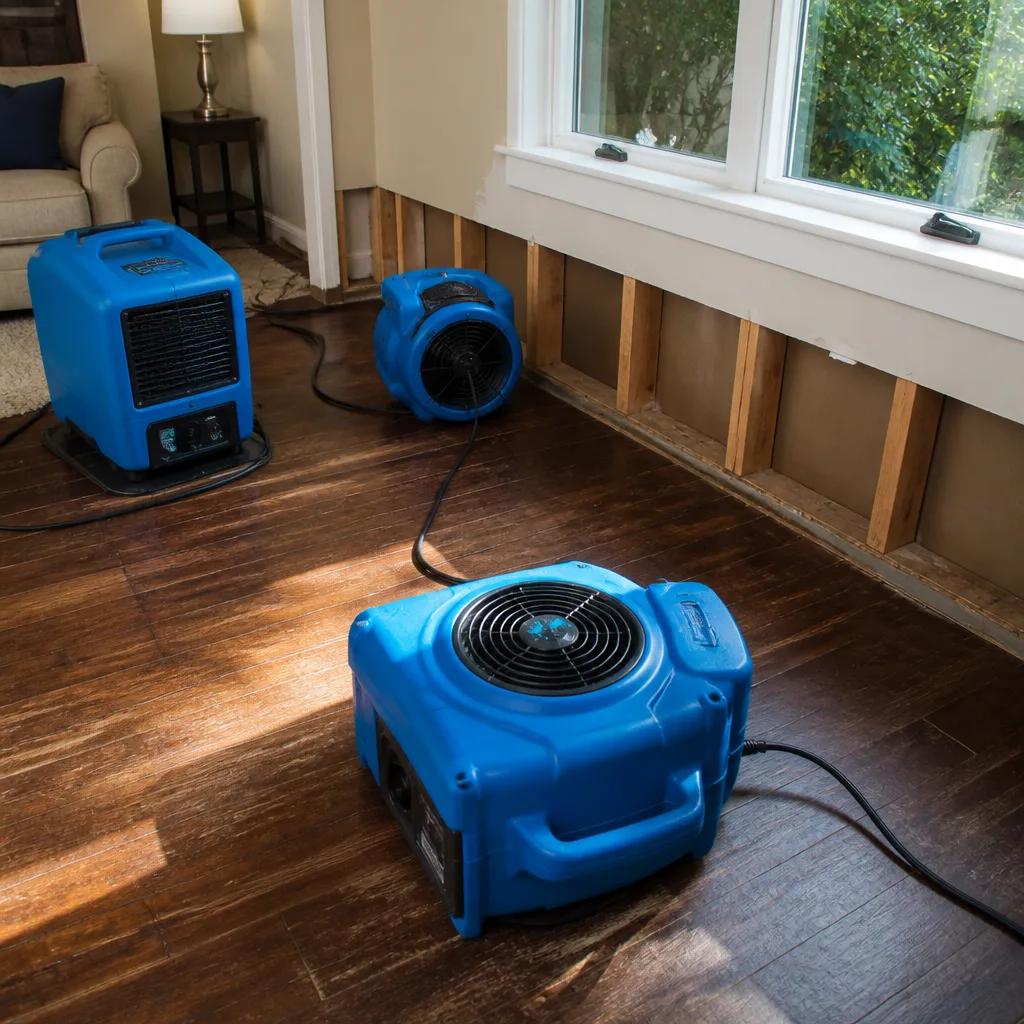
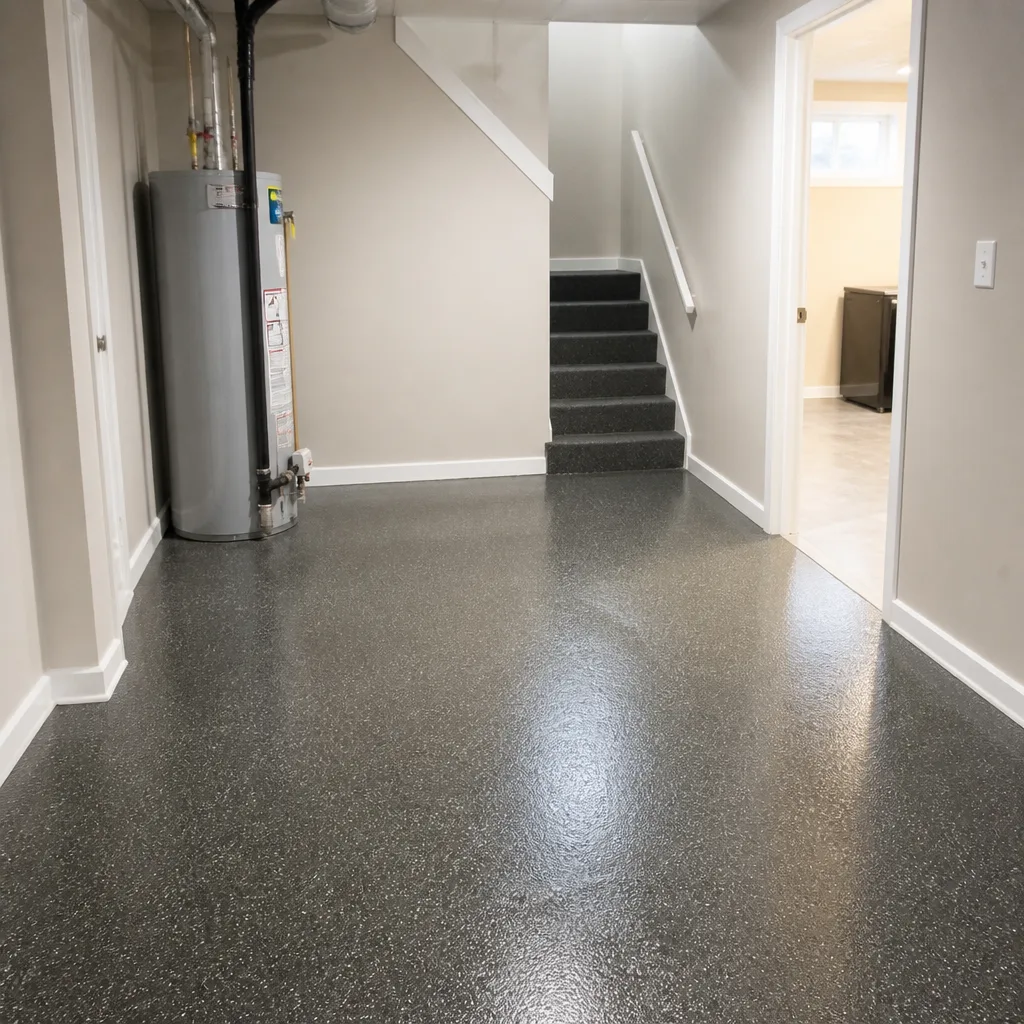

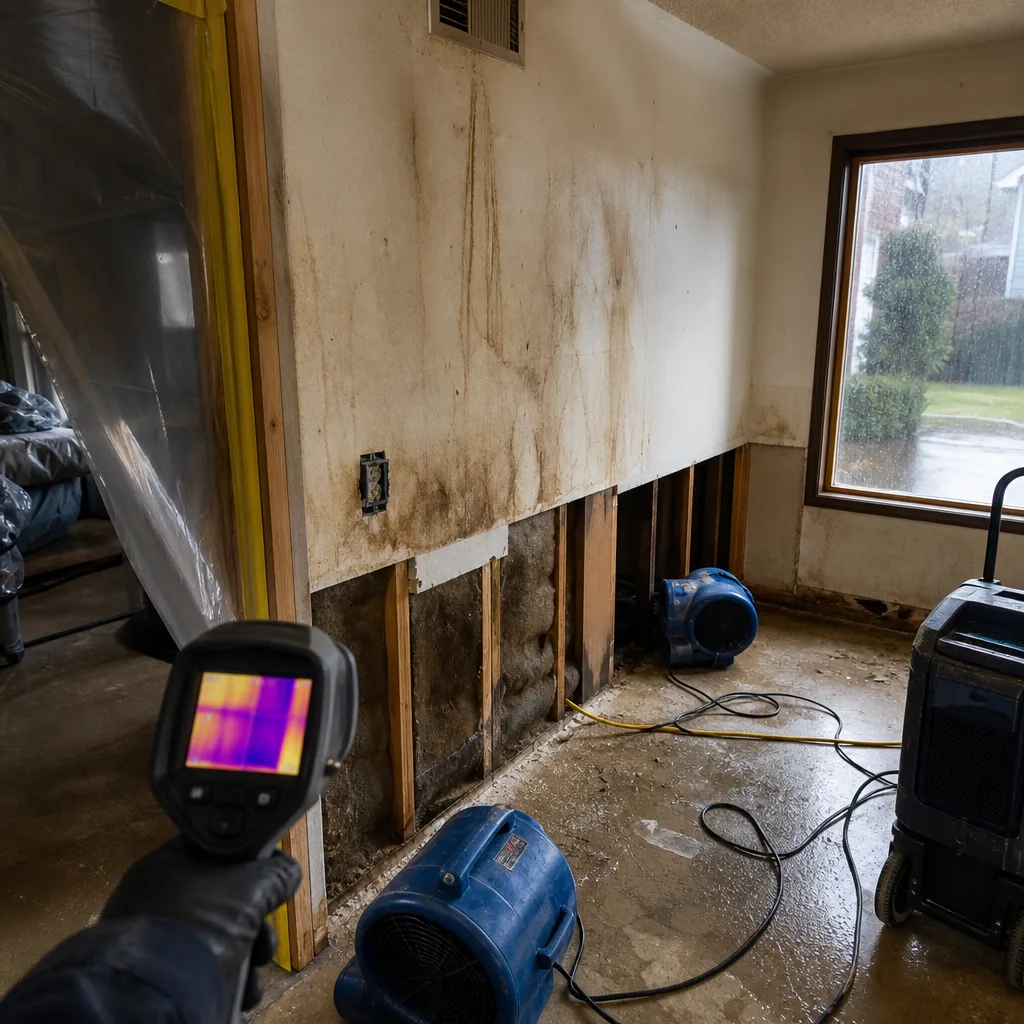 Before
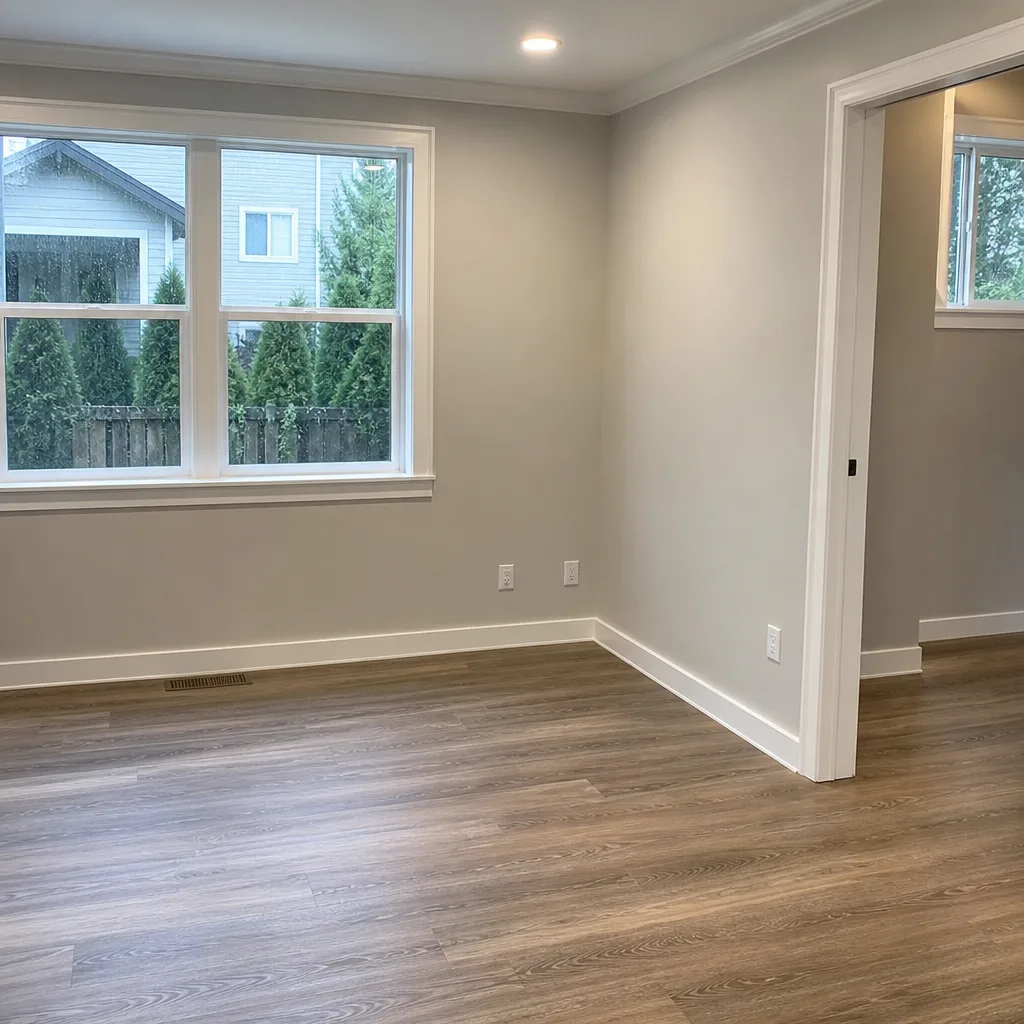 After
After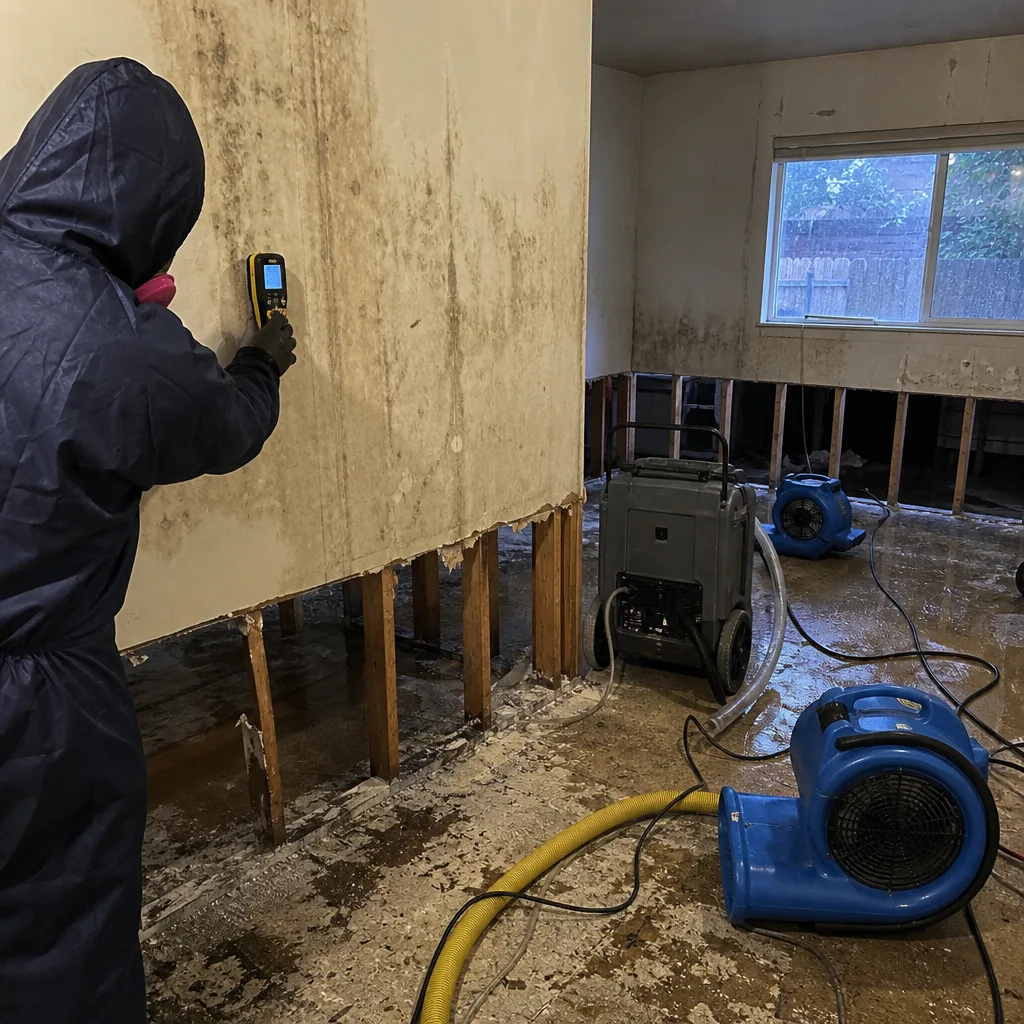 Before
 After
After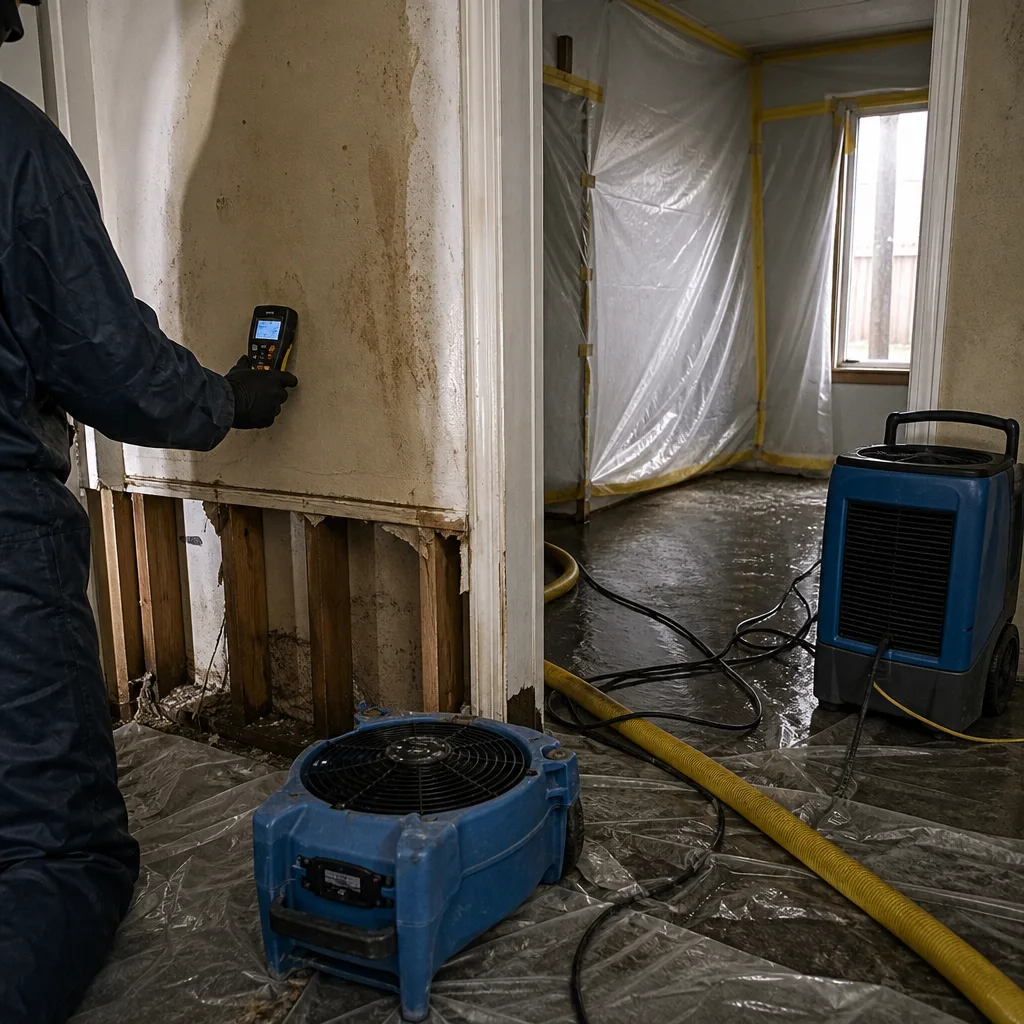 Before
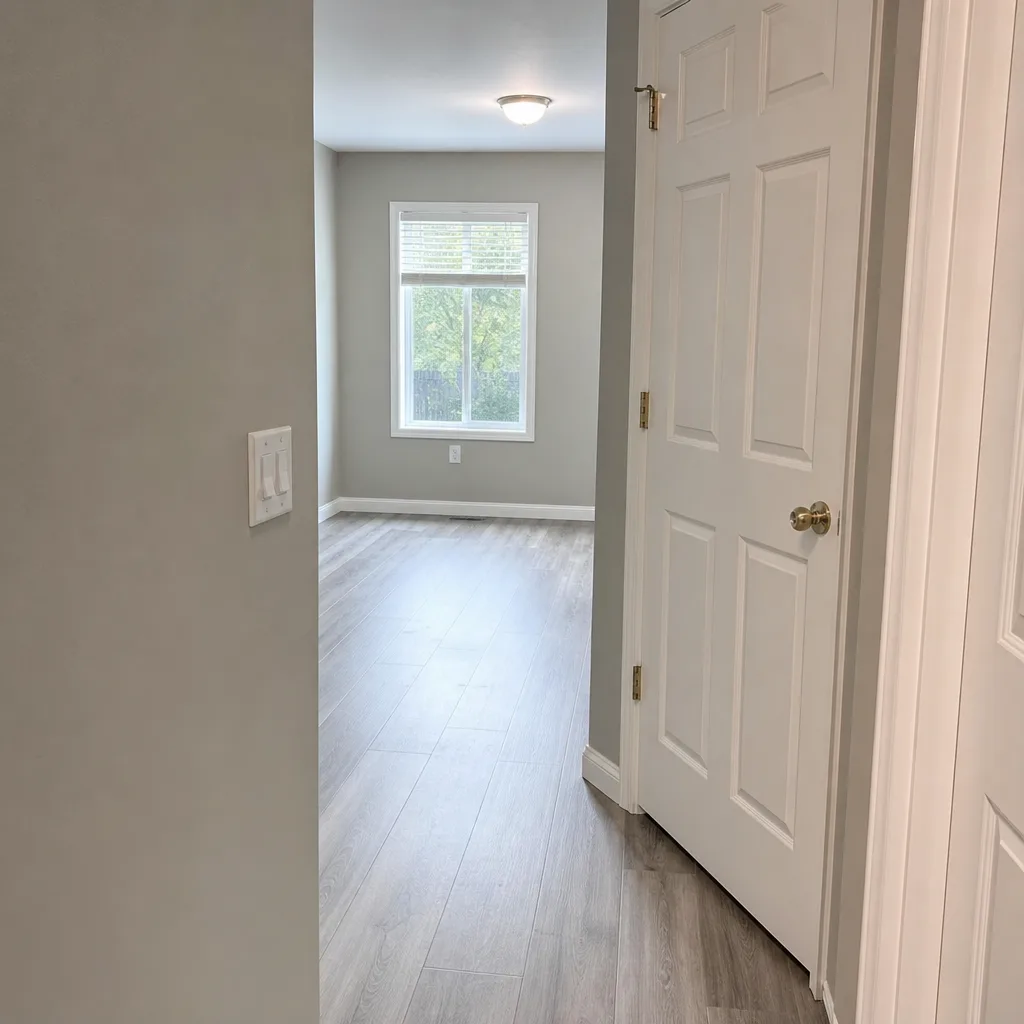 After
AfterHow to Hire a Damage Restoration Contractor in Bothell: A Step-by-Step Guide
The question most Bothell homeowners never think to ask a restoration contractor: “Can I see a sample drying log from a past job?” Contractors who hesitate at that question are telling you everything you need to know. We’ve reviewed thousands of claims since 2011, and the pattern is stark: contractors who do excellent physical work but keep sloppy records cost homeowners their insurance settlements anyway. This guide - alongside our complete guide to damage restoration in Bothell - turns documentation verification into a six-question interview you can complete before anyone sets foot in your house.
Quick Answer
Hiring a damage restoration contractor in Bothell means verifying three things before signing: Washington state contractor registration with the correct specialty endorsement, a written scope and price before any work begins, and documentation practices that match your insurer’s format requirements. The best contractors in Bothell’s market will show you sample drying logs, explain their Xactimate line-item format, and agree to a not-to-exceed cap in writing.
Table of Contents
- Why Documentation Beats Salesmanship in Bothell
- The Six-Question Vetting Script
- Washington State Licensing: What to Verify and How
- Red Flags in Restoration Contracts
- How to Compare Bids Using Line-Item Categories
- Written Price vs. “Estimate Subject to Change”
- Bothell-Specific Considerations: Climate, Codes, and Neighborhoods
- Common Mistakes to Avoid
- When to Call a Professional
- Frequently Asked Questions
- The Bottom Line
BeforeAfterWhy Documentation Beats Salesmanship in Bothell
Bothell sits in a convergence zone where the Puget Sound’s moisture-laden air meets the Cascade foothills. Annual rainfall here runs 35 to 40 inches, and the Sammamish River Valley’s older neighborhoods - like the homes near Bothell Landing and along the Burke-Gilman Trail - contain original construction with limited vapor barriers and aging plumbing. Water damage isn’t rare. It’s predictable.
What separates a smooth restoration from a disputed claim isn’t how fast a crew arrives. It’s whether the documentation they produce will survive an adjuster’s review six months later.
Insurers in Washington State, including the major carriers writing policies in Snohomish and King counties, increasingly require specific documentation formats:
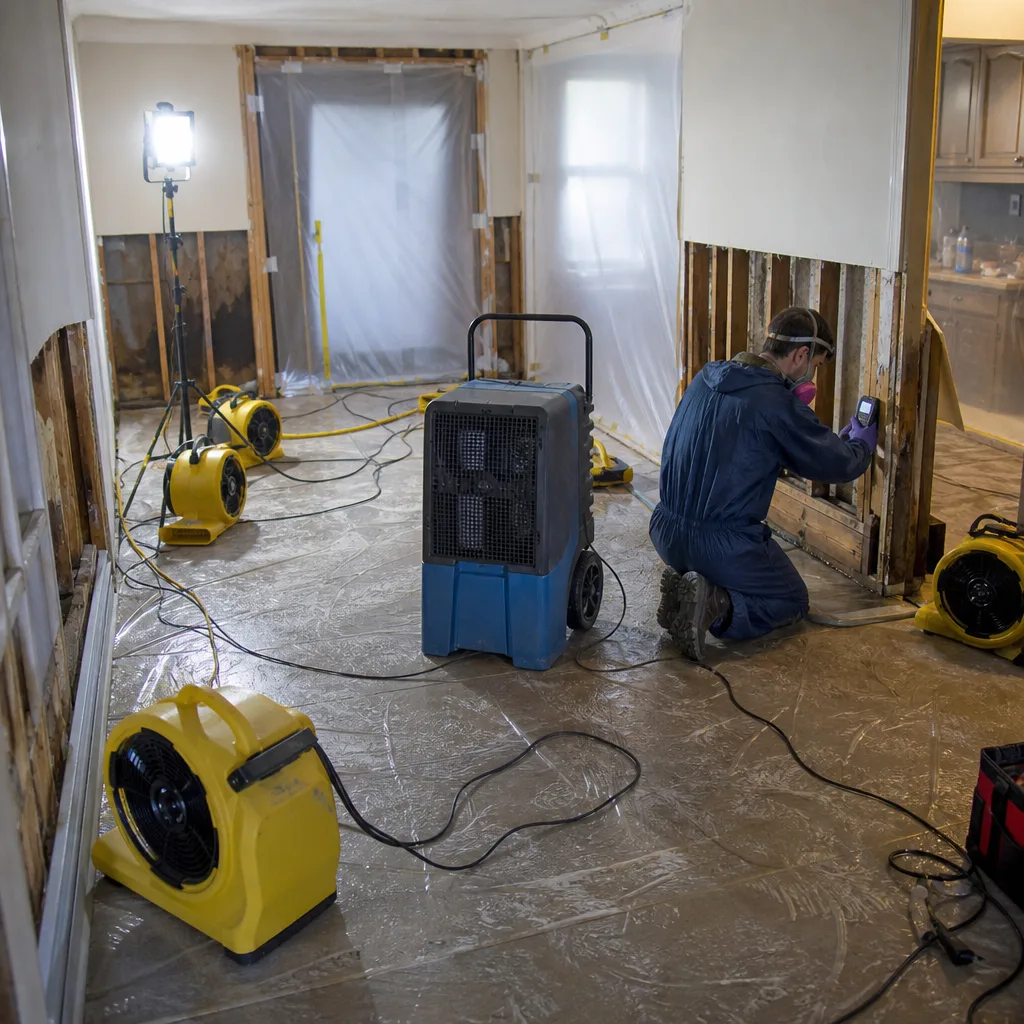
- Daily moisture readings with psychrometric data - temperature, relative humidity, and vapor pressure differential, which measures how aggressively the air is pulling moisture from wet materials
- Photo documentation with date stamps on every visit, not just the first and last
- Written scopes in Xactimate line-item format, the estimating software used by most Washington adjusters
- Material classifications by trade name, not generic descriptions
A contractor who arrives with a reassuring voice and a fast timeline but produces handwritten notes and lump-sum invoices is asking you to carry the documentation risk. If your insurer disputes the scope or the drying duration, you become the intermediary between their adjuster and your contractor’s memory. That’s a position no homeowner should occupy.
At DryMark Restoration Bothell, we built our process around this gap. Every job since 2011 has included a written price before work starts, a photo record on every visit, and daily drying logs formatted to IICRC, RIA, and IFA standards. Our origin is specific: Alicia Brennan founded this company after working as a claims adjuster and watching homeowners lose legitimate claims to contractors who couldn’t produce the paperwork.
The Six-Question Vetting Script
Use these questions on your first phone call. A legitimate contractor answers without hesitation. Evasion or vagueness is data.
- “Can you email me a sample drying log from a past job?” You’re looking for daily entries with moisture content percentages, equipment placement maps, and psychrometric readings. A drying log without numbers is a diary. You need data.
- “What estimating software do you use, and can I see a sample scope format?” Xactimate compatibility matters because Washington insurers use it. A contractor using proprietary formats or handwritten scopes is creating translation work that often becomes dispute work.
- “Will you put a written price in my hands before any equipment runs or any wall opens?” This is non-negotiable. “We’ll see once we get there” is a scope-creep warning. Haven Standard, Clause 1 exists precisely because this promise is so frequently broken.
- “What’s your not-to-exceed cap, and is it in the contract?” Time-and-material pricing without a ceiling transfers all risk to you. The cap should reference the written scope, not vague language like “reasonable additional work.”
- “How do I verify your Washington contractor registration and specialty endorsement?” The answer should include L&I’s online lookup URL and specific instructions, not “we’re fully licensed.” See the next section for what those endorsements should be.
- “Who handles photo documentation, and how do I receive it?” The correct answer: a designated technician on every visit, delivered through a shared portal or email link, included as standard. “We’ll take some pictures” means maybe someone remembers, maybe they don’t.
Contractors who answer these questions with specifics - sample documents, software names, clause references - have built systems. Contractors who redirect to their reputation or their speed of response are selling confidence, not evidence. In our experience across 12,000 homes, systems produce better claim outcomes than confidence.
Washington State Licensing: What to Verify and How
Washington’s Department of Labor and Industries (L&I) maintains a public contractor lookup at secure.lni.wa.gov/verify. The verification takes under three minutes and protects you from unregistered operators, a persistent issue in Bothell’s high-demand restoration market.
Here’s what to check:
- Active contractor registration: The status should read “Active,” not “Expired” or “Suspended.” Note the registration number for your records.
- Correct specialty endorsement: For water damage restoration, look for “Sewer, Drainage and Water Line Construction” or a related specialty. For mold remediation, “Asbestos and Hazardous Waste” or a mold-specific endorsement. General construction alone does not cover specialized restoration work.
- Bond and insurance on file: L&I displays bond status. Ask the contractor for a certificate of insurance naming you as additional insured for the project duration.
- No recent infractions: The lookup shows enforcement actions. Multiple recent citations suggest systemic issues, not isolated mistakes.
Bothell spans two counties - King and Snohomish - and permitting requirements vary by location. A contractor working in the Snohomish County portion should know the Snohomish Health District’s requirements for mold assessment and clearance testing. One working in the King County portion should reference Public Health - Seattle & King County protocols. A contractor who treats Bothell as a single jurisdiction hasn’t done the homework.
We maintain active registration with appropriate specialty endorsements for every service we provide, and we provide our registration number on request. Background-checked, uniformed technicians arrive with license verification available - named individuals, not rotating subcontractors whose qualifications you cannot verify.
Red Flags in Restoration Contracts
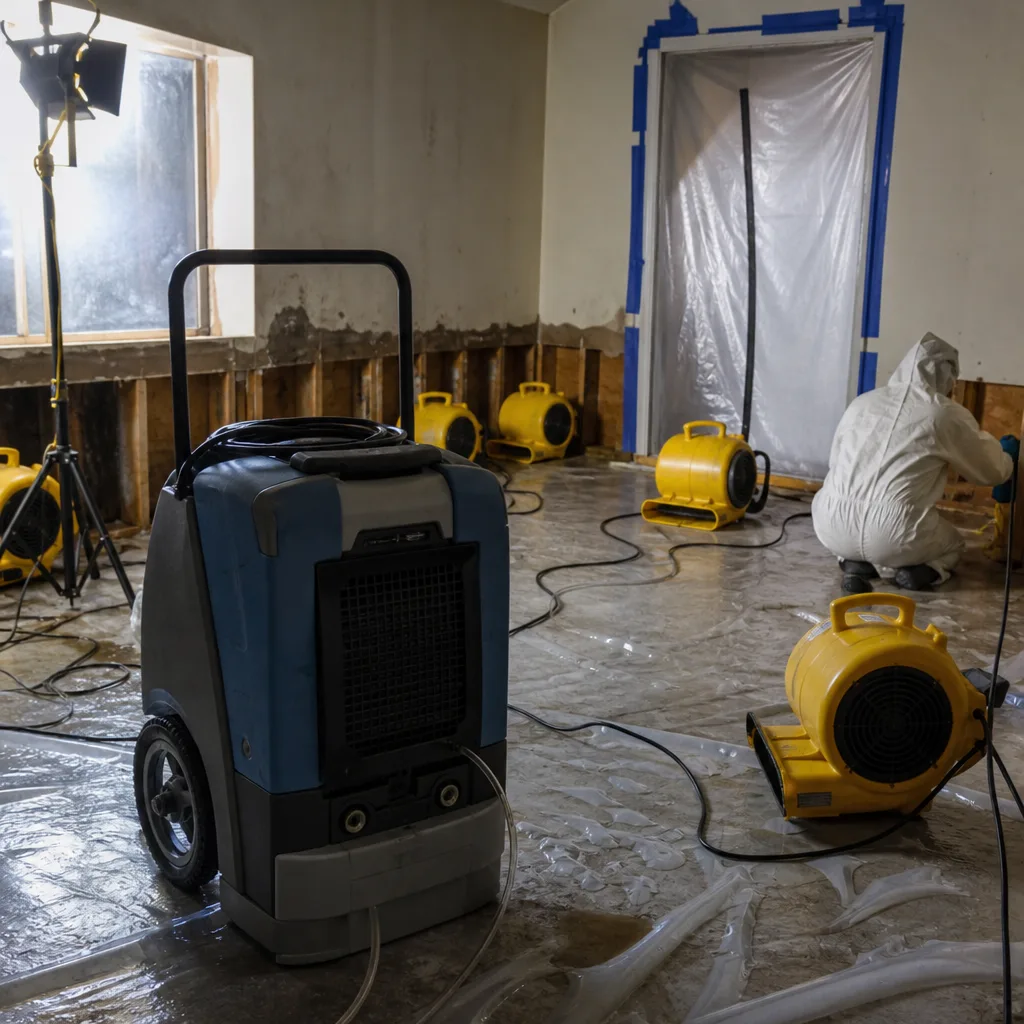
Restoration contracts in Washington contain clauses that appear standard but transfer significant risk to homeowners. Three deserve particular scrutiny.
“Direction to Pay” Clauses
These clauses authorize the contractor to bill your insurer directly and, in some versions, assign your claim benefits to the contractor. The problem: you lose negotiating leverage if the scope changes or the work is disputed. Washington law permits these assignments, but they are not mandatory. A contractor who presents one as standard practice without explaining the alternative - you pay, then seek reimbursement - is not being transparent. We do not use direction-to-pay clauses. Every DryMark Restoration Bothell customer receives a written price and pays according to the agreed scope, with documentation they can submit to their insurer directly.
Open-Ended Time-and-Material Pricing
Contracts stating “work performed at $X per hour plus materials, actual cost to be determined” create unlimited exposure. The correct format: line-item quantities and unit prices, with a not-to-exceed cap tied to the written scope. If additional damage is discovered, the contractor stops, documents, and presents a supplemental scope for your written approval before continuing. Haven Standard, Clause 1 requires this process on every job we perform.
No Written Scope Before Demolition
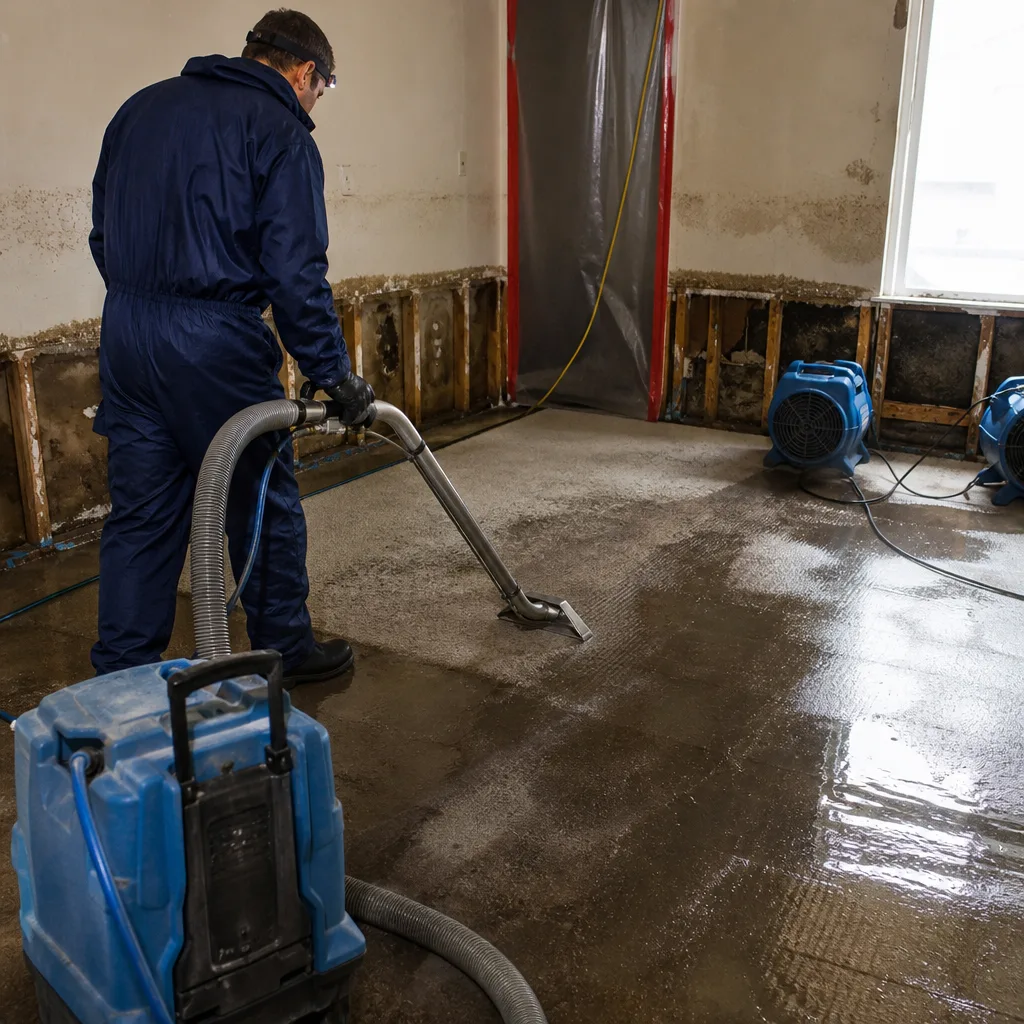
Some contractors begin demolition to “see what we’re dealing with” before providing a written scope. This reverses the proper sequence. The initial assessment should identify affected materials, establish drying goals with measurable endpoints, and produce a written scope before any destructive work begins. Emergency mitigation - extracting standing water, removing saturated carpet - is distinct from demolition. Know which phase you’re in before signing.
How to Compare Bids Using Line-Item Categories
Homeowners in Bothell’s competitive market often receive multiple bids after water damage, particularly in newer developments like North Creek and the homes near Beardslee Boulevard. Comparing lump-sum totals is misleading. The same job can show a $3,200 bid and a $5,800 bid with identical final costs, depending on how line items are grouped.
Request that every bid break down into these categories:
| Category | What It Covers | What to Verify |
|---|---|---|
| Emergency Mitigation | Water extraction, initial setup, containment | Hourly rates, minimum charges, equipment delivery fees |
| Drying Equipment | Dehumidifiers, air movers, specialty drying systems | Daily rates, brand names (Dri-Eaz, Phoenix), monitoring frequency |
| Demolition & Removal | Removal of unsalvageable materials | Scope limits - “as needed” is not a scope |
| Cleaning & Sanitization | Antimicrobial application, HEPA vacuuming, surface cleaning | Product specifications, application rates per square foot |
| Reconstruction | Return to pre-loss condition | Material grades, matching requirements, timeline |
Xactimate, the software most Washington insurers use, structures estimates in these categories. A contractor whose bid format mirrors Xactimate is speaking your adjuster’s language. One who uses proprietary categories or lump sums is creating friction you’ll resolve later, possibly with your own money.
We provide Xactimate-compatible line-item scopes on every job, with equipment from Dri-Eaz, Phoenix, XPOWER, B-Air, and Injectidry specified by model and daily rate. This format doesn’t just help with insurance. It lets you compare our bid to any competitor’s apples-to-apples.
Written Price vs. “Estimate Subject to Change”
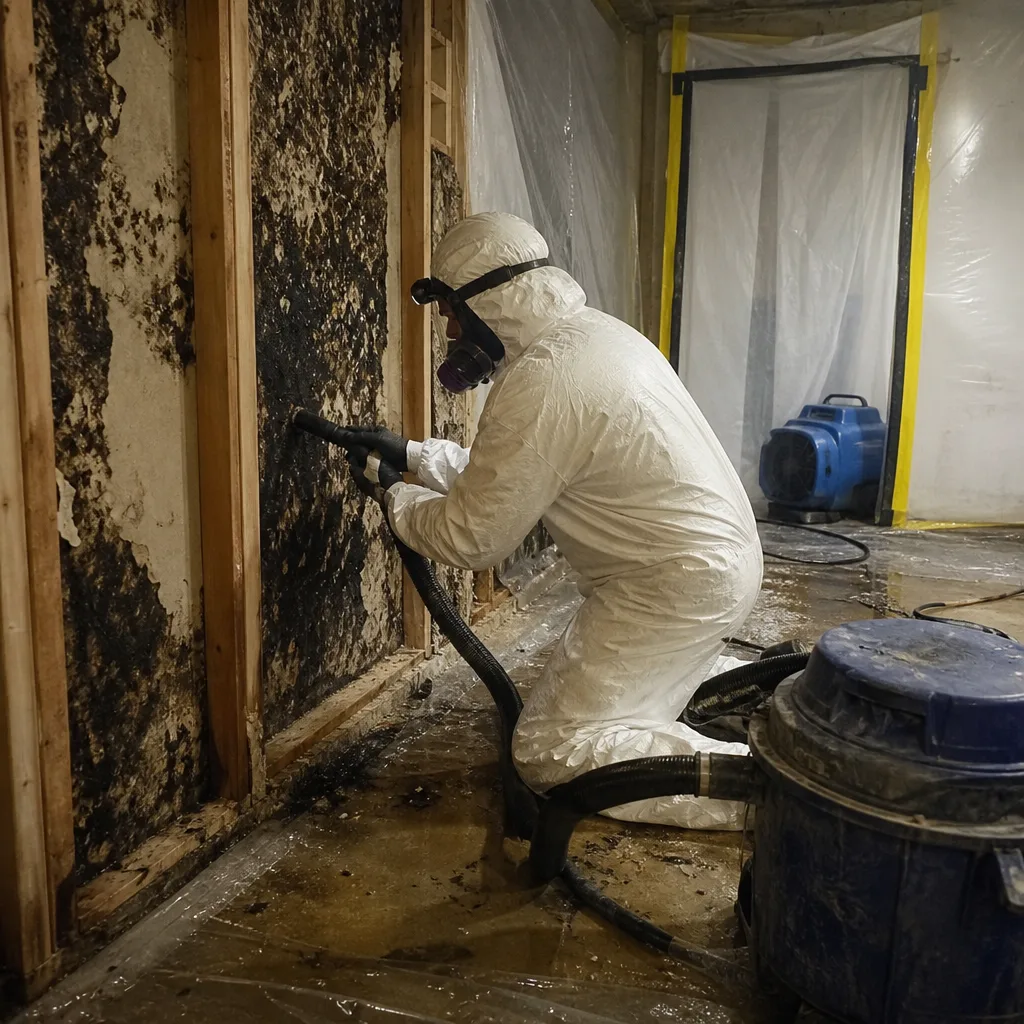
The distinction matters when your insurer reviews the final invoice. A written price is a commitment. An estimate with change language is a projection that protects the contractor, not you.
Here’s what legitimate written price documentation looks like:
- A scope document listing each task, quantity, and unit price
- A total price with explicit statement that no additional charges will be added without written change order
- Your signature and the contractor’s signature, both dated, before work begins
- Reference to a not-to-exceed cap for unforeseen conditions, with defined triggering events
Here’s what problematic language looks like:
- “Estimate based on visible damage; actual cost may vary”
- “Additional work billed at time-and-material rates”
- “Price valid for 30 days” on emergency work that starts immediately
- No signature line for homeowner approval before work commences
The first format gives you standing in a dispute. The second gives the contractor unlimited flexibility to increase charges after you’re committed. Haven Standard, Clause 1 requires the first format on every job: written price before work starts, every time, with no exceptions. We’ve maintained this standard through 12,000 homes because it eliminates the adversarial dynamic that arises when homeowners feel surprised by final invoices.
Our Free Second Opinion on any competitor’s written estimate exists because we frequently see the second format presented as standard. Bring us a written estimate, and we’ll review its structure, its line-item logic, and its change-order protections at no charge.
Bothell-Specific Considerations: Climate, Codes, and Neighborhoods
Bothell’s geography creates restoration scenarios that contractors from drier markets miss. Understanding these local factors - covered in our Seasonal Damage Restoration Care for Bothell: Year-Round Homeowner’s Guide - helps you evaluate whether a contractor has actual Bothell experience or just a Bothell mailing address.
Convergence Zone Moisture Patterns
The Puget Sound convergence zone stalls over Bothell more often than communities to the north or south, producing prolonged light rain rather than intense bursts. This pattern saturates building envelopes gradually. By the time homeowners notice water damage, moisture has often migrated through wall cavities into adjacent rooms. Contractors who assess only the visible damage miss the full scope. Our assessments in Bothell’s Canyon Park and North Creek neighborhoods routinely find secondary moisture in base plates and subflooring two rooms from the apparent source.
Age-Related Construction Variations
Bothell’s housing stock spans nearly a century. Homes near Main Street and the historic district may have balloon framing, no vapor barriers, and original plaster. Homes in newer developments like North Creek have engineered trusses, continuous insulation, and complex HVAC systems. The drying strategy differs significantly. Balloon framing requires positive air pressure management to prevent cross-contamination. Modern assemblies need controlled dehumidification to avoid trapping moisture in sealed wall cavities. A contractor who applies one approach to both construction eras is applying a template, not solving a problem.
Local Permitting and Environmental Requirements
Bothell’s location across two counties means permit jurisdiction varies by address. Snohomish County requires permits for most reconstruction work beyond cosmetic repair. King County’s Bothell addresses fall under different thresholds. Mold remediation in either county may require third-party clearance testing before reconstruction begins. Contractors should know which jurisdiction applies to your address and factor permit timelines into their schedules.
Neighborhood-Specific Risks
In our experience, certain Bothell neighborhoods present recurring patterns:
- Thrasher’s Corner and older Canyon Park: Original 1970s-1980s construction with galvanized plumbing reaching end of life. Water damage from pipe failures often includes significant mold colonization behind cabinetry.
- Bothell Landing and river-adjacent properties: Seasonal groundwater intrusion in basements and crawl spaces, sometimes misdiagnosed as plumbing leaks.
- Newer North Creek construction: Tight building envelopes with mechanical ventilation dependencies; humidity control failures during power outages or equipment malfunction.
A contractor who can name these patterns without prompting has worked in Bothell long enough to recognize them. One who treats your home as generic “Seattle-area” construction has not.
Common Mistakes to Avoid
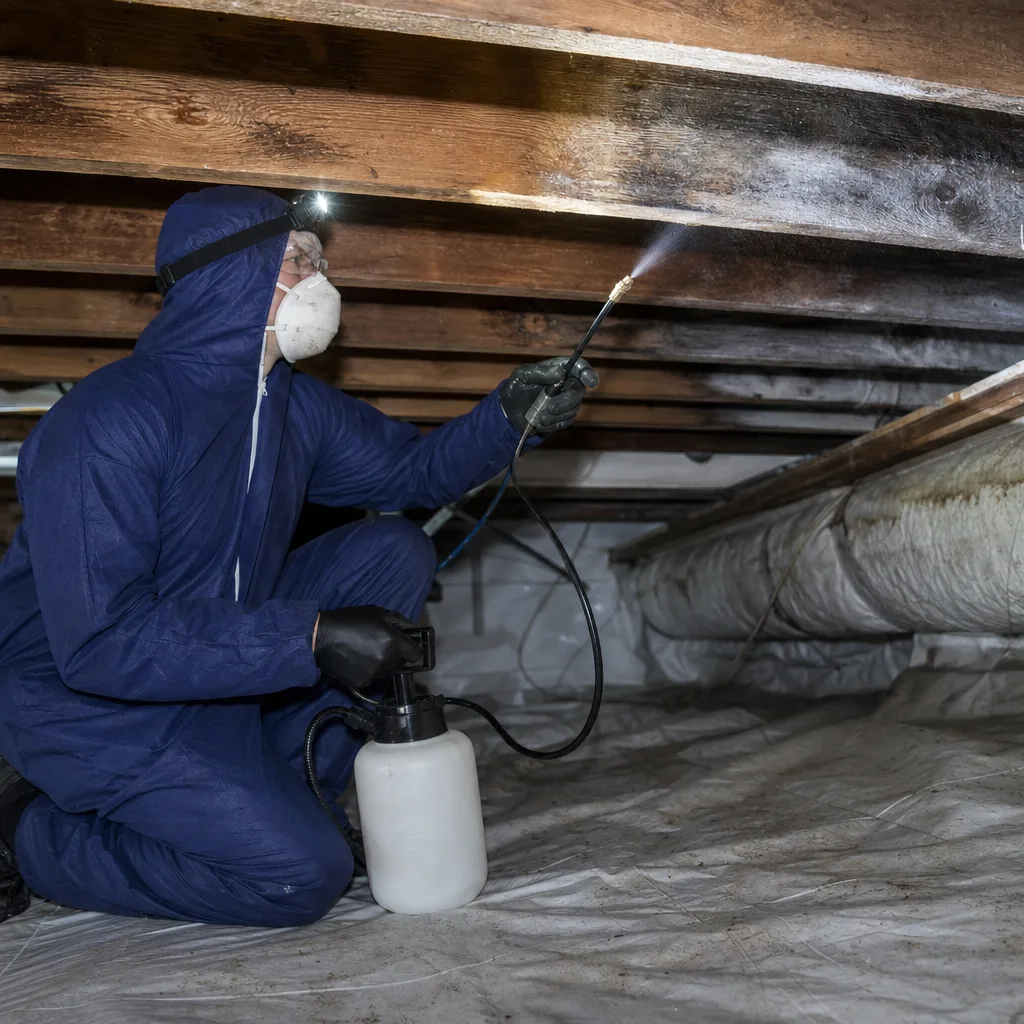
- Choosing the first contractor who answers at 2 a.m. Emergency response speed matters for active water flow, but the contractor who answers first isn’t necessarily the contractor who documents best. For water damage restoration in Bothell, verify that 24/7 availability includes live dispatchers who can describe documentation practices, not just call-takers who schedule appointments.
- Accepting a verbal scope over the phone. No legitimate restoration scope can be determined without on-site moisture mapping. A contractor who quotes $X without seeing the damage is either guessing or planning to increase the price later. Both are unacceptable under Haven Standard, Clause 1.
- Ignoring the difference between mitigation and reconstruction contractors. Some companies handle only emergency drying; others handle only rebuild. Using separate contractors creates documentation gaps at the handoff. A full-service contractor maintains continuous records from initial loss to final walkthrough.
- Not requesting proof of specialty endorsement for mold. Mold remediation in Bothell requires specific licensing. General contractors without mold endorsements sometimes perform remediation illegally, producing documentation that insurers reject and creating liability exposure for homeowners.
- Signing contracts with “assignment of benefits” language without legal review. These clauses are common in fire and smoke damage restoration in Bothell where initial costs are high. They may be appropriate in specific cases, but they should never be presented as standard or required.
- Failing to document pre-existing conditions. Photograph everything before the contractor arrives. Disputes about whether damage was pre-existing or loss-related are common. Your documentation protects you.
- Assuming insurance will handle contractor vetting. Insurers verify that work was done, not that it was done well. The documentation burden falls on you. A contractor who produces poor records can leave you with uncovered costs even when coverage exists.
When to Call a Professional
Call immediately when standing water is present, when mold is visible or suspected, when sewage or Category 3 water is involved, or when fire damage has compromised structural elements. These scenarios carry health risks and documentation requirements that exceed DIY capacity.
For water damage, the critical window is the first 24-48 hours before mold colonization begins. For fire damage, corrosive byproducts continue damaging surfaces until professional cleaning begins. For mold, disturbing colonies without containment spreads spores and complicates remediation.
DryMark Restoration Bothell offers free estimates in Bothell. Our live dispatchers answer every call, 24 hours a day, 7 days a week, with no voicemail trees. Call (425) 696-6061 to speak with a person who can describe our documentation process, verify our licensing information, and schedule an assessment with a written price before any work begins, or explore more guides & resources on our blog.
Frequently Asked Questions
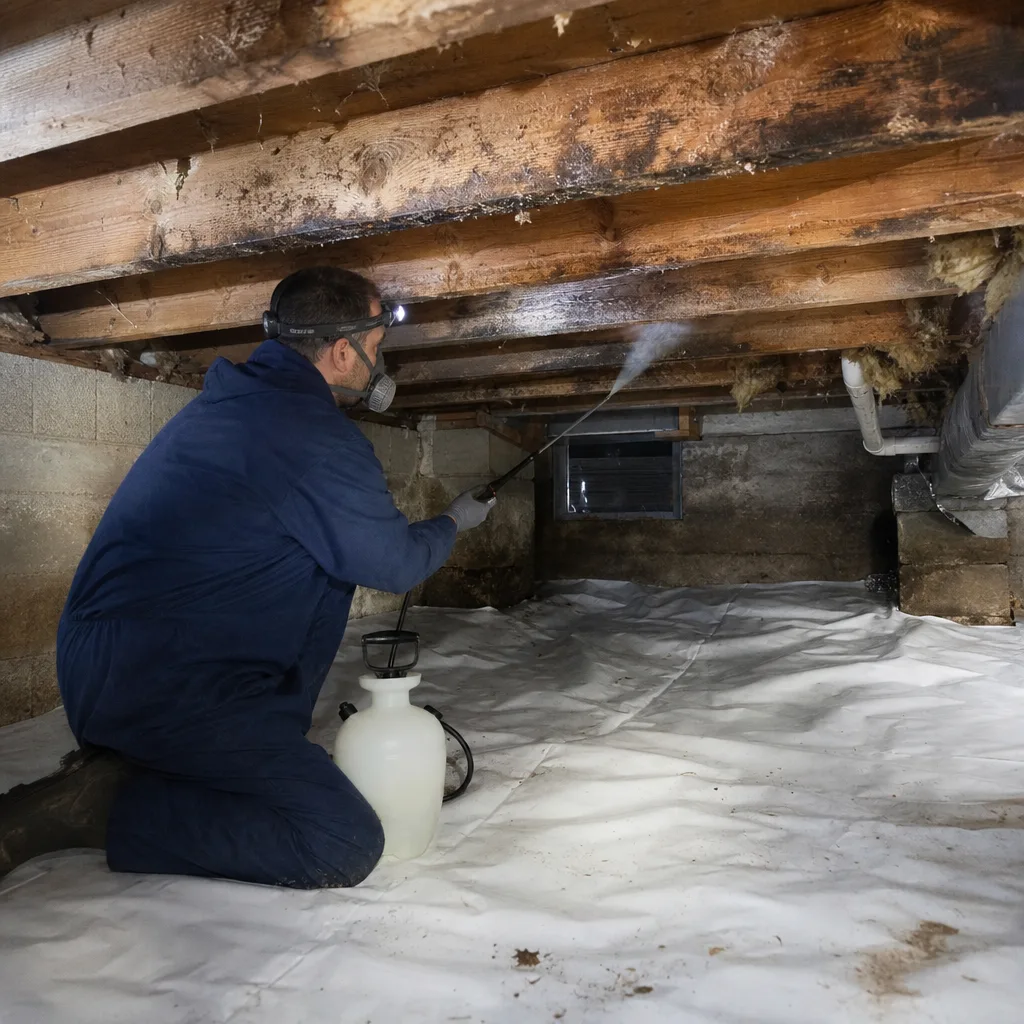
Typical water damage mitigation in Bothell ranges from $1,200 for limited clean-water extraction and drying to $6,500+ for extensive Category 2 or 3 losses with demolition and antimicrobial treatment. Reconstruction costs are additional and depend on material selections. The critical factor isn’t the total - it’s whether the contractor provides a written line-item scope with unit prices before work starts. Call (425) 696-6061 for a free assessment with exact pricing.
Most Bothell homeowners policies cover sudden and accidental water damage, subject to your deductible and policy limits. Coverage disputes arise when documentation doesn’t establish that damage was sudden, or when scopes include items your adjuster considers unnecessary. The contractor’s documentation practices directly affect your coverage outcome. We produce Xactimate-formatted scopes with daily moisture logs and photo records specifically to support clean claim processing.
For active water flow or sewage backup, legitimate 24/7 contractors dispatch within 1-2 hours in the Bothell area. For non-emergency assessments, next-day scheduling is standard. Speed of arrival matters less than what happens after arrival: moisture mapping, written scope development, and documentation before any destructive work. A fast arrival with no documentation system is a liability, not a service.
Remediation is required when mold growth exceeds 10 square feet, involves HVAC systems, or follows Category 3 water damage. Cleaning alone is appropriate only for limited surface growth on non-porous materials in dry conditions. The determination requires air and surface sampling by a qualified assessor, not visual guesswork. In Bothell’s climate, we frequently find hidden colonization behind baseboards and under vinyl flooring that appears clean. Documentation of the full extent protects you from recurrence and supports insurance claims when coverage applies.
You retain that authority unless you sign it away. We coordinate directly with adjusters when homeowners request it, providing documentation packages formatted to their requirements. But the claim remains in your name, and you approve all scopes and pricing. We do not accept assignment of benefits or direction-to-pay clauses that remove you from the process. This preserves your negotiating position and ensures transparency.
A moisture reading is a single measurement, usually of surface moisture content in wood or drywall, expressed as a percentage. A drying log is a time-series record of multiple readings across multiple locations, combined with psychrometric data and equipment status, maintained daily until drying goals are met. Insurers require drying logs, not isolated readings, to justify equipment rental duration and confirm that materials reached acceptable moisture levels before reconstruction began. Ask to see a sample before hiring any contractor.
The Bottom Line
Hiring a restoration contractor in Bothell is a documentation decision disguised as a service decision. The contractor who produces daily drying logs, Xactimate-formatted scopes, and photo records on every visit is protecting your insurance claim as carefully as your property. The one who doesn’t is asking you to carry that risk.
Verify Washington state licensing through L&I’s online lookup. Demand a written price before any work begins. Review contracts for direction-to-pay clauses and open-ended pricing. Compare bids by line-item categories, not lump sums. And ask the question most homeowners never think to ask: “Can I see a sample drying log?”
The answer tells you everything.
Written by Alicia Brennan, Owner at DryMark Restoration Bothell, serving Bothell since 2011.